 How-to
7 Acid-Free Protection Facts for Graded Card Slabs
Last Updated: November 16, 2026
Quick Summary
Acid-free protection means a sleeve is made from materials that will not release acidic compounds onto the card or slab over time. For collectors who want graded cards to look the same for decades, this property matters more than almost any other feature. Ask the seller what the sleeve is made from and whether it is tested for archival safety.
- Ask for the polymer name, not just a PVC-free label.
- Film thickness is quoted in mil or microns, and the units are not interchangeable.
- Acid migration can cause yellowing, brittleness or a faint haze on cards.
- Heat and humidity speed up the chemical reactions that damage sleeves.
- Store slabs away from direct light, in a cool and dry place.
Table of Contents
- What Acid-Free Protection Means for a Graded Card Slab
- Why Acid Migration Damages Cards and Holders
- PVC-Free Card Sleeves: What the Label Does and Does Not Tell You
- UV Protection for Graded Cards: Light, Heat and Humidity
- How to Store Graded Cards Long Term
- How to Sleeve a Slab Safely
- Building an Archival Setup for Your Collection
- Frequently Asked Questions
What Acid-Free Protection Means for a Graded Card Slab
Acid-free protection means a sleeve is made from materials that will not release acidic compounds onto the card or slab over time. For collectors who want their graded cards to look the same decades from now, that single property matters more than almost any other feature on the label. At Superior Fit Sleeves, we design our sleeves around archival-grade acid free protection because a sleeve that stays clear and clean protects the value of what sits inside it.
Many shoppers see "acid-free" printed on a package and assume the job is done. The label alone does not tell you much. Ask the seller what the sleeve is made from, whether the material is tested for archival safety, and how it holds up to handling. A sleeve that looks crisp today can still yellow or cloud if the plastic is poorly chosen.
For a graded slab, the protection has to do three things well: keep the outer shell free of scuffs, keep dust away from the label and the holder edges, and avoid any chemical interaction with the plastic. Good acid-free protection handles all three without adding bulk that stresses the case.
Why Acid Migration Damages Cards and Holders
Acid migration happens when acidic compounds move out of a material and into a neighboring surface. Paper, cardboard and some plastics can release these compounds, and the result is often yellowing, brittleness or a faint haze. Collectors notice it first on the edges of a card or on the inside of an older holder.
The risk grows when cards sit in storage for long periods, especially in a warm or humid room. Heat speeds up the chemical reactions, so a sleeve that is only borderline acceptable at room temperature can become a problem in a closet or attic. This is why archival storage advice keeps coming back to materials you can trust over the long run, not just the first few months.
Watch out: a sleeve that smells strongly of plastic or feels tacky on the surface should be avoided for slab storage, since those are common signs of a material that may not be stable enough for long-term use.
PVC-Free Card Sleeves: What the Label Does and Does Not Tell You
PVC-free and acid-free are two different claims, and most listings blur them together. PVC-free means the film does not contain polyvinyl chloride. It says nothing on its own about whether the material is archival-safe, whether it resists scratching, or whether it fits your slab.
What the label does not tell you, and what to ask instead:
- Polymer type. Ask for the resin name, not just 'PVC-free.'
- Thickness. Film is quoted in mil (thousandths of an inch) or in microns. Ask which unit the seller is quoting, because mil and micron are not interchangeable.
- Archival evidence. A seller who can point to a stated polymer, a thickness spec, and a test method is giving you more than a seller who prints a badge.
- Closure construction. Ask whether the flap is adhesive or mechanical, since adhesive layers are where residue questions usually start.
We recommend reading the label as a starting point, then checking polymer type, thickness, closure, and fit. For more on how these choices compare, see our Acid-Free Sleeves vs PVC Sleeves for Cards: 2026 Guide. It walks through the two sleeve types side by side.
UV Protection for Graded Cards: Light, Heat and Humidity
Light is one of the quieter threats to a graded card. Direct sunlight and strong indoor lighting can fade inks and affect the appearance of a card over years of exposure. Heat and humidity add a second layer of risk because they change how materials behave and can encourage condensation inside storage containers.
For most collectors, the practical answer is to keep slabs out of direct sun, store them in a stable environment, and use sleeves that help block dust and handling damage. A sleeve is one layer in that plan, not a complete climate control system.
The real-world takeaway is simple: a sleeve protects the surface, but the storage location protects the card from the environment. Keep both in mind when you set up a display or a long-term box.
If humidity is your main concern, our guide on Can Humidity Ruin Your Pokémon Card Collection? covers the moisture questions collectors ask most often.
How to Store Graded Cards Long Term
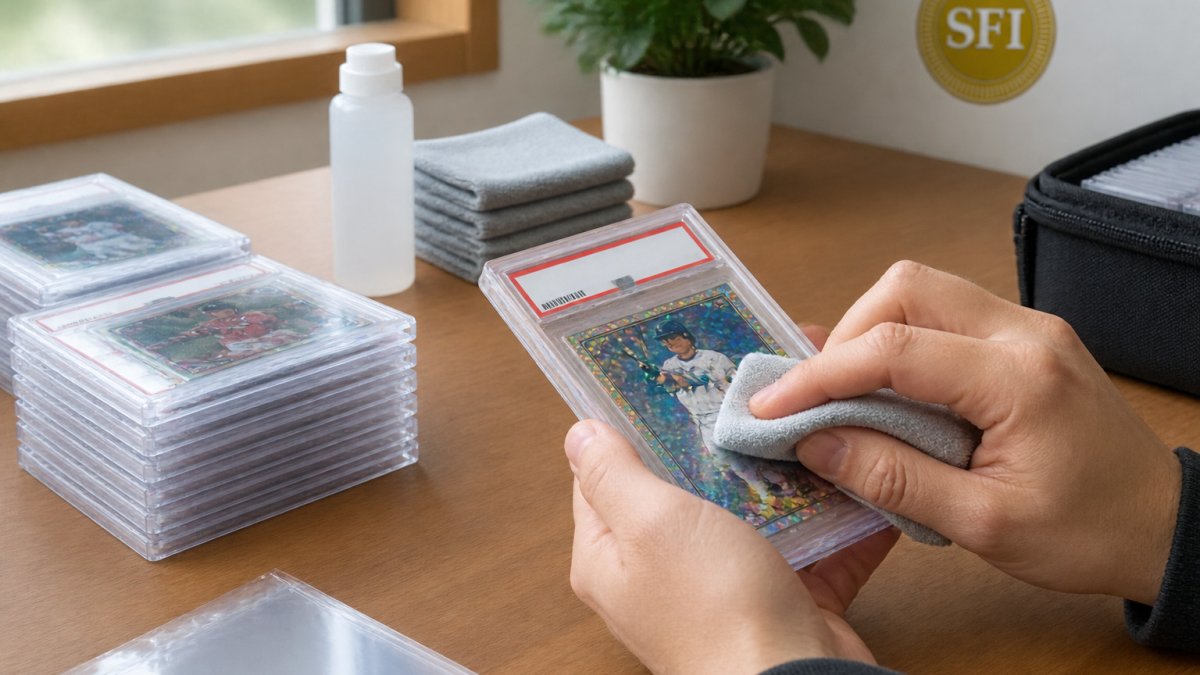
Long-term storage starts with a clean workspace. Wash your hands, work on a flat surface, and avoid handling cards over food or drink. Place each slab into an appropriate acid free protection sleeve, then move it into a storage box that keeps it upright and supported.
Keep storage areas cool, dry and away from direct light. Avoid basements and attics that swing widely in temperature. Check your boxes every few months for condensation, pests or any sign that a sleeve has yellowed.
A common mistake is storing slabs in a tight stack with no support, which can put pressure on the edges over time. Give each slab room, and make sure the sleeve closes securely without forcing it.
For a step-by-step look at slab storage habits, read our guide on How to Store Graded Card Slabs Safely Long Term.
Choosing a Fit That Protects Without Stressing the Slab
A fit that is too tight can strain the slab shell, while a fit that is too loose lets the case rattle and pick up scuffs. The goal is a snug sleeve that slides in and out without force. Measure your slab, compare it with the sleeve dimensions, and test the fit with one slab before you buy a full set.
Consider the closure too. A resealable flap should hold firmly without requiring pressure on the slab. If you find yourself pushing hard to get a slab in, the sleeve is probably the wrong size.
For a full buyer's guide on what archival-grade sleeves should include, see Archival Grade Sleeves for Cards: The 2026 Buyer's Guide.
How to Sleeve a Slab Safely
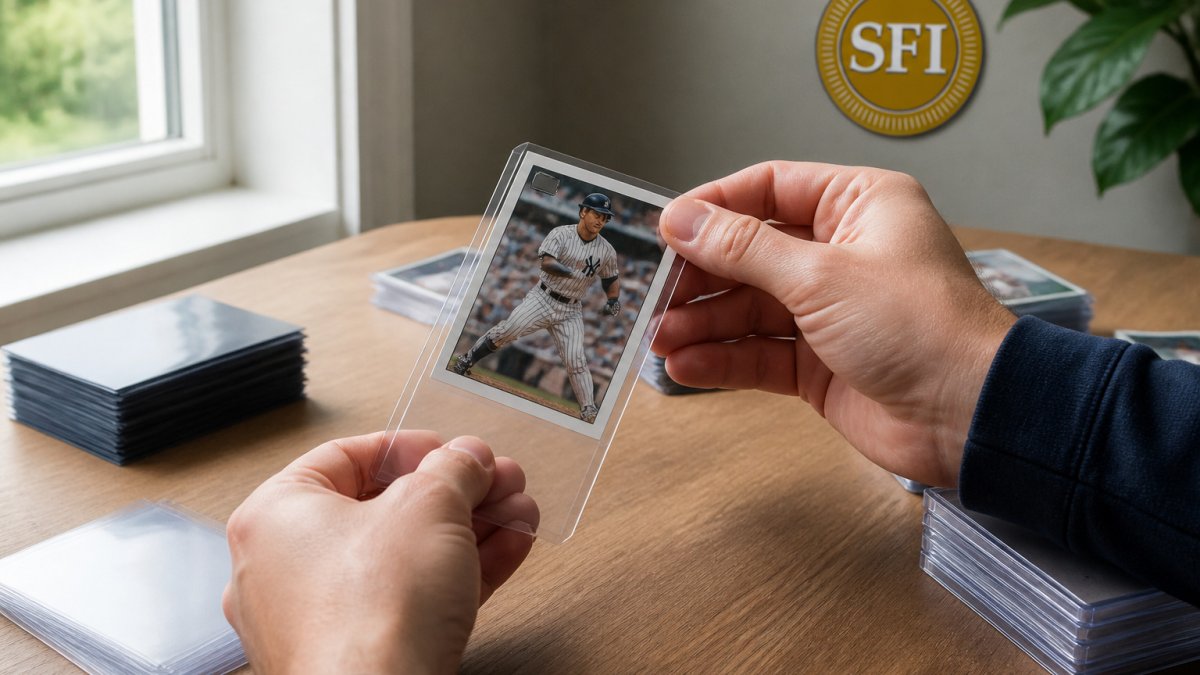
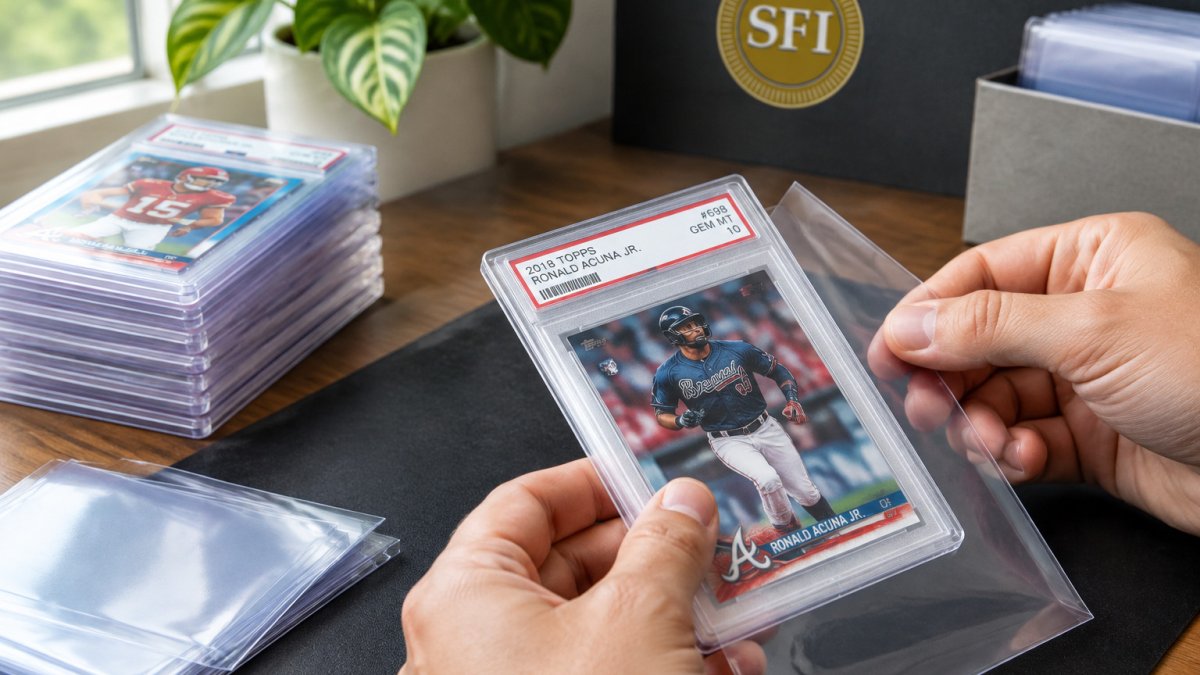
Start with clean hands and a clean, flat surface. Hold the slab by its edges, not the front or back. Line up the sleeve opening with the slab, then slide the slab in gently and straight. Stop if you feel resistance and check the alignment before continuing.
Once the slab is inside, seal the flap or closure and check that nothing is catching on the edges. Set the sleeved slab down on a soft surface, and avoid stacking it under heavy items.
Watch out: never force a slab into a sleeve that is too small. The pressure can crack the shell or bend the edges, and no sleeve can undo that damage.
Building an Archival Setup for Your Collection
A complete archival setup combines the right sleeves, a stable storage container and a clear storage routine. Start with acid-free or archival-grade sleeves that fit your slabs. Add a storage box that keeps cards upright and away from light. Label each box so you can find a card without handling the whole collection.
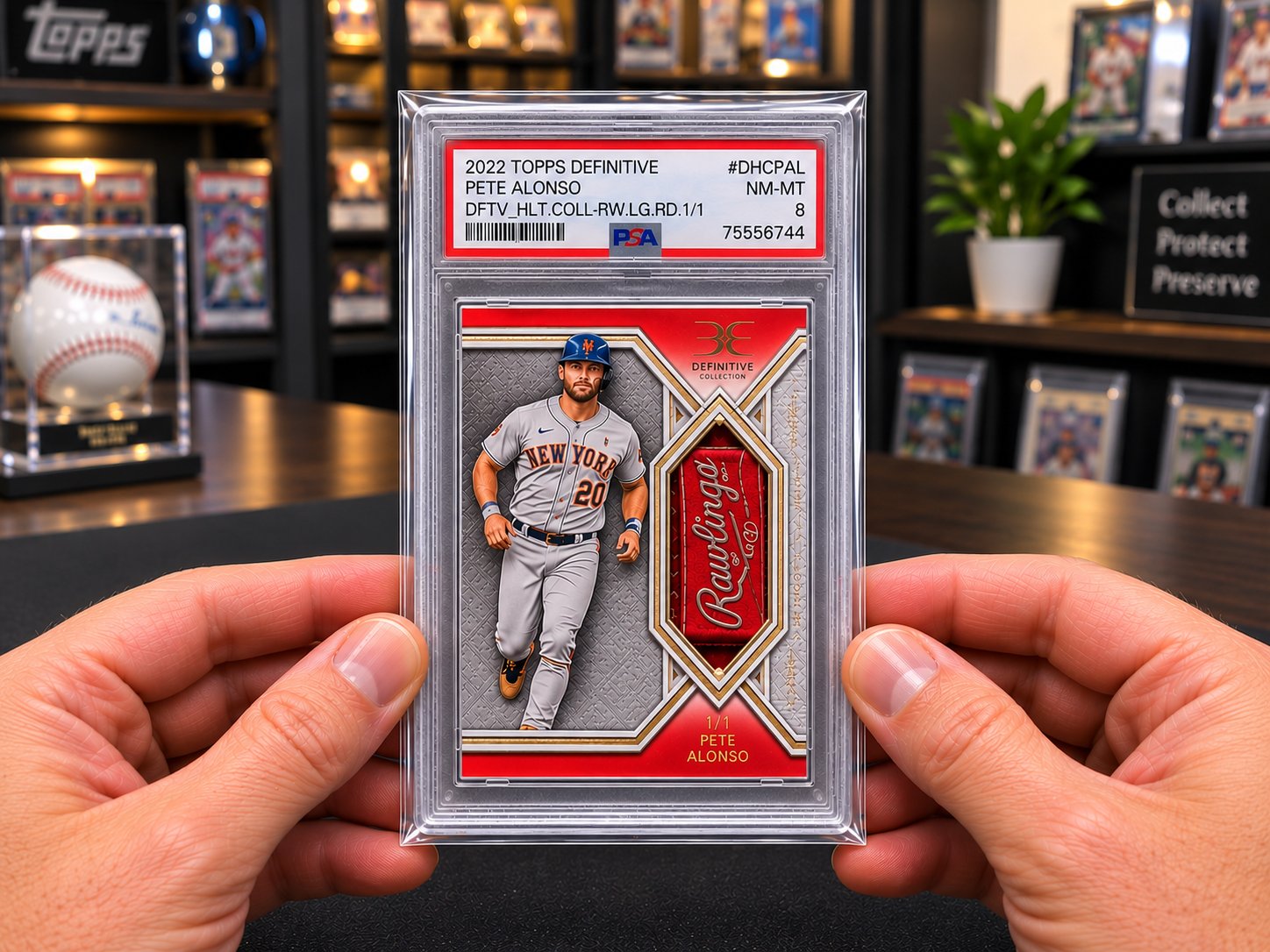
For collectors who also display their cards, the same principles apply. Choose display cases and sleeves that block dust and light, and keep the display away from direct sun. Rotate displays so no single card sits in the same spot for years.
If you want to see how graded cards look on display with protection in place, read How to Display Graded Trading Cards: 2026 Collector's Guide. It covers display options alongside the protection choices .
Superior Fit Sleeves offers sleeves for graded card slabs, including sleeves for PSA, BGS, SGC and CGC holders. Browse our Graded Card Slab Sleeves to find a fit for your collection. Pricing depends on quantity, dates, and delivery, so check the website for current prices or request a quote.
Frequently Asked Questions
What does acid-free mean for a collectible card sleeve?
Acid-free means the sleeve is made from materials that do not release acidic compounds over time. Those compounds can migrate into paper, cardboard and the plastic of a graded holder, causing discoloration and brittleness. For a slab, it is a meaningful specification because the sleeve sits in direct contact with the holder for years. Look for the term stated explicitly on the product page, and check whether it refers to the sleeve material itself rather than just the packaging. Polypropylene is the material most often used for this purpose.
Can an outer sleeve damage a graded card slab?
A sleeve can cause damage if it is too tight, made from a material that off-gasses, or fitted roughly. A snug fit that forces the slab to flex can stress the seal over time. Dust trapped inside a poorly fitting sleeve can scratch the holder's surface when the slab is removed. Choose a sleeve sized to the specific grading company's slab dimensions, insert slabs gently, and avoid forcing a holder into a sleeve that resists it.
How should you store collectible card slabs long term?
Store slabs upright in a cool, dry, dark place with stable humidity. Keep each slab in an acid-free, PVC-free sleeve so it is protected from dust, scuffs and chemical exposure from nearby materials. Avoid attics, garages and basements where temperature and humidity swing widely. Check the collection periodically for condensation, odor or changes in the sleeve, and replace any sleeve that shows clouding or yellowing.
Do PSA slabs protect cards from UV light?
A grading holder protects the card from physical handling, but it is not designed as a light filter for long-term display. Prolonged exposure to direct sunlight and strong indoor light can fade printed colors over time. A sleeve offers physical protection, but it is not a substitute for keeping slabs out of direct light. Store collections away from windows and use a sleeve that the seller describes as protecting against UV exposure, while still limiting how long slabs are displayed in bright conditions.