 ultimate-guide
Archival Grade Sleeves for Cards: The 2026 Buyer's Guide
Table of Contents
- What Makes a Sleeve Truly Archival Grade?
- Acid Free Sleeves for Trading Cards: Why pH and Lignin Matter
- Polypropylene vs Polyester Sleeves: Which Material Wins?
- Thickness and Mil Measurements: What the Numbers Mean
- Best Archival Sleeves for PSA Slabs and Other Graded Cases
- Sleeve Dimensions: Matching the Right Enclosure to Your Cards
- Storage Environment and Handling: Protecting Your Investment
- Final Verdict: Choosing Archival Grade Sleeves for Cards
- Frequently Asked Questions
Last Updated: September 4, 2026
Collectors spend thousands on graded cards, only to store them in enclosures that slowly degrade the very items they are meant to protect. Archival grade sleeves for cards are the difference between a collection that survives decades and one that yellows, scratches, and loses value. At Superior Fit Sleeves, we have engineered precision-fit protective sleeves since 2014, and we know exactly what separates true archival protection from marketing jargon.
The harsh reality is that most plastic sleeves on the market are not archival. They contain acids, plasticizers, and reactive compounds that migrate into your cards over time. This guide cuts through the confusion, explains the materials science that actually matters, and gives you a practical framework for choosing the right protection for every card in your collection. We will cover material chemistry, thickness standards, sizing, and the storage environment itself, so you can buy with confidence.
What Makes a Sleeve Truly Archival Grade?
An archival grade sleeve is a protective enclosure made from materials that are chemically inert, acid-free, and dimensionally stable, meaning they will not react with, transfer chemicals to, or degrade the item they protect over long-term storage periods.
Archival-grade is not a regulated term, but conservation professionals and the Library of Congress preservation standards treat it as shorthand for materials that pass specific tests for chemical stability. A sleeve earns this label by meeting several non-negotiable criteria.
First, the material must be chemically inert. This means it contains no plasticizers, no acids, and no reactive additives that can off-gas or migrate onto your cards. Second, it must be pH neutral or slightly alkaline, typically in the 7.0 to 8.5 range, to counteract any acids already present in the card stock. Third, it must be lignin-free, since lignin, a natural polymer in wood pulp, produces acids as it breaks down.
A common mistake is assuming that any clear plastic sleeve offers the same protection. Standard PVC sleeves, still found in bargain bins, are the worst offenders. They contain plasticizers that leach out over time, leaving a sticky residue on cards and causing them to yellow. True archival sleeves use only stable polymers, which brings us to the material question.
Acid Free Sleeves for Trading Cards: Why pH and Lignin Matter
Acid free sleeves for trading cards are the baseline requirement for any serious collection, and the chemistry explains why. Card stock is wood-based, and wood contains lignin, the compound that gives trees structural rigidity. As lignin degrades, it produces acidic byproducts that weaken paper fibers and cause yellowing and brittleness.
Your card is already fighting this internal battle. The last thing you need is a sleeve that adds external acids to the equation. Non-archival plastics and papers can introduce acids that accelerate the degradation process dramatically. This is why the pH of the sleeve material matters, and why conservation standards emphasize both acid-free and lignin-free construction.
The Library of Congress guidelines on storage enclosures explicitly recommend enclosures made from materials that are acid-free and lignin-free for long-term storage of paper-based collections. Trading cards are paper-based collections, regardless of how they are graded or slabbed. The same chemistry applies.
- Acid-free means the material has no acids introduced during manufacturing, typically verified by a pH test showing a neutral or slightly alkaline reading.
- Lignin-free means the material contains no wood-based lignin, eliminating the source of future acid generation.
- Plasticizer-free means the sleeve contains no softening agents that can migrate to the card surface.
Polypropylene vs Polyester Sleeves: Which Material Wins?
The polypropylene vs polyester sleeves debate is really a question of which stable polymer fits your specific storage needs. Both materials are chemically inert and archival-safe, but they behave differently in practice.
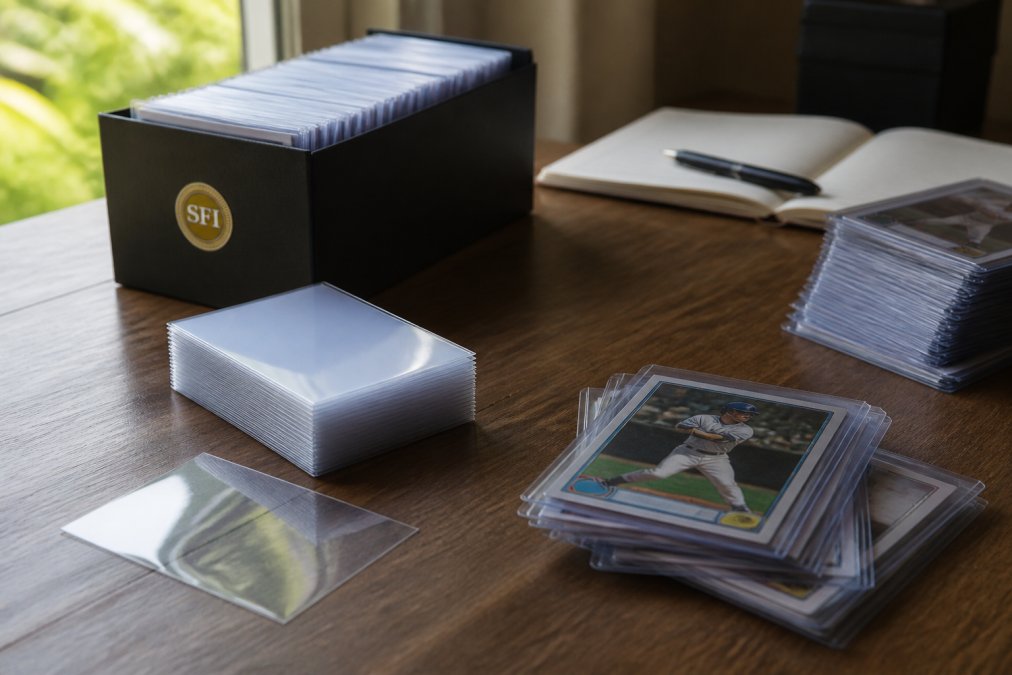
Polypropylene is the most common archival plastic. It is clear, lightweight, and flexible, making it ideal for penny sleeves and soft protection inside binders or boxes. It is also inexpensive, which is why most mass-market sleeves use it. The trade-off is that polypropylene is softer than polyester, offering less rigid protection against physical impact.
Polyester, often sold under the brand name Mylar, is the gold standard for archival protection. It is significantly stronger, more transparent, and more chemically stable than polypropylene. Polyester is also dimensionally stable, meaning it will not stretch or warp over time. The National Archives guidance on plastic enclosures lists polyester as one of the only plastics recommended for direct contact with archival materials.
Material | Clarity | Rigidity | Chemical Stability | Best Use Case |
|---|---|---|---|---|
Polypropylene | Good | Flexible | Excellent | Soft sleeves, binder pages, short-term storage |
Polyester (Mylar) | Superior | Rigid | Exceptional | Graded slabs, long-term storage, high-value cards |
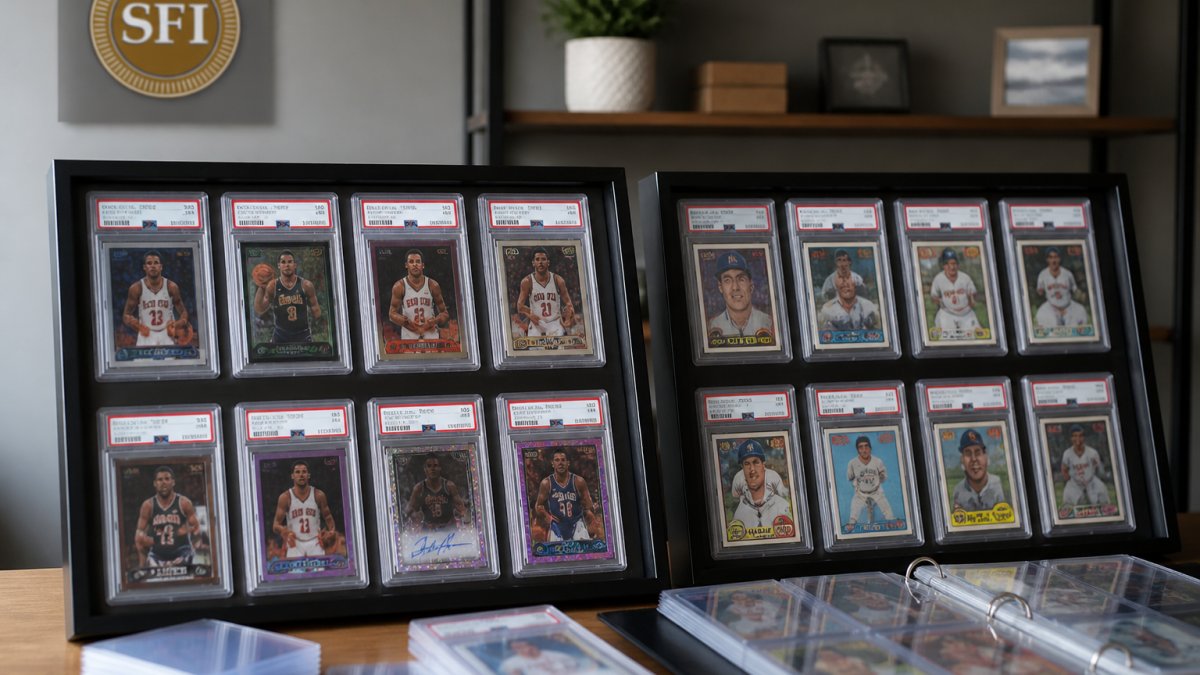
For graded slabs and high-value cards, polyester is the clear winner. The extra rigidity protects the slab edges from dings, and the superior clarity ensures your card looks its best on display. For bulk storage of raw cards in a box, quality polypropylene sleeves are perfectly adequate and more economical.
Thickness and Mil Measurements: What the Numbers Mean
Sleeve thickness is measured in mils, where one mil equals one-thousandth of an inch. This number directly determines how much physical protection the sleeve provides against bending, impact, and abrasion.
A standard penny sleeve is typically 1 to 2 mils thick. It protects against scratches and dust but offers almost no protection against bending. A 3 to 4 mil sleeve is stiffer and provides moderate protection, suitable for top-loaders and occasional handling. For graded slabs, you want a sleeve in the 3 to 5 mil range, thick enough to absorb impact but thin enough to fit inside a storage box without adding excessive bulk.
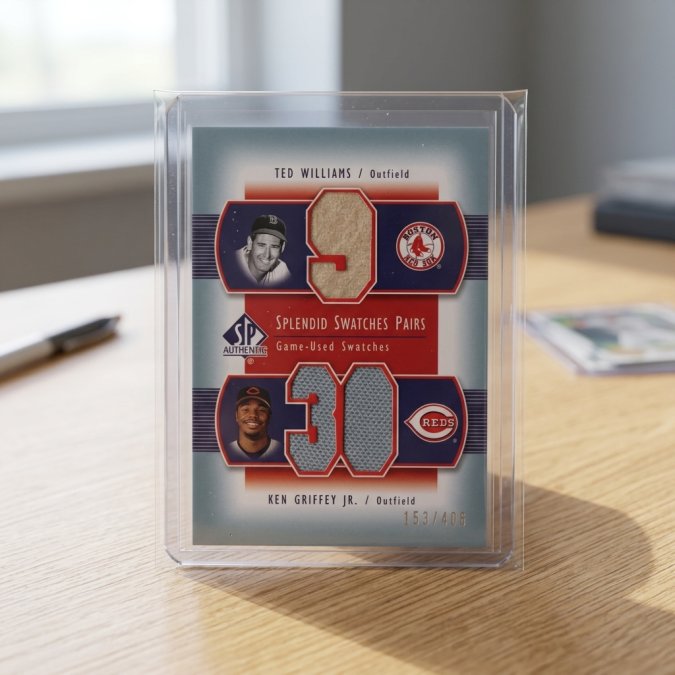
The material matters as much as the number. A 3 mil polypropylene sleeve is softer and less protective than a 3 mil polyester sleeve. Polyester's higher tensile strength means it resists tearing and puncture better at the same thickness.
Best Archival Sleeves for PSA Slabs and Other Graded Cases
The best archival sleeves for PSA slabs are precision-cut polyester sleeves designed to match the exact exterior dimensions of the grading case, with a tapered profile for a snug, professional fit.
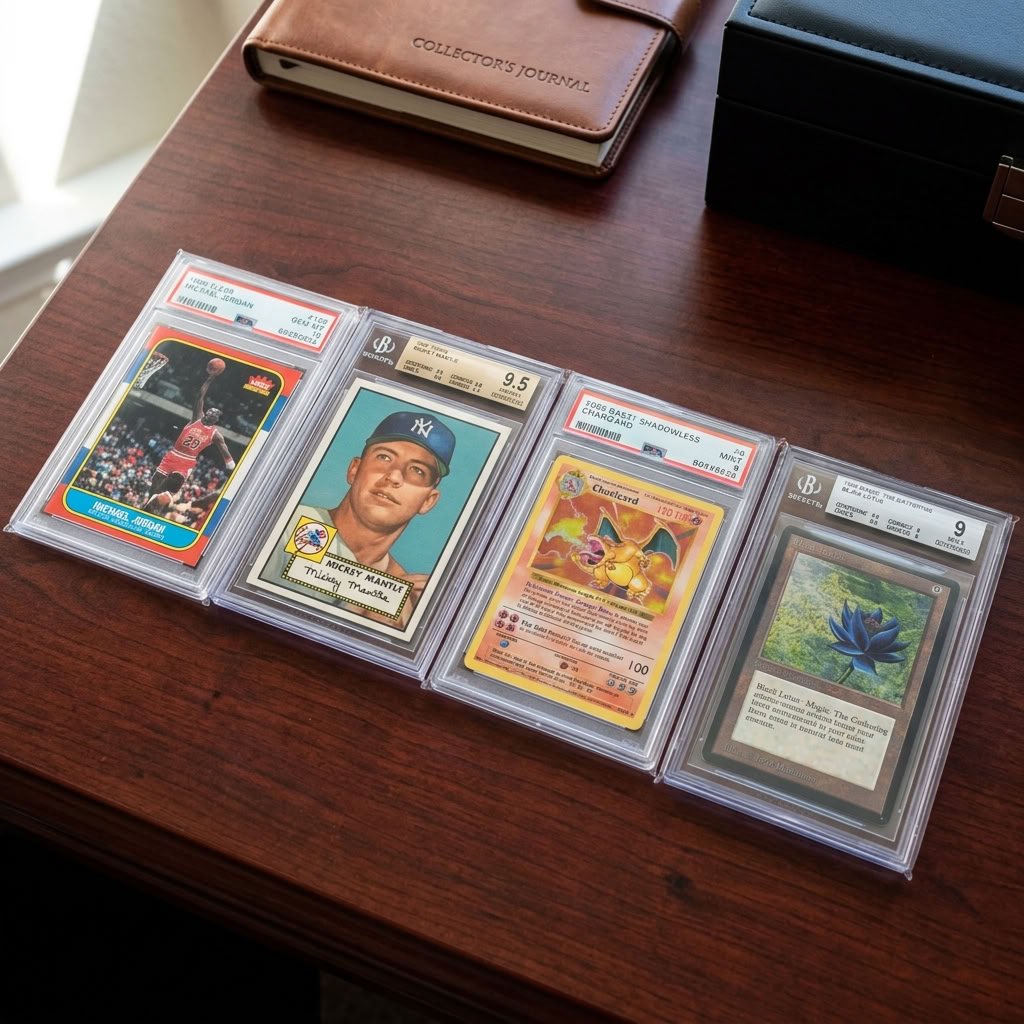
Graded slabs come in standard sizes. PSA, BGS, and CGC card slabs share similar dimensions for standard trading cards, but the case thickness and edge profiles vary slightly between grading companies. A sleeve that fits a PSA slab perfectly may be loose on a CGC slab. This is why generic "one size fits all" sleeves are a compromise you do not want to make with a graded card worth hundreds or thousands of dollars.
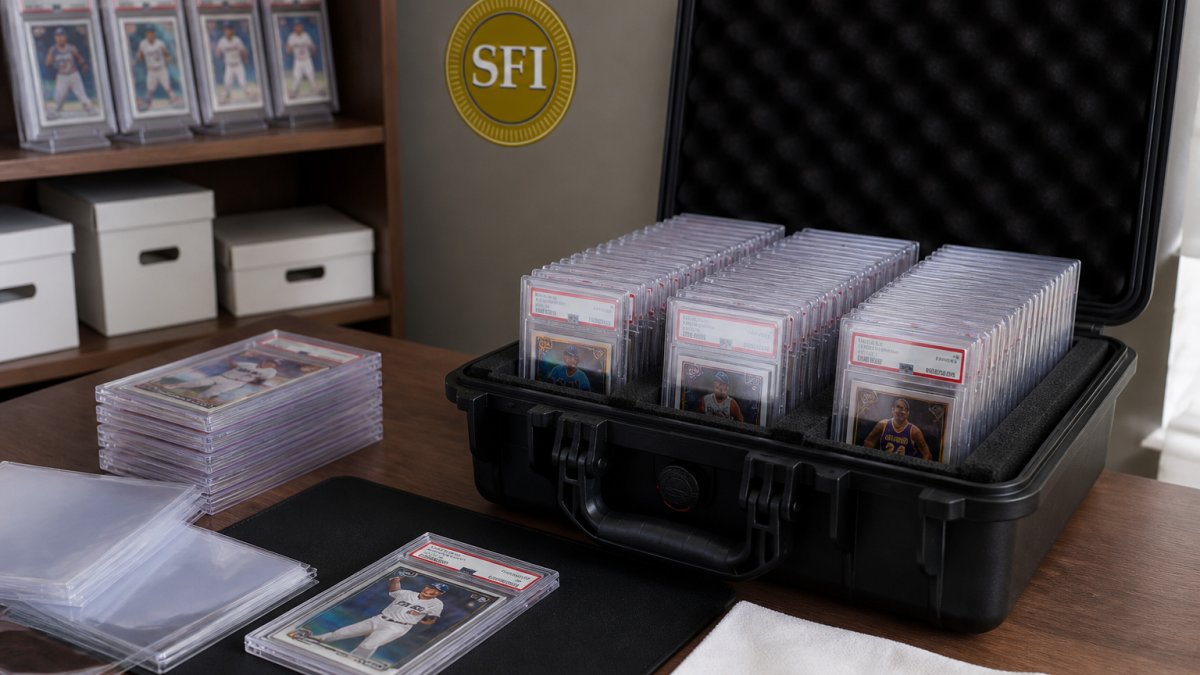
Superior Fit Sleeves manufactures tapered sleeves specifically engineered for PSA, BGS, and CGC graded card slabs, as well as graded comic and magazine slabs from CGC and CBCS. The precision-cut design ensures the sleeve hugs the case without stretching, eliminating the wrinkles and air pockets that plague flat sleeves. The result is a clean, distortion-free presentation that protects the slab and looks professional on display.
- PSA slabs: Standard card slabs require a sleeve roughly 3.25 x 3.75 inches interior.
- CGC comic slabs: Larger format requires a sleeve sized to the magazine case dimensions.
- One-touch magnetic cases: These benefit from a slightly different profile to accommodate the hinge mechanism.
Sleeve Dimensions: Matching the Right Enclosure to Your Cards
Choosing the correct sleeve dimensions is about matching the enclosure to the item, not just the card itself. A graded slab is larger than the card inside it, and a top-loader has different exterior dimensions than a raw card.
The most common sizing mistake is buying a sleeve that is too large, thinking it offers more protection. A loose sleeve allows the card or slab to shift during handling, which can cause corner damage and surface scratches. Conversely, a sleeve that is too tight can stress the seal of a graded case or make insertion difficult.
Standard card dimensions:
- Raw trading card: 2.5 x 3.5 inches
- Graded card slab (PSA, BGS, CGC): approximately 3.13 x 3.63 inches
- One-touch magnetic case: approximately 3.25 x 3.75 inches
- Graded comic slab: varies significantly by publisher and era
Storage Environment and Handling: Protecting Your Investment
Even the best archival sleeves cannot compensate for a hostile storage environment. Temperature, humidity, and light exposure all play critical roles in the long-term preservation of your collection.
The ideal storage environment for trading cards is cool, dry, and dark. The Library of Congress recommended storage conditions suggest keeping paper collections at stable temperatures between 60 and 70 degrees Fahrenheit, with relative humidity between 30 and 40 percent. Fluctuations are more damaging than a slightly imperfect baseline, because expansion and contraction stresses both the cards and the plastic enclosures.
Environmental threats to manage:
- UV light: Causes fading and accelerates chemical degradation. Store boxes away from windows and direct sunlight.
- Humidity: Above 60 percent relative humidity encourages mold growth and paper degradation. Below 30 percent causes embrittlement.
- Temperature: High heat accelerates all chemical reactions, including the breakdown of card stock and plastics.
- Handling: Oils and acids from your skin transfer to cards and sleeves. Handle graded slabs by the edges and use cotton gloves for raw cards.
Final Verdict: Choosing Archival Grade Sleeves for Cards
Choosing archival grade sleeves for cards comes down to matching the right material and thickness to the value and format of each item in your collection. For graded slabs, polyester sleeves in the 3 to 5 mil range offer the best combination of clarity, rigidity, and chemical stability. For raw cards in bulk storage, quality polypropylene penny sleeves are a reasonable baseline, provided they are acid-free and plasticizer-free.
The premium you pay for true archival protection buys real, measurable benefits: chemically stable materials that will not degrade your cards, precision cuts that fit properly without stress, and clarity that keeps your collection looking its best. The cheap sleeves you already own may look fine today, but the damage they cause compounds silently over years.
Superior Fit Sleeves has been the hobby standard for perfect-fit tapered protection since 2014. Our archival-grade, acid-free sleeves are precision-cut for PSA, BGS, CGC slabs, top-loaders, and magnetic cases, delivering crystal-clear, distortion-free display quality that safeguards your investment. Whether you have fifty cards or fifty thousand, the right protection is the difference between preserving value and watching it erode.
Protecting a valuable collection is not about buying the cheapest plastic bag that fits. It is about understanding the chemistry of degradation and choosing enclosures that will not become the cause of future damage. Superior Fit Sleeves offers archival-grade, acid-free sleeves engineered for a precise fit across PSA, BGS, and CGC graded slabs, top-loaders, and magnetic cases, with ultra-clear clarity that enhances any display. Get started with Superior Fit Sleeves and give your collection the protection it deserves.
Frequently Asked Questions
Are polypropylene sleeves archival?
Yes, polypropylene sleeves are archival-grade when they are acid-free, lignin-free, and plasticizer-free. Polypropylene is chemically inert, which means it will not react with your cards over time. Look for sleeves labeled archival-grade or conservation-grade to confirm they meet these standards. Polypropylene offers good clarity and is a popular choice for long-term storage because it does not contain the harmful chemicals found in PVC sleeves.
What makes a card sleeve truly archival grade?
A truly archival-grade card sleeve is made from a chemically inert material like polypropylene or polyester (mylar). It must be acid-free, lignin-free, and plasticizer-free to prevent off-gassing and chemical reactions that cause yellowing or damage. The material should be pH neutral and stable for long-term storage. These sleeves are also free of recycled content, which can contain impurities that degrade over time.
What is the difference between acid-free and archival-safe materials?
Acid-free refers specifically to a pH level of 7.0 or higher, meaning the material contains no acid that can degrade paper or cardstock. Archival-safe is a broader term that includes acid-free but also covers other factors like being lignin-free, plasticizer-free, and chemically inert. A sleeve can be acid-free but still contain other harmful additives. For the best archival sleeves for PSA slabs, look for materials that meet both acid-free and archival standards.
Do graded card slabs require additional archival sleeves?
Yes, graded card slabs benefit from additional archival sleeves even though the holder provides some protection. The slab case can get scratched, and the label can fade from UV exposure. A protective sleeve adds a barrier against dust, moisture, and physical scuffs. It also keeps the slab's surface clear for easy reading. Sleeves designed for PSA, BGS, and CGC slabs provide a snug fit that prevents the case from sliding around during handling or transport.
Are polypropylene or polyester sleeves better for long-term card storage?
Both polypropylene and polyester (mylar) are safe for long-term storage, but they have different strengths. Polyester is more rigid and offers superior clarity and durability, making it a top choice for museum-quality preservation. Polypropylene is more flexible and cost-effective, which is why many collectors use it for everyday storage. Both are chemically inert, acid-free, and plasticizer-free. Your choice depends on whether you prioritize maximum rigidity or affordability.
How often should I replace archival sleeves for my collection?
Quality archival sleeves made from polypropylene or polyester do not need regular replacement. These materials are chemically stable and will not degrade for decades. However, you should replace any sleeve that becomes scratched, cloudy, or damaged, as this reduces visibility and protection. Check your sleeves periodically for signs of wear, especially if you handle your cards often. The sleeve itself should outlast the card's useful life when stored in a stable environment.
This article was written using GrandRanker