 comparison
Best VaultX Alternatives for Card Collectors in 2026
Table of Contents
- Why Card Collectors Look Beyond VaultX for Binders
- How We Evaluated the Best Trading Card Binders
- Top Alternatives to VaultX for Card Collectors
- What to Look for in a Side-Loading Card Binder
- When a 900-Card Trading Card Binder Makes Sense
- Trading Card Binder Protection: What Actually Prevents Damage
- Conclusion
- Frequently Asked Questions
Last Updated: October 9, 2026
Why Card Collectors Look Beyond VaultX for Binders
VaultX built its reputation on the Exo-Tec zipper folio, and for many collectors it’s a great first binder, but the search for VaultX alternatives usually starts once that first binder fills up.
At Superior Fit Sleeves, we've been making archival-grade sleeves since 2014, so we spend a lot of time thinking about what actually protects a card. Below, we break down the criteria that matter, then compare the alternatives collectors ask about most.
How We Evaluated the Best Trading Card Binders
We judged every option on three things: how many cards it actually holds, how the pages are configured, and how well it’s built.
Capacity and Card Slots
Capacity numbers on the box rarely match real-world use. A 480-card binder holds 480 unsleeved cards. Sleeve them, and you lose slots fast. Always check whether the stated capacity assumes bare cards or sleeved ones.
Pocket Layout and Page Configuration
Nine-pocket pages are standard for a reason: they match standard trading card dimensions and keep the binder compact. Twelve-pocket layouts hold more per page but flex more when full. For a side-loading card binder, the pocket opening faces the spine, which keeps dust out when the binder is closed.
Construction, Seams, and Zipper Quality
This is where budget binders give themselves away. Run a thumb along the interior seam. If you can feel the stitching through the lining, that's where it will split. A zippered binder should pull smoothly and close fully without catching the page edges.
Criterion | What to Check | Why It Matters |
|---|---|---|
Capacity | Stated slots vs. sleeved slots | Prevents overflow and page bowing |
Pocket layout | 9-pocket vs. 12-pocket | Affects fit and page rigidity |
Pocket opening | Side-loading vs. top-loading | Dust and spill exposure |
Binder style | Ringless vs. ring | Ring dents damage cards |
Zipper | Full closure, smooth pull | Edge and dust protection |
Seam strength | Stitched and sealed lining | Long-term durability |
Top Alternatives to VaultX for Card Collectors
The best VaultX alternatives depend on how you store your cards: raw, sleeved, or in rigid holders. Below, we judge each option on four criteria: usable capacity, pocket configuration, construction, and compatibility with sleeves and holders, so you can compare them directly rather than by brand reputation.
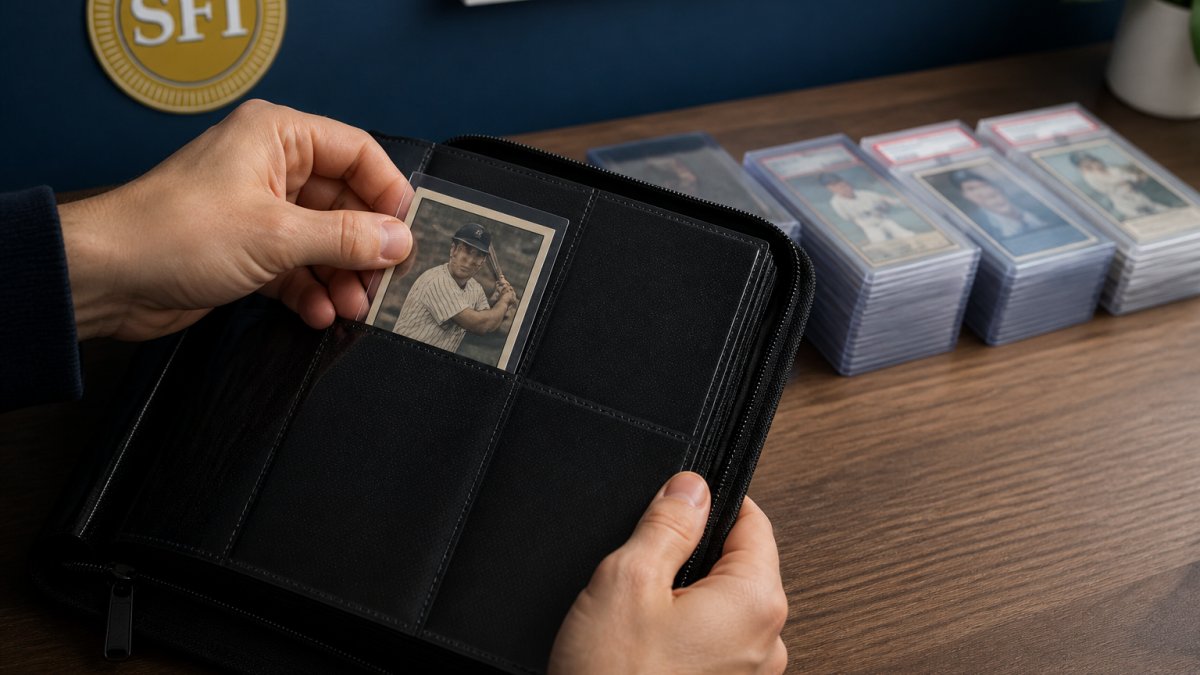
Vaulted 252-Card Top-Loader Binder
This one solves a specific problem: storing cards that are already in rigid top-loaders.
Capacity and layout: 252 top-loader slots, arranged so each holder sits in its own pocket rather than sharing a page with raw cards.
Compatibility: designed for standard top-loaders.
Trade-off: the format costs more than a comparable zip folio, and the cited guide lists it in the $45 to $55 range.
Dex Protection and TopDeck
Dex Protection and TopDeck both appear in collector comparisons as binder options for serious collectors. TopDeck is associated with collections of up to 480 cards, which puts it in the mid-capacity range.
Here's the catch: neither brand's supplied results specify a model, capacity, or construction detail. That doesn't make them bad. It means you should verify the exact model before buying, rather than trusting a brand name alone.
Ultra PRO Zipfolio
Ultra PRO is one of the most established names in card accessories, and collector discussion specifically calls out its Zipfolio line.
Why the format matters: side-loading pockets face the spine, so cards can't slide out when the binder is upright, and dust has a harder time reaching the card edge.
What to verify: the supplied results don't provide model specifications, capacity, or pricing. Zipfolio is a line, not a single product, so capacity and page count vary by model.
How to Compare Them Side by Side
Option | Format | Best For | Verify Before Buying |
|---|---|---|---|
Vaulted 252-Card Top-Loader Binder | Top-loader binder | Cards already in rigid holders | Page material, seam finish, current price |
Dex Protection | Storage album | Collectors prioritizing card care | Exact model, capacity, pocket opening |
TopDeck | Mid-capacity binder | Collections up to 480 cards | Sleeved vs. bare capacity |
Ultra PRO Zipfolio | Zippered side-loading | Long-term storage | Model, slot count, page thickness |
The Cost-Per-Usable-Slot Angle
Sticker price tells you almost nothing. Divide the price by the number of slots you can actually fill with sleeved cards, then add the cost of replacement pages if the originals tear. A binder that holds 480 bare cards but only 360 sleeved cards has a real capacity of 360, not 480. Run that math on every option before you commit, and factor in shipping if you order online.
What to Look for in a Side-Loading Card Binder
A side-loading card binder stores cards with the pocket opening facing the spine, so cards can't slide out when the binder is upright, and dust has a harder time reaching the card edge.
Beyond the opening, check these:
- Page thickness. Thin pages crease at the spine after a few months of flipping. Padded pages hold their shape.
- Pocket clarity. You should be able to read a card through the pocket without distortion or glare.
- Ringless construction. Ring binders can dent a card if a page shifts against the metal. Ringless binders remove that risk entirely.
For collectors storing graded slabs rather than raw cards, a binder isn't the right tool at all. Slabs need a snug outer sleeve, which is exactly what our graded card slab sleeves are cut for.
When a 900-Card Trading Card Binder Makes Sense
A 900-card trading card binder makes sense when you're building full sets and want them in one place, not scattered across four smaller albums.
But the 900 number deserves scrutiny. That figure usually assumes bare, unsleeved cards in nine-pocket pages. Sleeve every card and you lose slots fast, a 900-slot binder might realistically hold 700 to 750 sleeved cards before the pages start to bow.
The Durability Question Nobody Tests
Most guides compare binders on capacity and price. Almost none test how they hold up after a year of real use. Here's what to check, and how to check it:
- Zipper wear. Open and close the zipper 20 times in the store or when you arrive. A smooth pull that closes fully without catching page edges is the baseline. If it snags early, it will fail early.
- Seam strength. Run a thumb along the interior seam. If you can feel stitching through the lining, it will split there. Stitched and sealed linings outlast exposed stitching.
- Page tearing. Load a page to full capacity, then flip it back and forth. Thin pages crease at the spine within months; padded pages hold their shape.
These are repeatable checks you can run yourself, and they tell you more than any product claim on the box.
Cost Per Usable Slot
A large binder's value isn't its sticker price; it's price divided by the number of slots you can actually fill, plus the cost of replacement pages if the originals fail. A 900-slot binder that holds 750 sleeved cards and needs new pages after a year may cost more per usable slot than two mid-capacity binders that last three years. Factor in shipping if you order online, and compare that final number across options.
When a Large Binder Is the Wrong Choice
- High-value cards. If a card is worth more than the binder holding it, it belongs in a rigid holder, not a page pocket. Slabs and top-loaders need their own storage format.
- Travel and display. A fully loaded 900-card binder is heavy, and the spine takes more stress every time you open it. For travel, a smaller binder or a dedicated case is easier to manage.
- Bulk storage. If you're storing thousands of commons, a large binder is the wrong tool. Boxes cost less per card and are easier to organize.
The Inner Layer Still Matters
A 900-card binder protects the pages, but the sleeve touching each card is the first line of defense. Our top-loader sleeves and magnetic card case sleeves are built for that inner layer, with a tapered flap that keeps the holder snug without bulk. For collectors storing graded slabs rather than raw cards, a binder isn't the right tool at all; slabs need a snug outer sleeve, which is exactly what our graded card slab sleeves are designed for.
Trading Card Binder Protection: What Actually Prevents Damage
Trading card binder protection comes down to three layers: the sleeve touching the card, the pocket holding the sleeve, and the binder shell protecting the pages.
The sleeve is what touches your card. Our top-loader sleeves and magnetic card case sleeves are built for that inner layer, with a tapered flap that keeps the holder snug without bulk.
Then the binder shell handles dust, light, and physical knocks. A zippered binder with sealed seams does that job.
For anyone storing graded comics alongside cards, the same logic applies at a larger scale, which is why we also cut graded comic and magazine slab sleeves.
Conclusion
The hardest part of choosing a binder isn't picking a brand. It's matching the binder to how you actually store your cards, whether that's raw, sleeved, or in rigid holders.
That's the gap we built Superior Fit Sleeves to close. Our precision-cut, archival-grade sleeves are acid-free and distortion-free, and we cut them specifically for PSA, BGS, SGC and CGC slabs, as well as top-loaders and magnetic cases.
Frequently Asked Questions
What are the best alternatives to VaultX binders?
Collectors comparing VaultX alternatives usually weigh four options. A top-loader binder such as the Vaulted 252-card model stores rigidly protected cards without removing them from their holders. Dex Protection and TopDeck appear in collector comparisons for smaller collections, with TopDeck tied to collections of up to 480 cards. Ultra PRO's Zipfolio line is a long-standing zippered choice. The right pick depends on whether you store raw cards, sleeved cards, or top-loaders, and how many card slots you actually need.
What should collectors look for in a trading card binder?
Start with capacity and pocket layout: nine-pocket pages hold nine standard cards per side, so a 900-card trading card binder needs 100 pages or 50 double-sided sheets. Check whether pockets are side-loading or top-loading, since side-loading keeps card edges away from the opening. Then examine seam strength, page thickness, and zipper quality if the binder closes with a zip. Finally, confirm compatibility with sleeved cards and double-sleeved cards, because a snug pocket that fits a bare card may bulge once a sleeve is added.
Are side-loading binders better for trading cards?
Side-loading pockets insert cards from the side rather than the top, which reduces the chance of a card sliding out when the binder is held upside down or carried in a bag. That matters for edge protection and dust protection over years of handling. Top-loading pockets are faster to fill and easier to flip through. For valuable cards, a side-loading card binder paired with sleeves is the safer arrangement, especially when the pages are padded and the binder closes with a zipper.
How many cards can a trading card binder hold?
Capacity depends on page count and pocket layout. A standard nine-pocket page holds 18 cards when double-sided, so a 50-page binder holds roughly 900 cards, which is where the 900-card trading card binder category comes from. Smaller folios often hold 252 to 480 cards, and top-loader binders hold fewer because each rigid holder takes more space. Match capacity to your collection size: a 480-card binder suits a focused set, while a 900-card binder fits a large collection or set completion project.
What binder features help protect trading cards?
The features that matter most are side-loading pockets, padded pages, reinforced seams, and a zipper closure that keeps dust and spills out. A ringless binder avoids the risk of ring indentations pressing into pages, while a ring binder makes page removal easier. Pairing the binder with archival-grade, acid-free sleeves adds another layer, since the sleeve takes the handling wear and the binder provides edge protection and dust protection for the whole page.