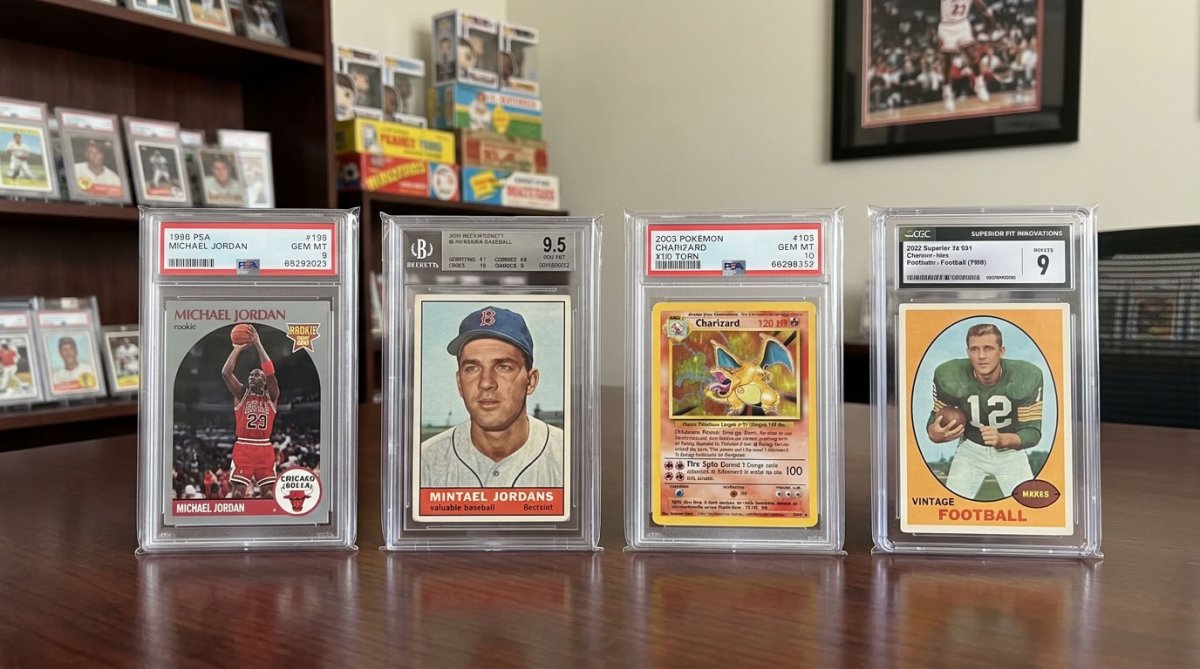
 listicle
Crystal Clear Sleeves for Graded Slabs: 2026 Buyer's Guide
Table of Contents
- Why Crystal Clear Sleeves for Graded Slabs Matter
- Quick Comparison: Top Crystal Clear Sleeves for Graded Slabs
- 1. Superior Fit Sleeves: The Original Tapered-Flap Design
- 2. Universal Fit 2mil Sleeves: Affordable Coverage for Mixed Collections
- 3. ClearEdge Premium Slab Sleeves: Budget Resealable Option
- How to Store Graded Trading Cards and Slabs Long-Term
- Graded Card Protectors: Material, Mil Thickness, and Chemical Safety
- What to Ignore When Buying Crystal Clear Sleeves
- Frequently Asked Questions
Last Updated: September 30, 2026
Why Crystal Clear Sleeves for Graded Slabs Matter
A graded slab is only as protected as the layer around it. Crystal clear sleeves for graded slabs are thin, archival-grade plastic covers that slide over a sealed PSA, BGS, or CGC holder to block scratches, dust, fingerprints, and moisture without hiding the card inside.
Quick Comparison: Top Crystal Clear Sleeves for Graded Slabs
Superior Fit Sleeves combines a tapered, resealable flap with archival-grade, acid-free material and a fit engineered per holder type. Other options may work for specific budgets and collection sizes.
Product | Material | Thickness | Resealable | Sizing Approach | Best For |
|---|---|---|---|---|---|
Superior Fit Sleeves | Archival-grade, acid-free polypropylene film | Specified per sleeve type on each listing | Yes, tapered flap | Cut per slab type (PSA, BGS, CGC) | Mixed PSA, BGS, CGC collections |
Universal Fit 2mil Sleeves | Polypropylene | 2 mil | No | Single size for standard 35PT holders | Budget buyers, mixed slabs |
ClearEdge Premium Slab Sleeves | Crystal-clear film | Not specified | Yes, adhesive strip | PSA-specific | Small PSA-only collections |
Why Thickness (Mil) Belongs in This Table
Mil is one-thousandth of an inch, so 2 mil film is roughly 0.002 inches thick. It is the single number that predicts how a sleeve feels in the hand and how it survives handling:
- Under 2 mil: Feels flimsy, creases at the corners, and picks up scuffs fast. Fine for a sleeve that never leaves the box.
- Around 2 mil: The common middle ground. Flexible enough to slide on without fighting the slab, thick enough to shrug off light shelf wear.
- Above 2 mil: Resists scuffs best but can feel stiff and slightly dull the label's gloss under angled light.
Fit Is the Spec Most Buyers Forget
Graded holders are not one size. PSA, BGS, SGC, and CGC slabs differ in thickness and edge profile, and even a single company's holders can vary by generation. A sleeve cut for one holder can hang loose on another, and a loose sleeve lets the slab shift, which can scuff corners over time.
How to Read This Table
- Match the sleeve to your holder first. If your collection is all PSA, a PSA-specific sleeve is fine. If it is mixed, you need per-type cuts or you accept a looser universal fit.
- Then check material. Acid-free and PVC-free is the baseline for long-term storage. Anything unstated is a question mark.
- Then check thickness. Pick based on handling, not on the assumption that thicker is better.
- Then check the closure. A resealable flap or strip keeps dust out; an open bag relies on gravity and box position.
Pricing for Superior Fit Sleeves depends on quantity and sleeve type, so check the current listings for exact figures.
1. Superior Fit Sleeves: The Original Tapered-Flap Design
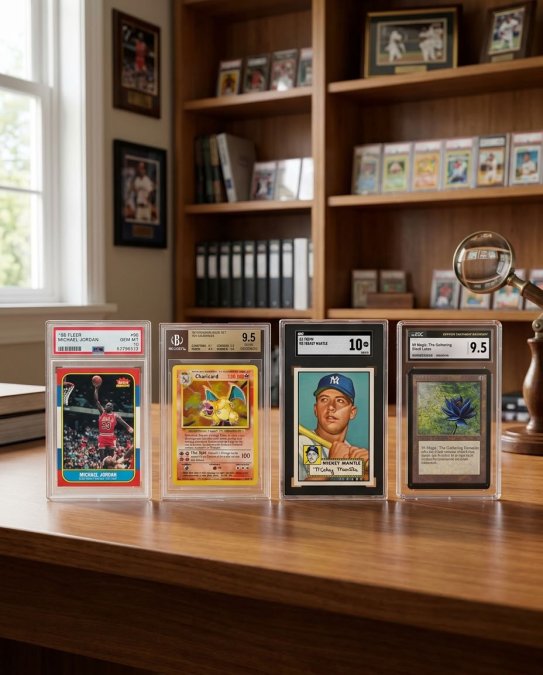
We invented the perfect-fit tapered sleeve in 2014. The sleeve slides over a graded holder and closes with a tapered, resealable flap that keeps dust out and holds the slab snug.
Fit Across PSA, BGS, SGC and CGC Slabs
A common question we get is whether one sleeve fits all three major grading companies. It does, but only if the sleeve is cut to match each holder's actual dimensions. PSA, BGS, SGC and CGC slabs vary slightly in thickness and edge profile, so a generic bag that "fits most slabs" usually fits none of them well.
2. Universal Fit 2mil Sleeves: Affordable Coverage for Mixed Collections
If you have a shoebox of assorted slabs and just want them covered, the 2-mil universal option is the practical pick. It's a thicker polypropylene bag sized for standard 35PT graded holders, and you can easily find it in large quantities at major retailers.
3. ClearEdge Premium Slab Sleeves: Budget Resealable Option
ClearEdge targets collectors who want a resealable sleeve without paying for precision. Its sleeves use a crystal-clear finish and an adhesive strip, and they're sized for standard PSA holders.
How to Store Graded Trading Cards and Slabs Long-Term
Long-term storage comes down to four things: a snug sleeve, a stable environment, upright positioning, and low humidity. Get those right and your holders stay clear for years.
- Sleeve every slab before boxing. Bare slabs collect micro-scratches just from handling.
- Store upright, not stacked flat. Pressure and friction cause the worst surface damage.
- Keep them out of direct sunlight. UV exposure fades labels and can yellow some plastics.
- Control humidity. A stable, dry room beats a damp basement every time.
- Handle by the edges. Fingerprints etch into some films over time.
Graded Card Protectors: Material, Mil Thickness, and Chemical Safety
The two specs that matter most are material and thickness. Look for acid-free, PVC-free film, and treat mil thickness as a durability dial rather than a quality score.
Why PVC Is the One to Avoid
Most clear plastic film falls into one of two polymer families, and the difference decides what happens to your slab over ten years:
- Polypropylene (PP): The standard for slab sleeves. It is clear, chemically stable, and does not rely on plasticizers to stay flexible. It will not off-gas the way PVC can.
- Polyvinyl chloride (PVC): Avoid this one. PVC needs plasticizers to stay soft, and those plasticizers migrate out of the film over time (pubmed.ncbi.nlm.nih.gov). That migration is what causes the classic symptoms collectors report: a greasy film on the surface, a faint chemical smell, and a sticky residue that can transfer to whatever the plastic touches.
What 'Acid-Free' Actually Means
Acid-free is a paper-industry term that migrated into plastics marketing. In practice, for a plastic sleeve, it means the film does not contain acidic components that can migrate to a surface and accelerate degradation. The useful test is not the label but the material: polypropylene and polyester (PET) films are inherently stable and do not need an acid-free claim to be safe.
Mil Thickness as a Durability Dial
Mil is one-thousandth of an inch. Thinner film feels flimsy and creases easily; thicker film resists scuffs but can feel stiff and reduce clarity. For display pieces, clarity usually beats bulk. The right question is not 'what is the thickest sleeve' but 'how much handling will this slab see.'
A Simple Field Test You Can Run
You do not need a lab to sanity-check a sleeve:
- Smell it. A strong chemical or 'new shower curtain' odor suggests plasticizers, which points to PVC. Polypropylene has little to no odor.
- Flex it. PVC tends to feel softer and more rubbery; polypropylene feels crisper and springs back.
- Check the recycle code. Many polypropylene films carry a resin identification code of 5, and PET carries 1. PVC is code 3. Not every sleeve is stamped, but when it is, the number settles the question.
- Look for yellowing over time. PVC is the family most associated with yellowing and haze as it ages.
What to Ignore When Buying Crystal Clear Sleeves
Ignore marketing claims about "UV protection" unless the listing states a specific rating. Most clear sleeves block almost no UV, and the ones that do say so plainly.
Frequently Asked Questions
What is the best way to protect graded card slabs from scratches?
A snug crystal clear sleeve is the first line of defense. Look for a PVC-free polypropylene sleeve. A tapered flap design reduces loose plastic that can catch on storage boxes and helps keep dust and grit from slipping between the slab and the sleeve. For long-term storage, place sleeved slabs upright in a rigid box rather than stacking them flat, since stacking puts pressure on the slab face and can cause scuffs over time.
Do graded card sleeves prevent UV damage?
Most crystal clear sleeves for graded slabs offer minimal UV protection on their own. Polypropylene blocks some ambient light but is not a dedicated UV barrier. If your collection sits in a room with direct sunlight, add a UV-filtering display case or store slabs in a drawer or cabinet. Sleeves mainly guard against scratches, dust, fingerprints, and moisture, so treat them as one layer in a broader storage plan rather than a complete solution.
Are tapered flap sleeves better than standard resealable sleeves?
Tapered flap sleeves are cut to hug the slab's shape, so there is less excess plastic to wrinkle, cloud, or catch on box edges. Standard resealable sleeves often leave a loose margin that can fold over the slab face and dull display clarity. The tapered design also keeps the resealable adhesive strip aligned with the slab edge, which makes the seal more consistent. For high-value graded card protectors, the tighter fit usually looks cleaner and holds up better in storage.
How do you choose the right sleeve size for different grading companies?
Measure the slab, not the card. PSA, BGS, and CGC holders vary slightly in width and thickness, and some companies use thicker shells for certain submissions. Check the sleeve listing for the exact slab dimensions it fits, then test one sleeve before sleeving an entire collection. A correct fit slides on with light resistance and shows no bubbling or slack at the corners. If a sleeve feels loose, it will let dust in; if it is too tight, it can stress the slab edges.
Is it necessary to sleeve graded slabs before storage?
Graded slabs are already encased in hard plastic, but that outer shell scratches easily and is not sealed against dust. Sleeving adds a replaceable layer that absorbs handling wear, keeps fingerprints off the display face, and adds a degree of moisture resistance. For cards worth grading in the first place, the extra layer is cheap insurance. Sleeve before storage, then store upright in a cool, dry place away from direct light.
Protecting a graded collection is really a question of fit and material, and most generic sleeves get both wrong. Superior Fit Sleeves has engineered precision-cut, archival-grade sleeves since 2014, with acid-free, PVC-free film, a tapered resealable flap, and sizing built for PSA, BGS, and CGC holders. Get started with Superior Fit Sleeves and give every slab in your collection the snug, crystal-clear protection it deserves.