 listicle
Best Archival Sleeves for 2026 Collection Storage
Table of Contents
- Best Archival Sleeves for 2026: Quick Comparison
- How We Evaluated Archival Sleeves
- 1. Superior Fit Sleeves: Archival Grade Sleeves for Graded Slabs
- 2. Gaylord Archival Polyester Sleeves: Museum-Grade PET
- 3. Print File 35mm Negative Pages: Archival Envelopes for Film
- 4. MoFi Original Master Sleeves: Anti-Static Vinyl Protection
- 5. Dragon Shield Sleeves: Durable Gaming Card Protection
- 6. Katana Sleeves: Precision for Tournament Play
- Frequently Asked Questions
Last Updated: October 4, 2026
Best Archival Sleeves for 2026: Quick Comparison
The best archival sleeves for a 2026 collection guard against the two forces that quietly ruin graded cards and comics: chemical off-gassing from cheap plastics and physical scuffing from loose storage. At Superior Fit Sleeves, we have engineered precision-fit, acid-free sleeves since 2014, and this guide sorts real preservation options from marketing.
Quick Picks:
- Best Overall: Superior Fit Sleeves, precision-cut archival-grade sleeves for graded slabs, top-loaders, and magnetic cases
- Best Museum-Grade PET: Gaylord Archival Polyester Sleeves for documents and photos
- Best for Film: Print File 35mm Negative Pages for negative storage
- Best for Vinyl: MoFi Original Master Sleeves for anti-static record protection
Product | Material | Best For | Archival-Grade |
|---|---|---|---|
Acid-free, crystal-clear film | Graded slabs, top-loaders, mags | Yes | |
Gaylord Polyester | Polyester (PET) | Documents, photos | Yes |
Print File 35mm | Polyethylene | Film negatives | Yes |
MoFi Master Sleeves | Three-ply paper/plastic | Vinyl records | Yes |
Dragon Shield | Polypropylene | Gameplay cards | Partial |
Katana Sleeves | Acid-free polypropylene | Tournament play | Partial |
How We Evaluated Archival Sleeves
We scored each sleeve on material stability, fit precision, clarity, and long-term durability. A plastic sleeve only earns the archival label if it is chemically inert and acid-free, a difference invisible on day one.
The Three Plastics That Matter
Almost every sleeve is made from one of three polymers, and they behave very differently over a decade:
- Polyester (PET): The museum standard. Chemically inert, dimensionally stable, and least likely to off-gas. Rigid, the clearest of the three, and the most expensive. Conservation labs use it for photographs, documents, and anything irreplaceable.
- Polyethylene (PE): Softer, flexible, and static-free, gentle on delicate emulsions like film negatives. A close second in stability and cheaper, which is why it dominates film and photo storage.
- Polypropylene (PP), The workhorse of gaming and bulk card storage. Durable and inexpensive, but formulated for play, not decades of static storage. Some grades cloud or stiffen over time.
Avoid PVC entirely. Polyvinyl chloride releases hydrochloric acid as it breaks down, etching card surfaces and permanently dulling slab clarity. If a sleeve smells like a shower curtain or feels tacky, it is almost certainly PVC.
Acid-Free and Lignin-Free: What the Labels Actually Mean
"Acid-free" means the material has a neutral or slightly alkaline pH and will not leach acidic compounds onto the item it holds. "Lignin-free" is the companion standard: lignin, a natural polymer in wood pulp, breaks down into acidic byproducts, so paper-based storage (like the backing on a three-ply record sleeve) must be lignin-free to qualify.
Micron Thickness and Why It Predicts Durability
Sleeve thickness is measured in microns (one-thousandth of a millimeter). Thin inner sleeves run 40-50 microns; heavier outer sleeves and top-loaders climb above 100. Thicker is not automatically better, a snug inner sleeve must stay thin to fit inside a rigid holder, but thickness best predicts resistance to tearing, creasing, and edge wear. A listing without a micron figure is missing a spec.
How to Identify an Inert Plastic Without a Lab
You can screen a sleeve at home before it touches anything valuable:
- The smell test. Inert plastics are odorless. A sharp chemical smell flags plasticizers and off-gassing.
- The clarity test. Against white paper, inert PET stays crystal-clear; degrading PVC and low-grade PP take a blue or yellow cast.
- The stiffness test. PVC feels tacky or rubbery; PET feels crisp and glassy; PE feels soft and waxy.
- The seam test. Flat, even heat-sealed seams suggest controlled manufacturing; glue seams add their own chemistry.
We weighted chemical stability highest because it is the one property you cannot fix after the fact. Fit and clarity are recoverable; chemical damage is not.
Compatibility Testing: The Step Most Guides Skip
Even an archival-grade sleeve can misbehave if it doesn’t match the item. Before committing a whole collection, test one low-value piece:
- Look for off-gassing signs. After a week sealed, check for a hazy film, a faint chemical smell when you open it, or any change in the item's gloss.
- Check for transfer. Some coatings and inks migrate onto a sleeve's inner surface. A ghost image or residue means the pairing is wrong.
- Re-test after temperature swings. Off-gassing accelerates with heat, so test where the collection will actually live.
If a sleeve passes all three checks, scale up. If it fails any one, retire that product; careful handling cannot undo a chemical reaction already underway.
1. Superior Fit Sleeves: Archival Grade Sleeves for Graded Slabs
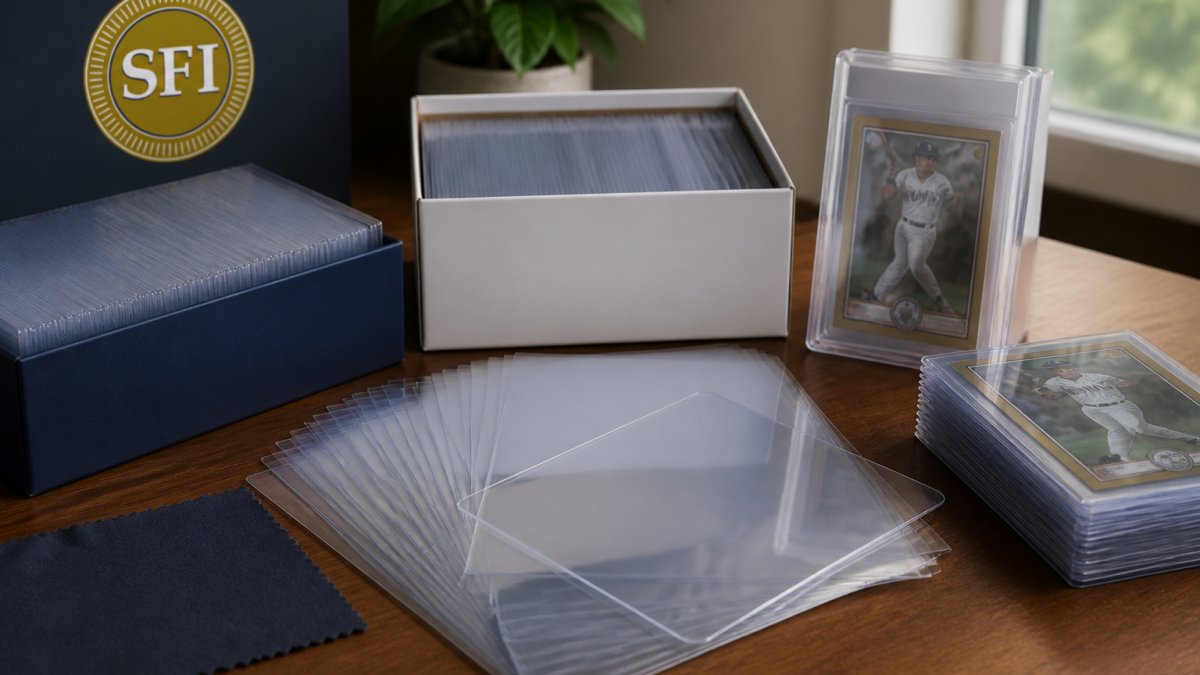
Our top pick is Superior Fit Sleeves, engineered for the problem most collectors face: a graded slab that needs protection without excess bulk. We precision-cut every sleeve from acid-free, archival-grade material.
We invented the perfect-fit tapered sleeve in 2014, and the design still holds up. The snug fit prevents loose corners from catching dust, and the crystal-clear film keeps the label and card fully visible.
Precision Fit for PSA, BGS, SGC, and CGC Slabs
Grading companies use slightly different case dimensions, and a generic sleeve fits none well. Our archival-grade sleeves for graded slabs are cut for PSA, BGS, SGC, and CGC holders without the slack that lets a slab slide around.
That precision matters: a loose sleeve traps grit against the slab surface, and every removal risks a scuff.
The Tapered Flap Difference
The tapered, resealable flap is our signature feature: slide a slab in and out cleanly, then seal it against dust and moisture without tape or adhesive. Most sleeves force a tradeoff: tight enough to stay put, or loose enough to open easily, but the tapered flap solves both, giving a slab a clean, custom look rather than the baggy appearance of a standard poly bag.
For collectors with graded slabs from PSA, BGS, or CGC who want archival-grade, acid-free protection with a snug, display-ready fit.
The one limitation: these sleeves are built for slabs, top-loaders, and magnetic cases, not raw cards.
2. Gaylord Archival Polyester Sleeves: Museum-Grade PET
Gaylord's polyester sleeves are the reference standard for paper preservation, using chemically stable polyester (PET), the same inert material museums rely on for long-term document storage. Polyester resists tearing, moisture, and the off-gassing that degrades lesser films, which is why conservation labs favor it for photographs and documents. The tradeoff is cost and rigidity: polyester sleeves are stiffer and pricier than polyethylene, so they suit high-value paper items rather than bulk storage.
3. Print File 35mm Negative Pages: Archival Envelopes for Film
Print File's negative pages solve a narrow problem well: storing 35mm film without scratching it. The top-loading pages use acid-free polyethylene and fit standard three-ring binders.
Polyethylene is softer and more flexible than polyester, gentle on delicate film emulsions, and static-free, so dust does not cling the way it does with stiffer plastics.
The catch: these pages need a binder. Buy them for a film archive, not card or slab storage. Within their niche, they are the practical standard.
4. MoFi Original Master Sleeves: Anti-Static Vinyl Protection
MoFi's Original Master Sleeves target vinyl collectors who care about surface noise, pairing an anti-static inner layer with a paper backing for rigidity.
That anti-static layer is the point: static attracts dust, and dust in the groove is what you hear as crackle. A MoFi sleeve neutralizes that charge and keeps vinyl cleaner between plays.
They cost more than plain paper inners and are sized for records only. For an audiophile pressing, the extra spend is easy to justify.
5. Dragon Shield Sleeves: Durable Gaming Card Protection
Dragon Shield builds sleeves for play, not the vault. Heavy-duty polypropylene handles constant shuffling, and matte and glossy finishes come in a wide range of colors.
They are acid-free and PVC-free, so they will not actively harm a card. The caveat: polypropylene is built for durability under handling, not decades of static archival storage. Treat them as play sleeves, not preservation sleeves.
6. Katana Sleeves: Precision for Tournament Play
Katana sleeves are built for competitive play, with an extra-clear front, a strong seal that resists splitting during shuffles, and an acid-free material with a smooth shuffle feel.
Where they fall short is the same place Dragon Shield does: they are optimized for active use, not long-term storage. Double-sleeve a deck for play with Katana; archive a valuable card for years in a dedicated archival sleeve.
Frequently Asked Questions
What makes a card sleeve truly archival-safe?
Archival-safe sleeves are made from chemically inert materials like polyester (PET), polyethylene, or polypropylene. They must be acid-free, lignin-free, and PVC-free to prevent off-gassing and chemical degradation. Look for sleeves labeled archival-grade or museum-quality, which have passed standards for long-term storage. These materials won't yellow, fog, or damage your cards over time, unlike cheap PVC sleeves that release harmful gases as they break down.
Are acid-free sleeves enough to prevent card degradation?
Acid-free is a critical start, but it's not the whole story. You also need lignin-free and PVC-free materials. Lignin, found in paper-based products, breaks down into acidic compounds over time. PVC releases hydrochloric acid as it degrades. The safest options are polyester, polyethylene, or polypropylene sleeves that are explicitly labeled archival-grade. Combined with proper storage away from UV light and humidity, these sleeves provide the chemical stability needed for long-term preservation.
Do archival sleeves protect against UV damage?
Most standard archival sleeves do not block UV rays on their own. They protect against physical damage, moisture, and chemical off-gassing, but UV protection requires either sleeves with added UV inhibitors or storing your collection in a dark, climate-controlled environment. For display pieces, consider UV-filtering acrylic cases or keep your slabs out of direct sunlight. Even with UV-resistant sleeves, prolonged exposure to bright light will eventually fade inks and damage card surfaces.
What is the difference between PVC-free and archival-grade sleeves?
PVC-free means the sleeve contains no polyvinyl chloride, which is a good start. Archival-grade goes further: it means the material is chemically inert, acid-free, lignin-free, and tested for long-term stability. A sleeve can be PVC-free but still contain plasticizers or other additives that degrade over time. Archival-grade sleeves, like those made from polyester or polyethylene, meet stricter standards for conservation and are safe for decades of storage.
How do I identify high-quality polyester or Mylar sleeves?
High-quality polyester sleeves, often sold under the brand name Mylar, are crystal clear, stiff but flexible, and feel smooth to the touch. They resist tearing and don't cloud over time. Look for sleeves labeled PET or polyester, and check for archival certifications or statements about acid-free and lignin-free construction. Reputable suppliers like Gaylord Archival or archival storage specialists provide detailed material specs. If a sleeve feels flimsy, has a strong plastic odor, or yellows quickly, it's likely not archival-grade.
The real challenge with a 2026 collection is that cheap sleeves fail slowly, and you often notice the damage only after it is permanent. Superior Fit Sleeves solves that with precision-cut, acid-free sleeves that fit PSA, BGS, and CGC slabs snugly, stay crystal clear for display, and seal against dust with our signature tapered flap. We have protected collectors' investments since 2014. Get started with Superior Fit Sleeves and store your graded slabs with confidence.