 Comparison
Fitted Sleeves vs Penny Sleeves: Which Protects Cards Better
Last Updated: October 30, 2026
Quick Summary
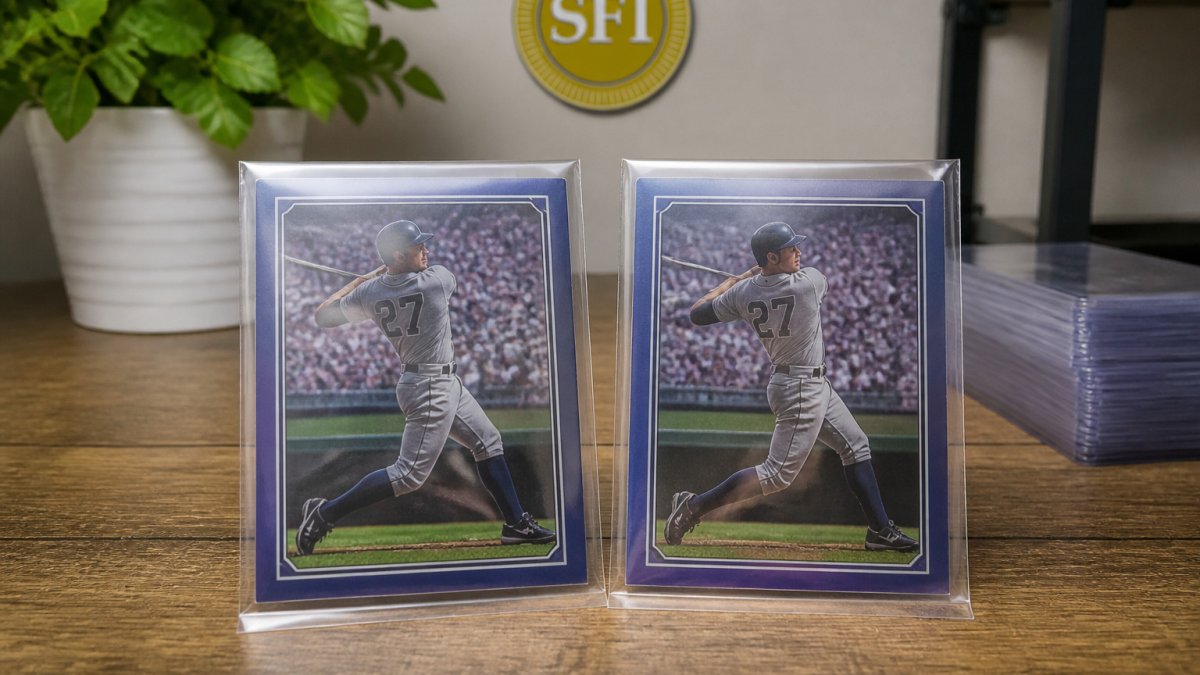
Fitted sleeves are thin inner sleeves cut to a card's exact dimensions, so the plastic hugs the surface instead of sitting loose. That snug fit limits card movement, dust ingress, and edge wear, making fitted sleeves better for valuable cards and long-term storage, while penny sleeves suit bulk commons and quick sorting.
- Standard-size trading cards measure about 63 x 88 mm, so match sleeves to actual card dimensions.
- Cheap PVC sleeves can degrade, yellow, and release plasticizers that stain or fog a card surface.
- Double-sleeve with the inner and outer sleeve openings at opposite ends of the card.
- Push a card out from the closed end of a tight sleeve rather than pulling it by the edge.
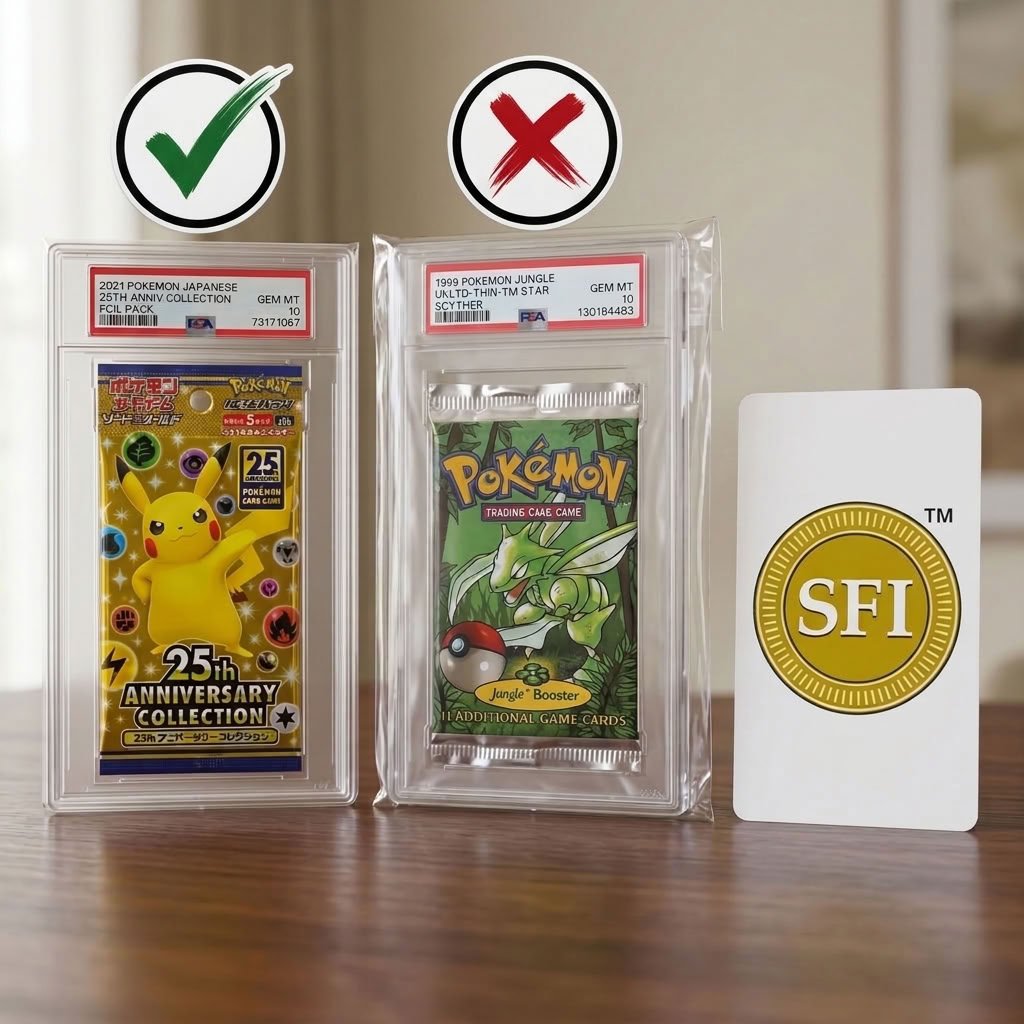
- Buy fitted sleeves by holder type, since slab sleeves will not fit top-loaders or one-touch cases.
Table of Contents
- What Fitted Sleeves Do That Loose Sleeves Don't
- Fitted Sleeves vs Penny Sleeves: A Side-by-Side Comparison
- Trading Card Sleeve Sizes and How to Match Them to Your Cards
- Why Archival-Safe Card Sleeves Matter for Long-Term Storage
- Double-Sleeving: Using Fitted Sleeves as Inner Sleeves
- How to Remove a Card From a Tight Sleeve Without Bending It
- Which Sleeve Fits Your Collection: Recommendations by Card Value and Activity
- Choosing Your Fitted Sleeves for Slabs, Top-Loaders, and One-Touch Cases
- Frequently Asked Questions
What Fitted Sleeves Do That Loose Sleeves Don't
The question collectors ask most is simple: does the snugness actually matter? It does, and the reason is mechanical. A loose sleeve lets the card shift every time you pick it up.
The trade-off is real, though. Fitted sleeves are thinner, harder to insert a card into, and they are not built for shuffling a deck. They are built for protection.
Fitted Sleeves vs Penny Sleeves: A Side-by-Side Comparison
Penny sleeves are the loose, soft sleeves most cards ship in. Fitted sleeves demand more care during insertion, but they win on protection and presentation. Here is the honest comparison:
Factor | Fitted Sleeves | Penny Sleeves |
|---|---|---|
Fit | Hugs the card, minimal slack | Loose, visible excess plastic |
Dust and particulate | Edges sealed tight, little ingress | Open gaps let dust in |
Card surface contact | Even, controlled contact | Card shifts and rubs |
Handling | Slower insertion, careful removal | Fast, forgiving |
Shuffling | Not recommended | Workable for casual play |
Best use | Valuable cards, long-term storage | Bulk commons, quick sorting |
The practical verdict: penny sleeves are fine for cards you handle constantly and don't mind replacing. Fitted sleeves are for cards you want to keep in the same condition for years. If you are weighing what else exists beyond the loose option, our guide to alternatives to penny sleeves for valuable cards covers the upgrade paths in more detail.
Trading Card Sleeve Sizes and How to Match Them to Your Cards
Sizing is where most collectors get burned. A sleeve that is too large defeats the purpose; one that is too tight can bow the card during insertion. Match the sleeve to the card's actual dimensions, not the game's marketing name.
Standard Size vs Japanese Size Cards
Standard-size trading cards measure about 63 x 88 mm. Japanese-size cards, common in Pokémon and other trading card games, have a tighter art border, so a standard sleeve may feel loose on them.
Measure the card, then check the sleeve's stated dimensions against it.
Why Archival-Safe Card Sleeves Matter for Long-Term Storage
Archival-safe card sleeves are generally made from acid-free materials, which are less likely to leach chemicals into the card over time.
What to look for in an archival-safe sleeve:
- Acid-free material that will not migrate into the card stock
- Clarity that holds rather than fogging as the plastic ages
For a deeper explanation of the materials and what the term actually covers, consult the relevant industry standards. The short version: if you are storing a card for a decade, the sleeve material matters as much as the holder.
Double-Sleeving: Using Fitted Sleeves as Inner Sleeves
Double-sleeving means placing a card in a thin fitted inner sleeve, then inserting that assembly into a larger outer sleeve, deck sleeve, or toploader.
The Opposing-Openings Rule
The core principle is simple: the inner sleeve's opening and the outer sleeve's opening should sit at opposite ends of the card. That way, dust and moisture have to travel past two sealed edges to reach the card surface. If both openings face the same direction, the inner sleeve does nothing the outer sleeve wasn't already doing.
Step-by-Step Double-Sleeving Technique
- Work on a clean, flat surface. A microfiber mat or a clean sheet of paper is enough. Grit on the table is grit on the card.
- Insert the card into the fitted inner sleeve, open edge up. Slide it in slowly, supporting the card from behind with a flat finger so it cannot flex.
- Seat the card fully. The card should sit flush against the closed end of the inner sleeve, with no gap. A gap lets the card shift and rub.
- Expel trapped air. Pinch the inner sleeve gently from the closed end toward the open end, pushing air out ahead of the card. Trapped air is what makes the assembly balloon and catch on the outer sleeve's mouth.
- Slide the sleeved card into the outer sleeve, open edge down. The inner sleeve's opening now faces the outer sleeve's closed end, and vice versa.
- Seat the assembly in the toploader or case. If the assembly binds at the mouth, stop, do not force it. Forcing is how corners crease.
Orientation and the Tapered Flap
Orientation matters more with a tapered flap than with a plain sleeve. The tapered, resealable flap on our fitted sleeves is a feature of their design. Insert the card so the flap folds over the open edge, then slide the whole thing into the outer sleeve.
If you are using a plain (non-flap) inner sleeve, the same opposing-openings logic applies, the inner opening faces the outer closed end.
When Double-Sleeving Is Worth It, and When It Isn't
Double-sleeving adds cost, thickness, and handling time. It earns that cost in specific situations:
- High-value singles in long-term storage: yes. The inner layer is cheap insurance against surface scuffs and dust ingress.
- Cards headed to a grader: yes, if the grading company accepts sleeved submissions (check current submission rules, some do, some don't).
- Active play decks: only if the cards are valuable. A fitted inner sleeve makes shuffling stiffer and slower, and most players prefer a single deck sleeve for play.
Common Double-Sleeving Mistakes
- Same-direction openings. The most common error. The inner sleeve's opening must face the outer sleeve's closed end.
- Trapped air. If the assembly feels puffy, you skipped the air-expulsion step. Re-seat it.
- Forcing a tight outer sleeve. If the assembly will not slide in smoothly, the outer sleeve is the wrong size. Do not push.
- Handling the card by the edges with bare fingers. Oils transfer. Hold the card by the sleeve, not the card.
If you are deciding whether the inner layer is worth it, our breakdown of whether perfect fit toploader sleeves are worth the investment covers the cost-versus-protection question directly.
How to Remove a Card From a Tight Sleeve Without Bending It
Never pull a card straight out of a tight sleeve. The friction can bow the card, and a bowed card is a damaged card in the eyes of any grader. Use this method instead:
- Push, don't pull. Grip the sleeve near the open edge and push the card forward from the closed end with two fingers, letting it slide out gradually.
- Support the card. Keep a flat palm behind the card so it cannot flex as it emerges.
- Work the corners. If the card catches, ease one corner out first, then the second.
- Skip the fingernail. Never dig a nail under the card edge to lift it; that is how you get a nick.
A common mistake is grabbing the card by the top edge and pulling. Slow and steady wins here. If a sleeve is so tight that the card will not budge, the sleeve is the wrong size, not the card.
Which Sleeve Fits Your Collection: Recommendations by Card Value and Activity
The right sleeve depends on two things: what the card is worth and how often you touch it. Here is how we would sort a collection:
- High-value singles and graded-worthy cards: fitted inner sleeve plus a rigid outer holder. Maximum surface protection, minimum movement.
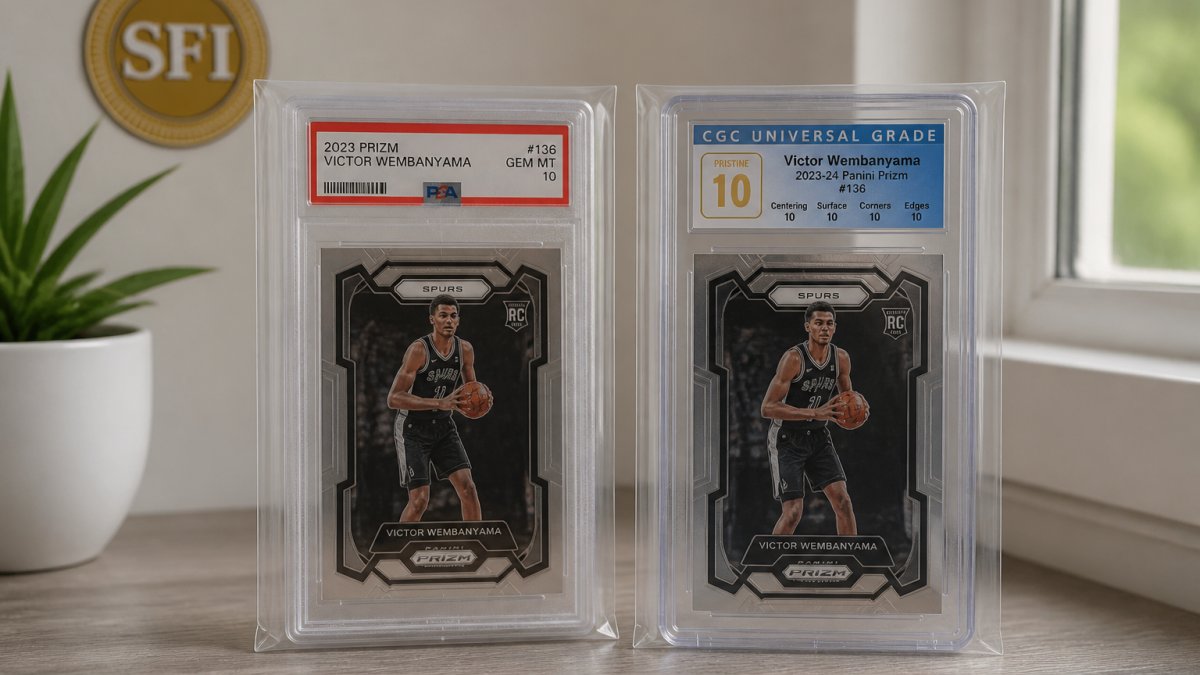
- Graded slabs: a fitted slab sleeve over the case to prevent scuffs and scratches on the holder itself.
- Active decks you play with: a deck sleeve built for shuffling, with a fitted inner sleeve only if the cards are valuable.
- Bulk commons and sorting: penny sleeves are fine. Save the fitted sleeves for cards that earn them.
For high-value cards specifically, our guide to the best protective sleeves for high value cards goes deeper on matching sleeve type to card value. The throughline across all of it: the more a card is worth, the less you want it moving.
Choosing Your Fitted Sleeves for Slabs, Top-Loaders, and One-Touch Cases
Fitted sleeves are not one product; they are a family of products cut for different holders. A sleeve made for a PSA, BGS, SGC, or CGC slab will not fit a magnetic one-touch case, and a top-loader sleeve will not fit a slab.
The lineup is built around that split:
- Graded card slab sleeves for graded slabs
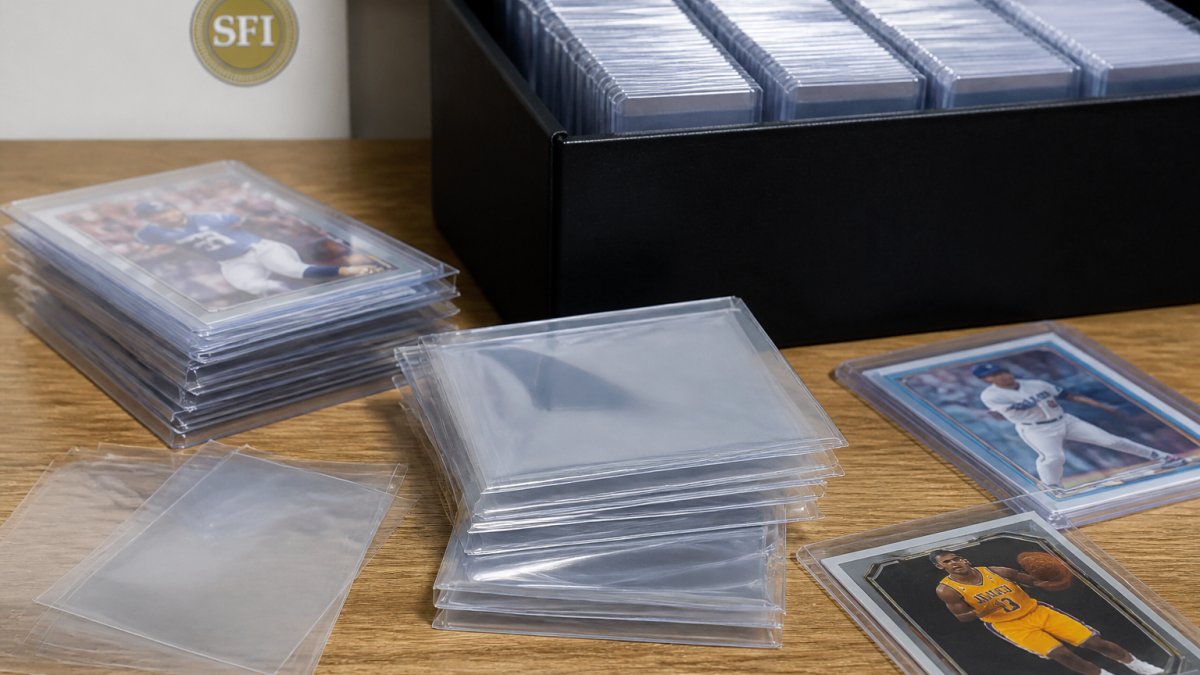
- Top-loader sleeves for standard rigid holders
- Magnetic one-touch case sleeves for magnetic cases
- Graded comic and magazine slab sleeves for graded comic holders
Superior Fit Sleeves are precision-cut from archival-grade, acid-free material and feature a tapered flap for a snug fit.
Watch out: buying a "standard" sleeve and stretching it over a slab will leave slack at the corners, which is exactly where scuffs start.
Frequently Asked Questions
What are fitted sleeves for trading cards?
Fitted sleeves are precision-cut inner sleeves sized to wrap tightly around a card with minimal excess plastic. Fitted sleeves are cut to a close tolerance around a standard 63 x 88 mm card. That snug fit keeps dust and particulate matter off the card surface and stops the card from shifting inside the sleeve. Collectors use them as the first layer of protection, then add an outer sleeve, top-loader, or slab sleeve on top.
How do you remove a card from a fitted sleeve safely?
Never pull the card by a corner while squeezing the sleeve. Lay the sleeved card on a flat, clean surface, press gently on the sleeve near the top edge to loosen the seal, and let the card slide down slightly. Then grip the sleeve edges, not the card, and ease the card out with two fingers on its border. If the sleeve has a tapered flap, open it fully first. Rushing this step is how corners get bent.
Are fitted sleeves safe for long-term card storage?
They are safe when the sleeve itself is archival-safe, meaning acid-free and made from materials that resist yellowing and fogging over time. The tight fit actually reduces the air and dust contact that causes surface wear during storage. Pair fitted sleeves with rigid outer protection and keep the collection out of heat and direct sunlight. Cheap sleeves with unknown plastic content are the real risk, not the snug fit.
Can fitted sleeves protect cards inside top-loaders?
Yes, and that is one of their most common uses. A fitted sleeve goes on first, then the sleeved card slides into a rigid top-loader or magnetic one-touch case. The inner sleeve prevents the card surface from rubbing against the rigid holder, and the outer holder absorbs impacts. This double-sleeve setup is standard practice for high-value cards before shipping, storing, or submitting for grading.
What's the difference between penny sleeves and fitted sleeves?
Penny sleeves are loose, thin, and inexpensive, with enough slack that a card slides around inside. Fitted sleeves are cut to a closer tolerance so the card stays put, which limits dust intrusion and surface scuffing. Penny sleeves work for bulk storage and quick sorting. Fitted sleeves cost more per sleeve but suit cards you handle often, display, or plan to grade. Many collectors use both, with fitted sleeves on the cards that matter most.
Your cards are only as protected as the layer touching them. If you are still wrapping valuable cards in loose plastic, the snug fit and archival-grade clarity of Superior Fit Sleeves are built to close that gap, with precision-cut sleeves for slabs, top-loaders, and magnetic cases, each with our signature tapered flap. Get started with Superior Fit Sleeves and give every card in your collection the fit it deserves.