 Comparison
Perfect Fit vs Standard Sleeves for Trading Cards
Last Updated: October 29, 2026
Quick Summary
Perfect fit sleeves are cut to hug a trading card's edges with little or no excess room, so the card stays still. Standard sleeves are looser, easier to slide cards into, and cost less. Choose perfect fit sleeves for valuable cards stored long term, and standard sleeves for cards handled often.
- A loose sleeve lets the card shift, and that movement can rub corners and edges.
- Standard TCG cards measure 63 x 88 mm, the footprint most standard sleeves are built around.
- Perfect-fit inner sleeves leave roughly 0.5-1 mm of slack per side, versus 1.5-3 mm for outer sleeves.
- Keep the inner and outer sleeve openings facing opposite directions when double sleeving.
- Slide cards out by the bottom edge, keeping fingers off the card face, to avoid edge damage.
Table of Contents
- What Perfect Fit Sleeves and Standard Sleeves Are
- Trading Card Sleeve Sizes and How Snugly Each Sleeve Fits
- Perfect Fit vs Standard Sleeves: Side-by-Side Comparison
- Double Sleeving Trading Cards: Setup and Orientation
- How to Remove a Card From a Perfect Fit Sleeve
- Card Sleeves for Top Loaders: Which Type Works Better
- Choosing the Right Sleeve for Your Collection
- Frequently Asked Questions
What Perfect Fit Sleeves and Standard Sleeves Are
Perfect fit sleeves are inner card sleeves cut to hug a trading card's edges with little or no excess room. Standard sleeves are the common, looser-fitting sleeves that most collectors start with. Superior Fit Sleeves builds its line around a snug, clear, distortion-free fit that protects cards from scuffs and surface wear.
The difference matters most when a card moves. A loose sleeve lets the card shift, and that movement can rub corners and edges. A tight sleeve holds the card still, which is the main reason serious collectors reach for a perfect fit. You can try the fit yourself with Superior Fit top-loaders for regular cards.
Standard sleeves still have a place. They are easier to slide cards into, they cost less, and they work well for cards that get handled often, such as a deck you shuffle every week.
Trading Card Sleeve Sizes and How Snugly Each Sleeve Fits
Sleeve fit comes down to millimeters, so it helps to know the standard card footprints before you buy. The table below collects the dimensions most collectors work with. Treat them as nominal figures, manufacturers vary by a fraction of a millimeter, and that fraction is often the difference between a smooth insert and a fight.
Card or sleeve type | Typical dimensions (mm) | Typical dimensions (in) | Notes |
|---|---|---|---|
Standard trading card (TCG) | 63 x 88 | 2.48 x 3.46 | The footprint most standard sleeves are built around |
Japanese-style TCG card | 63 x 88 | 2.48 x 3.46 | Same footprint as standard TCG cards; art and stock differ, not size |
Small-size card (older minis) | 44 x 67 | 1.73 x 2.64 | Needs a dedicated small sleeve, not a trimmed standard one |
Standard outer sleeve | ~66 x 91 | ~2.60 x 3.58 | Roughly 1.5-3 mm of slack per side |
Perfect-fit inner sleeve | ~64 x 89 | ~2.52 x 3.50 | Roughly 0.5-1 mm of slack per side |
Top loader (standard) | 3 x 4 in opening | 76 x 102 | Rigid holder; sleeve goes inside |
Reading the Numbers
A standard sleeve leaves a visible air gap around the card. That gap is what lets a card slide, and sliding is what scuffs edges. A perfect-fit sleeve trims that gap so the card sits still. The trade-off is insertion friction: the tighter the tolerance, the more care the insert takes.
Three checks before you commit to a sleeve:
- Stated card dimensions. Match the sleeve's stated card size to your card, not to the game's brand name. Two games can share a 63 x 88 mm footprint.
- Inner vs. outer labeling. A sleeve sold as an inner is cut tighter than one sold as an outer. Using an outer as an inner leaves slack; using an inner as an outer leaves no room for a second layer.
- Seal or flap design. A resealable flap adds a few millimeters of length and changes how the sleeve sits in a binder or top loader. Check that the closed sleeve still fits your storage.
When Snug Is Too Snug
Snug fit is not automatically better. A card you plan to remove often, a commander you swap between decks, a card you photograph for listings, is easier to handle in a standard sleeve. A perfect fit rewards cards that stay put. Match the tolerance to the activity, not to a general rule that tighter equals safer.
Compatibility With Common Games
Because most modern trading card games print to the same 63 x 88 mm standard, a perfect-fit sleeve sized for that footprint works across them. The variable is not the game, it is the printing run and the card stock thickness. Foil and textured cards can run slightly thicker, which tightens the fit further. When in doubt, test one card from the batch before sleeving the whole set.
Perfect Fit vs Standard Sleeves: Side-by-Side Comparison
Perfect-fit sleeves and standard sleeves differ on protection, fit, handling and use case. Here is how they compare:
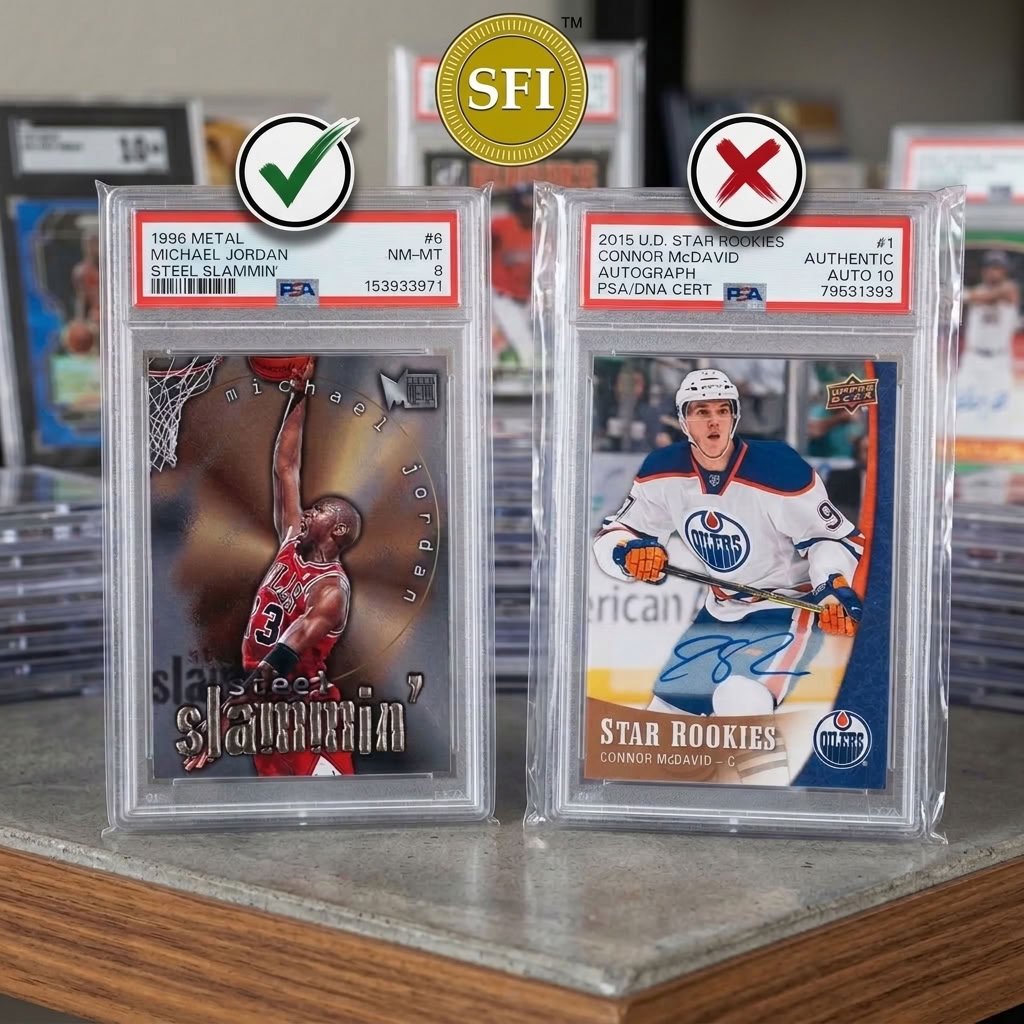
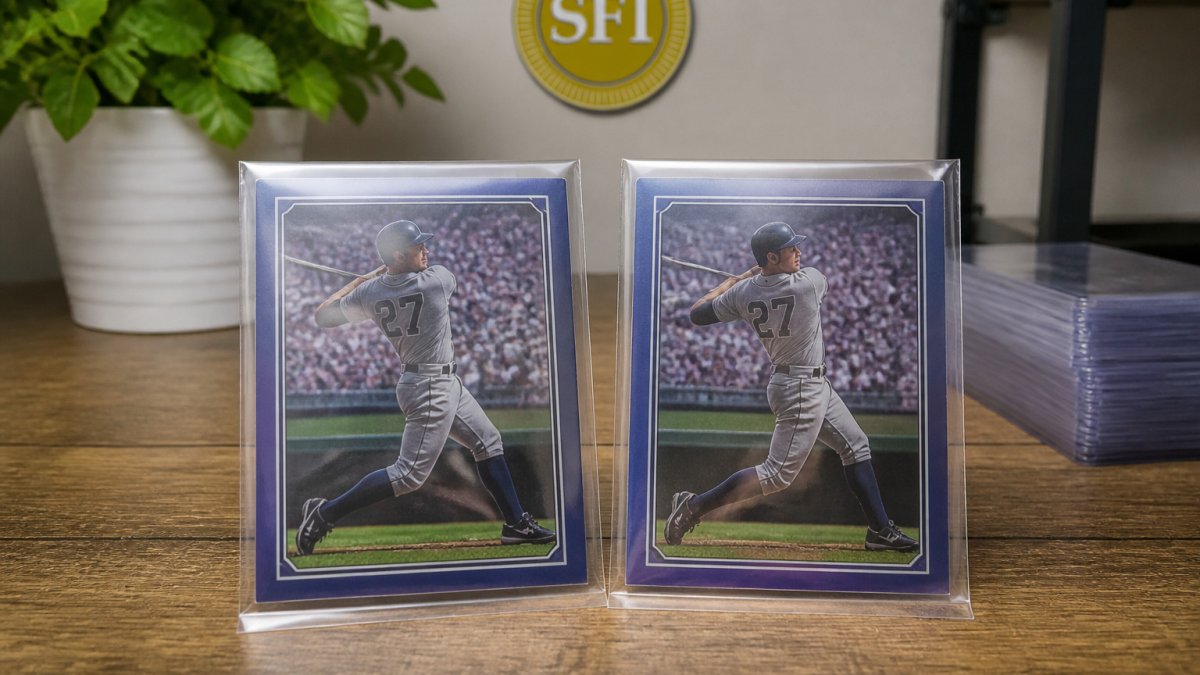
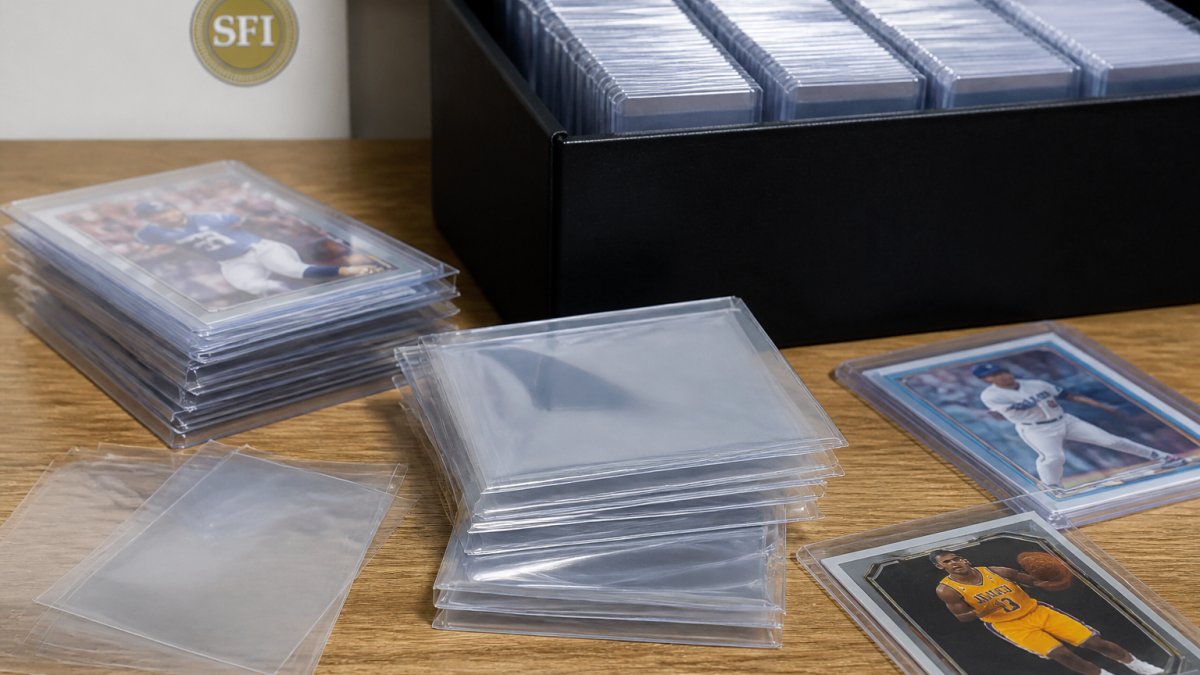
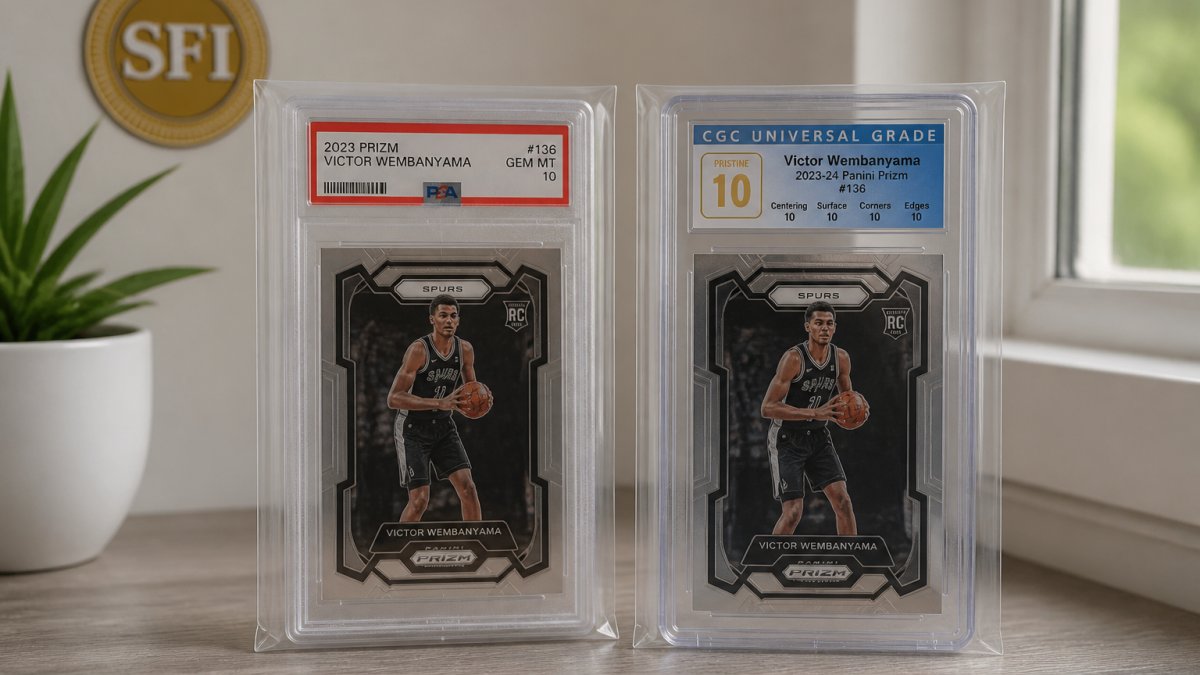
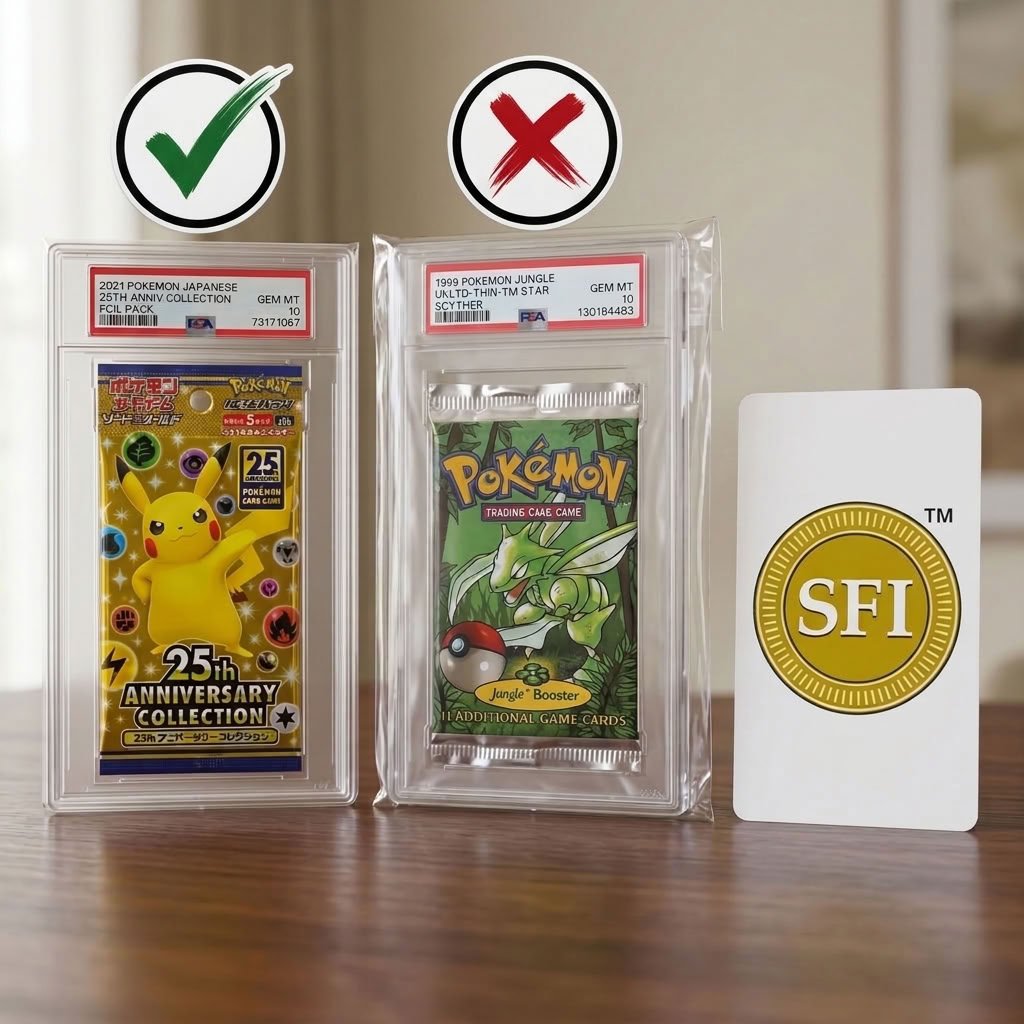
Side-by-side comparison of a graded card slab next to perfect fit sleeves and standard sleeves on a wooden table
Factor | Perfect Fit Sleeve | Standard Sleeve |
|---|---|---|
Fit | Hugs the card, little movement | Looser, card can shift |
Protection | Limits rub and edge wear | Basic surface protection |
Handling | Slower to insert and remove | Quick to slide in and out |
Best for | Valuable or graded cards kept long term | Daily-use and shuffled cards |
Protection and Dust Resistance
A sleeve's first job is to keep the card's surface clean and free of scratches. A tight fit limits the card's movement inside the sleeve, which cuts down on the rubbing that causes wear. Dust is a separate concern. For a full walkthrough, see how to display graded trading cards. Any sleeve can trap fine particles if it is left open, so the seal and how you store the sleeve matter as much as the fit. Keep sleeves closed and stored upright in a box or binder.
Handling, Insertion and Removal
Standard sleeves win on convenience. Perfect-fit sleeves reward careful handling: slide the card in slowly, keep your fingers off the card face, and work the card out by the edges. Rushing the insert is the most common way to scuff a card in a tight sleeve.
Double Sleeving Trading Cards: Setup and Orientation
Double sleeving means placing a card in an inner sleeve, then placing that sleeved card inside an outer sleeve. The inner layer holds the card still; the outer layer adds a second barrier against dust, spills, and handling wear. Done right, the two openings end up on opposite ends so nothing can travel straight through.
The Orientation Rule
The single most important detail is that the inner sleeve's opening and the outer sleeve's opening face opposite directions. That offset is what makes double sleeving worth the effort, dust has to travel the full length of the outer sleeve, then the full length of the inner sleeve, to reach the card.
Step by step:
- Insert the card into the inner sleeve. Slide it in slowly, keeping fingers on the sleeve, not the card face. Seat it fully so the card's bottom edge sits against the sleeve's closed end.
- Note the inner opening. The open end of the inner sleeve is now at the top of the card.
- Insert the sleeved card into the outer sleeve upside down. Slide it in so the inner sleeve's open end points toward the outer sleeve's closed end. The two openings now sit at opposite ends.
- Seat it fully. Push the stack down until the inner sleeve's bottom edge meets the outer sleeve's bottom edge.
- Press out trapped air. Hold the stack between two fingers and gently bow the outer sleeve to push air out the open end before storing it.
Trapped Air and Why It Matters
A freshly double-sleeved card often looks puffy. That is trapped air between the layers, and it is normal. It escapes over a few hours if the stack is stored flat under light weight, or immediately if you bow the outer sleeve slightly and press. Do not store a puffy stack in a tight binder pocket, the pressure can crease the card. Let it settle first.
Choosing the Outer Sleeve
The outer sleeve must be sized for a sleeved card, not a bare one. Look for outer sleeves labeled for double sleeving, or size up. The same logic applies to top loaders: a perfect-fit inner sleeve plus a standard outer sleeve is a common stack, and the top loader must be sized for the finished thickness.
When Double Sleeving Is Worth It
Double sleeving adds thickness, cost, and handling time. It earns that back on cards you store long term, cards of high value, and decks that see a lot of table time. For bulk storage or cards you resleeve often, a single standard sleeve is usually enough. The decision is about how much the card is worth to you versus how often you touch it.
How to Remove a Card From a Perfect Fit Sleeve
Work slowly. For more on this, read protecting sports cards in top loaders. Hold the sleeve steady and slide the card out by its bottom edge, keeping your fingers on the sides rather than the face. If the card resists, do not pull hard. Press the sleeve's walls gently away from the card's edges first, then ease it out. Pulling hard is the most common cause of edge damage.
Card Sleeves for Top Loaders: Which Type Works Better
Top loaders are rigid holders that protect cards from bending and crushing. A sleeve inside a top loader adds a layer against scuffs, and a perfect-fit sleeve keeps the card from sliding around in the holder. For valuable cards, a perfect-fit sleeve inside a top loader is the more protective setup. For cards that come out often, a standard sleeve is simpler.
If you are setting up a top loader stack, Superior Fit Sleeves offers Top-Loader Sleeves for this purpose.
Choosing the Right Sleeve for Your Collection
Pick a perfect-fit sleeve for cards you value and plan to store long term. Choose a standard sleeve for cards you handle often or sleeve in bulk. If a card is both valuable and frequently handled, use a perfect-fit inner sleeve with a standard outer sleeve.
Superior Fit Sleeves offers Graded Card Slab Sleeves and Magnetic Card Case Sleeves, so the right fit depends on the holder you already own.
Frequently Asked Questions
What is the difference between perfect fit sleeves and standard sleeves?
Perfect fit sleeves are cut to closely match the outer dimensions of a trading card, leaving very little space around it. Standard sleeves are made with more room, so the card moves slightly inside. The snugger fit reduces shifting and dust entry, while the roomier standard sleeve is typically easier to slide cards in and out of. Choose based on whether minimal movement or easy handling matters more for your cards.
Are perfect fit sleeves better than standard sleeves for trading cards?
Perfect fit sleeves are generally better when you want a tight fit that limits movement and keeps dust out, which suits valuable or long-term storage. Standard sleeves are often preferred for everyday handling, shuffling and decks. Neither is universally better; the right choice depends on how the card will be used and stored.
What is the difference between penny sleeves and regular sleeves?
Penny sleeves are thin, inexpensive inner sleeves meant for basic protection and used as a first layer. Regular or standard sleeves are thicker outer sleeves designed to add more protection. Many collectors use a penny sleeve inside a regular sleeve, but check that the fit is compatible before stacking them.
Do perfect fit sleeves fit inside standard sleeves?
Sometimes, but it depends on the exact dimensions of both products. A perfect fit sleeve is narrow, so it may slide into a standard sleeve, though a tight fit can make insertion harder. Measure both sleeves and test with a spare card before sleeving valuable cards this way.