 how-to
Protecting Sports Cards in Top Loaders: A Complete Guide
Table of Contents
- What a Top Loader Does and Why It Protects Your Cards
- Choosing the Right Top Loader: Understanding Thickness and Size
- Using a Penny Sleeve and Top Loader Together
- How to Safely Insert and Remove Cards from Top Loaders
- Preventing Corner and Edge Damage During Handling
- How to Store Baseball Cards in Top Loaders Long-Term
- Top Loader Mistakes to Avoid
- Top Loaders Versus Other Protective Options
- Frequently Asked Questions
Last Updated: October 5, 2026
What a Top Loader Does and Why It Protects Your Cards
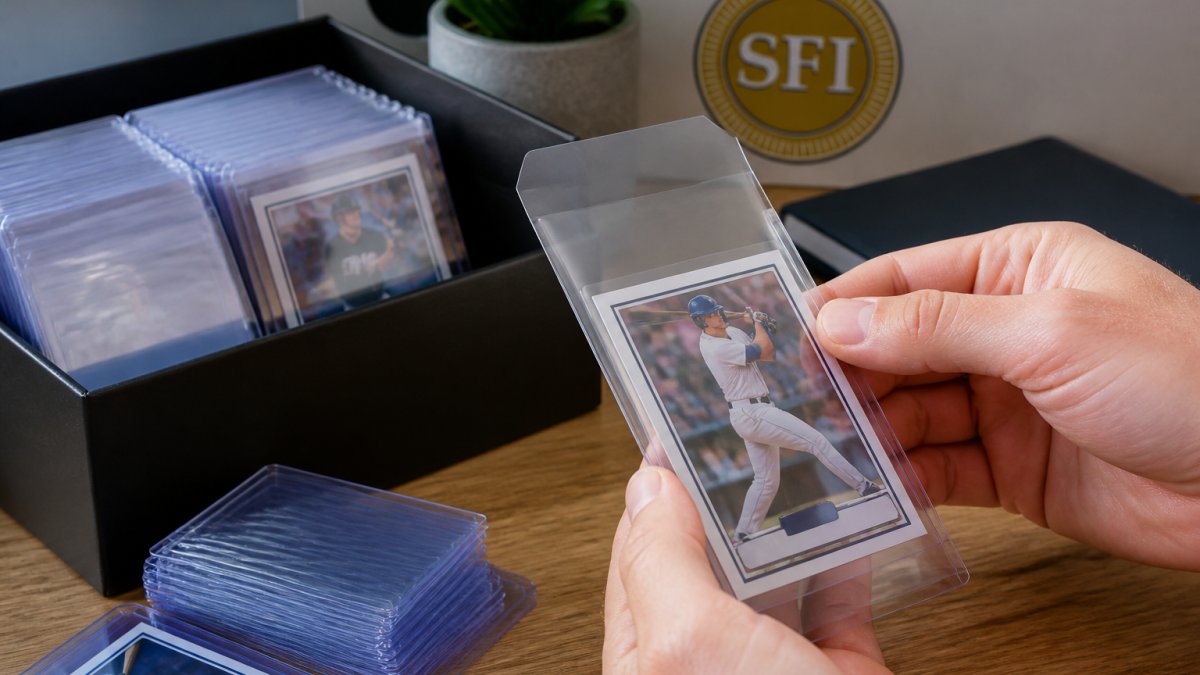
Protecting sports cards in top loaders means understanding what these rigid holders do and why they're essential for serious collectors. Protecting sports cards in top loaders means using a clear plastic sleeve that holds a single card upright.
Top loaders protect against multiple threats to card condition. They shield cards from dust, moisture, and accidental drops. They keep cards from sliding around inside binders or boxes.
The rigid plastic material creates a barrier between your card and the outside world. Unlike soft sleeves, which flex and move, top loaders stay firm.
At Superior Fit Sleeves, we've engineered our sleeves with precision cuts and archival-grade materials. The tight fit means zero excess bulk, so your cards look clean and professional in your collection.
Choosing the Right Top Loader: Understanding Thickness and Size
Selecting the right top loader depends on your card's thickness. Standard sports cards are 0.012 inches thick. Most collectors use standard 100-point top loaders for these cards.
The number refers to the thickness in points. One point equals 0.001 inches. So a 100-point loader is 0.100 inches thick. A 130-point loader is 0.130 inches thick. The thicker the loader, the more space inside for thicker cards.
Using the wrong thickness creates problems. A card too thin for its loader will slide around inside. This defeats the purpose of protection. A card too thick for its loader won't fit, or it'll force the plastic and stress the card. Get the fit right, and your card stays secure.
Common top-loader sizes:
Card Type | Standard Thickness | Recommended Loader |
|---|---|---|
Standard sports cards | 0.012 inches | 100-point |
Thicker cards (autos, memorabilia) | 0.020-0.030 inches | 130-point or 180-point |
Using a Penny Sleeve and Top Loader Together
Many collectors ask whether to use both a penny sleeve and a top loader. The answer is yes, and here's why.
The penny sleeve goes on first. It's a thin, soft plastic sleeve that fits snugly around the card. It protects the card surface from dust and finger oils.
Then you slide the sleeved card into the top loader. The top loader adds rigid protection against bending and crushing. Together, they create a two-layer barrier that stops most threats to card condition.
This combination matters most for high-value cards.
Use a penny sleeve that fits snugly. A loose penny sleeve defeats the purpose. The sleeve should grip the card without excess space.
Why use both:
- Penny sleeve stops dust and fingerprints
- Top loader prevents bending and impacts
- Together they handle almost every storage threat
How to Safely Insert and Remove Cards from Top Loaders
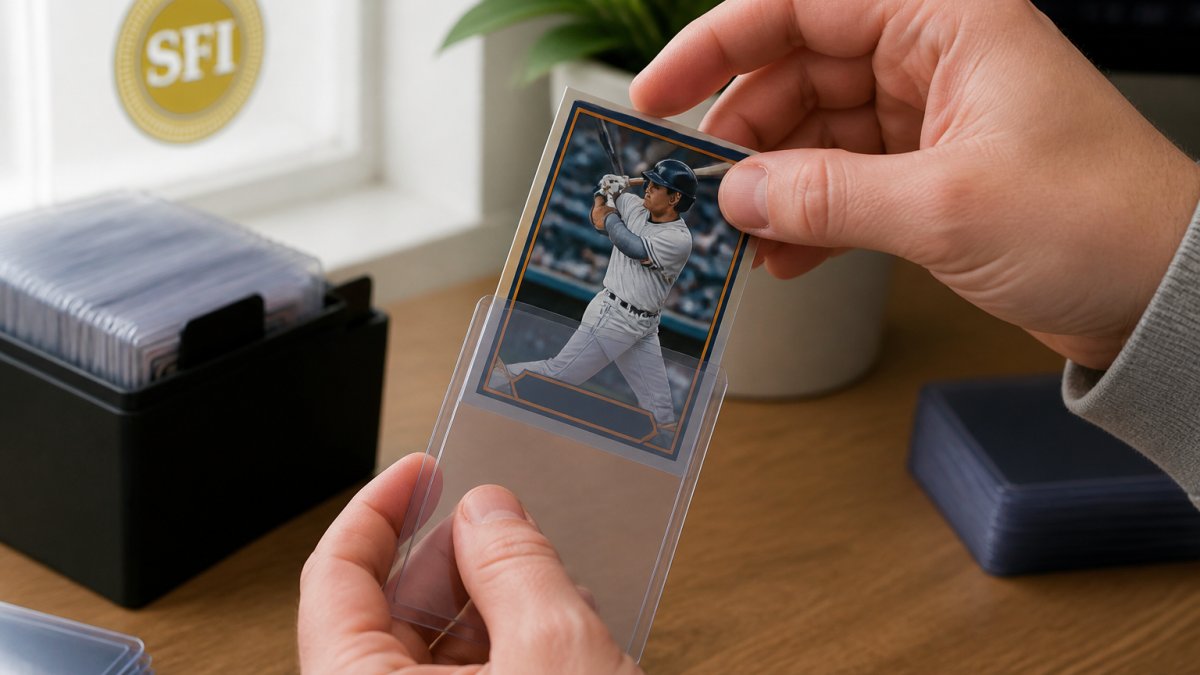
Inserting and removing cards from top loaders requires care. A rushed insertion can crease corners or scratch the card surface. Follow these steps to protect your cards.
Step-by-Step Insertion Process
Step 1: Prepare your workspace. Clear a clean, flat surface. Wash your hands or wear clean cotton gloves. Dust and debris on your hands transfer to the card.
Step 2: Hold the card by its edges. Never touch the front or back of the card. Grip the left and right edges gently but firmly.
Step 3: Align the card with the loader opening. The top loader's opening is at the top. Position the card so it enters straight, not at an angle.
Step 4: Slide the card in slowly. Don't rush. Gently push the card down into the loader. Stop when the card is fully inside and sitting flat at the bottom.
Step 5: Check the fit. The card should not move inside the loader. If it shifts or slides, the loader is too big.
Safe Removal Technique
Removing a card requires the same care as inserting it. Never yank or force a card out.
Step 1: Grip the top loader firmly. Hold the loader with one hand, supporting it from underneath. This prevents the loader from tipping or dropping.
Step 2: Gently push the card up from the bottom. Use your other hand to apply upward pressure on the card's bottom edge. The card should slide up gradually.
Step 3: Once the card clears the top, grip its edges. As soon as the card emerges, switch to holding it by its edges. Never let it fall or drop out of the loader.
Step 4: Inspect the card. Check for new scratches or damage. If you see anything, stop and assess before continuing.
Preventing Corner and Edge Damage During Handling
Corner damage is the biggest threat to card value. A bent corner can drop a card's grade from mint to near-mint instantly. Edges are equally vulnerable.
The key to preventing corner damage is minimizing handling. The less you touch a card, the safer it is. Keep valuable cards in loaders, and remove them only when necessary.
When you do handle cards, support them properly. Hold the card by its edges, never the corners. Your fingers should contact only the thin plastic edge, not the printed surface or corners.
Store cards upright in loaders, not flat in stacks. Stacked cards put pressure on corners from the weight above. Upright storage distributes pressure evenly.
Use top-loader covers or team bags for extra protection during storage. These add a second layer that keeps dust away and prevents accidental bumps.
Corner damage prevention checklist:
- Minimize handling of valuable cards
- Hold cards by edges only
- Store cards upright in loaders
- Use top-loader covers for storage
- Use team bags for shipping
- Never stack cards flat on top of each other
How to Store Baseball Cards in Top Loaders Long-Term
Long-term storage of baseball cards and other sports cards requires the right conditions. Temperature, humidity, and light all affect card condition over years and decades.
Store cards in a cool, dry place. Room temperature between 65 and 75 degrees Fahrenheit is ideal.
Humidity is equally critical. High humidity (above 60%) encourages mold and moisture damage. Low humidity (below 30%) makes cards brittle. Aim for 40-50% humidity.
Keep cards away from direct sunlight. UV light fades card colors and degrades the plastic in loaders.
Use acid-free storage boxes. Cheap cardboard boxes contain acids that damage cards over time. Archival-grade boxes protect cards for decades.
Air circulation matters too. Don't seal cards in airtight containers. A little air movement prevents moisture buildup. Store boxes on shelves where air can flow around them.
Long-term storage conditions:
- Temperature: 65-75 degrees Fahrenheit
- Humidity: 40-50%
- Light: Dark storage, away from windows
- Containers: Acid-free, archival-grade boxes
- Placement: Shelves with air circulation, not sealed
Top Loader Mistakes to Avoid
Even experienced collectors make mistakes that damage cards.
Mistake 1: Using the wrong size loader. A loader too big lets the card move.
Mistake 2: Forcing a card into a tight loader. If a card doesn't slide in smoothly, stop.
Mistake 3: Stacking cards flat. Never stack top-loaded cards in horizontal piles. The weight on top damages corners of cards below.
Mistake 4: Touching the card surface. Oils from your skin leave marks. Always hold cards by the edges.
Mistake 5: Storing in humid or hot areas. Basements, garages, and attics are death traps for cards.
Mistake 6: Leaving cards in loaders for years without checking. Inspect cards periodically.
Mistake 7: Using cheap, cloudy loaders. Low-quality loaders cloud over time and don't protect as well. Invest in clear, archival-grade loaders.
Top Loaders Versus Other Protective Options
Top loaders aren't the only way to protect cards. Binders, semi-rigid holders, and magnetic cases all offer protection. Each has trade-offs.
Top Loaders vs. Binders
Binders hold multiple cards in one place. Each card goes in a pocket, usually 9 pockets per page. Binders are great for displaying collections and organizing by team or player.
Top loaders offer better individual protection. Each card has its own rigid holder. Binders protect cards from dust but offer less protection against bending or impacts. A dropped or sat-on binder can damage the cards inside.
Top loaders are better for high-value cards. Binders are better for displaying a large collection. Many collectors use both: top loaders for valuable cards and binders for bulk collections.
Top loaders vs. binders:
- Top loaders: Individual protection, better for valuable cards
- Binders: Display multiple cards, better for organizing
- Best approach: Top loaders for graded slabs, binders for casual collections
Top Loaders vs. Semi-Rigid and Magnetic Holders
Semi-rigid holders are thicker than penny sleeves but not fully rigid. Magnetic cases hold cards between two magnets without a sleeve. Both protect cards, but differently.
Semi-rigid holders offer middle-ground protection. They're more protective than penny sleeves but less rigid than top loaders. They work well for cards you handle occasionally.
Magnetic cases display cards beautifully. The card is visible from both sides with no sleeve. But magnets can damage cards over time if not designed carefully. One-touch magnetic cases are popular but more expensive than top loaders.
Top loaders are the most affordable option for serious protection. Magnetic cases cost more but offer premium display quality. Semi-rigid holders split the difference in cost and protection.
Comparison of protection options:
Holder Type | Protection Level | Display Quality | Cost | Best For |
|---|---|---|---|---|
High | Good | Low | High-value cards, storage | |
Semi-Rigid | Medium | Good | Medium | Occasional handling |
Magnetic Case | High | Excellent | High | Display and premium protection |
Binder | Medium | Excellent | Medium | Organizing large collectionsPut the soft sleeve on first, then slide the sleeved card damage corners and edges |
Frequently Asked Questions
Should I put a penny sleeve on my card before placing it in a top loader?
Yes. A soft inner sleeve protects the card surface from direct contact with the rigid plastic of the top loader. Penny sleeves and top loaders work together to shield the card from scratches, dust, and moisture. The soft sleeve goes on first, then the sleeved card slides into the top loader. This two-layer approach is the standard for protecting sports cards, especially graded slabs and valuable collectibles.
What size top loader should I use for different card thicknesses?
Standard cards fit in 100-point top loaders. Thicker cards may need 120-point or 130-point loaders. Measure your card's thickness before buying—too loose a fit allows movement and corner damage, while too tight a fit can bend the card during insertion. Most sports cards use 100-point, but always verify the card thickness to ensure a snug, protective fit without excess slack.
How do I prevent my cards from moving inside the top loader?
A properly fitted top loader should hold the card snugly with minimal movement. Using a penny sleeve first reduces friction and keeps the card centered. If your cards still shift, your top loader may be too large. Avoid overstuffing binders or storage boxes, which can create pressure and cause cards to slide. Store top-loaded cards upright in acid-free boxes, never stacked flat, to prevent warping and movement.
Can top loaders scratch my sports cards if I use them incorrectly?
Yes. Forcing a card into a top loader or removing it too quickly can cause corner and edge damage. Always insert the card slowly at a slight angle, starting with one corner first. Rough handling, dropping top loaders, or storing them in high-humidity environments can also lead to surface scratches and degradation. Proper insertion technique and archival-grade sleeves minimize this risk significantly.
Protecting sports cards in top loaders is the foundation of good collection care. The right loader, proper insertion technique, and smart storage conditions keep your cards safe for decades. Superior Fit Sleeves designs sleeves and loaders specifically for collectors who take their protection seriously. Our archival-grade materials and precision cuts ensure your collection stays in mint condition. Visit Superior Fit Sleeves to find the right protective solution for your cards.