 listicle
Best Tapered Flap Sleeves for Card Slabs: 2026 Guide
Table of Contents
- Why Tapered Flap Sleeves for Card Slabs Beat Standard Sleeves
- Quick Comparison: Top Tapered Flap Sleeves for Card Slabs
- Superior Fit Sleeves: The Original Tapered Flap Sleeve
- Vault X Exact Fit Slab Sleeves: Multi-Brand Compatibility
- Rieton Graded Card Sleeves: PSA-Sized Fit in a 100-Pack
- Generic 100-Pack Slab Sleeves: Budget Polypropylene Option
- Slab Sleeve Size Guide: Matching Sleeves to PSA, BGS, SGC, and CGC Slabs
- How to Protect Graded Cards: Application, Removal, and Storage
- Frequently Asked Questions
Last Updated: October 15, 2026
Why Tapered Flap Sleeves for Card Slabs Beat Standard Sleeves
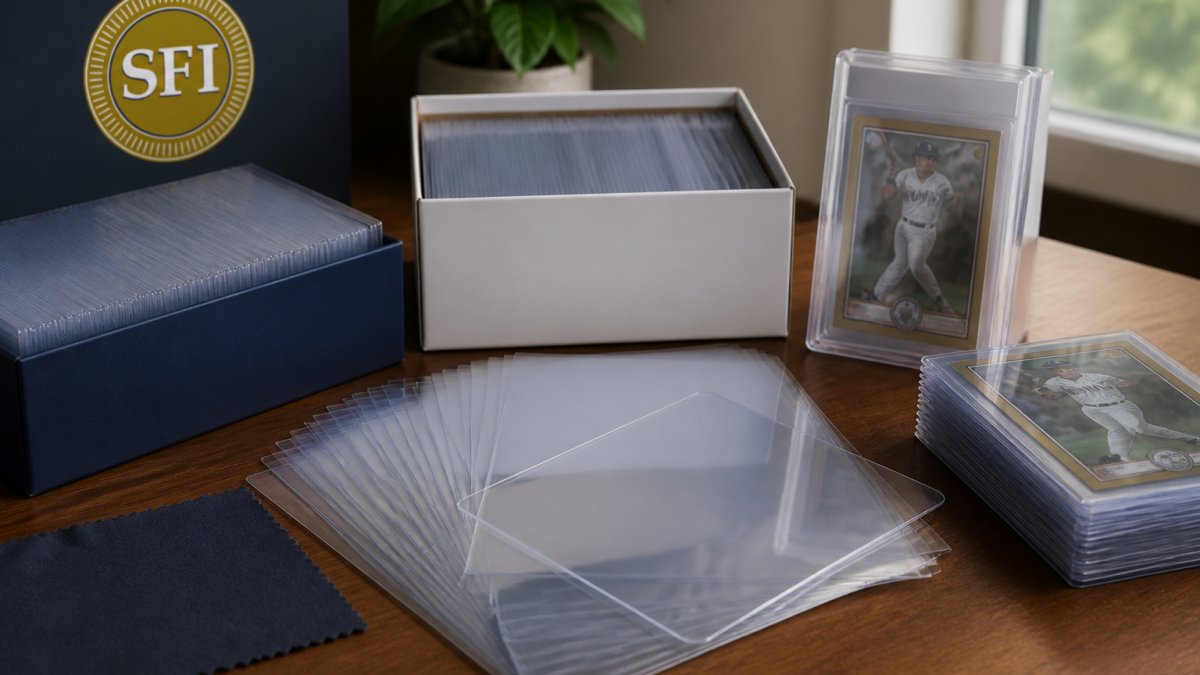
Tapered flap sleeves for card slabs are protective sleeves with a narrowed, resealable flap that folds flat against the slab instead of bunching at the edge, which is why they beat standard sleeves on fit, dust protection, and display quality.
Standard sleeves leave excess material at the opening that catches on shelves, traps dust, and makes a graded slab look sloppy. A tapered flap removes that bulk: the sleeve hugs the holder and the flap tucks cleanly.
At Superior Fit Sleeves, we have made this style since 2014, when our founders got tired of watching scuffed slabs and scratched top loaders.
What "Tapered" Actually Means
Most sleeve listings use "tapered" loosely. In practice, it covers three flap geometries that do not perform the same way:
- Straight-cut flap. The flap is the same width as the sleeve body, so the corners overlap when it folds and create a raised ridge along the opening- the ridge that snags on storage box dividers and lifts first when sleeves are packed tightly.
- Tapered tab. The flap narrows to a small tab at the tip, usually for a tuck-in or light adhesive closure. It reduces corner bulk, but concentrates the seal at one point of contact.
- Full tapered, resealable flap. The flap narrows gradually across its full width and seals along its length, removing corner overlap and spreading contact across the opening instead of one tab.
We build that third design. The difference is not cosmetic: it changes how the sleeve behaves in a box, on a shelf, and in your hand.
How Flap Shape Changes Four Things
Sealing. A straight-cut flap folds over itself at the corners, so the seal is uneven: tight in the middle and lifting at the edges.
Bulk. A straight-cut flap adds material at both corners of the opening, and in a tightly packed box that extra thickness makes sleeves press against each other and peel.
Compatibility. Slab guards, oversized holders, and snug storage boxes all have tight internal clearances.
The Trade-Offs Nobody Lists
Tapered flaps are not free of compromises:
- A narrower flap means less adhesive area than a full-width straight flap. That is why seal quality matters more on a tapered design; a weak adhesive on a tapered flap fails faster than on a wide one.
- Tapered flaps are harder to manufacture consistently. The taper has to be cut cleanly, or the flap will not fold flat. Batch-to-batch variation is a real risk with unbranded listings.
- A tapered tab is not a tapered flap. If a listing says "tapered tab," read closely; a tab closure and a full-length resealable flap solve different problems.
Here is what matters most before you buy:
- Fit tolerance: too loose and the sleeve slides off; too tight and you fight it every time
- Flap design: tapered and resealable beats straight-cut every time
- Material: acid-free, crystal-clear polypropylene for long-term storage
Below, we break down the top options, then walk through sizing, application, and storage.
Quick Comparison: Top Tapered Flap Sleeves for Card Slabs
The best tapered flap sleeves for card slabs balance flap design, material clarity, and pack value.
Product | Pack Size | Flap Style | Material | Best For |
|---|---|---|---|---|
Varies by listing | Tapered, resealable | Acid-free, crystal clear | PSA, BGS, SGC, CGC, and more. | |
Vault X Exact Fit | 100 | Not confirmed as tapered | Acid-free, crystal clear | Multi-brand PSA, CGC, MGC |
Rieton Graded Card | 100 | Not confirmed as tapered | Acid-free, crystal clear | PSA-sized slabs |
Generic 100-Pack | 100 | Tapered tab | 50-micron polypropylene | Budget PSA slab coverage |
Only two of these listings actually state a tapered flap. Plenty of sleeves claim a snug fit; far fewer commit to the flap design that delivers it.
Superior Fit Sleeves: The Original Tapered Flap Sleeve
Superior Fit Sleeves is the original inventor of the perfect-fit tapered sleeve, and our graded slab sleeves remain the benchmark for a snug, professional fit.
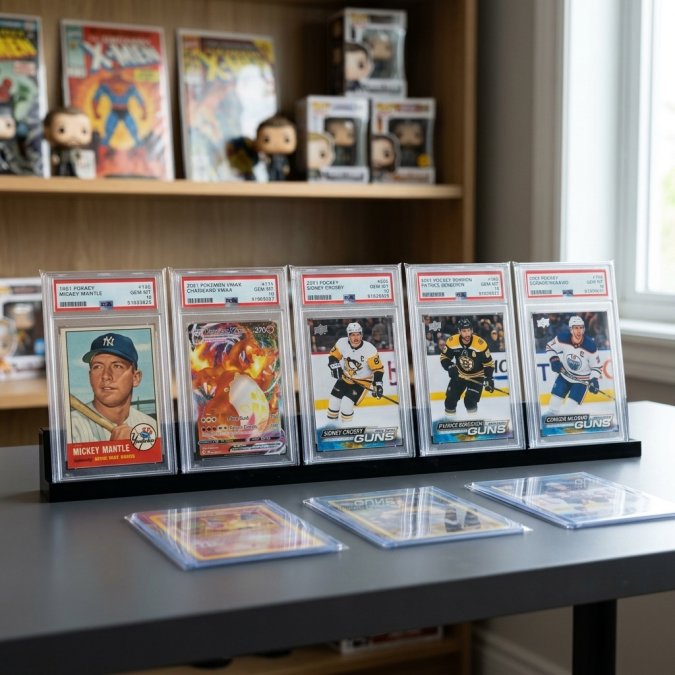
What sets our graded slab sleeves apart:
- Precision-cut material for a tight, form-fitting result with no baggy corners
- Ultra-clear, distortion-free finish so the label and card stay fully readable
- Stated compatibility with PSA slabs and Beckett cases, plus other major grading companies
One honest limitation: our listings do not always confirm current pack sizes up front, so check the product page for the exact configuration you need.
Vault X Exact Fit Slab Sleeves: Multi-Brand Compatibility
Vault X Exact Fit Slab Sleeves list compatibility with PSA, CGC, and MGC graded slabs.
The listing confirms acid-free, crystal-clear material, but does not confirm a tapered flap, which matters if flap design is your reason for buying.
Amazon website
Where it falls short: without a confirmed tapered flap, you may get the extra bulk at the opening that tapered designs are built to remove.
Rieton Graded Card Sleeves: PSA-Sized Fit in a 100-Pack
Rieton Graded Card Sleeves are built for PSA-sized slabs, with crystal-clear, acid-free material stated on the listing. Collectors who only hold PSA slabs get a straightforward, single-brand fit, and the specified PSA-sized fit remove the guesswork.
The catch is the same one that runs through this category: the listing does not confirm a tapered flap. For a PSA-only collection that may be fine; for a mixed collection, check fit across every slab type you own.
Generic 100-Pack Slab Sleeves: Budget Polypropylene Option
The generic slab sleeve listing is the budget entry in this group, and the only one that specifies both material thickness and flap style: 50-micron polypropylene with a tapered tab, sized for PSA-graded cards.
Two caveats. The listing does not identify a distinct manufacturer, so batch consistency is a real question. A tapered tab isn’t automatically the same as a fully tapered, resealable flap, so read the product description closely before committing to a large order.
Slab Sleeve Size Guide: Matching Sleeves to PSA, BGS, SGC, and CGC Slabs
The safest way to match a sleeve to a slab is to measure your holder's outer dimensions and compare them to the sleeve's internal dimensions, because grading companies use different case sizes. Guessing by brand name alone is how collectors end up with sleeves that are too loose or too tight.
The Three Numbers That Matter
A slab sleeve size guide starts with three measurements:
- Outer length and width of the slab, measured at the widest point
- Outer thickness, since some holders are noticeably chunkier than others
- Internal dimensions of the sleeve, which must clear all three numbers
Fit tolerance is the gap between those figures. A small tolerance gives a form-fitting, professional look; too much and the sleeve slides, too little and you risk stressing the holder every time you insert it.
How to Measure Your Slab in Four Steps
You do not need calipers, but they help. A flat ruler and a steady hand will get you close enough to sort sleeves into "fits" and "does not fit."
- Lay the slab flat on a hard surface. Measure the longest edge for length, then the shorter edge for width, at the widest point rather than the middle; some holders flare slightly at the corners.
- Measure thickness at the thickest point. That is usually the edge where the two halves of the case meet, not the center of the card window.
- Add your tolerance. For a snug fit, the sleeve's internal dimensions should exceed the slab's outer dimensions by a small margin on every axis. If the internal length equals the slab's outer length, you will fight it every time.
- Re-measure a second slab from the same grading company. Case sizes can shift between production runs; if two slabs from the same company measure differently, size to the larger one.
Why Brand Names Are Not Enough
Grading companies revise their holders, so a sleeve that fit a case from one production year may be tight or loose on another. That is why a size chart built only on brand names goes stale, and why measuring your own slab is the only method that stays accurate.
A practical pattern most collectors land on:
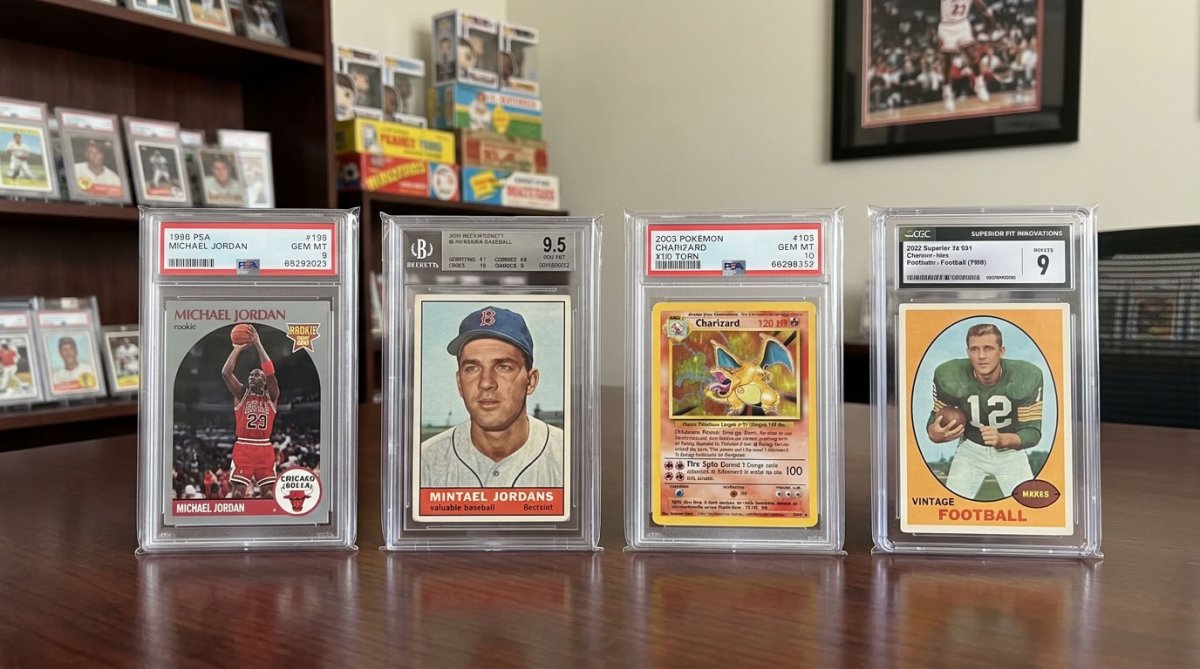
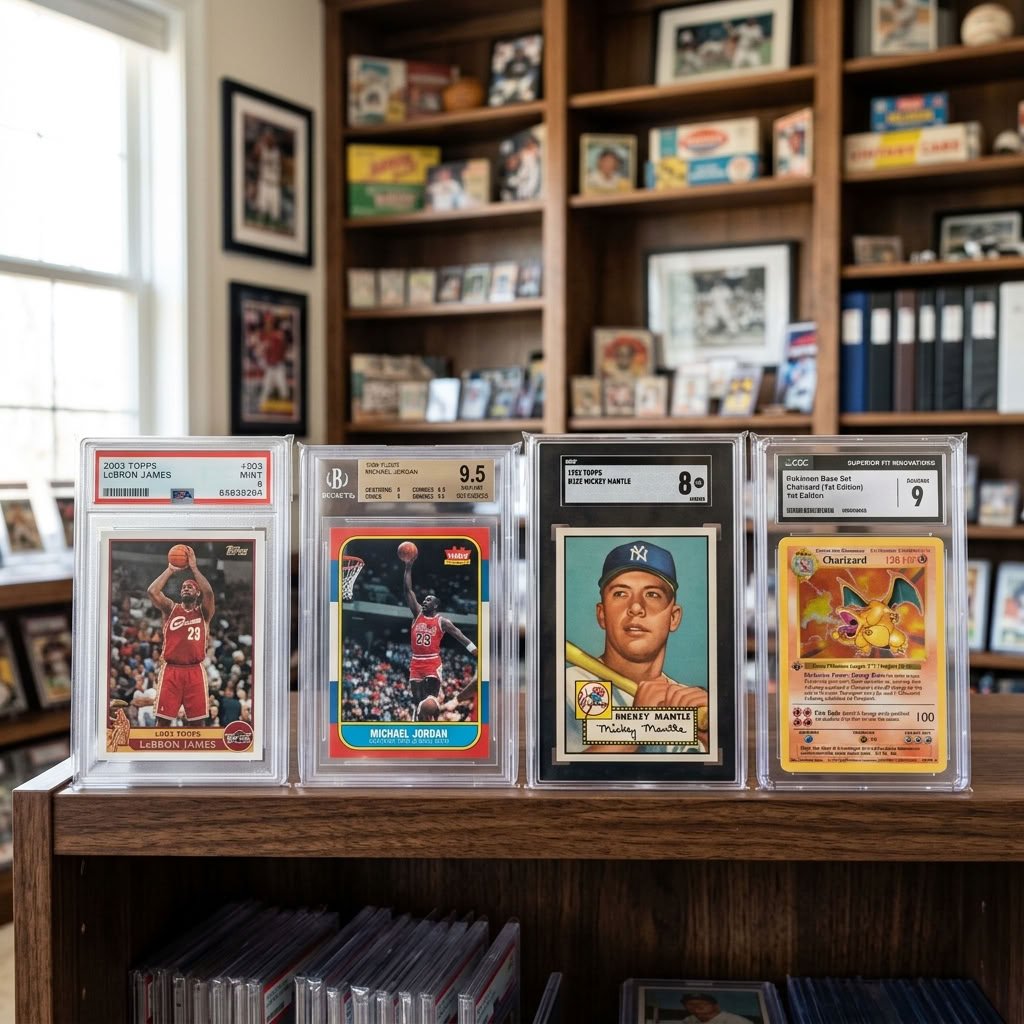
- PSA slabs are the most common reference point, and most "graded card sleeve" listings are sized around them. If you hold mostly PSA, a PSA-sized sleeve is the safe default.
- Beckett (BGS) cases are noticeably thicker than PSA slabs, so a sleeve sized tightly for PSA may not clear a BGS case at all, or may bind at the opening.
- SGC and CGC holders sit between those extremes in most runs, but they aren’t identical. Treat them as their own measurement, not as "PSA-sized."
If you hold a mix, measure one slab from each company and compare all of them against the sleeve's stated internal dimensions before buying a large pack.
Slab Guards and Oversized Holders
Slab guards and oversized holders add thickness on top of the slab itself. That changes the math:
- A sleeve sized for a bare slab will be too tight over a slab guard.
- A sleeve sized for a guarded slab will be loose on a bare one.
- If you use both setups, you need two sleeve sizes, not one.
This is where flap design and fit tolerance interact. A sleeve with corner bulk from a straight-cut flap needs more clearance to slide into a guard. A tapered flap needs less, because the leading edge is narrower than the opening it enters.
A Fit-Tolerance Rule of Thumb
Most practitioners find that a sleeve feels right when it slides on with light resistance and stays put when you turn the slab upside down.
Our own graded slab sleeves state compatibility with PSA slabs and Beckett cases. Before ordering for a mixed collection, confirm the sleeve covers every grading company you hold, and check whether you also use slab guards or oversized holders, since those add thickness.
How to Protect Graded Cards: Application, Removal, and Storage
Protecting graded cards comes down to three habits: insert cleanly, remove without stress, and store where dust and light cannot reach the surface.
Step 2: Insert the slab flap-first. Slide the slab in at a slight angle, then settle it flat.
Step 3: Seal the flap. Press the resealable flap down along its length.
Step 4: Remove without pulling. Lift the flap and slide the slab free by the edges.
Graded slabs are expensive, and the wrong sleeve undoes the protection you paid for. We also make top-loader sleeves and magnetic one-touch case sleeves, so one order covers a mixed collection.
Frequently Asked Questions
What are tapered flap sleeves for card slabs?
Tapered flap sleeves are protective covers made from clear polypropylene or OPP material that slide over a graded card slab and close with a flap that narrows toward the end. The tapered shape removes the bulky square corners found on standard sleeves, so the slab sits flat in a box or display case. The resealable flap keeps dust off the slab surface and lets you reopen the sleeve without tearing it, which matters if you resell or reholder cards often.
Do tapered flap sleeves fit PSA, BGS, SGC, and CGC slabs?
Fit depends on the sleeve's internal dimensions matching the slab's outer dimensions. PSA slabs share a common footprint, so PSA slab sleeves are widely available. BGS, SGC, and CGC holders vary slightly in thickness and edge profile, so check the listed compatibility before buying. Some sleeves, like the Vault X Exact Fit, state compatibility with PSA, CGC, and MGC slabs, while others are sized only for PSA-style holders.
How do you put a sleeve on a graded card slab without scratching it?
Work on a clean, soft surface. Hold the slab by its edges, never the front label, and slide it into the sleeve opening at a slight angle so the corners do not catch. Push until the slab sits fully inside, then fold the tapered flap over and press the resealable edge down. To remove it, lift the flap slowly and slide the slab out by the edges. Keeping your fingers off the slab face is the simplest way to avoid fingerprints and surface scratches.
Are resealable sleeves for graded cards better than open-top sleeves?
Resealable sleeves close the opening, which blocks dust and limits how much the slab slides around during storage or shipping. Open-top sleeves are faster to load but leave the top edge exposed. For long-term storage or cards you plan to sell, a resealable, tapered flap sleeve gives better protection with little extra effort. For cards you handle and photograph constantly, an open-top sleeve is quicker to work with.
Can you reuse tapered flap sleeves on graded card slabs?
Yes, if the resealable flap still holds and the material has not creased or clouded. Polypropylene and OPP sleeves can be reopened and reused several times, but repeated handling dulls clarity and weakens the flap adhesive. Inspect the sleeve before reuse: if it looks foggy, has deep creases, or the flap no longer stays closed, replace it. Sleeves are cheap insurance compared with the value of the slab inside.