 blog
blog
Best Sleeves for BGS Graded Cards: 2026 Fit Guide
Table of Contents
- What Makes a Sleeve Right for BGS Graded Cards
- Quick Comparison: Sleeve Styles for BGS Slabs
- Beckett Slab Sleeve Size: What Actually Fits
- PSA vs BGS Slab Sleeve Fit: Why One Size Does Not Work
- Resealable Graded Card Sleeves: Flap Design and Closure
- Material, Clarity, and Thickness: What You Are Paying For
- How to Protect Graded Cards in Storage, Display, and Shipping
- Cost Per Sleeve and Value: A Buying Framework
- Frequently Asked Questions
Last Updated: October 13, 2026
What Makes a Sleeve Right for BGS Graded Cards
A sleeve that works for BGS graded cards fits snugly, seals shut, and stays clear for years.
This guide from Superior Fit Sleeves covers the fit, materials, and closure design that matter for Beckett holders. We've made precision-fit tapered sleeves since 2014.
The core problem: the best sleeves for BGS-graded cards are not the same sleeves that fit PSA holders.
Quick Comparison: Sleeve Styles for BGS Slabs
Three sleeve styles dominate the market, each solving a different problem. Loose poly bags are cheap and forgiving. Resealable tapered sleeves are the tight, clean option. Semi-rigid holders are for shipping, not display.
Sleeve Style | Fit | Closure | Best For |
|---|---|---|---|
Loose poly bag | Slack, universal | None or fold-over | Budget storage |
Resealable tapered sleeve | Form-fitting | Adhesive flap | Display and handling |
Semi-rigid holder | Rigid, snug | Fold and tape | Shipping and transport |
Loose bags leave excess material that catches on shelves and collects dust. Resealable tapered sleeves give a clean, custom look with zero bulk. Semi-rigid holders protect during transit but aren't meant for long-term display.
For most collectors storing and displaying Beckett slabs, the resealable tapered sleeve is the right call, the style we invented, and still the one we'd pick. If you want that fit without hunting for dimensions, our Graded Card Slab Sleeves are cut specifically for graded holders like BGS slabs.
Beckett Slab Sleeve Size: What Actually Fits
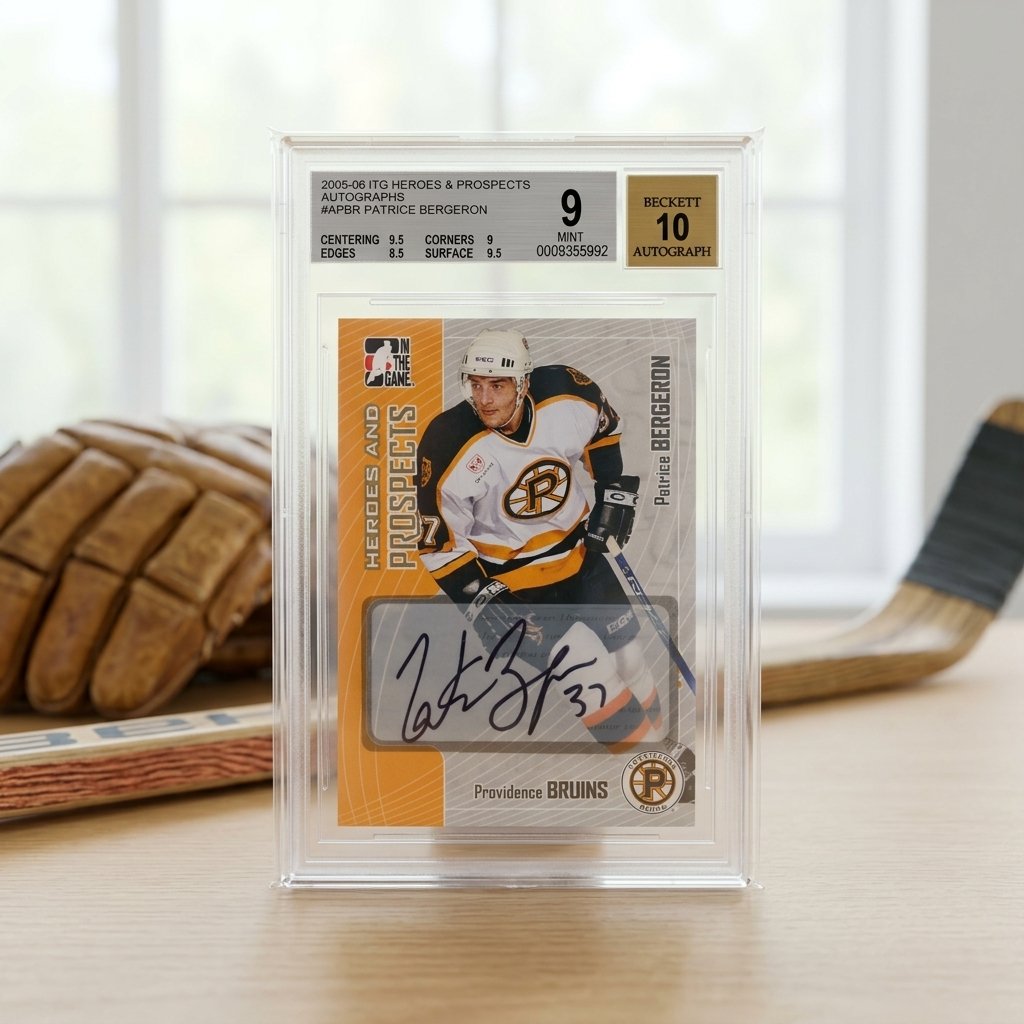
Beckett slab sleeve size depends on the slab generation and case variation, so measuring beats guessing. BGS holders have shifted over the years, and a sleeve cut for one run can feel tight on another.
Why BGS Slabs Vary More Than PSA
PSA holders are remarkably consistent from run to run. Beckett's are not. BGS cases span multiple generations of tooling, and outer dimensions drift between production batches. Thicker cards, memorabilia swatches, patch autographs, booklet-style cards, push a holder toward the upper end of the thickness range; a base card sits at the lower end.
That variation is why a "one size fits all" sleeve often fits nothing well. If universal sleeves felt baggy on some slabs and tight on others, that's holder variation, not you.
A Repeatable Fit-Test Method
Instead of trusting a product page, run the same test on every slab. It takes about a minute and gives you a number you can compare across sleeves.
- Measure the slab. Use digital calipers or a steel ruler with millimeter markings. Record length, width, and thickness at the thickest point of the case, usually across the center, not the corner.
- Measure the sleeve's interior. Lay the sleeve flat and measure the inside opening, not the outside. Outside dimensions include the seam and the flap, which can add several millimeters.
- Calculate clearance. Subtract the slab dimension from the sleeve's interior dimension on each axis. A snug fit leaves a small positive clearance on length and width, enough to slide the slab in without forcing it, and just enough thickness clearance for the flap to fold flat.
- Test the flap. Insert the slab, fold the flap down, and press the adhesive. If the flap bulges or the seam pulls, the sleeve is too tight. If it slides off with a shake, it's too loose.
- Log the result. Note the slab generation, dimensions, and whether the sleeve passed. Over a few slabs you'll see which size covers most of your collection and which outliers need a second size.
Side-by-Side Fit Comparison
Use a table like this to compare sleeves before you commit. Fill in interior dimensions from the product listing and the clearance you measured. A sleeve that passes on most of your slabs beats one that passes on a single outlier.
Sleeve Style | Interior Length | Interior Width | Interior Thickness | Closure | Typical Clearance on a Standard BGS Slab |
|---|---|---|---|---|---|
Loose poly bag | Oversized | Oversized | Oversized | None or fold-over | Large, slab shifts inside |
Resealable tapered sleeve | Form-fitting | Form-fitting | Form-fitting | Adhesive flap | Small, even on all axes |
Semi-rigid holder | Rigid | Rigid | Rigid | Fold and tape | Minimal, slab is held firm |
Collectors who mix generations of BGS holders often need two sleeve sizes: one for the majority of their slabs and one for the outliers, cheaper than replacing a pack that fits only half your collection.
What to Do When a Sleeve Doesn't Fit
If a sleeve is too tight, don't force it, that can scuff corners and stress the seam. If it's too loose, the slab slides and the flap may not stay sealed. Match the sleeve to the measured slab, not the grading company's name alone.
PSA vs BGS Slab Sleeve Fit: Why One Size Does Not Work
PSA vs BGS slab sleeve fit comes down to dimensions. PSA holders run thinner and squarer. BGS holders are thicker and slightly taller.
This is the mistake we see most. Collectors buy sleeves marketed as fitting "graded slabs," then find half their collection swimming in excess plastic while the other half won't seal.
What most guides miss: the grading company isn't the full story. Within BGS alone, holder variation means checking fit across your slabs rather than trusting a single spec.
Resealable Graded Card Sleeves: Flap Design and Closure
Resealable graded card sleeves keep dust and fingerprints off the slab with a closure that stays shut.
Two closure types are on the market: a straight adhesive strip and a tapered flap.
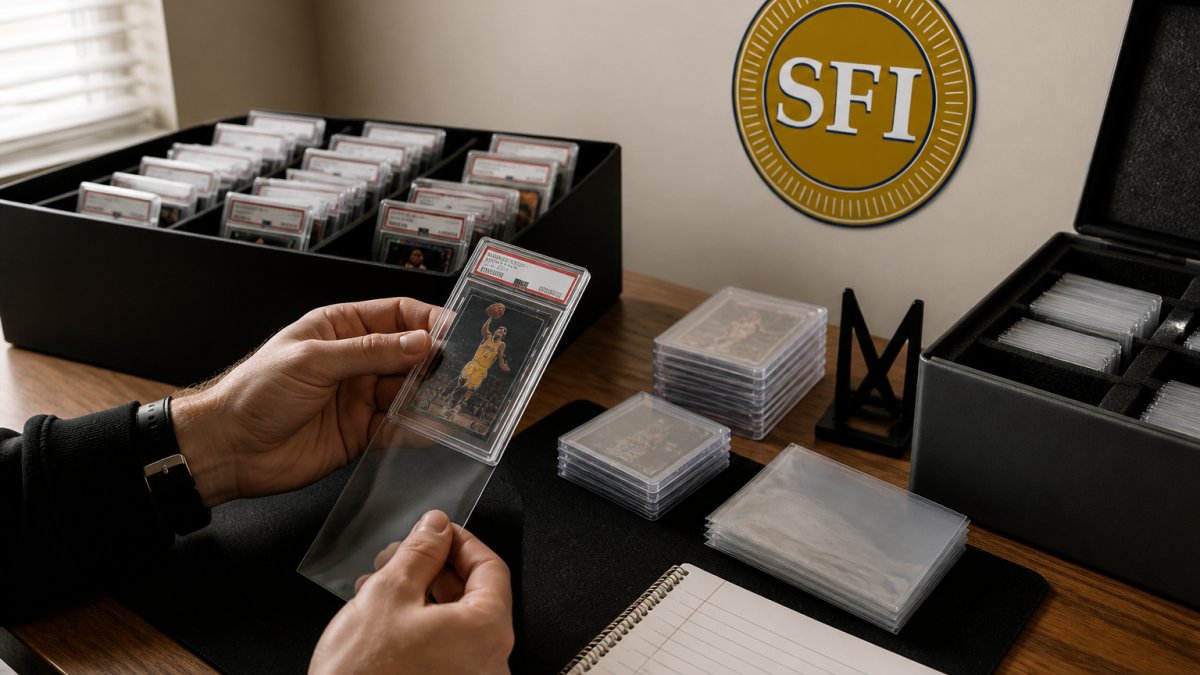
A resealable sleeve also lets you handle a slab without touching the plastic directly; you grip the sleeve, not the holder.
The adhesive should hold through repeated opening and closing.
Material, Clarity, and Thickness: What You Are Paying For
Sleeve material decides whether your slab still looks sharp in five years. Polypropylene is the standard clear plastic for card sleeves, and quality varies enormously between suppliers.
Here's what separates a good sleeve from a cheap one:
- Surface clarity: Glass-clear material lets you read the label and see the card without distortion. Foggy plastic makes even a gem-mint slab look dull.
- Thickness: Thicker material resists creasing and holds its shape. If it’s too thin, the sleeve wrinkles at the corners.
- Archival quality: Acid-free material won't break down and damage what it touches. This is the difference between protection and a slow problem.
When you pay more per sleeve, you're buying lasting clarity and material that won't degrade. The cheapest bag protects the slab today and looks tired in two years.
How to Protect Graded Cards in Storage, Display, and Shipping
Protecting graded cards means matching the sleeve to the job.
Storage: Sleeved slabs stack and box cleanly.
Display: Clarity is everything.
Shipping: Semi-rigid holders and careful packing matter here. Sleeve the slab first, then add rigid protection and padding.
For long-term handling, the rule is simple: touch the sleeve, not the slab. Every direct touch adds fingerprints or micro-scratches.
Cost Per Sleeve and Value: A Buying Framework
Cost per sleeve matters, not the pack price. A cheap pack with sleeves you can't use costs more than a quality pack where every sleeve fits. The framework below makes that decision repeatable.
Step 1: Calculate True Cost Per Sleeve
Divide the pack price by the number of sleeves that actually fit your slabs, not the number in the pack. If a 100-count pack fits 60 of your slabs, your effective cost per usable sleeve is the pack price divided by 60, not 100. That adjustment often flips the value comparison between a bargain bag and a precision sleeve.
Step 2: Score Each Sleeve on the Four Value Factors
Factor | What to Check | Why It Matters |
|---|---|---|
Fit | Interior dimensions vs. your measured slab | A loose sleeve slides and lets dust reach the slab; a tight one won't seal |
Material | Polypropylene clarity, archival quality, yellowing resistance | Cheap plastic fogs and discolors, making a gem-mint slab look dull |
Closure | Adhesive flap vs. straight strip vs. none | A weak closure opens in storage, and the protection stops |
Reusability | Does the adhesive hold through repeated open/close cycles? | A sleeve you can re-seal is a sleeve you don't replace |
Score each sleeve pass or fail on each factor, and eliminate any that fail fit or material. Those two are non-negotiable; closure and reusability are tiebreakers.
Step 3: Match Sleeve Style to Job
- Storage: Resealable tapered sleeve. Flat profile, no bulk, stacks cleanly.
- Display: Resealable tapered sleeve. Clarity is the whole point; a distortion-free sleeve lets the label read cleanly.
- Shipping: Semi-rigid holder plus padding. A sleeve alone guards against surface scuffs, not impact.
If you buy only one style, choose the resealable tapered sleeve. It covers storage, display, and handling, and gives a clean, custom look with zero excess bulk.
Step 4: Decide How Many Sizes You Need
Measure your slabs first, then count how many fall into each size band. Most collectors find one size covers most of their collection, and a second covers outliers, thicker holders, older generations, or non-BGS slabs. Buying two sizes deliberately is cheaper than one size that fits nothing well.
Step 5: Check Availability Before You Commit
Pricing and availability shift with quantity, sleeve style, and stock, so check the product page rather than budgeting from memory. A sleeve that's out of stock when you need it isn't a value, no matter how good the per-unit number looks.
The Honest Trade-Off
Loose poly bags win on upfront price and lose on fit, clarity, and closure. Resealable tapered sleeves cost more per unit and win on every factor that affects how your slab looks and how long it stays protected. Semi-rigid holders are a shipping tool, not a storage or display solution. Pick the style that matches the job, then apply the cost-per-usable-sleeve math.
Frequently Asked Questions
What size sleeve fits a BGS graded card?
There is no single universal size, because BGS slab shells have changed slightly across production runs. A sleeve sized for standard BGS slabs will fit most current holders, but older or thicker shells can run tight. Measure your slab's length, width, and thickness with a ruler before ordering, then match those numbers to the sleeve's stated dimensions. A snug, form-fitting sleeve with a tapered resealable flap gives the cleanest result and avoids the slack you get from loose universal sleeves.
Are PSA and BGS slab sleeves the same size?
No. PSA and BGS holders are built to different dimensions, so a sleeve cut for one brand will feel either baggy or too tight on the other. PSA slabs are generally thinner and more uniform, while BGS shells are thicker and vary more between production runs. If your collection mixes both, buy sleeves sized per slab brand rather than a single universal option. This is the core of the PSA vs BGS slab sleeve fit question, and it is why fit testing matters.
Can you use a resealable sleeve on a BGS graded card?
Yes, and resealable graded card sleeves are one of the better choices for BGS slabs. A resealable flap, especially a tapered one, folds over the slab edge and keeps dust, fingerprints, and scratches off the surface without adhesive touching the holder. The flap also holds the sleeve in place during storage, display, and shipping. Look for an acid-free, archival-grade material so the sleeve does not yellow or fog over time.
Do graded card sleeves affect visibility?
A good sleeve should not. Ultra-clear, distortion-free material lets the label, grade, and card surface read exactly as they do unsleeved, which matters for display and for photos when you sell. Cheap poly sleeves with a hazy or cloudy finish can dull the presentation. If clarity drops after a few years, that usually points to a non-archival material rather than the sleeve concept itself. Choose archival-grade, acid-free sleeves to keep surface clarity long term.
Your graded cards deserve protection that fits as precisely as the grade itself. At Superior Fit Sleeves, we build archival-grade, acid-free sleeves with the tapered resealable flap we invented, cut for a snug fit on BGS and other major slab brands. Browse our graded card slab sleeves, top-loader sleeves, and magnetic card case sleeves to find the right fit for your collection. Get started with Superior Fit Sleeves and give every slab a clean, custom fit that lasts.