 how-to
Archival Grade Sleeves for PSA Slabs: A 2026 Guide
Table of Contents
- What Archival Grade Sleeves Protect Against
- Acid Free Sleeves for Trading Cards: Why It Matters
- PVC-Free Slab Sleeves: The Standard for Long-Term Preservation
- How to Store PSA Graded Cards for Maximum Protection
- Choosing the Right Sleeve Fit for Your Graded Slabs
- Step-by-Step: How to Properly Sleeve Your Graded Slabs
- Crystal-Clear Display Quality and Optical Clarity
- Frequently Asked Questions
Last Updated: September 2, 2026
What Archival Grade Sleeves Protect Against
Your graded cards face threats you might not see coming. Dust settles invisibly on surfaces. Moisture creeps in from humidity changes. Fingerprints leave oils that etch into card surfaces over time. UV light fades colors gradually, month after month. Static electricity can damage the card's surface without you realizing it happened.
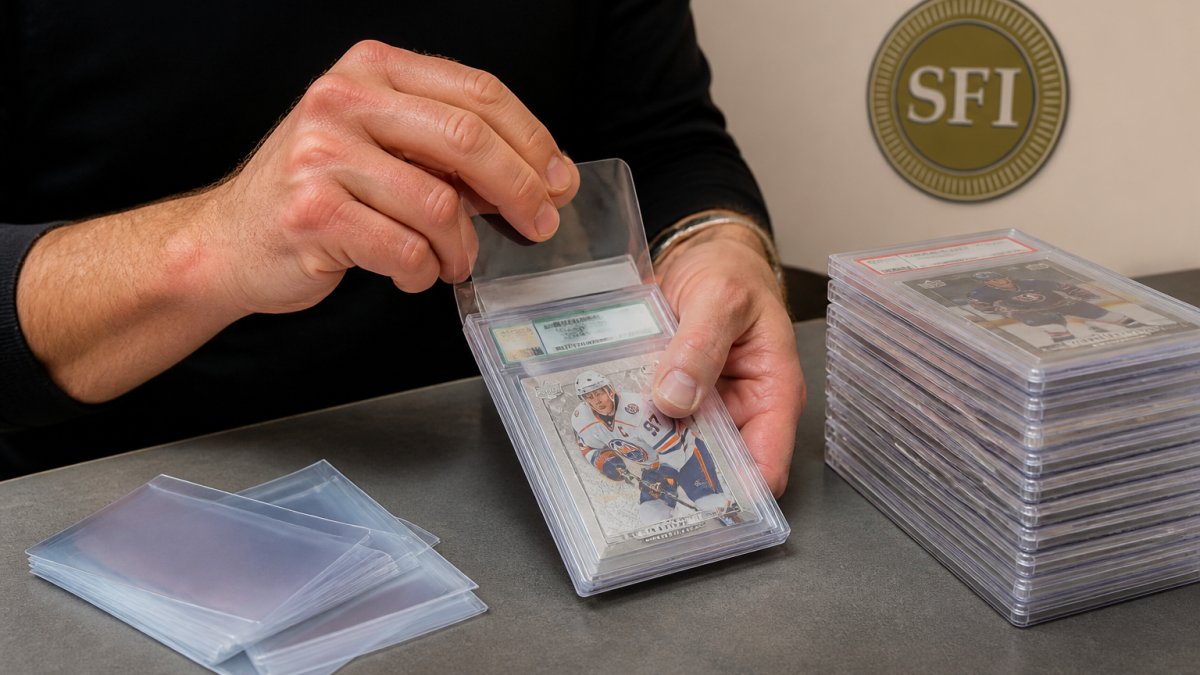
Step-by-step visual guide for Close, PSA for archival-grade sleeves for psa slabs
This is where archival-grade sleeves for PSA slabs become essential. They form a protective barrier against all of these threats simultaneously. The right sleeve doesn't just sit around your slab, it actively preserves what's inside by blocking environmental contaminants while maintaining the card's visibility.
Most collectors don't realize that standard plastic sleeves actually accelerate degradation. Cheap sleeves contain PVC and other chemicals that off-gas over time, creating an acidic microclimate inside the sleeve (peer-reviewed research). This acidic environment yellows cards, causes foxing spots, and degrades the card stock itself. The irony is brutal: the protection you thought you were providing becomes the very thing that damages your investment.
Archival grade sleeves work differently. They're engineered from acid-free, PVC-free materials that create a chemically stable environment. The plastic remains inert, it doesn't interact with the card or emit harmful compounds. Superior Fit Sleeves, the original inventor of perfect-fit tapered sleeves since 2014, manufactures sleeves specifically designed for this purpose, ensuring your graded slabs remain protected without introducing new risks.
Acid Free Sleeves for Trading Cards: Why It Matters
Acid-free materials prevent chemical degradation of your cards. When acid comes into contact with card stock, it breaks down the cellulose fibers that make up the card itself (loc.gov). This process is irreversible. Once started, it continues regardless of whether you remove the sleeve.
The chemistry here matters because it determines whether your card will look the same in five years or ten years. Acid-free sleeves for trading cards maintain a neutral pH environment. This means the card's surface, ink, and structural integrity remain unchanged by the sleeve material itself.
Many collectors assume that if a sleeve looks clear and fits the slab, it's fine. This assumption costs them thousands in lost card value. A card that's been stored in acidic sleeves for even two years will show visible yellowing, particularly around the edges. The damage compounds over time, what starts as minor discoloration becomes severe degradation.
The standard you should look for is archival grade certification. This designation means the material has been tested to maintain its chemical stability for decades without degrading. Acid-free sleeves for trading cards aren't premium because they cost more to produce, they're premium because they're the only option that actually preserves your investment long-term.
PVC-Free Slab Sleeves: The Standard for Long-Term Preservation
PVC, or polyvinyl chloride, is cheap and flexible. Manufacturers love it because it's easy to work with. Collectors should avoid it entirely.
PVC-free slab sleeves eliminate the primary source of chemical degradation in card storage. PVC releases plasticizers and chlorine compounds as it ages. These compounds migrate into the card, causing yellowing, brittleness, and permanent damage. The process accelerates in warm environments, the exact conditions many collectors maintain their collections in.
The alternative is polypropylene, a chemically inert plastic that doesn't off-gas or interact with card stock. Polypropylene sleeves maintain their clarity and structural integrity for decades. They don't yellow, they don't become brittle, and they don't emit compounds that damage cards.
When you're choosing between sleeves, the PVC-free designation is non-negotiable. It's not a premium feature, it's the baseline requirement for long-term preservation. Superior Fit Sleeves manufactures archival grade sleeves for PSA slabs using PVC-free polypropylene, ensuring that your graded slabs remain in the same condition five, ten, and twenty years from now as they are today.
The cost difference between PVC and PVC-free materials is minimal. The difference in preservation outcomes is massive. This is one of those decisions where the cheaper option actively harms your collection.
How to Store PSA Graded Cards for Maximum Protection
Proper storage combines the right sleeve with the right environment. A perfect sleeve in a humid basement won't preserve your cards. A mediocre sleeve in ideal conditions will still degrade your collection over time. You need both elements working together.
Start with environment. Store your graded cards in a cool, dry location where temperature remains stable. Humidity should stay between 30-50 percent (loc.gov). Fluctuations are worse than consistent conditions, they cause the card and slab to expand and contract, creating stress on the protective case. Avoid basements, attics, and areas near windows. A climate-controlled closet or shelf away from direct sunlight is ideal.
Next, use acid-free, PVC-free sleeves designed specifically for your slab type. Different grading companies manufacture cases with slightly different dimensions. A sleeve that fits a PSA slab perfectly might be loose on a BGS case, and loose sleeves don't provide proper protection. The sleeve should fit snugly without forcing it over the slab.
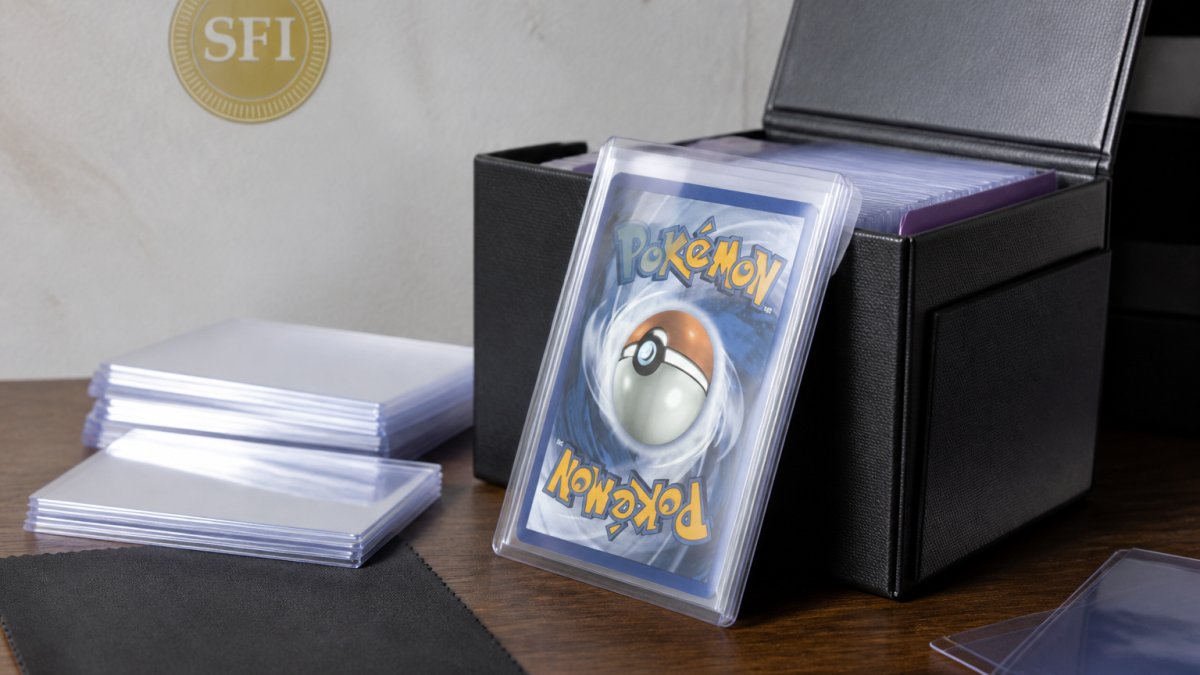
Store slabs vertically or flat, but never standing on edge. Vertical storage works well for collections you'll access regularly. Flat storage works better for long-term preservation because it distributes the slab's weight evenly. Avoid stacking slabs directly on top of each other, the weight of multiple slabs can stress the case and card inside.
Keep your collection away from light sources. UV exposure fades card colors permanently. This happens even with cards inside slabs, UV light penetrates through the clear plastic. Store your collection in opaque storage boxes or closed cabinets. If you display cards, use UV-blocking glass or acrylic and rotate the display periodically to minimize exposure.
Handle slabs by the edges only. Fingerprints leave oils and salts that etch into protective cases and can transfer to card surfaces. Wear cotton gloves when handling valuable cards. This seems excessive until you see fingerprint marks on a slab that won't come off.
Choosing the Right Sleeve Fit for Your Graded Slabs
The fit of your sleeve determines how much protection it actually provides. A loose sleeve allows the slab to shift inside, creating friction that can damage the case. A sleeve that's too tight forces the slab and can crack the protective case. The right fit is snug without pressure.
Exact-Fit vs. Standard Sleeves
Exact-fit sleeves are engineered to match specific slab dimensions precisely. They wrap around the slab with minimal excess material. This design eliminates movement inside the sleeve while maintaining visibility of the graded label and card.
Standard sleeves are one-size-fits-multiple designs. They accommodate a range of slab sizes, which means they're looser on smaller cases and tighter on larger ones. Standard sleeves cost less because they're manufactured in higher volume, but they sacrifice the protection that precision fit provides.
For valuable cards, exact-fit sleeves are worth the investment. The difference between a loose-fitting standard sleeve and a precision-fit exact-fit sleeve is the difference between adequate protection and optimal preservation. Superior Fit Sleeves manufactures exact-fit sleeves for major grading companies, ensuring that your specific slab type receives the protection it deserves.
Compatibility with PSA, BGS, and CGC Cases
PSA cases measure approximately 2.5 x 3.5 inches for standard trading cards. BGS cases are similar but have slightly different dimensions due to their magnetic closure design. CGC cases are slightly larger and use a different slab profile.
A sleeve designed for PSA slabs won't fit BGS cases properly. The BGS case's magnetic strip adds thickness that a PSA-specific sleeve won't accommodate. Similarly, CGC cases have their own dimensional requirements.
If you collect cards from multiple grading companies, which most serious collectors do, you need sleeves that fit each company's cases correctly. This is where many collectors make mistakes. They buy generic sleeves thinking they'll work for everything, then end up with a collection of poorly protected slabs.
The solution is to match your sleeves to your specific slab types. If you have a mix of PSA, BGS, and CGC slabs, purchase sleeves engineered for each. The cost is minimal compared to the value you're protecting. Superior Fit Sleeves offers precision-fit sleeves for all major grading companies, eliminating the guesswork.
Step-by-Step: How to Properly Sleeve Your Graded Slabs
Sleeving a graded slab seems simple but requires care to avoid damaging the case or card inside. The process takes less than a minute per slab once you develop the technique.
What You'll Need Before You Start
Gather your materials before you begin. You'll need the sleeves themselves, make sure they're the correct size for your slab type. Have a clean, flat surface to work on. A microfiber cloth is helpful for wiping dust off the slab before sleeving. Avoid paper towels, which can leave fibers behind.
Wash your hands or wear cotton gloves. This prevents fingerprints and oils from transferring to the slab. Have all your slabs organized and ready. Working in batches is more efficient than sleeving one card at a time.
Sleeving Process and Best Practices
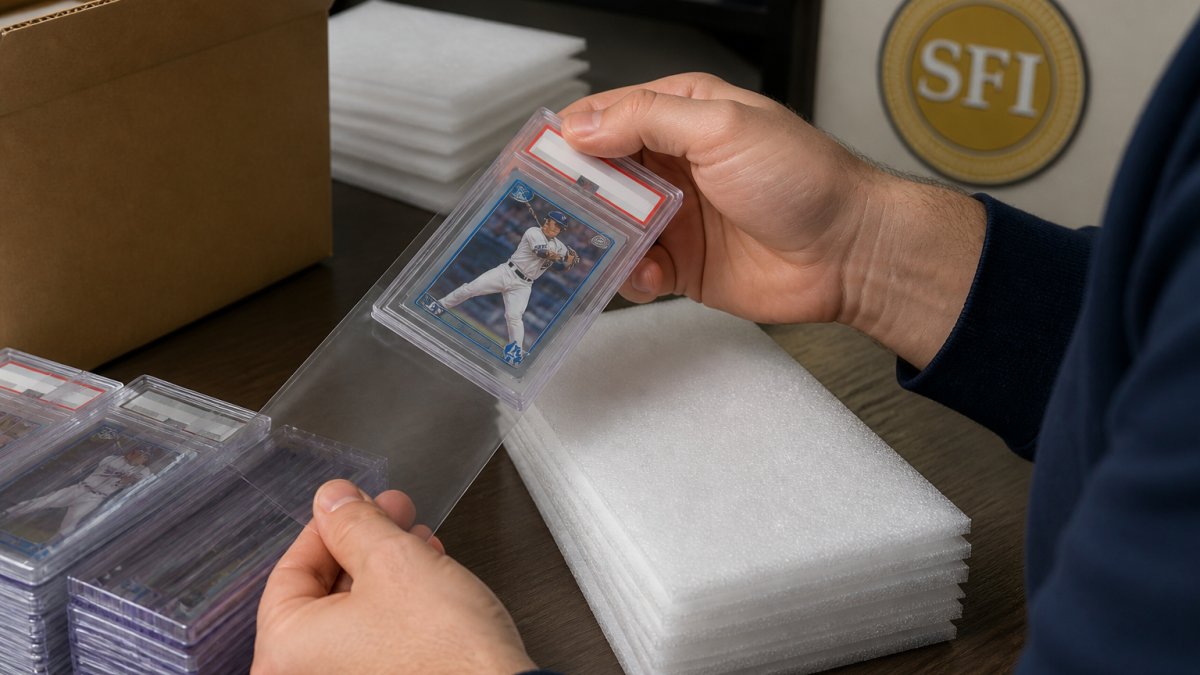
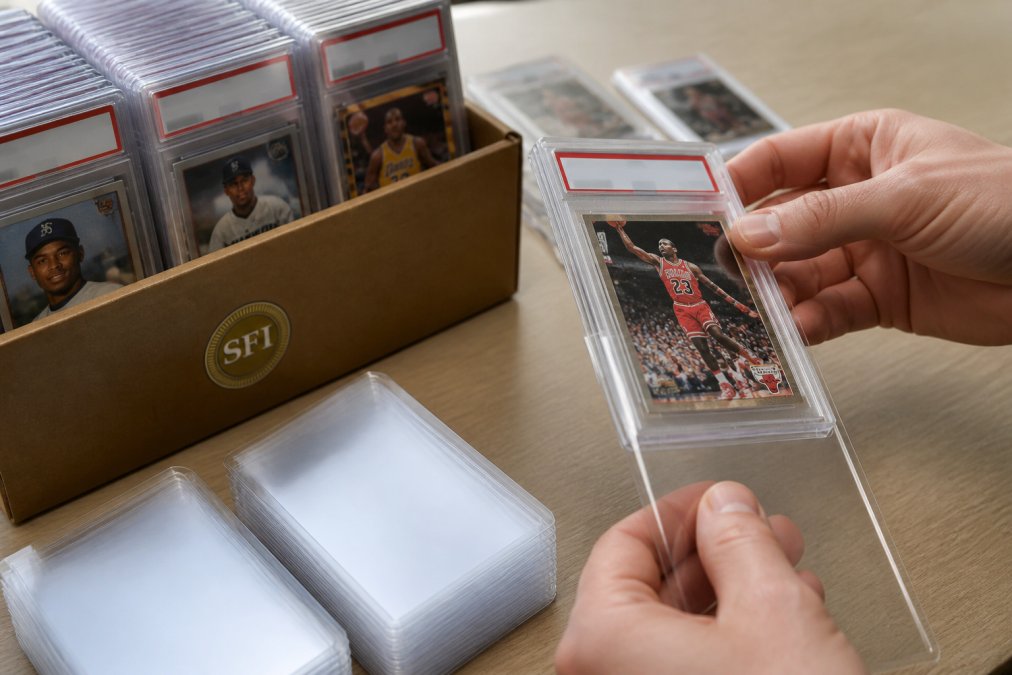
Hold the sleeve open with one hand, keeping the opening facing upward. Position the slab so the graded label faces the same direction as the sleeve's opening. Slowly slide the slab into the sleeve, starting with the top edge.
Use gentle, steady pressure. Don't force the slab. If you feel resistance, stop and check the alignment. The slab should slide in smoothly without binding. Once the slab is fully inserted, the sleeve should fit snugly around all sides.
Inspect the fit visually. The slab shouldn't move inside the sleeve when you gently shake it. The graded label should be clearly visible through the crystal-clear plastic. There should be no wrinkles or creases in the sleeve material.
If your sleeves have a resealable flap, seal it gently. Don't crimp or fold the flap sharply, this can stress the sleeve and create weak points. A gentle fold is sufficient to keep dust out.
Store the sleeved slab immediately. Don't leave sleeved cards sitting on your work surface exposed to dust and light. Place them in their storage location within minutes of sleeving.
Common Mistakes to Avoid
The most common mistake is using the wrong sleeve size. A sleeve that's too large allows the slab to move, defeating the purpose of protection. A sleeve that's too tight can crack the slab case when you try to insert it. Verify your sleeve size before sleeving any cards.
Another mistake is forcing a slab into a tight sleeve. This creates stress on the protective case and can cause cracks. If the slab doesn't slide in smoothly, you have the wrong size. Stop immediately and use the correct sleeve.
Don't touch the card surface inside the slab. Your fingers can leave permanent marks on the plastic. Handle the slab by its edges only. This applies even after the slab is sleeved, oils from your skin can transfer through the sleeve material.
Avoid storing sleeved slabs in direct sunlight or near heat sources. The combination of heat and UV light accelerates degradation of the sleeve material itself. A cool, dark storage location protects both the sleeve and what's inside.
Don't reuse sleeves. Once a sleeve has been removed and replaced, the material has been stressed and may have microscopic tears. New sleeves cost little compared to the value of your cards. Use fresh sleeves every time.
Crystal-Clear Display Quality and Optical Clarity
The sleeve material determines whether your card remains clearly visible or gradually becomes obscured. Optical clarity matters because you're paying for the privilege of seeing and displaying your graded cards. A cloudy or yellowing sleeve defeats that purpose.
High-quality archival grade sleeves maintain crystal-clear optical clarity for decades. The plastic doesn't cloud, yellow, or become hazy over time. This means a card sleeved in 2020 will look just as clear today as it did the day it was sleeved.
Cheap sleeves cloud within months. The plastic becomes slightly opaque, making it harder to see the card and graded label clearly. This happens because the plastic material is unstable and degrades when exposed to light and air. The degradation is permanent, there's no way to restore clarity once it's lost.
When you're evaluating sleeves, hold them up to light and look through them. The view of the card should be completely unobstructed. You should see no haziness, no distortion, and no color cast. If the sleeve material itself has any tint or cloudiness, that's a sign of poor-quality plastic that will only get worse.
Superior Fit Sleeves manufactures sleeves with optical clarity that rivals museum-quality display cases. The precision-cut design eliminates distortion at the edges. The archival-grade polypropylene maintains its clarity indefinitely. This means your graded slabs will look as impressive in ten years as they do today.
Protecting your graded card collection requires sleeves engineered for preservation, not just containment. The difference between archival grade sleeves for PSA slabs and standard alternatives is the difference between a collection that appreciates and one that deteriorates.
Superior Fit Sleeves has been manufacturing precision-fit, archival-grade protective sleeves since 2014. Our acid-free, PVC-free sleeves are designed specifically for PSA, BGS, CGC, and other major grading companies. Each sleeve maintains crystal-clear optical clarity while providing the chemical stability your cards need for long-term preservation. Get started with Superior Fit Sleeves and ensure your most valued investments remain protected and display-ready for decades to come.
Frequently Asked Questions
What does archival grade mean for card sleeves?
Archival grade means the sleeves meet preservation standards for long-term storage without degrading your cards. These sleeves are acid-free, PVC-free, and chemically stable, preventing yellowing, brittleness, or damage over decades. Archival-grade sleeves protect against moisture, dust, and environmental factors that would otherwise compromise your collection's condition and value.
Are PVC-free sleeves necessary for PSA slabs?
Yes. PVC (polyvinyl chloride) releases harmful compounds over time that can degrade card surfaces and slab cases. PVC-free sleeves eliminate this risk, ensuring your graded investment remains protected. Serious collectors and professional storage facilities use PVC-free sleeves exclusively because they preserve the integrity of both the card and the slab case without chemical degradation.
How do I prevent scratches on my PSA slab cases?
Use precision-fit, archival-grade protective sleeves that provide a snug, form-fitting barrier against dust and handling damage. Keep slabs in individual sleeves rather than stacked directly together. Store them upright or in acid-free boxes away from high-traffic areas. Handle slabs by the edges only, and replace sleeves if they show wear or cloudiness, as damaged sleeves reduce the protective barrier.
What is the difference between exact-fit and standard slab sleeves?
Exact-fit sleeves are precision-cut to match specific slab dimensions (like PSA or BGS cases), providing a snug fit that prevents shifting and dust infiltration. Standard sleeves are looser, allowing more movement inside the sleeve. Exact-fit sleeves offer superior protection, display quality, and professional appearance, making them the preferred choice for serious collectors and valuable cards.
This article was written using GrandRanker