 ultimate-guide
How to Display Graded Card Slabs: The 2026 Collector's Guide
Table of Contents
- Display Options Compared: Cases, Stands, and Risers
- Choosing the Best Sleeves for PSA Slabs and Other Graders
- Picking a Graded Card Display Case for Your Space
- UV Protection for Trading Cards: What Actually Works
- How to Organize Graded Card Collections by Set and Rarity
- Step-by-Step: Setting Up a Scratch-Free Display
- Cleaning, Insuring, and Securing Your Display
- Frequently Asked Questions
Last Updated: September 28, 2026
Display Options Compared: Cases, Stands, and Risers
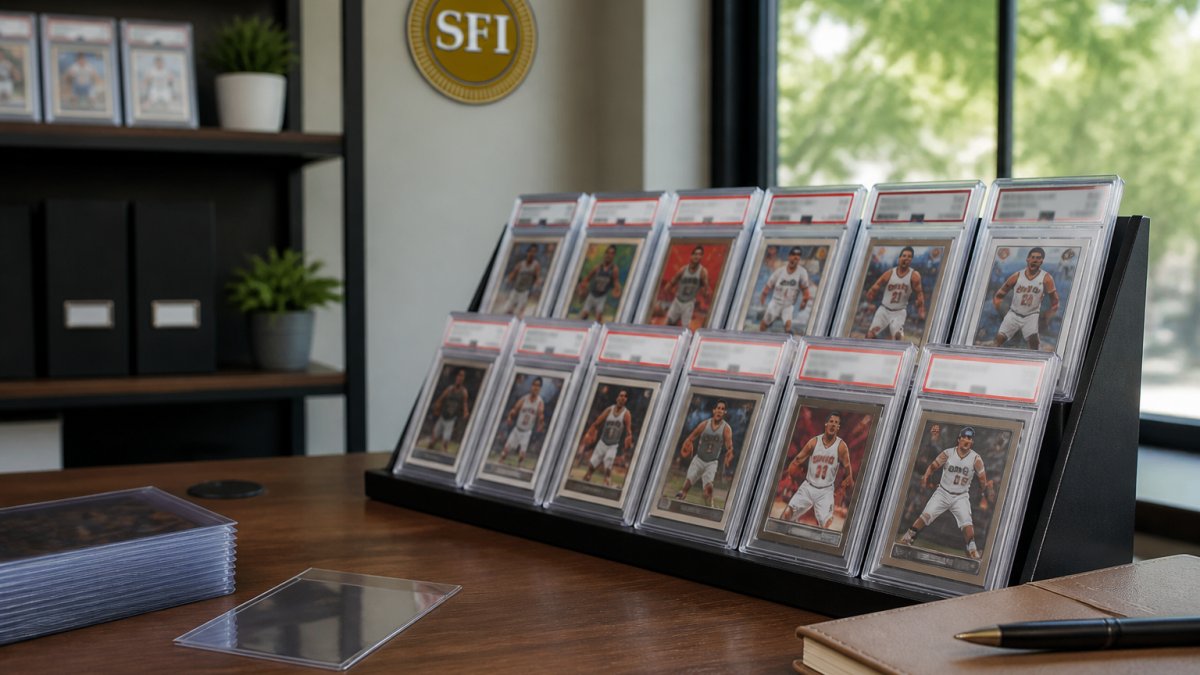
Displaying graded card slabs comes down to three families: enclosed cases, open stands, and tiered risers for graded card slabs. Each trades protection against visibility, and picking wrong means scratched slabs or a collection you never look at.
Display Type | Protection Level | Space Needed | Best For |
|---|---|---|---|
Wall-mounted case | High (enclosed, dust-proof) | None on surfaces | High-value slabs, small apartments |
Tabletop stand | Low (open to air) | Moderate | Rotating favorites |
Display riser | Low to medium | Moderate | Full sets, tiered viewing |
Acrylic showcase | High | Moderate to high | Centerpiece slabs |
Choosing the Best Sleeves for PSA Slabs and Other Graders
The best sleeves for PSA slabs are precision-cut, archival-grade sleeves sized to the holder's exact outer dimensions. A loose sleeve lets the slab slide and scratch; a tight one resists movement and keeps the surface clean.
Fitting PSA, BGS, and CGC Holders
Measure before you buy. Slab dimensions vary enough between graders that a universal sleeve either bags out at the corners or won't slide on at all.
- PSA: Standard-sized holders with consistent outer dimensions across most submissions
- BGS: Thicker cases with a different corner profile
- CGC: Its own dimensions, distinct from both
Picking a Graded Card Display Case for Your Space
A graded card display case should match your room, not the reverse. In small apartments, wall-mount units win by default, a vertical case holds many slabs in zero footprint. If you rent and can't drill, a narrow tabletop showcase against a wall is next best.
UV Protection for Trading Cards: What Actually Works
UV protection for trading cards means interrupting the ultraviolet portion of the light spectrum before it reaches the inks, coatings, and paper inside a slab. "Keep it out of the sun" is correct but incomplete: fading is a chemistry problem, not a brightness problem.
Why Light Fades a Card
Visible and ultraviolet light both carry energy. When it lands on a card's organic dyes and pigments, it can break the chemical bonds that give them color; the freed molecules recombine into compounds that absorb different wavelengths, which is why a faded card looks washed out, yellowed, or shifted toward blue-gray rather than simply lighter. Paper fibers and adhesives break down the same way, which is why an old card can feel brittle even when never handled.
How UV Ratings Actually Work
Manufacturers describe UV filtering as a percentage of ultraviolet light blocked. A case rated at 98% blocks nearly all UV but still passes visible light, which also fades pigments, just more slowly. A high UV number is not full light protection.
A few practical reference points:
- Standard acrylic (PMMA): Clear and rigid, but blocks very little UV on its own unless a UV-stabilizing additive is compounded into it. Many budget cases fall here.
- UV-filtering acrylic: The same base plastic with an additive that absorbs UV before it passes through. This is what most reputable display makers mean by "UV-resistant."
- Polycarbonate: Tougher and more impact-resistant than acrylic, and naturally blocks more UV, but it scratches more easily and can yellow over time if not UV-stabilized.
- Glass: Blocks most UV-B but passes a large share of UV-A, which is the wavelength most responsible for fading. Plain glass display cabinets are not UV protection.
What Actually Reduces Fading
- Distance from the light source matters more than the case rating. Light intensity falls off sharply with distance, so moving a display a few feet further from a window can cut exposure dramatically.
- Filter the window, not just the case. UV-filtering window film protects open stands and risers that no case can cover.
- Prefer enclosed cases for anything valuable. An open stand exposes the slab face directly, and no sleeve or slab blocks UV.
- Rotate featured slabs. Swap the prime spot periodically so no single slab absorbs years of continuous exposure.
- Choose archival materials. Acid-free, archival-grade sleeves and backings resist yellowing and off-gassing.
- Control the light you add. LED display lighting emits far less UV than halogen or incandescent, and it runs cooler.
Temperature and Humidity Are Part of the Same Problem
Light is the headline, but heat and moisture accelerate every reaction that fades or warps a card. A display above a radiator, beside a vent, or in a bathroom degrades faster than one in a stable interior room, regardless of UV rating. Aim for steady temperature and moderate humidity, away from direct sun, vents, and exterior walls; a simple hygrometer confirms the range.
How to Organize Graded Card Collections by Set and Rarity
Organizing graded card collections works best when you pick one primary sort and stick to it: by set, by rarity, or by value. Mixing all three looks impressive and functions terribly. For most collectors, set-based organization reads cleanest: group slabs by year and release, then order within each group by card number.
Step-by-Step: Setting Up a Scratch-Free Display
- Clean the work area. Wipe down the surface so grit and dust don't get trapped under a slab.
- Sleeve each slab first. Slide the slab into its fitted sleeve before it goes near the display, your first line of defense against scuffs.
- Mount or place the display. Install wall hardware where you can see labels without pulling slabs out. For tabletop units, position away from windows.
- Load slabs in your chosen order. Set-based or rarity-based, keep it consistent across rows.
- Check for movement. A slab that rattles in its slot will scratch over time. Add corner protection or a tighter sleeve if it shifts.
- Label the sections. Mark rows so you never have to guess.
Cleaning, Insuring, and Securing Your Display
A display is only as good as its upkeep. Dust, fingerprints, and micro-scratches accumulate on the case and the slabs inside, and the wrong cleaning method can permanently cloud acrylic or lift a label. Here's the maintenance routine most guides skip, plus the security and insurance steps that protect the value behind the glass.
Cleaning Acrylic and Polycarbonate Cases
Acrylic and polycarbonate are softer than glass, so paper towels, abrasive pads, and ammonia-based cleaners are the wrong tools: paper towels leave fine wood-fiber scratches that cloud the view, and ammonia can haze plastics and attack slab label edges.
The safe routine:
- Dust first, dry. Use a clean microfiber cloth or soft camera-lens brush to lift loose dust. Wiping dust with a damp cloth grinds it into the surface.
- Mix a mild solution. A few drops of gentle dish soap in lukewarm water. Avoid hot water, which can warp thin acrylic.
- Wipe with a damp microfiber cloth. Work in straight lines rather than circles so any scratches that form stay consistent and less visible.
- Rinse with a clean, damp cloth. Do not pour water directly on the case, especially near seams or mounting hardware.
- Buff dry immediately. A second dry microfiber cloth removes water spots before they etch.
Polishing Out Light Scratches
Fine acrylic scratches can often be reduced with a plastic polish made for the material, applied with a soft foam pad and light pressure, then buffed off. Polishing removes a thin layer of plastic, so aggressive rubbing can dull printed logos or beveled edges. Deep gouges and cracks can't be polished out, the case has done its job and should be replaced.
Cleaning the Slabs Themselves
The slab is the card's primary shield, so treat it like one. Dust the face with a microfiber cloth before it goes back into a case; for smudges, a barely damp cloth and dry buff usually suffice. Never use solvents, alcohol, or abrasives, which can attack the plastic, seep under the label edge, or leave residue that traps dust. If a slab is already scuffed, a fitted sleeve is the practical fix: it covers the surface and prevents further contact scratches without polishing risk to the label.
Securing the Display
A display is a visible inventory, and visibility cuts both ways. Practical steps for a collection worth protecting:
- Photograph every slab and record certification numbers. A grading company's lookup tool can confirm a slab's authenticity and grade, which makes recovery and claims far easier.
- Keep purchase receipts and grading submission records together. Insurers and law enforcement both ask for proof of ownership and value.
- Check your renters or homeowners policy. Many standard policies cap or exclude collectibles, and coverage often requires a scheduled rider or a separate collectibles policy. Confirm the limit before you need it.
- Use a locking case or cabinet for high-value slabs. A locking wall case doubles as display and secure storage, especially useful in a small apartment.
- Store the highest-value slabs in a fireproof safe when not on display. Rotate them into the case for viewing rather than leaving them exposed indefinitely.
- Consider a monitored alarm or discreet camera if the collection is large enough to attract attention. Deterrence is cheaper than replacement.
A Maintenance Calendar That Works
- Weekly: Dust the outside of cases with a dry microfiber cloth.
- Monthly: Wipe case fronts with the mild soap solution and buff dry; check that no slab has shifted in its slot.
- Quarterly: Inspect slabs for new scuffs, confirm sleeves are still snug, and re-photograph anything that has changed.
- Annually: Review insurance coverage and limits against current values, and rotate featured slabs so no single card takes continuous light exposure.
A display cleaned on schedule, secured against theft, and documented for insurance is one you can enjoy instead of worry about, the difference between a collection on a shelf and one that holds its value.
Frequently Asked Questions
What is the best way to display graded cards without damaging them?
Keep slabs out of direct sunlight and away from heat or humidity swings. Sleeve each holder before it goes on a shelf or wall mount, and use UV-resistant cases where light is unavoidable. Rotate pieces periodically so no single slab sits in the brightest spot for months. This approach limits fading, warping, and the surface scuffs that come from bare slabs rubbing against stands or each other.
Do graded card slabs need extra sleeves for display?
Yes. Bare acrylic and polycarbonate holders pick up micro-scratches from shelves, risers, and handling, and those marks dull the view of the card inside. A precision-cut sleeve adds a clear barrier that keeps the slab surface smooth and dust-free. Superior Fit Sleeves makes fitted sleeves for graded card slabs, top-loaders, and magnetic one-touch cases, so each holder type gets a snug fit rather than a loose bag.
Should you use UV-protected cases for graded card displays?
Use them anywhere light reaches the display, especially near windows or under bright overhead fixtures. UV exposure fades inks and yellows holders over time, and damage is permanent once it happens. Look for cases and sleeves with a stated UV-resistant coating, keep displays out of direct sun, and pair UV cases with routine rotation of the cards on view.
How do you store PSA slabs to prevent scratching?
Sleeve every slab, then store upright in a box or case with dividers so holders do not slide against each other. Avoid stacking heavy slabs on top of one another, and keep the display area free of grit that can grind into acrylic. For long-term storage, a dust-proof case or fireproof safe with humidity control protects both the holder and the card inside it.
What are the best wall-mounted options for graded card slabs?
Wall-mounted rails, interlocking frames, and shadow-box shelves work well because they hold slabs flat and off surfaces where they can be knocked over. Check the mounting hardware rating before hanging anything heavy, and anchor into studs where possible. For small apartments, vertical wall mounts free up shelf space and turn a collection into wall art rather than clutter.
Will one sleeve fit PSA, BGS, and CGC slabs?
No. PSA, BGS, and CGC holders differ in slab dimensions and thickness, so a sleeve cut for one brand will be loose or too tight on another. Match the sleeve to the grading company's case size. Superior Fit Sleeves sells graded card slab sleeves sized for the major graders, plus separate lines for top-loaders and magnetic cases, so mixed collections stay properly fitted.
Is it worth buying premium sleeves for a small collection?
It depends on what the cards are worth to you. Even 50 graded cards represent real money and real effort, and a snug, archival-grade sleeve costs little per card while preventing scratches that lower eye appeal. Collectors with a handful of sentimental slabs get the same benefit as investors with thousands: the holder stays clean, and the card stays presentable.