 how-to
How to Prevent Graded Slab Scratches: 7 Proven Steps
Table of Contents
- Why Slab Scratches Happen and What They Cost You
- Assess Scratch Severity Before You Touch the Case
- How to Clean Graded Card Slabs Without Causing Scratches
- How to Store Graded Cards to Avoid Scratches
- Graded Card Sleeves: The First Line of Defense
- Step-by-Step: Build a Repeatable Scratch Prevention Routine
- When to Stop Polishing and Consider Replacement
- Conclusion
- Frequently Asked Questions
Last Updated: October 19, 2026
Why Slab Scratches Happen and What They Cost You
Slab scratches come from three places: the case sliding against another case, contact with a hard surface, and grit trapped between the two. That is the whole list.
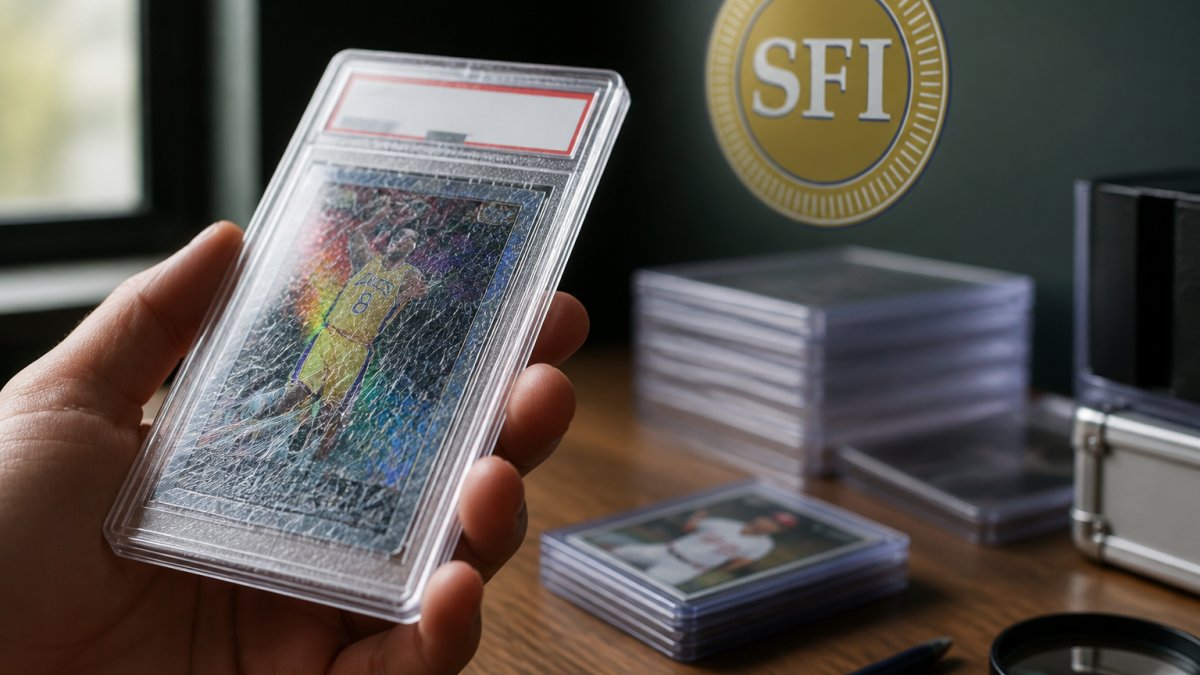
Here is the uncomfortable part. A scratch on the case does not touch the card inside, but it changes how the card reads. Buyers scan a slab for clarity first.
Most damage happens in the gap between "protected" and "actually protected." A slab in a top loader is still exposed at the face. A slab stacked loose in a box is grinding against its neighbor every time you move the box.
Assess Scratch Severity Before You Touch the Case
Not every mark should be polished. Sort them first, because the wrong fix on the wrong scratch makes things worse.
Surface scratches sit on top of the plastic. You can feel them with a fingernail, but they do not catch light at an angle.
Deep scratches go into the material. They catch a fingernail and show white at the edge.
Scuffs and hazing are a dull film, not a line. Often this is residue, not damage, and a clean cloth fixes it.
Run one test before any polish touches a slab.
How to Clean Graded Card Slabs Without Causing Scratches
Cleaning is where most collectors cause the damage they are trying to remove. The rule is simple: no dry wiping. A dry cloth drags dust across the surface, and dust is abrasive. Every step below exists because of a specific mechanism, not because it is tradition.
Why each step matters
- Rinse first under lukewarm water. Loose grit floats off before any cloth touches the surface. Skip this, and you press grit into the plastic on the first wipe. Lukewarm, not hot, heat softens the case and stresses seams.
- Apply a small amount of mild soap to a soft microfiber cloth, never directly to the slab. Soap applied to the case can wick toward the label edge and the seam. On the cloth, you control where it goes.
- Wipe with gentle circular motions, light pressure only. Circular motion spreads pressure evenly and avoids the straight-line gouges that back-and-forth wiping leaves when grit is trapped.
- Rinse again to lift the soap film. Dried soap residue looks exactly like hazing and traps new grit.
- Pat dry with a clean microfiber cloth, then air dry fully. Patting lifts water; wiping drags it. Air drying removes the last film without contact.
What to use and what to avoid
Microfiber is the default because the fibers trap grit instead of dragging it. Paper towels shed fibers and leave micro-marks that read as hazing under a lamp. Cotton t-shirts feel soft but hold grit in the weave.
Avoid alcohol, acetone, and ammonia-based glass cleaners. These solvents attack the case surface, dull the finish, and can wick into the label area.
If you use a plastic polish, choose one labeled for clear acrylic or polycarbonate and test it on a corner first. Abrasive polishes remove plastic, and every pass thins the case.
Protect the label and the seams
Keep the label dry. Water that reaches the label can lift ink or wrinkle the paper, and a damaged label hurts value far more than a scuff on the case.
The seam is the other weak point. Water and soap that pool at the seam can seep inside, and once moisture is in, the card is at risk. Dry the seam first with a microfiber cloth before air-drying the face.
How to clean graded card slabs comes down to one principle: remove grit from the surface before you apply any pressure. Pressure plus grit equals scratches.
How to Store Graded Cards to Avoid Scratches
Storage is where prevention actually happens. How to store graded cards well comes down to three rules: separate every case, control the environment, and keep the display surface soft. Each rule maps to a specific failure mode.
Separate every case
Stacking is the quiet killer. A stack of ten slabs puts weight on the bottom case, and any grit between them grinds under that load. The bottom slab takes the most pressure and shows the most scuffs. Dividers cost little and prevent most of it.
- Store slabs upright, never stacked flat on top of each other
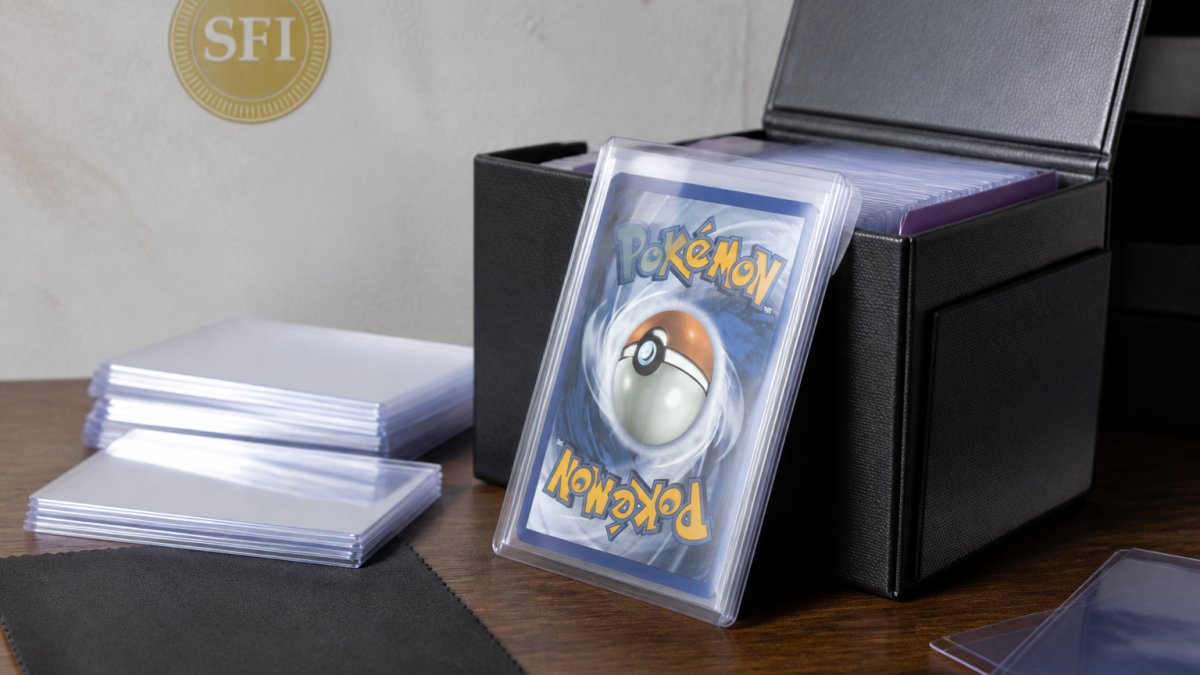
- Use a felt-lined case or a storage box with dividers
- Avoid cardboard as a contact surface; it holds grit
- Never slide one slab across another; lift, then set down
A common pattern is a collector who stores slabs upright but still sees edge scuffs. The cause is usually the box itself: an unlined cardboard box sheds fibers and holds dust. A felt liner or a plastic bin with dividers solves it.
Control the environment
Temperature swings matter. Plastic expands and contracts, and repeated cycling can stress case seams. A stable, room-temperature spot beats a garage shelf every time. Keep boxes out of direct sunlight, UV does not scratch plastic, but heat cycling does, and sunlight through a window can push a shelf well above room temperature.
Humidity is the second lever. High humidity softens paper labels and can warp the card inside. A dry, stable room is the goal; a basement corner is not.
Handle and transport with intent
Most damage happens during handling and transport, not on the shelf. The rules are short:
- Handle by the edges, never the face
- Set slabs on felt or a sleeve, never bare wood or cardboard
- Keep food and drink away from the work area
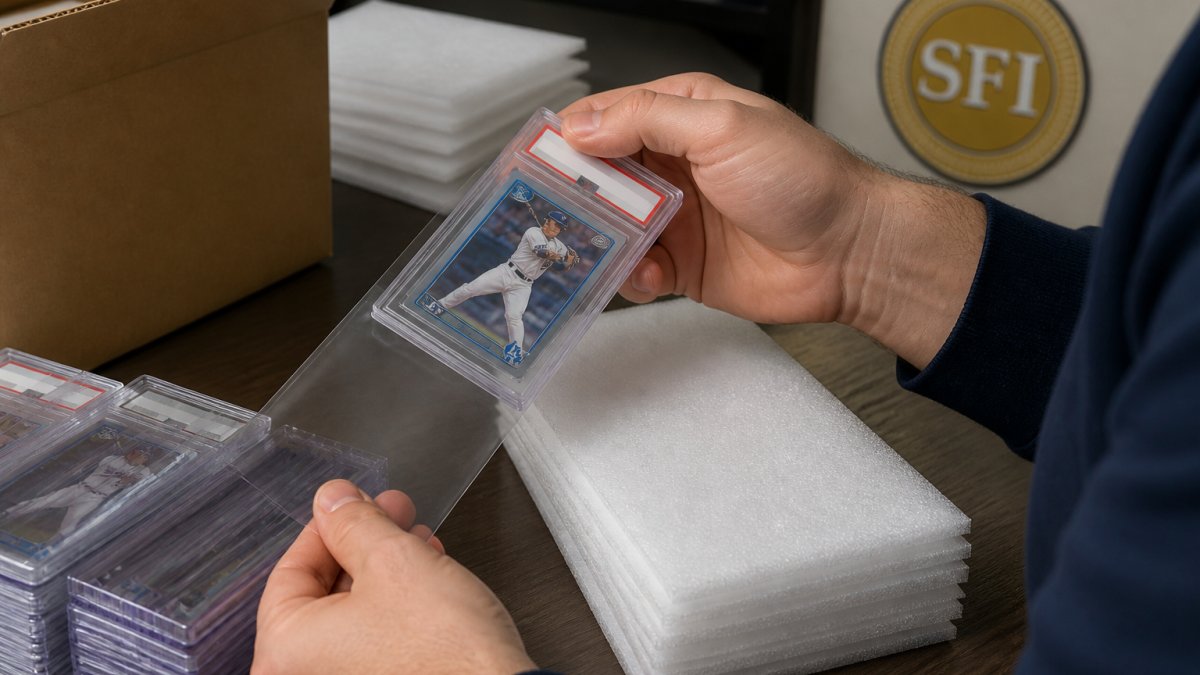
- When shipping, wrap each slab individually and pack so nothing shifts
For transport, a padded case with individual slots beats a padded envelope every time. Slabs that can move will move, and movement plus grit equals scratches.
Display without damage
Display is storage with an audience. If slabs sit on a shelf, keep them upright in a stand that contacts only the edges, and dust the shelf, not the slabs, with a microfiber cloth. Dust that settles on a slab and then gets wiped dry can start a scratch.
Graded Card Sleeves: The First Line of Defense
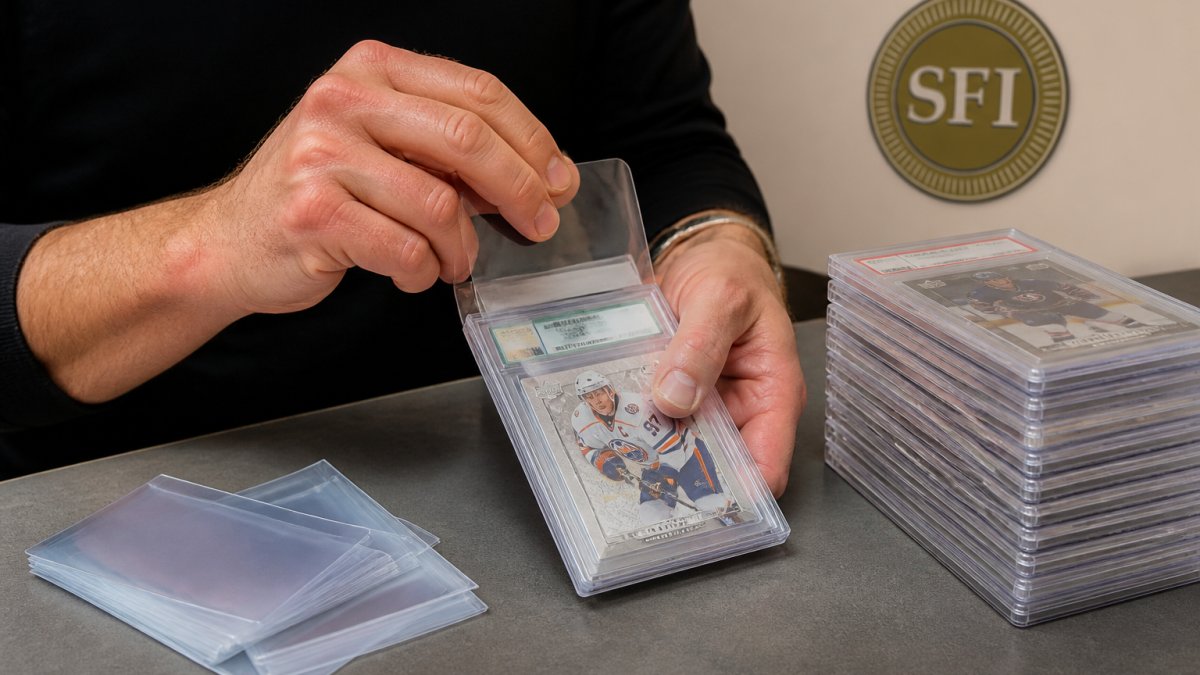
A graded card sleeve is a tight-fitting plastic cover that wraps the entire slab, sealing the case surface from grit, friction, and handling contact.
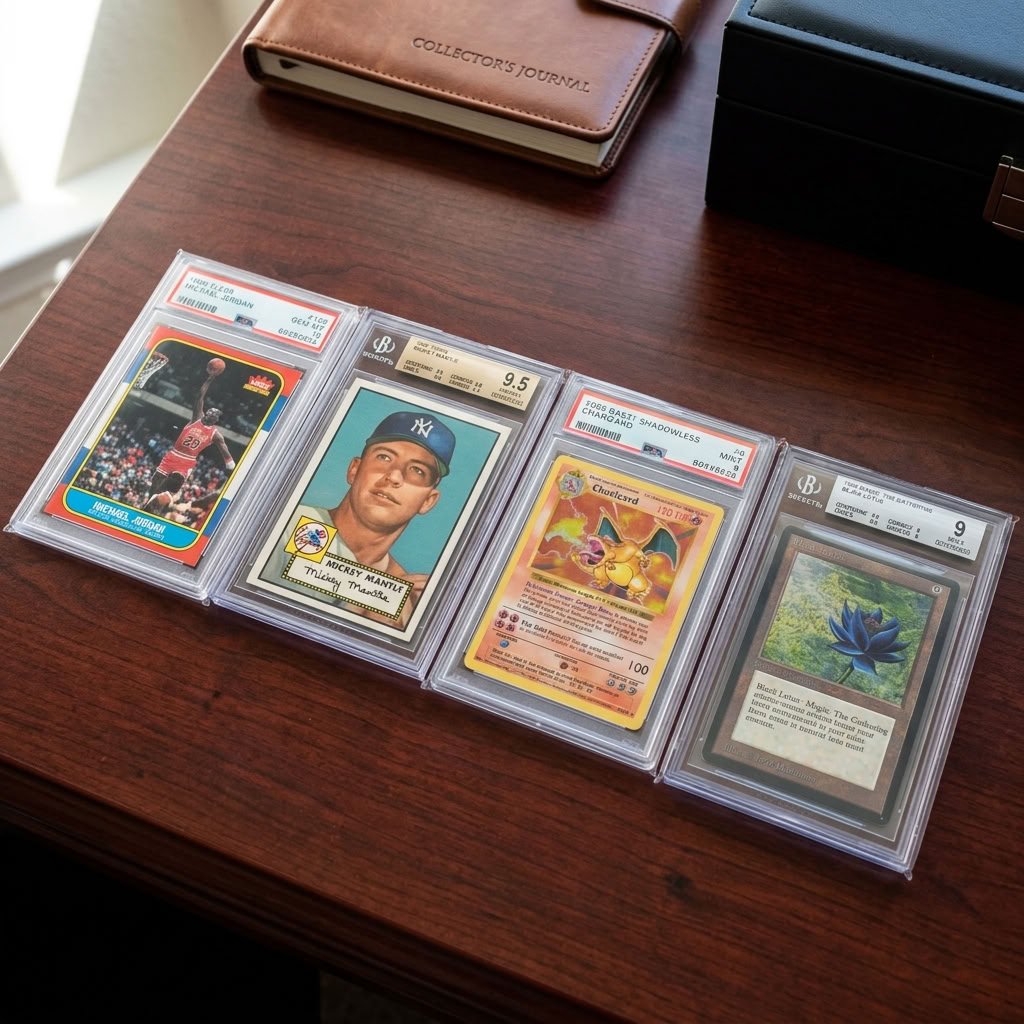
Step-by-step process for inserting a graded card into a protective sleeve to prevent scratches on the slab.
Our sleeves exist because of this exact problem. We started in 2014 as collectors watching expensive slabs get scuffed by rigid holders, and we built a crystal-clear, tight-fitting sleeve with a tapered, resealable flap to fix it.
Why a sleeve beats polishing:
- It absorbs the friction that would otherwise hit the case
- It keeps dust off the surface between cleanings
- It protects during transport, when most damage happens
- It adds a clean, professional finish for display
Fit matters. Our graded card slab sleeves are cut for PSA, BGS, SGC, and CGC cases, so the sleeve sits snug rather than baggy. We also make sleeves for top loaders and magnetic one-touch cases, plus graded comic and magazine slabs for CGC and CBCS holders.
The material is archival grade and acid-free, which matters for long-term storage. Cheap sleeves can yellow or fog over time, and a fogged sleeve looks exactly like a hazed case.
Step-by-Step: Build a Repeatable Scratch Prevention Routine
A routine beats good intentions. Here is the one we recommend, and it takes minutes per month.
Step | Action | Frequency |
|---|---|---|
1 | Inspect each slab under low-angle light | Monthly |
2 | Wipe cases with a dry microfiber cloth | Monthly |
3 | Check sleeves for grit or splits | Monthly |
4 | Deep clean cases with mild soap and water | Quarterly |
5 | Replace worn sleeves | As needed |
6 | Recheck storage dividers and box condition | Quarterly |
7 | Rotate display pieces out of direct light | Ongoing |
The order matters. Inspection comes first because it tells you whether anything else is needed. Most months, steps one through three are the whole job.
Handling rules belong in the routine too:
- Handle by the edges, never the face
- Set slabs on felt or a sleeve, never bare wood or cardboard
- Never slide one slab across another
- Keep food and drink away from the work area
Scratch prevention is a habit, not a product. The collectors with the cleanest slabs are not the ones who polish best. They are the ones who never let grit near the case.
When to Stop Polishing and Consider Replacement
Polishing has a hard limit, and crossing it costs more than a scratched case. Stop when any of these are true:
- The scratch catches a fingernail and shows white
- The label is lifting, wrinkled, or water-stained
- The case seam is cracked or separating
- Polish residue has built up in the corners
- Repeated application has started to haze the surface
Each of these means the fix is now riskier than the flaw. A cracked seam can let moisture reach the card. Residue in the corners traps grit. Hazing from over-polishing is permanent.
Replacement is the honest answer in those cases. Many grading companies offer a reholder service, which keeps the card's grade while swapping the case. Check your grading company's current policy and turnaround time before you send anything in.
One more caution: never polish a slab you plan to sell without disclosing it. Buyers notice residue, and an undisclosed polish job reads as hiding something.
Conclusion
The hardest part of slab care is accepting that prevention is boring and repair is risky. Polishing a case is a last resort. A sleeve, a divider, and a clean cloth do the real work.
At Superior Fit Sleeves, we built our archival-grade, acid-free sleeves for exactly this job: a snug, distortion-free fit that keeps grit off the case and keeps the presentation sharp.
Start with the slabs you handle most. Get them sleeved, separated, and off bare surfaces. Browse our graded slab sleeves and build the routine once, then let it run.
Frequently Asked Questions
Is it normal for PSA slabs to have scratches?
Light surface scratches and scuffs on PSA slabs are common because the plastic case is handled during grading, shipping, and display. Most minor marks do not affect the card inside or the grade. Deep scratches that cloud the view of the card are less typical and usually come from poor storage or stacking. Inspect new slabs under bright light, note any existing marks, and start prevention habits immediately so light scuffs do not become deep scratches.
Do graded card sleeves help prevent scratches?
Yes. A snug, archival-grade graded card sleeve creates a barrier between the slab surface and the things that cause scratches: other slabs, display stands, storage bins, and handling. Look for sleeves that fit your specific slab brand without excess bulk, use acid-free materials, and stay clear over time. Sleeves do not remove existing slab scratches, but they stop new ones from forming during storage, transport, and display.
Can stacking graded slabs cause scratches?
Stacking slabs directly on top of each other is one of the most common causes of slab scratches. The hard plastic edges grind against the face of the slab below during handling and transport. Even short stacks create scuffs over time. Store slabs upright in divided boxes, use sleeves between slabs, or place a soft microfiber cloth between stacked slabs. Avoid pressing down on stacks, which forces grit and plastic edges into the surface.
What materials should I avoid when cleaning a slab?
Avoid paper towels, tissue, and rough cloths because their fibers can trap grit and leave fine scratches. Never use abrasive household cleaners, glass polish with grit, acetone, or alcohol-heavy products that can haze plastic or damage the label. Skip anything that requires hard rubbing. Use a clean microfiber cloth, a soft polishing pad, and a plastic-safe polish applied sparingly. Test any product on an inconspicuous area of the case first.