 how-to
How to Fit Sleeves on Slabs: A Step-by-Step Guide
Table of Contents
- Why Graded Card Slabs Need Protective Sleeves
- PSA Slab Sleeve Size and Fit by Grading Company
- Tapered Slab Sleeves vs. Standard Plastic Sleeves
- Step-by-Step: How to Fit Sleeves on Slabs
- How to Clean a Graded Card Slab Before Sleeving
- Common Mistakes That Damage Slabs and Sleeves
- Graded Card Storage: Care, Replacement, and Long-Term Protection
- Conclusion: Protect Your Investment with the Right Fit
- Frequently Asked Questions
Last Updated: October 12, 2026
Why Graded Card Slabs Need Protective Sleeves
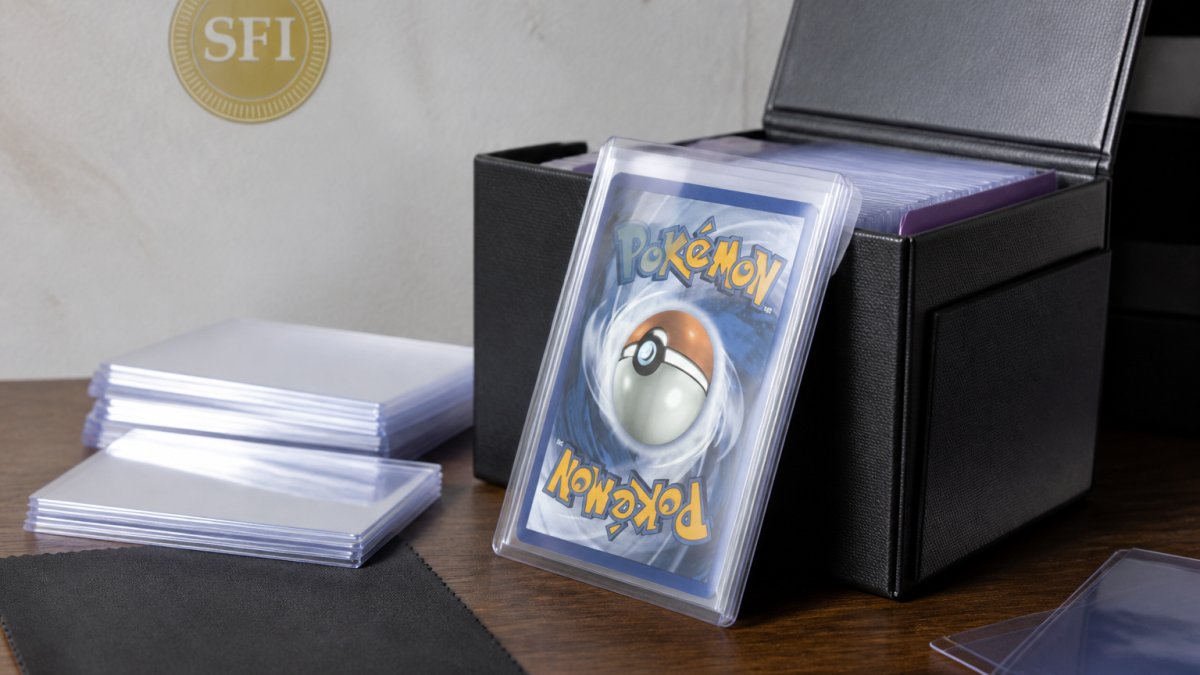
A graded card slab is a sealed plastic holder that protects a professionally graded trading card, and the slab itself needs protection the moment it leaves the grading company.
Here's the part most collectors learn the hard way. Slabs get handled constantly. They slide across tables, stack against each other, and pick up fingerprints at every show.
That's why a snug sleeve matters more than most people think.
Scratches, Scuffs, and Surface Damage
Hard plastic scratches. It's that simple. When two slabs rub together in a box, friction leaves fine marks that build up over time.
These marks sit right over the card. A scratched slab makes even a gem-mint card look tired.
A protective sleeve adds a barrier between the slab surface and everything else. The sleeve takes the wear. The slab stays clear.
Dust, Fingerprints, and Long-Term Clarity
Dust settles into every corner and edge of a slab. Fingerprints leave oils that haze the surface.
A clear sleeve keeps both off the plastic. It also keeps your slabs looking sharp for years of storage and display.
PSA Slab Sleeve Size and Fit by Grading Company
PSA slab sleeve size is not one-size-fits-all. Each grading company builds its holders to slightly different dimensions, so a sleeve that fits one brand may be loose on another. The fix is to measure the slab, not to trust the label on the sleeve.
How PSA, BGS, SGC, and CGC Slab Dimensions Compare
Graded slabs are not standardized. They vary by company, holder generation, and sometimes by the era in which a card was encapsulated. The practical ranges collectors report are:
- PSA: Roughly 3.25 in wide by 5.25 in tall, with a thickness around 0.25 in for standard holders. The most common slab in the hobby and the most consistent year to year.
- BGS: Slightly wider and noticeably thicker than PSA, with a beveled edge profile that changes how a sleeve sits at the corners.
- SGC: Compact and taller & wider than PSA, with a squarer corner radius.
- CGC: Similar footprint to PSA, with its own corner shape and a slightly different edge thickness.
Treat those as starting points, not gospel. Holder generations shift. A PSA slab from a decade ago can measure differently than one graded last month, and BGS has revised its holder more than once. The only reliable method is to quickly measure with calipers or a ruler before you commit a whole stack to one sleeve size.
How to Measure a Slab for the Right Sleeve Fit
You need three numbers: width, height, and thickness. Width and height are easy with a ruler. Thickness is where most collectors guess wrong, and it decides whether a sleeve slides on or fights you.
Measure at the holder’s thickest point, usually along one edge, not across the face. Add a small tolerance for the sleeve material itself. A sleeve that matches the slab exactly won’t fit.
Slab-to-Sleeve Compatibility at a Glance
Slab type | Typical width | Typical height | Typical thickness | Fit note |
|---|---|---|---|---|
PSA standard | ~3.25 in | ~5.25 in | ~0.25 in | Baseline fit; most sleeves sized for graded slabs target this |
BGS | Slightly wider than PSA | Comparable | Thicker than PSA | Needs extra thickness tolerance; corner profile matters |
SGC | Comparable to PSA | Taller & Wider | Comparable | Watch the height; extra length bunches at the flap |
CGC | Comparable to PSA | Comparable | Slightly different edge | Corner shape can catch on tight sleeves |
Use the table to narrow your options, then verify with a physical measurement. A sleeve that is too loose slides around and lets dust in. One that is too tight is a fight to get on and puts pressure on the holder corners.
Mixed Collections: One Sleeve or Several?
If your collection is all PSA, one size covers you. If it spans BGS, SGC, and CGC, expect to keep two or three sizes on hand.
A common pattern among collectors with mixed holdings is to sort slabs by measured thickness first, then match sleeve size to each group. It takes a few extra minutes up front and eliminates the guesswork for every slab after that.
Tapered Slab Sleeves vs. Standard Plastic Sleeves
Tapered slab sleeves win for graded cards. The tapered flap keeps the sleeve in place instead of bunching up.
Standard plastic sleeves are flat and open on one end. They slide on, but they don't hold.
Tapered sleeves use a resealable flap that narrows toward the opening. That shape hugs the slab and locks it in place.
Here's the honest trade-off:
- Tapered sleeves: Snug fit, resealable, clean look. Best for display and long-term storage.
- Standard sleeves: Cheaper, looser, no seal. Fine for quick, temporary protection.
For anything you care about, go with tapered.
Step-by-Step: How to Fit Sleeves on Slabs
Fitting a sleeve takes seconds once you know the technique. The goal is a snug fit with no scratches, no trapped dust, and no pressure on the holder corners. This is the part most guides skip, and it is where slabs actually get damaged.
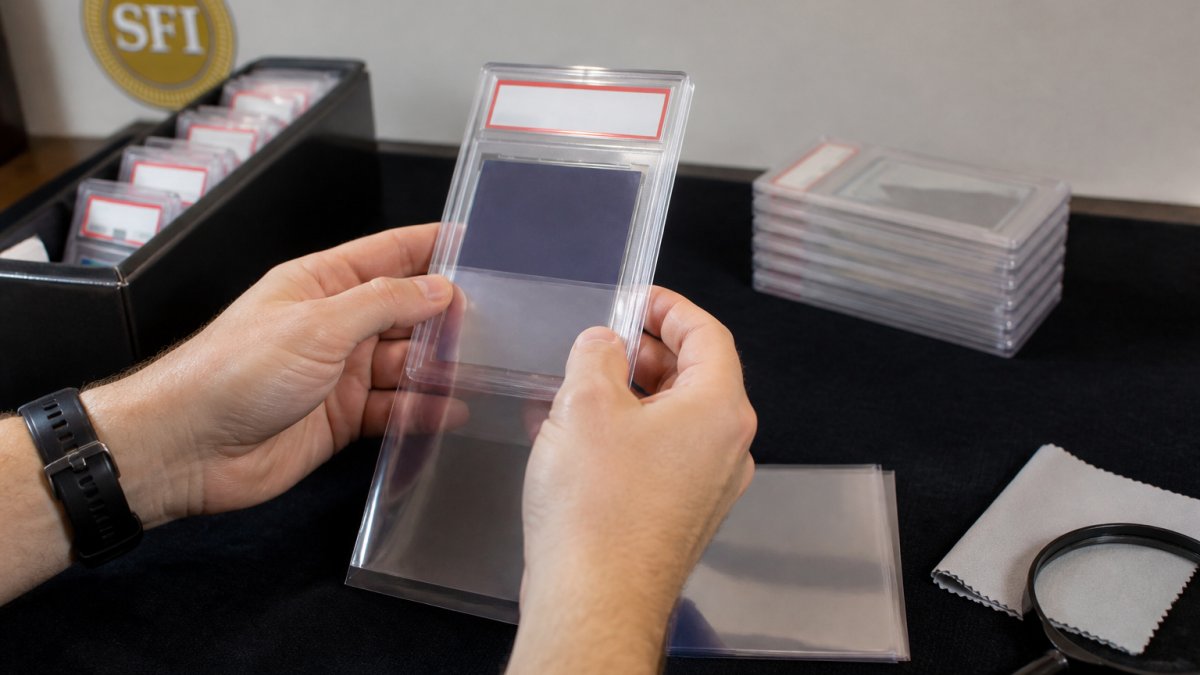
Keeping the surface dust- and fingerprint-free before insertion prevents debris from getting trapped against the plastic, so you can clean graded card slabs safely.
Step 1: Prepare a Clean, Dust-Free Work Surface
Start with a clean, flat surface. A felt mat or a soft cloth works well. Wipe it down first.
Wash and dry your hands. Oils and grit on your fingers transfer straight to the slab and sleeve. Keep the sleeve itself out of dusty air until you are ready to use it. If you are working through a stack, lay the sleeves out in a row so you don’t fumble with packaging mid-insertion.
Step 2: Align the Slab and Slide It Into the Sleeve
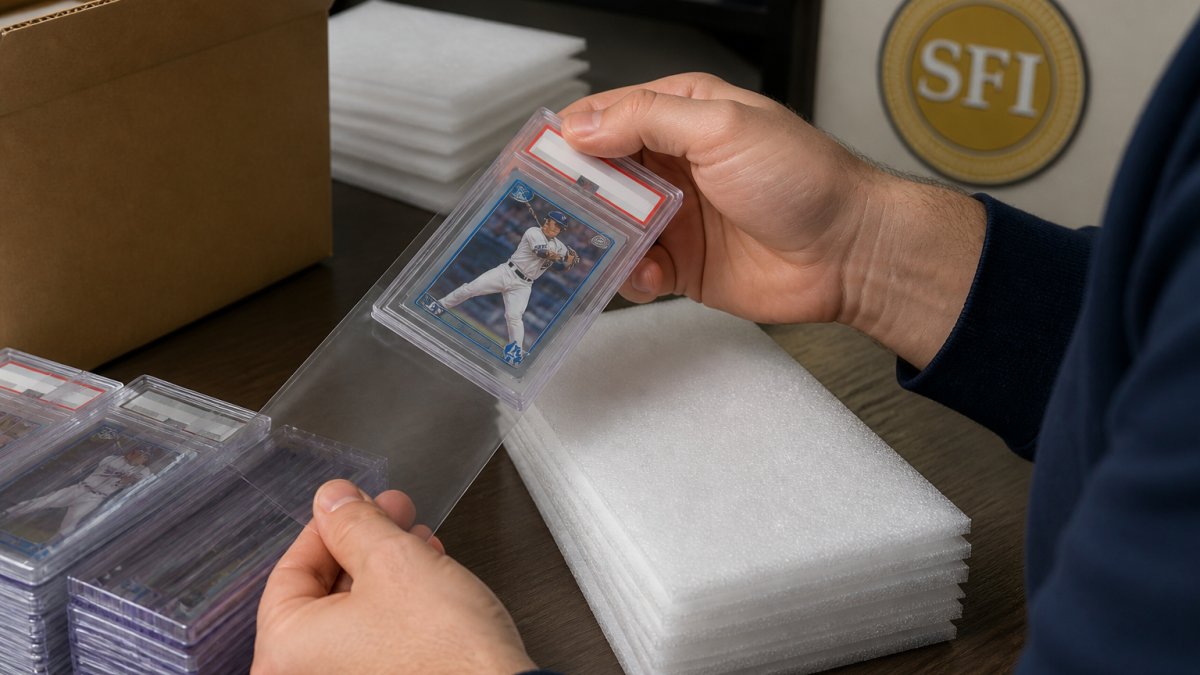
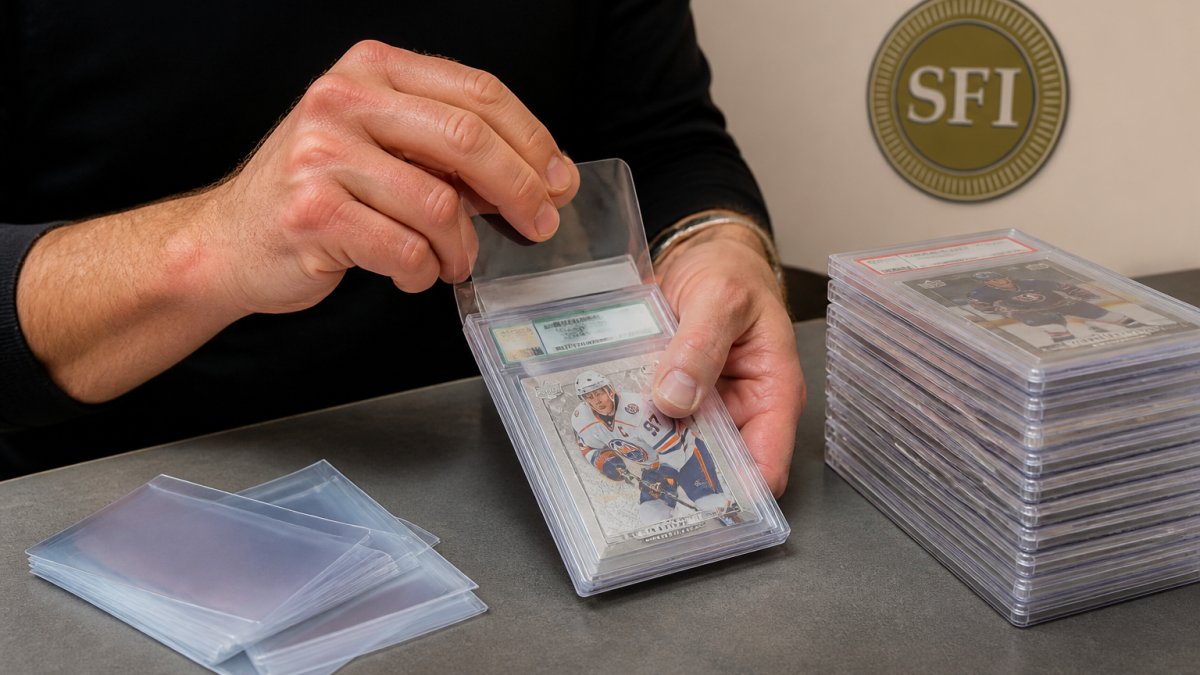
Hold the slab by its edges, never the face. Line up the slab's top edge with the sleeve opening. Alignment matters more than speed.
Slide it in slowly. Let the tapered flap guide the slab into place. Stop when the slab sits fully inside with the flap ready to seal.
A few quick checks:
- The sleeve should feel snug, not tight.
- No air pockets or wrinkles.
- The flap folds cleanly over the opening.
- Your fingers don't touch the slab surface.
If it fights you, the sleeve is too small. If it slides around, it is too loose.
Step 3: Seat the Flap and Check the Fit
Once the slab is fully in, fold the tapered flap over the opening and press it down along its length. A resealable flap should close flat, with no lifted corners or trapped air. Run a finger along the seal to set it.
Then check the fit from all four sides. The sleeve should hug the slab without bulging and without pulling tight at the corners.
Step 4: Removing a Slab Without Scuffing It
Removal is where most damage happens, because collectors rush it. Do not pull the slab out by the face. Do not grip the sleeve and yank.
Open the flap fully first. Then hold the sleeve near the opening with one hand and push the slab from the closed end with the other, guiding it out by its edges.
If the sleeve will not release, stop.
When to Stop and Resize
If you have to work hard to seat a sleeve, the size is wrong. A correct fit seats with light, even pressure in one motion. Two or three seconds per slab is normal. If it takes longer, or if you feel the holder flex, stop and switch sizes before you work through the rest of the stack.
How to Clean a Graded Card Slab Before Sleeving
Cleaning a graded card slab before sleeving keeps dust and oils from getting sealed in. Use a soft, lint-free cloth and a gentle plastic-safe cleaner.
Never spray liquid directly on the slab. Apply a little to the cloth, then wipe the surface in one direction. Dry it fully before it goes anywhere near a sleeve.
Skip harsh chemicals and paper towels. Both can leave marks or micro-scratches that defeat the whole point.
Common Mistakes That Damage Slabs and Sleeves
Most slab damage comes from handling, not storage. Avoid these mistakes and your holders will stay clear for years.
- Touching the slab face. Fingerprints and oils haze the surface.
- Forcing a tight sleeve. Pressure on the corners can crack the holder.
- Skipping the clean step. Dust gets sealed in and grinds against the plastic.
- Stacking bare slabs. Slab-on-slab contact causes scuffs and scratches.
- Using oversized sleeves. Loose fits let dust in and look unprofessional.
A common mistake is buying one sleeve size for a mixed collection. Check each slab type first.
Graded Card Storage: Care, Replacement, and Long-Term Protection
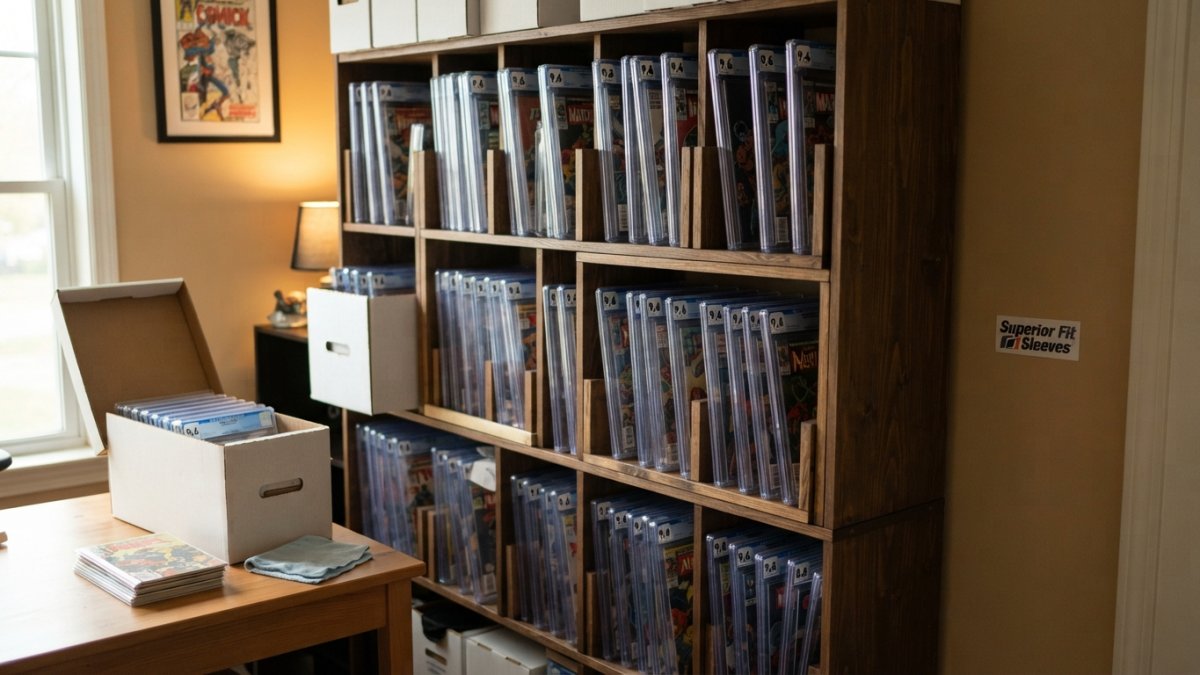
Graded card storage is about consistency. Keep slabs upright, out of direct sunlight, and away from heat. Store them in a cool, dry spot.
Replace sleeves when they yellow, cloud up, or no longer fit snugly. Cheap sleeves break down fast. Archival-grade, acid-free sleeves stay clear much longer, which is why we build ours that way.
For a mixed collection, match the sleeve to the slab. Superior Fit Sleeves makes precision-cut Graded Card Slab Sleeves for PSA, BGS, SGC, and CGC holders, plus top-loader sleeves and magnetic one-touch case sleeves.
Conclusion: Protect Your Investment with the Right Fit
Every slab in your collection faces the same threats: scratches, dust, and fingerprints. The fix is a sleeve that fits right and stays put.
Superior Fit Sleeves has engineered precision-cut, archival-grade sleeves since 2014. Our tapered flap design gives graded slabs a snug, tailored fit with crystal-clear, distortion-free display quality.
Get started with Superior Fit Sleeves and give every graded card in your collection the clean, professional protection it deserves.
Frequently Asked Questions
How do you put a sleeve on a graded card slab?
Hold the slab by its edges and slide it into the sleeve opening in one smooth motion. Let the slab settle until the corners align with the sleeve interior. If the sleeve has a tapered flap, fold it over the top edge to seal out dust and fingerprints. Avoid touching the slab surface during insertion to prevent smudges or scratches.
How do you choose the right sleeve size for a graded card slab?
Measure your slab's length, width, and thickness, then match those dimensions to the sleeve's stated fit. PSA, BGS, SGC, and CGC slabs vary slightly in thickness and edge profile, so a sleeve designed for one brand may be too loose or too tight for another. A snug fit with a small tolerance is ideal for clarity and protection.
Can a slab sleeve scratch or damage a graded card holder?
A clean, correctly sized sleeve will not scratch a slab. Damage happens when dust or grit gets trapped between the sleeve and the slab surface, or when you force an oversized slab into a tight sleeve. Always work on a clean surface, inspect the sleeve for debris, and slide the slab in gently by its edges.
How should you store sleeved graded cards?
Keep sleeved slabs upright in a cool, dry place away from direct sunlight and humidity. Use archival-grade storage boxes designed for graded slabs, and avoid stacking heavy items on top of them. For long-term graded card storage, check sleeves periodically for dust buildup and replace them if they become cloudy or loose.