 how-to
How to Prevent Pokémon Cards From Bending
Table of Contents
- Why Do Pokémon Cards Bend
- Best Sleeves for Pokémon Cards
- Step 1: Set Up Proper Storage Conditions
- Step 2: Sleeve and Protect Individual Cards
- Step 3: Choose the Right Storage Method
- Step 4: Monitor and Maintain Your Collection
- Common Mistakes to Avoid
- Frequently Asked Questions
Last Updated: October 10, 2026
Why Do Pokémon Cards Bend
Pokémon cards bend for three main reasons: moisture in the air, temperature swings, and physical pressure. Understanding what causes the damage is the first step to prevent pokemon cards bending.
Humidity and Moisture Damage
High humidity is the biggest threat to your collection. When moisture enters card stock, the fibers absorb water and expand unevenly. This causes the card to warp and curl inward.
Pokémon cards are made of layered cardboard, and the outer coating and inner core absorb moisture at different rates, creating tension that forces the card to bend.
Basements, closets near bathrooms, and areas near windows are humidity traps.
Temperature Fluctuations and Heat
Temperature swings stress card stock: heat causes expansion, cooling causes contraction, and repeated cycles weaken fibers and cause permanent warping.
Direct sunlight and radiators are the worst offenders. Sunlight also fades card colors over time. Keep your collection away from windows and heat sources.
Pressure and Improper Handling
Cards bend when stacked without protection or stored upright in tight binders. Even small amounts of weight applied consistently cause lasting damage.
Rough handling during play or shuffling bends cards, as does loose storage in boxes where cards shift and press against each other.
Best Sleeves for Pokémon Cards
The right sleeve protects your cards from all three damage types. Thickness, clarity, and fit matter.
Choosing Between Foil, Holo, and Non-Foil Card Protection
Foil and holo cards need tighter sleeves than non-foil cards because their reflective surface shows every fingerprint and dust particle, and loose sleeves cause micro-scratches.
Non-foil cards don't show surface damage as easily, but they still need protection from moisture and pressure.
Reverse-holo cards have a holo pattern on the background; treat them like regular holo cards with a snug-fitting sleeve to prevent movement.
Double-Sleeving for Maximum Protection
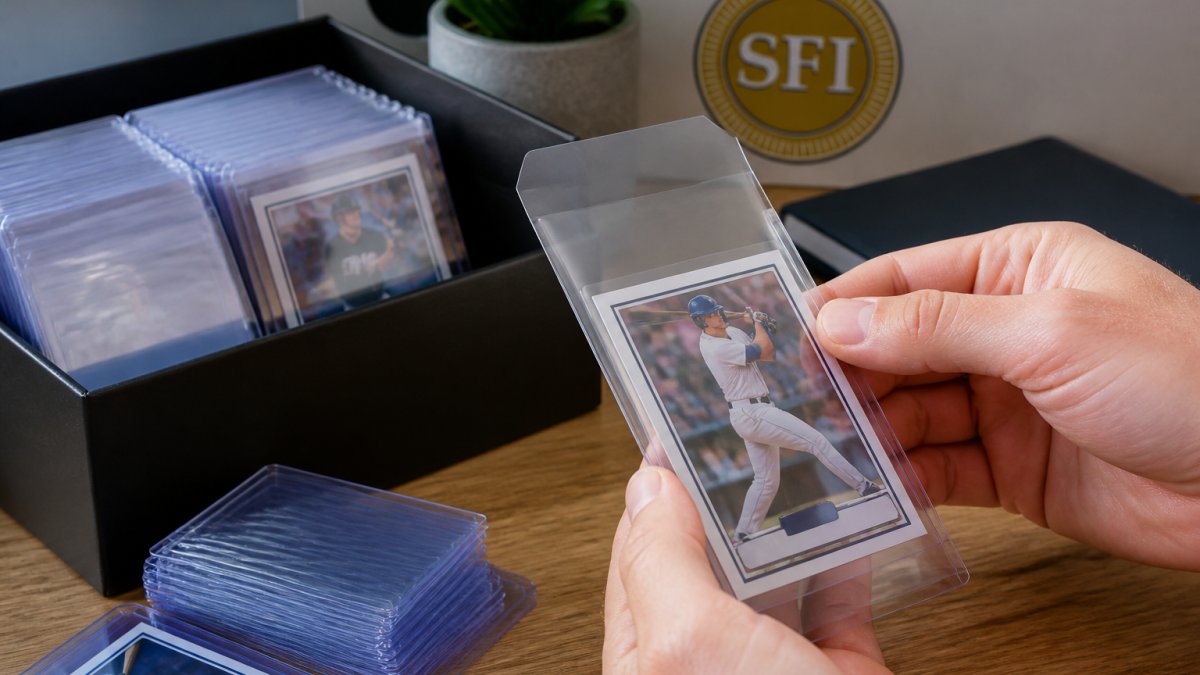
Double-sleeving means placing a card in an inner sleeve first, then sliding both into an outer sleeve, adding two layers of defense.
The inner sleeve protects against moisture and dust. The outer sleeve adds physical protection from pressure and handling damage. For valuable or graded cards, double-sleeving is standard practice.
Use thin inner sleeves so the double-sleeved card still fits in toploaders and magnetic cases.
Step 1: Set Up Proper Storage Conditions
Fix your storage environment before sleeving cards, sleeves alone cannot protect cards in damp basements or hot attics.
Pokémon Card Storage Humidity Guidelines
Keep humidity between 30% and 50% (Storing Your Books - Preserving Your Books). Below 30%, cards become brittle; above 50%, moisture damage accelerates.
Use a hygrometer to measure humidity and check your storage area weekly, especially during humid seasons.
If humidity runs high, add a dehumidifier to the room or use silica gel packets in sealed boxes, replacing them every few months.
Temperature Control
Store cards between 60°F and 75°F. Avoid basements, attics, and garages where temperature swings are extreme.
A climate-controlled closet in your main living space is ideal for stable temperature and humidity control.
Avoiding Problem Storage Locations
Never store cards in basements, attics, garages, near windows, near radiators, bathrooms, or kitchens. Pick a cool, dry room with stable temperature, a bedroom closet or dedicated collector's space works well.
Step 2: Sleeve and Protect Individual Cards
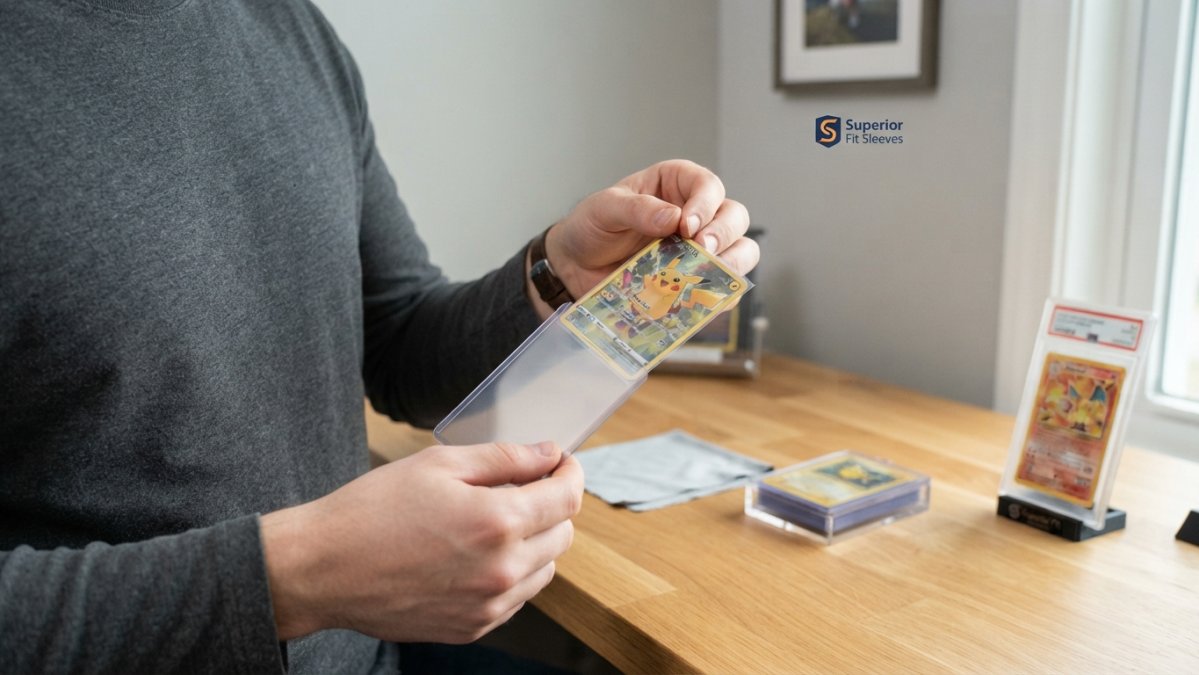
Sleeves are your first line of defense. The right sleeve fits snugly without forcing the card or leaving gaps.
Inner Sleeves for Card Protection
Inner sleeves go directly on the card. They block dust and moisture from touching the surface.
Use archival-grade plastic sleeves that don't yellow or off-gas; cheap sleeves degrade and release acids that damage cards.
Fit matters: a loose sleeve causes surface scratches while one that's too tight creases corners.
For foil and holo cards, precision fit is essential.
Top-Loaders and Card Savers
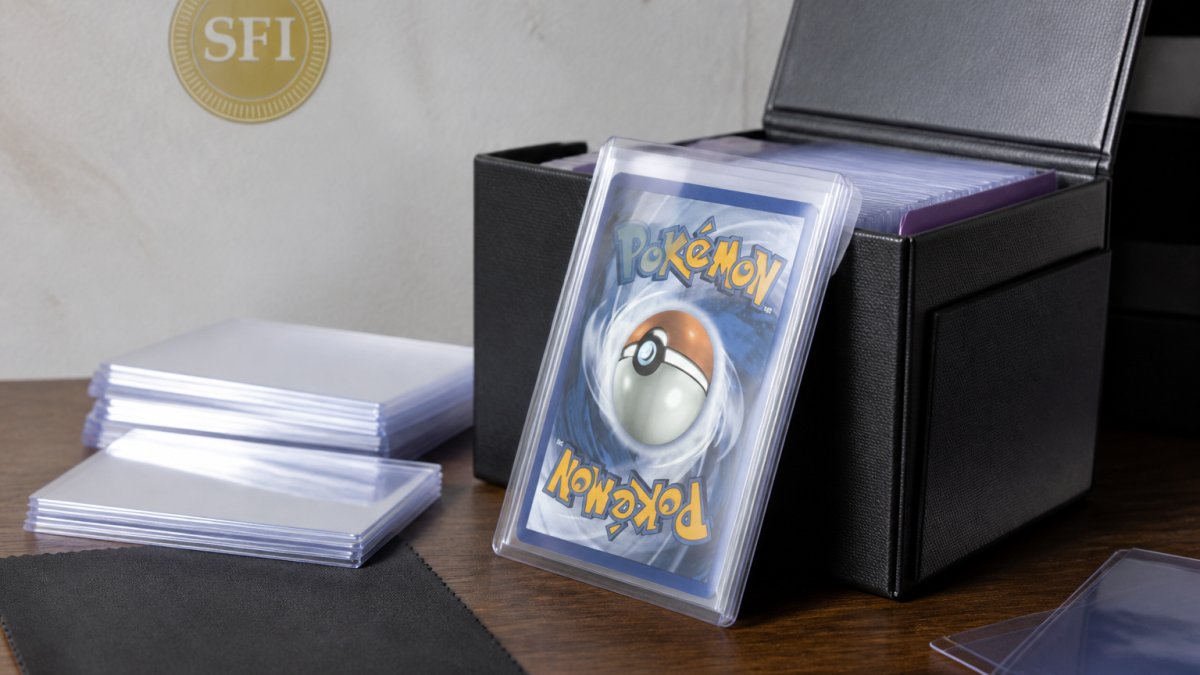
Top-Loaders are rigid plastic holders perfect for cards you handle regularly or transport.
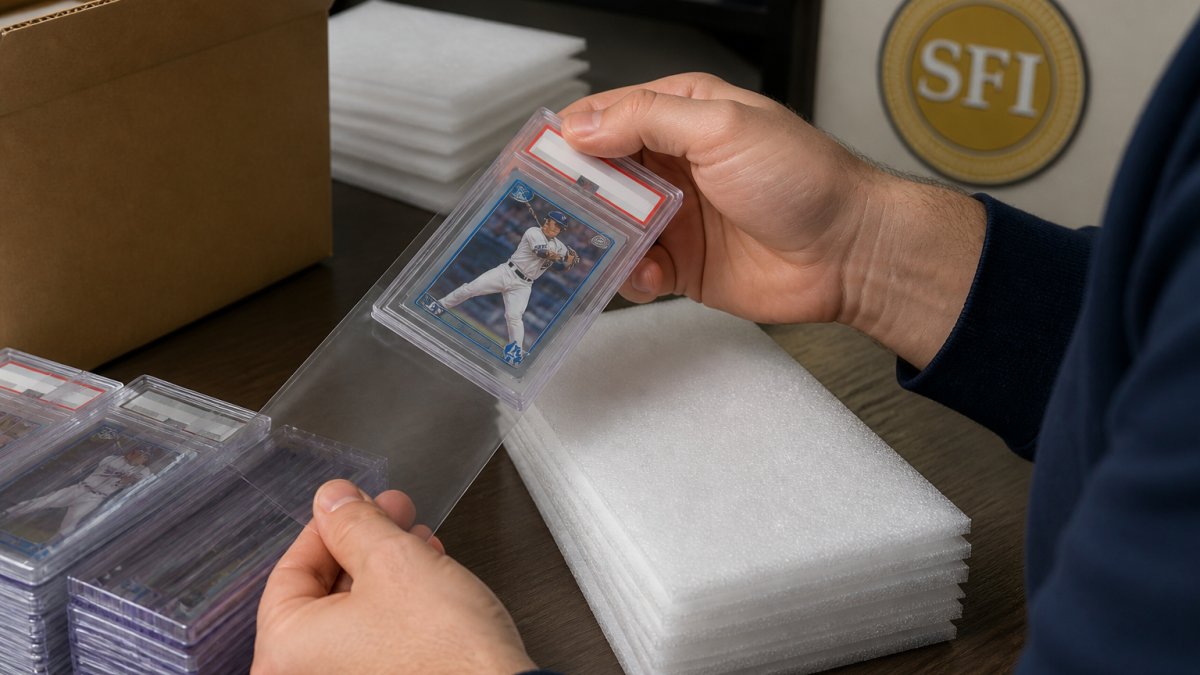
For graded slabs, use sleeves designed for the specific grading company, as PSA, BGS, SGC, and CGC slabs have different dimensions. A slab sleeve that's too loose lets the slab move; one that’s too tight risks damaging the corners.
Protection Type | Best For | Key Feature |
|---|---|---|
Inner sleeves | All cards | Moisture and dust barrier |
Top-loaders | Frequently handled cards | Rigid protection during play |
Card savers | Binder storage | Flat support without pressure |
Double-sleeving | Valuable or graded cards | Maximum protection |
Step 3: Choose the Right Storage Method
How you store cards matters as much as how you protect them. Different storage methods suit different collection sizes, card values, and use patterns.
Storage Methods: Binders, Boxes, and Cases
Binder storage is convenient for browsing and organizing by set or type. Use binder pages with card savers or sleeves to prevent sliding and pressure. Don't overfill pages, leave one empty slot per page so cards sit loosely and air circulates.
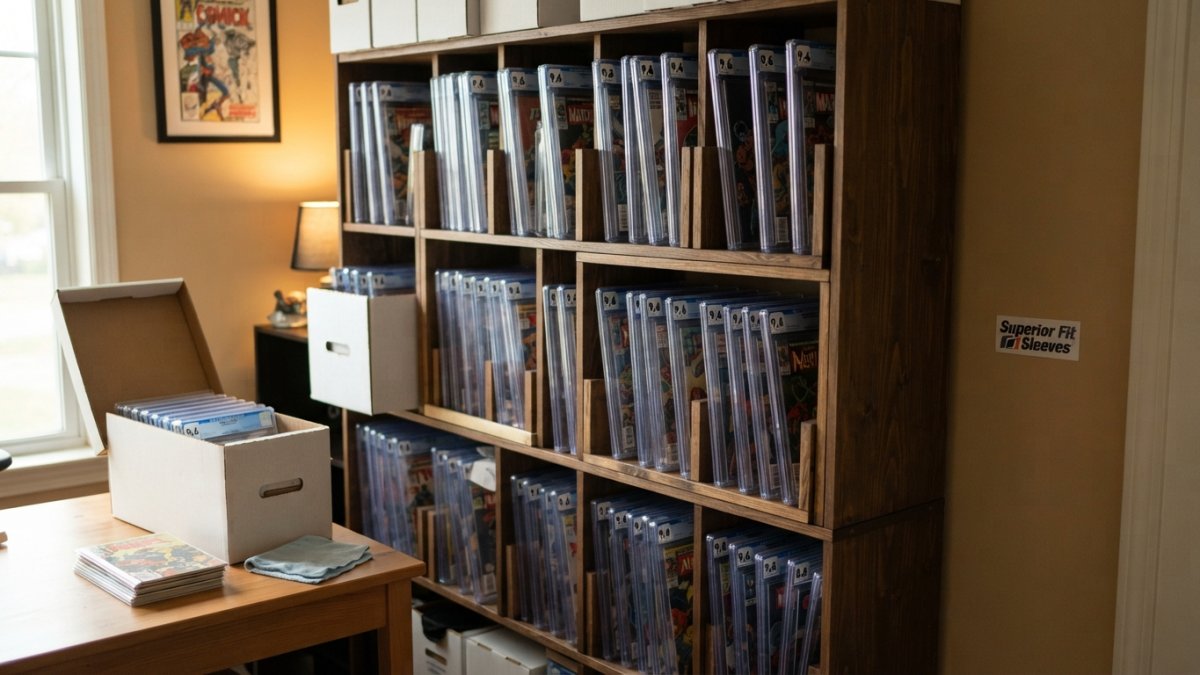
Store binders upright on a shelf, not stacked flat, to prevent pokemon cards bending from pressure over time.
Flat storage (cards laying horizontal in a box or case) spreads weight evenly and prevents curling. Use a sturdy box with dividers and silica gel packets to prevent shifting and keep humidity low.
Upright storage (cards standing vertically, like books on a shelf) saves space but can cause bending if cards shift. Use dividers to keep cards from sliding and prevent friction and pressure that bends edges.
Graded slab storage requires a dedicated display case or storage box. Store slabs upright in a case or lay them flat in a padded box, away from direct sunlight. Never stack slabs flat, the weight can crack the slab or damage the card inside.
Troubleshooting: Why Your Card Keeps Bending
If a card still bends or curls despite proper sleeving and storage, use this checklist to diagnose the problem:
1. Humidity is too high in your storage area
Even a well-sleeved card will warp if humidity stays above 50% for weeks. Use a hygrometer to check humidity.
2. The sleeve is too tight and forcing the card to curve
A sleeve that's too narrow applies constant pressure on the card's edges.
3. The card was already warped before you sleeved it
If a card was stored in high humidity or heat before you got it, the damage may be permanent.
Diagnostic test: Remove the card from the sleeve and lay it on a flat surface. Does it rock or sit unevenly? That's permanent warping.
Fix: Sleeves will prevent the warp from getting worse, but won't fix it.
4. Binder pages are stacked or overfilled, creating pressure
If you stack binders flat or pack pages too tightly, the weight presses cards and causes permanent bending.
Diagnostic test: Remove the binder from the stack and lay it flat.
Fix: Store binders upright, not stacked. Remove one card from each overfilled page.
5. Temperature swings are causing the card to expand and contract
Diagnostic test: Check if the card bends worse during certain seasons. If it curls more in summer or winter, temperature is the problem.
Fix: Move your collection to a climate-controlled room where temperature stays between 60°F and 75°F year-round. A bedroom closet or interior closet is ideal.
Matching Storage Method to Your Collection Size
Small collections (under 100 cards): Use a binder with card savers or a small flat storage box with silica gel. Binders are easier to browse; boxes are safer for valuable cards.
Medium collections (100-1,000 cards): Use multiple binders stored upright, or a combination of binders and flat boxes. Organize by set or rarity so you can find cards easily.
Large collections (over 1,000 cards): Use flat storage boxes with dividers and silica gel. Binders take up too much space. Label boxes clearly so you can locate cards without opening every box.
Graded slabs: Store in a dedicated slab case or padded box, separate from raw cards. Slabs are heavier and need their own storage solution. Graded Card Slab Sleeves provide a custom-fit protective layer that keeps your slabs looking pristine.
Step 4: Monitor and Maintain Your Collection
Prevention stops most damage. But regular checks catch problems early, before they spread.
Regular Inspections
Check your collection monthly. Look for signs of warping, curling, or moisture damage.
Run your finger along the card's edge. A bent card feels different than a flat one. Catch bends early before they become permanent.
If you spot a curved card, move it to a drier location immediately. Moisture damage spreads to nearby cards if humidity stays high.
Using Silica Gel and Dehumidifiers
Silica gel absorbs moisture in sealed boxes. Place packets around your cards, but don’t let them touch them directly.
Gel turns pink or blue when saturated. Replace packets when they're fully colored. You can dry reusable packets in an oven and reuse them.
For larger collections, a room dehumidifier works better. It keeps the entire storage area dry, protecting all your cards at once.
Run the dehumidifier continuously during humid months. Even a few hours of high humidity can damage cards.
Common Mistakes to Avoid
Most collectors make the same errors. Knowing what to avoid saves your cards from preventable damage.
Don't store cards in cheap plastic sleeves. They degrade quickly and release acids that yellow cards.
Don't stack binders flat. The weight presses cards and causes permanent bending.
Don't leave cards in humid environments while hoping sleeves will save them. Sleeves slow moisture damage but can't stop it entirely.
Don't use rubber bands to hold cards together. The pressure bends edges and corners.
Don't store cards in attics or basements. Temperature swings and moisture are too extreme.
Don't expose cards to direct sunlight. Sunlight fades colors and weakens the card stock.
Protecting Pokémon cards from bending requires three things: the right environment, quality sleeves, and smart storage choices. Start by controlling humidity and temperature in your storage space. Then sleeve your cards with precision-fit protection that keeps them flat and still. For graded slabs and valuable cards, Superior Fit Sleeves offers archival-grade sleeves engineered to fit PSA, BGS, and CGC slabs perfectly. Our tapered design eliminates excess bulk while keeping your investment safe. Visit Superior Fit Sleeves to explore sleeves built for collectors who take their protection seriously.stressingstrong protection against physical pressure and minor damage, but they aren'tcards, and use silica gel or dehumidifiers in humid climates to keep conditions consistent
Frequently Asked Questions
Why do Pokémon cards bend on their own?
Pokémon cards bend primarily due to humidity fluctuations and temperature changes. When moisture levels rise, card stock absorbs water and warps. Temperature swings cause the cardboard to expand and contract unevenly, creating stress on the fibers. Pressure from stacking, improper binder storage, or handling also causes permanent creases. Foil and holo cards are especially susceptible because the foil layer responds differently to humidity than the cardboard base, creating internal tension that leads to curling.
Can humidity cause Pokémon cards to bend?
Yes, humidity is one of the primary causes of bending and warping. Ideal storage humidity is between 30–50%. When humidity exceeds 60%, cards absorb moisture and expand, causing them to warp or curl inward. Conversely, humidity below 20% can make cards brittle and prone to cracking. Using a dehumidifier, silica gel packets, or storing cards in sealed, moisture-controlled environments prevents humidity-related damage. Graded slabs in protective sleeves offer additional insulation against humidity fluctuations.
Are sleeves and top-loaders enough to protect cards from bending?
Sleeves and top-loaders provide significant protection against physical pressure and minor damage, but they are not foolproof against environmental damage. A precision-fit sleeve prevents excess movement and reduces edge creasing, while a top-loader adds rigidity. However, if the surrounding storage environment has poor humidity or temperature control, cards can still warp inside their protection. For maximum protection, combine quality sleeves with proper storage conditions, flat or upright positioning in a binder, and environmental monitoring using humidity gauges.
How should I store Pokémon cards to help prevent warping?
Store cards in a cool, dry location with stable humidity between 30–50% and temperatures around 65–70°F. Keep cards away from direct sunlight, windows, radiators, basements, and heaters. Use precision-fit sleeves for individual cards, then place them in binders on horizontal shelves or in sealed storage boxes. For valuable or graded cards, store them upright in protective cases with acid-free materials. Avoid stacking heavy items on top of cards, and use silica gel or dehumidifiers in humid climates to maintain consistent conditions year-round.
, acid-free casesa primary causemainly because of