 how-to
CGC Graded Comic Slab Storage Tips for Collectors
Table of Contents
- Step 1: Choose the Right CGC Slab Storage Boxes
- Step 2: How to Protect CGC Slabs from Scratches
- Step 3: Best Temperature and Humidity for Comic Storage
- Step 4: How to Organize Graded Comics in Your Collection
- Step 5: Safe Stacking, Weight Limits, and Slab Dimensions
- Step 6: Displaying and Handling Your Slabbed Comics
- Common Mistakes to Avoid with Comic Slab Storage
- Conclusion: Building a Long-Term Comic Slab Storage System
- Frequently Asked Questions
Last Updated: October 7, 2026
Step 1: Choose the Right CGC Slab Storage Boxes
A CGC graded comic slab needs a box that fits its exact dimensions, blocks dust, and uses acid-free materials. Comic slab storage starts with the container, not the shelf.
At Superior Fit Sleeves, we've watched collectors spend thousands on graded comics and then store them in whatever cardboard box was lying around. That's backwards.
Here's what matters when you pick a box:
- Interior dimensions: CGC slabs measure roughly 8.5 x 13 inches, but always check the holder against your box before buying in bulk
- Material: Acid-free, lignin-free board or inert plastic only
- Lid style: A snug lid beats an open-top bin for dust control
- Stackability: Flat walls and reinforced corners hold shape under weight
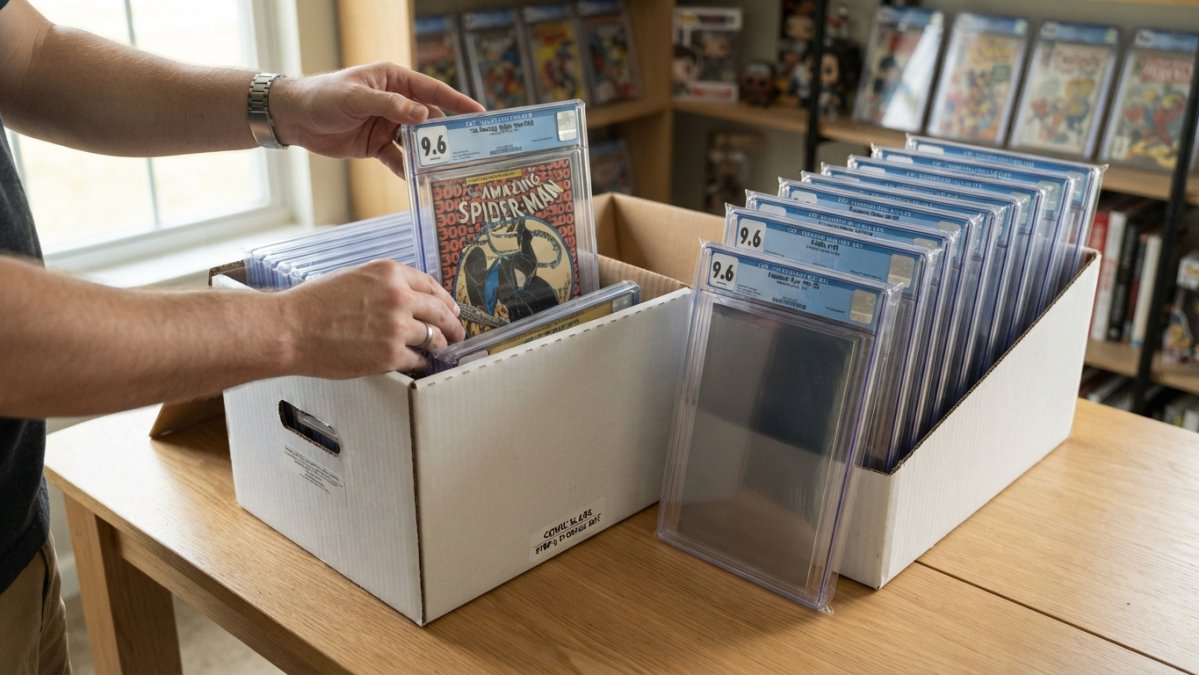
Size and Material Considerations
Cardboard that isn't rated acid-free will slowly break down and release compounds that harm paper. Plastic bins avoid that problem but trap moisture if the seal is tight.
For most collections, a rigid acid-free comic box sized for slabs is the safest default. If you live in a humid area, add a silica packet and check it monthly.
Step 2: How to Protect CGC Slabs from Scratches
The best way to protect CGC slabs from scratches is a snug outer sleeve that covers the full face and edges. Loose bags slide around and leave the corners exposed.
The CGC holder itself is hard plastic. It scratches easily, and those scratches show up under any light. A tight outer sleeve takes the abuse instead.
Outer Sleeves and Protective Bags
Skip flimsy poly bags that wrinkle and cloud over time. Look for archival-grade, acid-free sleeves cut to the slab's exact footprint.
Our graded comic book and magazine slab sleeves are built for this. The tapered flap seals tight with no excess bulk, so slabs sit flat in a box or on a shelf.
Step 3: Best Temperature and Humidity for Comic Storage
The best temperature and humidity for comic storage are a steady 65-70°F and 45-50% relative humidity. Stability matters more than any single number.
Paper and plastic both expand and contract with swings in heat and moisture. A closet that hits 85°F in summer and 55°F in winter will stress every slab.
Keep slabs out of attics, garages, basements, and any room with a water heater or furnace. Store them in a climate-controlled interior room instead.
- Avoid direct sunlight and heat vents
- Keep humidity steady year-round
- Use a hygrometer to track conditions
Library of Congress guidance on storage environment for paper collections
Step 4: How to Organize Graded Comics in Your Collection
How you organize graded comics depends on why you own them. Investors sort by value. Readers sort by title. Display collectors sort by what looks best on the wall. But the system that works for ten slabs will collapse at two hundred, so match the method to your collection’s size. Establishing a scalable framework early on simplifies organizing comic book collections and ensures every slab stays accessible, no matter how quickly your inventory grows.
Sorting by Value, Grade, or Publisher
Sort Method | Best For | Tradeoff |
|---|---|---|
Value | Insurance and resale | Requires re-checking market prices |
Grade | Grade-focused collectors | Splits runs across the room |
Publisher | Marvel, DC, indie fans | Slow to find a single key issue |
Title and run | Readers and completists | Value isn't visible at a glance |
Pick one primary system and one secondary tiebreaker. A value-first collector might sort by dollar tier, then by title within each tier. Mixed systems fall apart once the collection passes a few dozen slabs.
Matching the System to Collection Size
A few slabs (under 25): a single acid-free box with a printed index card taped to the lid is enough. No dividers needed.
A mid-size collection (25-150): split into two or three boxes by category, and add rigid dividers between rows so slabs don't slide. Keep a running spreadsheet or notes-app list with slab dimensions, grade, and box number.
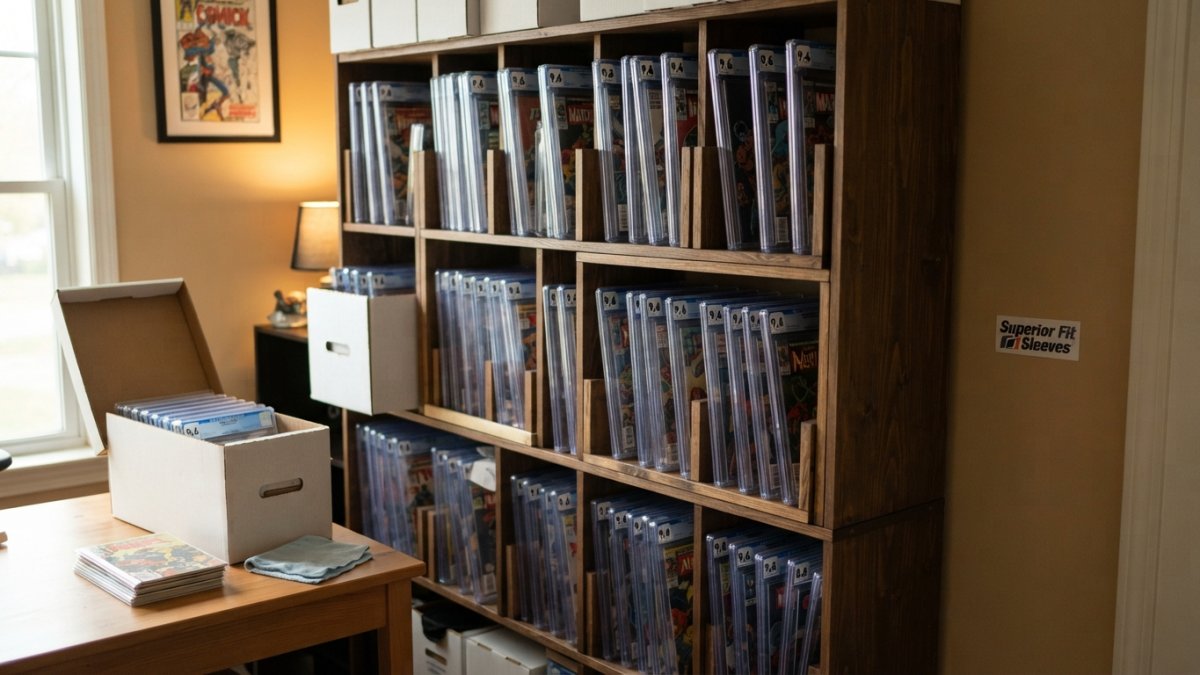
A large collection (150+): assign each box a permanent number and keep a master index. Group by value tier first, then by title or publisher inside each tier. This keeps your highest-value slabs in the most protected, easiest-to-reach location and lets you pull a specific book without opening every box.
Space-Efficient and Low-Cost Options
- Flat archival boxes stack vertically and use closet shelf space well; they're the cheapest per slab.
- Drawer-style cabinets cost more but let you pull a row without unstacking anything.
- Vertical file boxes with rigid dividers save floor space but require the upright-stacking precautions in Step 5.
- Binder-style pages are not recommended for graded slabs; the case’s weight and rigidity stress the page material.
Label every box on the outside with contents and date. A short index card taped to the lid saves you from opening ten boxes to find one slab, and it makes insurance documentation far easier if you ever need it.
Step 5: Safe Stacking, Weight Limits, and Slab Dimensions
Stack slabs flat, never on edge, and keep piles short. A CGC slab is rigid, but the plastic case can flex and crack under uneven pressure.
Slab dimensions run close to 8.5 x 13 inches, though thickness varies with page count. Measure your thickest slab before you buy dividers or boxes.
- Stack no more than 8-10 slabs high
- Put the heaviest slabs at the bottom
- Use a rigid divider between rows
- Never stack slabs on a soft or uneven surface
Step 6: Displaying and Handling Your Slabbed Comics
Wall mounts, display frames, and slanted shelves all work for slabbed comics, as long as they hold the slab flat and out of direct light. UV light fades covers and breaks down plastic, and it does the damage even when the room feels cool and comfortable.
Display Options Compared
- Wall-mounted acrylic or metal rails: good visibility, minimal wall damage, but the slab is fully exposed to room light and dust.
- Shadowbox or deep frames: best dust protection and a clean look, but you lose the ability to handle the slab without disassembly.
- Slanted easel shelves: easy to rotate books, but the slab leans, and the bottom edge carries the load.
- Closed display cabinets with glass doors: the best balance of visibility and protection; add a UV-filtering film to the glass if the cabinet faces a window.
Whatever you choose, keep displays out of direct sun and away from heat vents, and rotate which slabs are on display every few months so no single book takes years of continuous light exposure.
Handling Without Damaging the Case
Handle slabs by the edges only. Finger oils leave prints that etch into the case over time. When you remove a slab from a sleeve, slide it out slowly; tugging the sleeve can catch the flap and crease the plastic. Never pry at a corner to check the grade label, and never stack a display slab under anything heavy.
A Simple Inspection Checklist
Run through this every few months, and after any move or season change:
- Dust: wipe the outside of the sleeve or case with a dry microfiber cloth; never use household cleaners or paper towels.
- Scratches and clouding: hold the slab at an angle under a lamp; if the sleeve is scuffed or foggy, replace it before the case itself picks up the wear.
- Moisture: look for condensation, warping, or a musty smell; if you find any, move the collection to a drier spot and check your silica packets.
- Storage stability: confirm boxes aren't bowing, stacks aren't leaning, and shelves aren't sagging under weight.
- Labels and index: verify your box labels and master list still match what's actually inside.
Five minutes of inspection a few times a year catches the problems that cause decades of damage.
Common Mistakes to Avoid with Comic Slab Storage
The biggest mistake is treating a graded slab as indestructible. The case protects the comic, but the case itself still needs care.
Other mistakes we see often:
- Storing slabs in a garage or attic with wild temperature swings
- Using cheap bags that yellow and fog within a few years
- Stacking too high and cracking bottom slabs
- Leaving slabs in direct sunlight on a display shelf
- Skipping labels and losing track of what's in each box
Fix these five and your collection will hold its condition for decades.
Conclusion: Building a Long-Term Comic Slab Storage System
A storage system only works if it's easy to maintain. Pick boxes that fit, sleeves that seal tight, and a room with steady temperature and humidity. Then check on the collection a few times a year.
That's where Superior Fit Sleeves comes in. We've made archival-grade, acid-free slab sleeves since 2014, cut for a snug fit on CGC, PSA, and BGS holders. Our ultra-clear, distortion-free material keeps the display sharp while the tapered flap seals out dust.
Get started with Superior Fit Sleeves and give every graded comic a clean, protected home.
Frequently Asked Questions
Can CGC slabs be stored upright?
Storing CGC slabs upright is safe when they sit in a snug, acid-free box that keeps them from leaning or sliding. Vertical storage makes it easier to flip through a collection and reduces the weight pressing on any single slab. Avoid leaving slabs at an angle for months, because uneven pressure can stress the case seal over time. If you stack horizontally instead, keep piles shallow and rotate the bottom slabs periodically.
Do CGC slabs need an outer protective sleeve?
An outer sleeve is not required for the grade to stay valid, but it is one of the simplest ways to protect CGC slabs from scratches. The hard plastic case scuffs easily during handling, shipping, or repeated shelf contact, and surface scratches dull the display. A precision-cut, archival-grade sleeve adds a clear barrier without hiding the label or adding bulk. Collectors who display or ship slabs regularly get the most benefit.
What temperature and humidity are best for storing graded comics?
Aim for a stable range of 65 to 70 degrees Fahrenheit and 45 to 50 percent relative humidity. The exact number matters less than consistency, since repeated swings cause paper to expand and contract inside the slab. Keep storage away from exterior walls, attics, basements, and heating vents. A simple hygrometer placed near your comic slab storage boxes will tell you whether conditions are drifting.
How should you organize a CGC slab collection?
Most collectors organize graded comics by value tier, grade, publisher, or title, then assign each group its own labeled box or shelf section. High-value slabs belong in the most protected, least-handled spot, while duplicates or lower-grade copies can sit in easier-access storage. Pair the system with a simple inventory list noting the grade, certification number, and box location. That way you can find any slabbed comic quickly without digging through the whole collection.