 blog
Are Expensive Card Sleeves Worth It? A 2026 Guide
Table of Contents
- Are Expensive Card Sleeves Worth It? The Short Answer
- What Premium Card Sleeves Actually Protect Against
- Cheap vs. Expensive Card Sleeves: A Side-by-Side Comparison
- Trading Card Sleeve Thickness, Fit, and Deck Bulk
- Card Saver vs. Top-Loader: Which Holder Needs a Sleeve First
- The Best Card Sleeves for Valuable Cards and Graded Slabs
- Cost Per Card, Replacement Cost, and Sleeve Lifespan
- Conclusion: Match the Sleeve to the Card, Not the Price Tag
- Frequently Asked Questions
Last Updated: October 18, 2026
Are Expensive Card Sleeves Worth It? The Short Answer
Yes, expensive card sleeves are worth it, but only when the card inside is worth more than the sleeve protecting it.
A premium sleeve isn't a luxury version of a cheap sleeve. It's a different product with different material, cut tolerance, and job. Cheap sleeves keep cards separated. Premium sleeves keep cards presentable, protected, and resale-ready.
Below, we break down what you actually pay for and how to match sleeve quality to card value.
What Premium Card Sleeves Actually Protect Against
Premium card sleeves protect against the four things that quietly destroy card condition: surface scratches, embedded dirt, liquid damage, and handling wear at the edges. A standard sleeve handles some of that; a premium sleeve handles all of it without clouding the card underneath.
Card protection is cumulative. Every shuffle, stack, or slide across a table adds a little damage. None of it shows up immediately, all of it shows up at grading.
Scratches, Dirt, Spills, and Handling Wear
Scratches come from grit trapped inside a loose sleeve and from the sleeve abrading the card as it shifts. A snug fit eliminates the second problem almost entirely, the practical case for precision-cut sleeves, and why we engineered our tapered flap to remove excess material rather than leave a baggy pocket.
Dirt and dust work their way into open sleeve tops, and a sleeve with an open top is a funnel for spills; a resealable flap closes that funnel. Handling wear shows up as edge whitening and corner softening, the two defects graders flag most often on otherwise clean cards.
Why Archival-Grade, Acid-Free Material Matters
Archival-grade, acid-free material matters because ordinary plastic can off-gas and interact with the card surface over years. You won't see it happen, you'll see the result a decade later when a card has yellowed or fogged inside a sleeve that looked clear when you bought it.
Card sleeves are a long-term storage decision whether you intend them to be or not. Acid-free construction removes one variable from that timeline. When buying sleeves for valuable cards, ask what the material is made from before you ask what it costs.
Cheap vs. Expensive Card Sleeves: A Side-by-Side Comparison
Cheap and expensive card sleeves differ in four measurable ways: material consistency, cut tolerance, clarity, and durability after repeated handling. Price is the last difference, not the first, the gap shows up in details you only notice after months of use.
Attribute | Cheap Sleeves | Standard Sleeves | Premium Sleeves |
|---|---|---|---|
Material | Thin, inconsistent plastic | Mid-weight plastic | Archival-grade, acid-free film |
Cut tolerance | Loose, oversized | Close but variable | Precision-cut, snug |
Clarity | Hazy, prone to fogging | Clear at first, dulls | Ultra-clear, distortion-free |
Fit | Noticeable wiggle room | Slight play | Minimal movement |
Lifespan | Short, splits at seams | Moderate | Long, holds shape |
Best for | Bulk commons | Casual play decks | Valuable and graded cards |
The trade-off is real: premium sleeves cost more per unit, and sleeving a thousand bulk commons doesn't justify that math. The mistake is using bulk-sleeve logic on cards that deserve better.
Trading Card Sleeve Thickness, Fit, and Deck Bulk
Trading card sleeve thickness affects how the deck handles, how tall the stack gets, and how much the cards move inside the sleeve. Thicker isn't automatically better, it's better for protection and worse for portability.
Quantifying Added Bulk
A thicker sleeve adds measurable bulk to a 60-card deck: per-sleeve thickness multiplied by 60 makes a noticeably taller stack. For a display collection that's irrelevant; for a tournament deck you carry weekly, it changes how the deck feels in hand and whether it clears the deck box lid.
The practical rule: measure your deck box's interior height against your sleeved stack before committing to a thick sleeve. A deck that fits a standard box in thin sleeves may not close in premium ones.
Wiggle Room, Shuffle Feel, and Stacking
Wiggle room is the enemy of card condition and the friend of easy loading. Too much play lets the card slide, causing edge wear and surface scuffing; too little makes loading difficult without bending the card. The sweet spot is a snug fit that still lets the card seat without force.
Tight, precision-cut sleeves shuffle smoothly and resist catching at the corners; loose sleeves slide apart mid-shuffle and increase handling. Snug sleeves also stack flat and stable, while baggy sleeves trap air and produce a stack that leans and shifts.
Double-Sleeving and Storage Compatibility
Double-sleeving, an inner sleeve plus an outer sleeve plus a card, is where fit matters most because all three layers must fit in the same space without forcing. The inner sleeve must be thin enough that the outer still seats the card snugly; if the outer is already tight on a bare card, adding an inner can stress the seams.
Compatibility extends to storage: binders, deck boxes, and top-loaders each impose their own clearance. Before double-sleeving a whole deck, test one card through your full storage chain, inner sleeve, outer sleeve, deck box, binder page, and confirm it seats without compression.
Card Saver vs. Top-Loader: Which Holder Needs a Sleeve First
A card saver and a top-loader both need a sleeve, but for different reasons. A card saver is a semi-rigid holder with a narrow opening designed for mailing cards to grading companies.
The priority order depends on how the holder travels. Cards headed to a grader in a card saver take the most handling of any card in your collection: packed, shipped, unpacked, sorted.
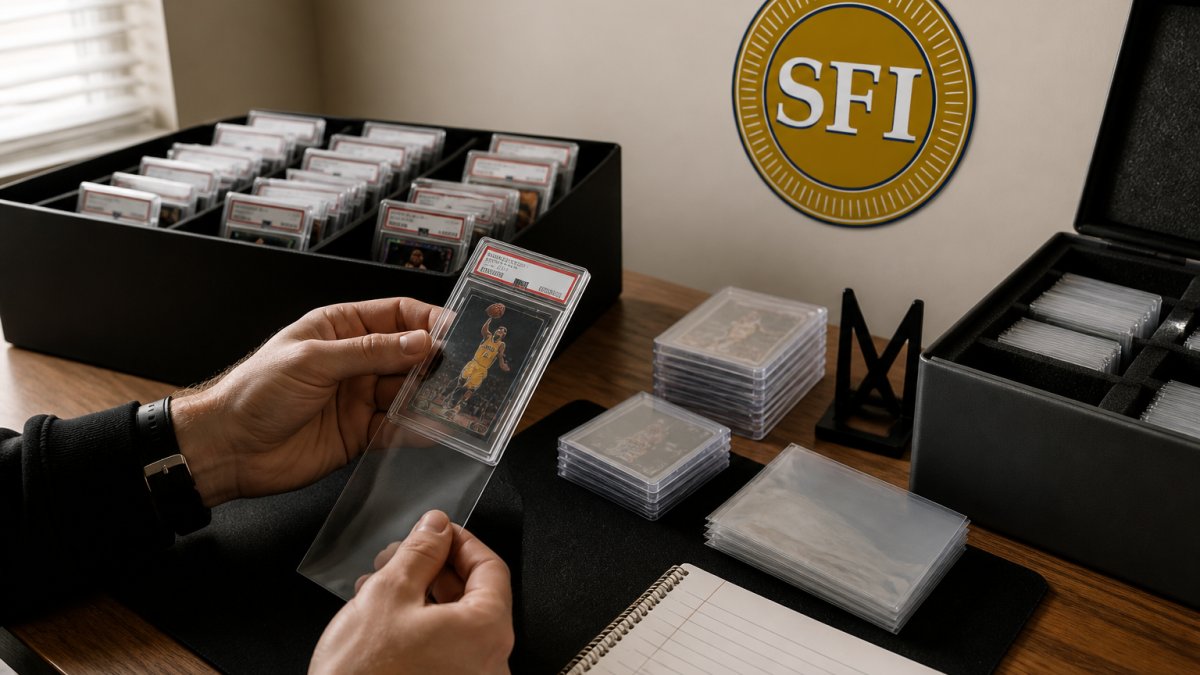
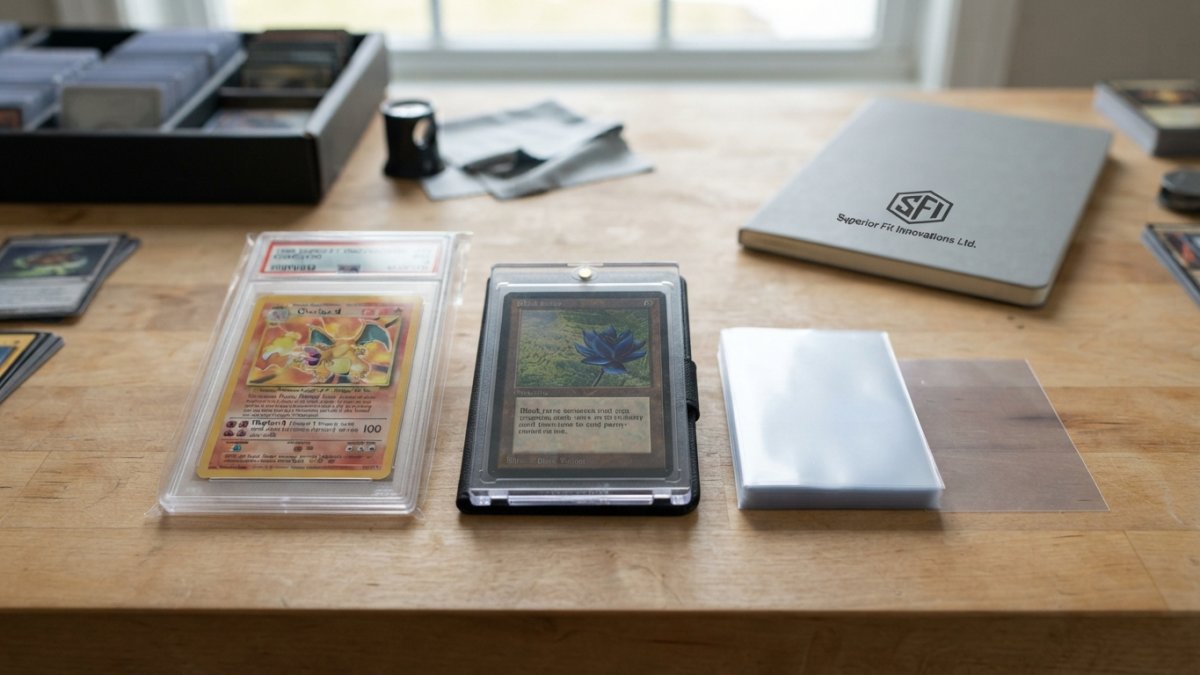
Our top-loader sleeves and magnetic case sleeves exist because the holder is only half the protection. The holder protects the card. The sleeve protects the holder, and by extension the presentation you paid for.
The Best Card Sleeves for Valuable Cards and Graded Slabs
The best card sleeves for valuable cards are precision-cut, archival-grade sleeves sized to the specific holder, not a one-size-fits-all bag.
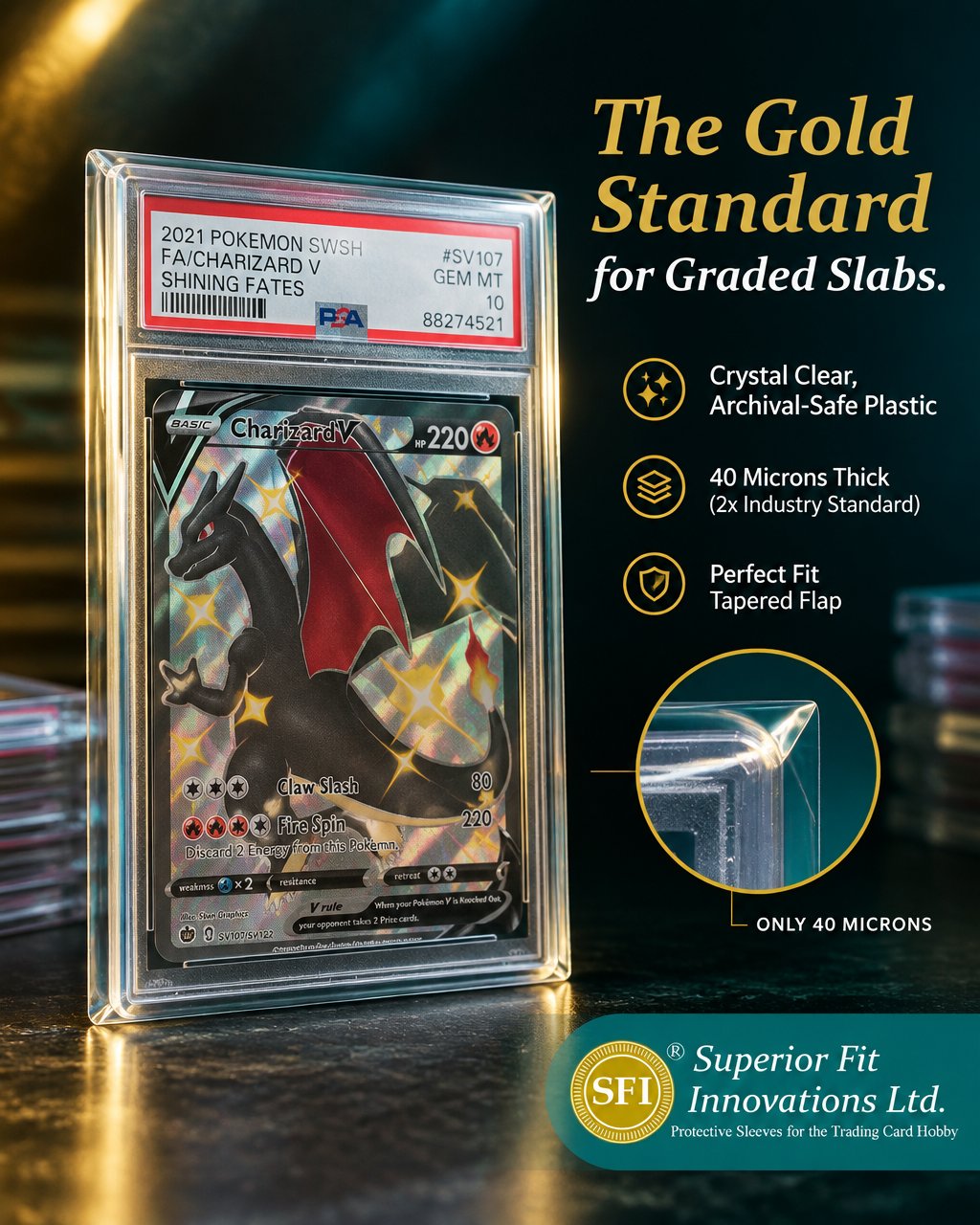
We have a stake in the answer, so weigh it accordingly. Superior Fit Sleeves invented the perfect-fit tapered sleeve in 2014 under our former name, Perfect Fit Innovations.
For magnetic one-touch cases, our magnetic card case sleeves do the same job: snug fit, clear display, no clouding.
Cost Per Card, Replacement Cost, and Sleeve Lifespan
Cost per card settles this debate, and it's the number almost nobody calculates. A premium sleeve costs more up front, but a cheap sleeve gets replaced more often, and replacement is where the budget quietly goes. Put both numbers on the same line: cost to sleeve a card once, versus cost to replace that card if the sleeve fails.
How to Calculate Cost Per Card
The formula is simple: divide the price of a pack by the number of sleeves in it, then multiply by how many sleeves that card will burn through in a year.
A common pattern among players who track this: budget sleeves in a frequently shuffled deck get replaced several times a year, while a snug premium sleeve in the same deck often lasts the full season. The sticker price favors the cheap sleeve; the annualized cost per card often does not.
Sleeve Lifespan by Use Case
Lifespan is not one number, it depends entirely on how the sleeve is used.
- Display or storage: A sleeve holding a card that never leaves its case can stay clear and intact for years. Wear comes from light and dust, not handling.
- Casual play: A sleeve in a deck shuffled weekly shows corner softening and seam stress within months.
- Tournament play: A sleeve in a deck shuffled hundreds of times per event wears fastest at the corners and the seam, and is usually the first to split.
- Shipping: A sleeve around a card saver headed to a grader takes the most handling of any sleeve in a collection, packed, shipped, unpacked, sorted, and should be treated as a consumable.
The practical takeaway: match sleeve grade to handling intensity, not to the card's price tag alone. A cheap sleeve on a card that travels is a false economy; a premium sleeve on a card that never moves is money you didn't need to spend.
The Replacement Cost Nobody Budgets For
Replacement cost has a second layer that doesn't show up on any receipt: the cost of damage that happened because a sleeve failed. A split seam or a loose fit that let grit in can cost far more than the difference between sleeve grades. Surface scratches and edge whitening are the defects graders flag most often, and both are cumulative.
That's the real value-for-money argument: spend on the cards that matter and economize on the ones that don't. The sleeve is not the investment, it's the insurance policy on the investment.
Card Tier | Sleeve Recommendation | Why |
|---|---|---|
Bulk commons | Cheap sleeves | Protection needs are minimal; replacement cost is low |
Play decks | Standard sleeves | Balance of cost, shuffle feel, and replacement frequency |
Valuable raw cards | Premium sleeves | Snug fit, archival material, fewer replacements |
Graded slabs | Precision-cut slab sleeves | Fit and display clarity; protects the holder itself |
Long-term storage | Archival-grade sleeves | Acid-free protection over years |
Conclusion: Match the Sleeve to the Card, Not the Price Tag
The expensive sleeve debate ends where it started: with the card. A premium sleeve on a bulk common is wasted money. A cheap sleeve on a graded slab is a preventable risk. The collectors who get this right aren't buying the most expensive sleeves, they're buying the right sleeve for each tier of their collection.
That's the approach we build for at Superior Fit Sleeves. Precision-cut fit, ultra-clear display quality, and archival-grade, acid-free protection, sized for the holders collectors actually use.
Frequently Asked Questions
Do expensive card sleeves protect cards better than cheap ones?
They can, but the difference is specific rather than automatic. Premium sleeves typically use thicker, acid-free material, tighter tolerances, and clearer plastic that resists yellowing and scuffing. Cheap sleeves are thinner, fit loosely, and can degrade faster, which lets dirt and scratches reach the card. For a valuable card or a graded slab you display and handle often, that extra protection is real. For bulk commons stored in a box, a basic sleeve is usually enough.
What is the difference between penny sleeves and premium card sleeves?
Penny sleeves are thin, loose inner sleeves meant as a first layer. Premium card sleeves are thicker, cut to a tighter fit, and often archival grade, so they work as outer protection for top-loaders, magnetic cases, and graded slabs. The practical trade-off is fit and durability versus cost. Premium sleeves add less wiggle room, handle better during shuffling, and last longer before they scuff or cloud.
Are perfect-fit sleeves safe for trading cards?
Yes, when they are cut to the right dimensions and made from acid-free material. A snug fit keeps the card from shifting, which reduces edge wear and surface scuffs. The risk comes from forcing a card into an undersized sleeve or using sleeves that are not archival grade. Check the stated fit for your holder type, and never bend a card to make it slide in.
How do you choose sleeves for cards stored in top-loaders or magnetic cases?
Match the sleeve to the holder, not the card. A top-loader sleeve should fit over the rigid holder with a snug, tapered flap; a magnetic case sleeve should wrap the one-touch case without stretching. For graded slabs, use sleeves sized to PSA, BGS, SGC, or CGC cases specifically. Buying one sleeve type for every holder usually means a loose fit somewhere, which defeats the purpose.