 comparison
Premium vs Budget Trading Card Sleeves: 2026 Guide
Table of Contents
- Premium vs Budget Trading Card Sleeves: The Quick Comparison
- Penny Sleeves vs Premium Sleeves: What Changes When You Pay More
- Trading Card Sleeve Thickness and Clarity: What the Numbers Tell You
- Best Trading Card Sleeves for Valuable Cards: Matching Sleeve to Card Value
- Card Sleeves for Top Loaders: Fit, Flap Style, and Compatibility
- Cost Per Card: The Long-Term Value Math
- Storage, Environment, and Sleeve Wear Over Time
- Conclusion: Choosing the Right Tier for Your Collection
- Frequently Asked Questions
Last Updated: October 14, 2026
Premium vs Budget Trading Card Sleeves: The Quick Comparison
The difference between premium and budget trading card sleeves comes down to three things: material quality, fit precision, and how long the sleeve protects your card before it needs replacing. Budget sleeves work for casual storage. Premium sleeves are built for cards you actually care about.
That distinction matters more than most collectors realize. At Superior Fit Sleeves, we've been making precision-cut sleeves since 2014, and we hear the same question most often: "Is the upgrade actually worth it?" Below, we break down exactly where the extra cost goes, and where it doesn't.
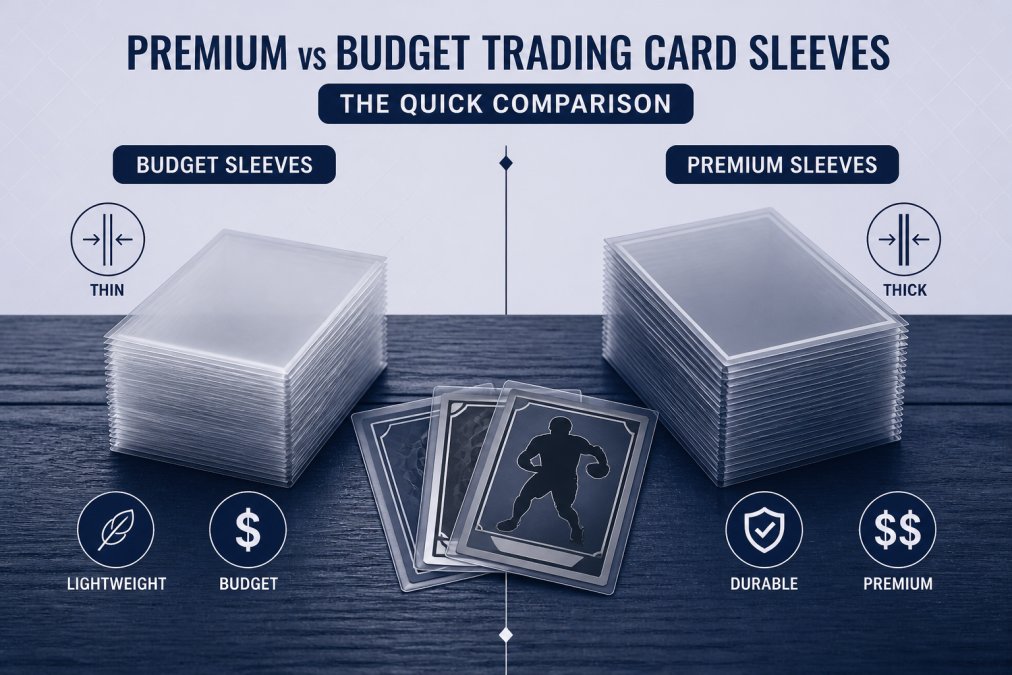
How the Two Tiers Differ at a Glance
Factor | Budget Sleeves | Premium Sleeves |
|---|---|---|
Material | Basic polypropylene | Archival-grade, acid-free materials |
Fit | Loose, one-size-fits-most | Precision-cut, snug |
Clarity | Can cloud or yellow over time | Ultra-clear, distortion-free |
Best For | Bulk commons, casual play | Valuable cards, graded slabs, display |
Replacement Cycle | Frequent | Long-term |
The short version: budget sleeves protect against handling. Premium sleeves protect against time.
Penny Sleeves vs Premium Sleeves: What Changes When You Pay More
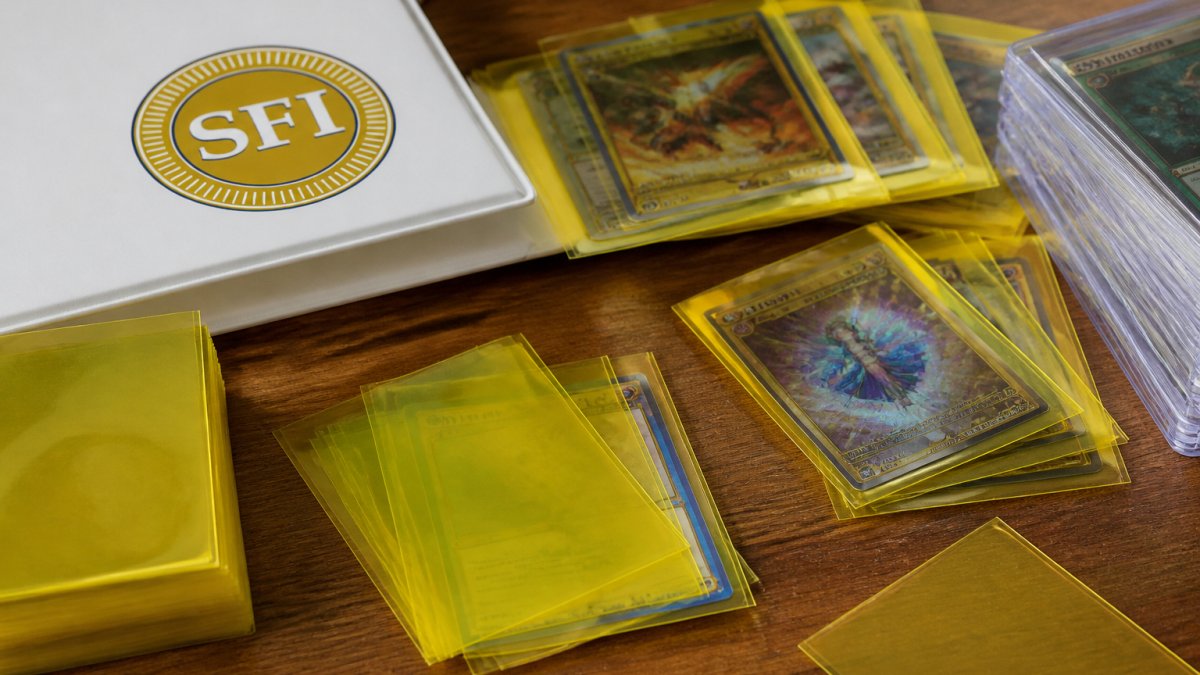
Penny sleeves are thin, inexpensive inner sleeves designed for basic protection. Premium sleeves use thicker, higher-grade materials, a tighter cut, and better optical clarity. The gap isn't just thickness. It's how the sleeve behaves after months of storage.
A common mistake is assuming all clear sleeves are basically the same. They aren't. Budget sleeves often use lower-grade plastic that can cloud, wrinkle at the edges, or pick up a haze that dulls the card underneath. Premium sleeves are engineered for clarity and archival safety, which matters if you plan to grade or display the card.
If you're deciding between the two, ask one question: is this card replaceable? If yes, budget is fine. If no, premium pays for itself.
Trading Card Sleeve Thickness and Clarity: What the Numbers Tell You
Thickness is the most useful number on a sleeve listing, and also the most misunderstood. Sleeve film is measured in microns (a micron is one thousandth of a millimeter) or in mils (one mil equals 25.4 microns). Budget penny sleeves commonly run at roughly 30 to 40 microns.
Here is what that number actually changes:
Property | Thinner film (roughly 30-40 microns) | Thicker film (roughly 50-100+ microns) |
|---|---|---|
Wear resistance | Scuffs and creases early | Holds shape through repeated handling |
Shuffle feel | Flimsy, snags, corners catch | Crisp snap, consistent glide |
Deck height | Adds little bulk | Adds measurable height per card |
Clarity | Can haze or yellow with age | Stays optically clear longer when archival-grade |
Cost per sleeve | Lowest | Higher upfront |
Why clarity is a separate spec from thickness. A thick sleeve can still be cloudy. Clarity comes from the resin and the finish, not the gauge.
How to check thickness and clarity yourself. You do not need a lab. Hold the sleeve up to a light source and look for distortion across the window. Flex a corner and listen for a crisp snap versus a soft fold. Slide a card in and out ten times and watch whether the sleeve creases at the opening.
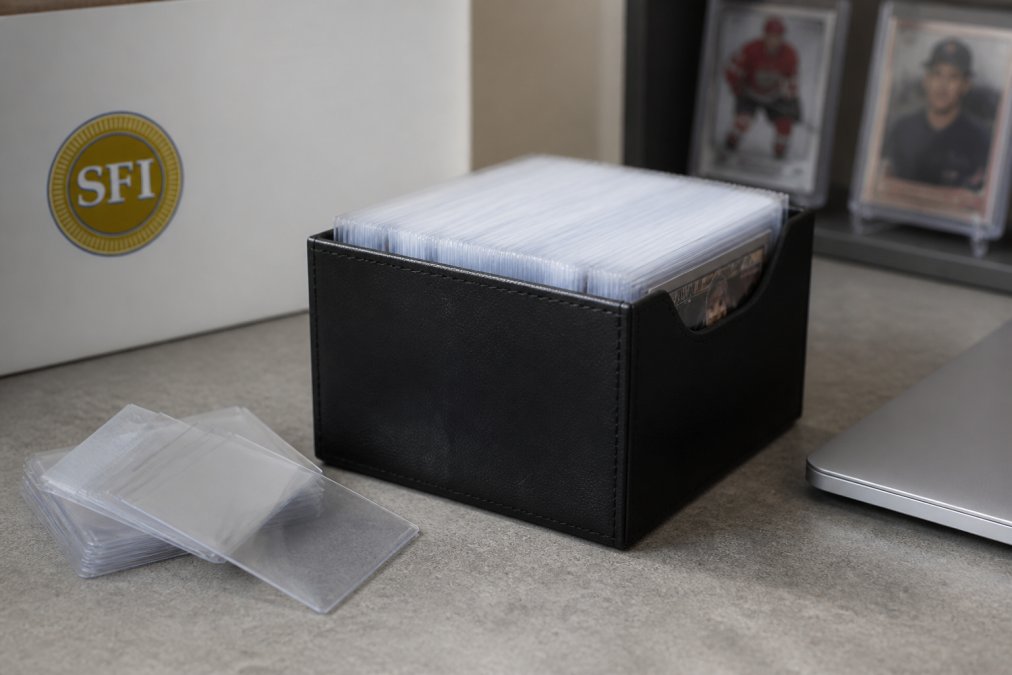
The bulk trade-off nobody mentions until it bites. Thicker sleeves make decks taller. A 60-card deck in thin sleeves and the same deck in thick sleeves will not fit the same box. If you store in a fixed-size deck box or binder page, measure before you upgrade, because the extra height per card compounds across a full deck.
For cards you handle often, thickness pays off. For cards that sit untouched in a box, clarity and archival safety matter more than gauge.
Best Trading Card Sleeves for Valuable Cards: Matching Sleeve to Card Value
The best trading card sleeves for valuable cards are precision-cut, archival-grade, and matched to the exact holder the card sits in. Value should drive the choice, not habit.
Here's how we'd match sleeve to card:
- Commons and bulk: budget penny sleeves are fine
- Playable cards in decks: durable standard sleeves with good shuffle feel
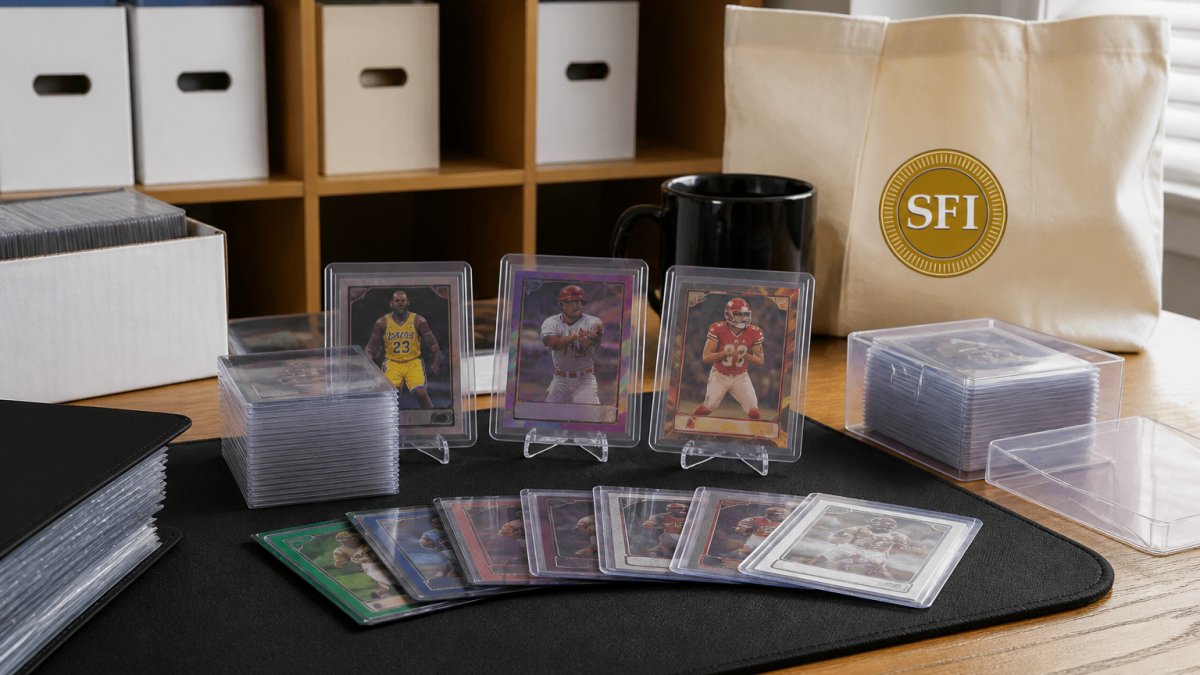
- Cards in top loaders: snug top-loader sleeves that resist sliding
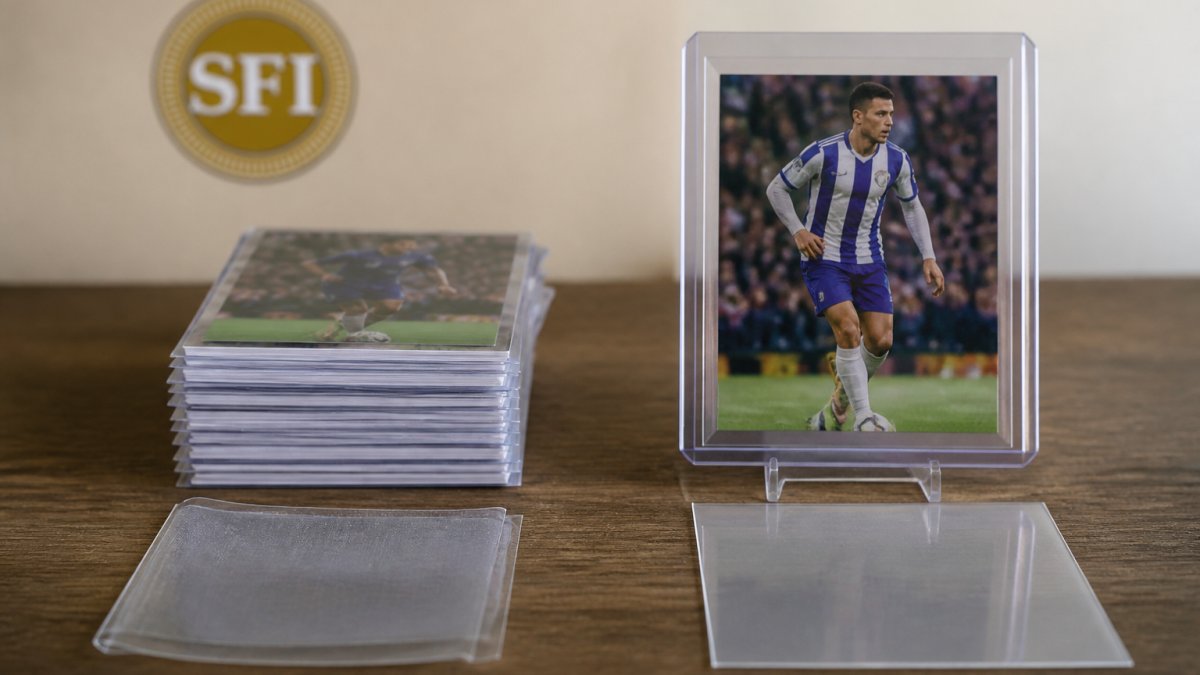
- Graded slabs: sleeves cut specifically for the slab brand
- High-value display cards: archival-grade, ultra-clear sleeves
This is where precision fit separates tiers. A loose sleeve lets the card shift, which means edge wear over time. A snug, correctly sized sleeve holds the card or slab exactly where it should be.
Card Sleeves for Top Loaders: Fit, Flap Style, and Compatibility
Card sleeves for top loaders need to match the holder's dimensions exactly. If they're too loose, the card slides; if they're too tight, you risk bending the loader or the card.
Flap style matters here. A tapered, resealable flap keeps dust out and holds the card in place without adding bulk, which is the concept we originally engineered and have refined since 2014. Flat or oversized flaps can bunch up, especially when you're stacking loaders in a box.
Compatibility is the quiet failure point. Collectors who mix holder brands often end up with sleeves that fit some loaders and not others. Buying sleeves cut for your specific holder type prevents that from happening.
Cost Per Card: The Long-Term Value Math
Pack price is a distraction. The number that decides whether premium is worth it is cost per card per year of protection, and you can estimate it without a spreadsheet.
The three variables that matter:
- Cost per sleeve: divide pack price by sleeve count. A pack of 100 budget sleeves and a pack of 50 premium sleeves are not comparable until you do this.
- Replacement frequency: how often a sleeve in your collection actually gets swapped. Sleeves that cloud, crease, or split get replaced; sleeves that hold up do not.
- Exposure: how often you handle, shuffle, or move the card. A card in a binder page sees almost no wear. A card in a played deck sees constant wear.
The framework, in plain terms. Take the cost per sleeve and divide it by the number of years you expect that sleeve to stay usable in your specific use case. That gives you an annual cost per card. A cheaper sleeve that needs replacing twice as often can cost more per year than a premium sleeve that lasts longer.
Where the math flips. For bulk commons in long-term storage, budget sleeves win on cost per card almost every time because replacement frequency is low and the card's value doesn't justify more.
The cost nobody puts on the label. A single card damaged by a sleeve that splits, clouds, or traps moisture can cost more to replace than years of sleeve upgrades for an entire collection. That is the real comparison: not premium versus budget per pack, but premium versus the replacement cost of one card you cared about.
A simple decision rule:
- If you can replace the card for less than the annual cost difference between tiers, budget is fine.
- If the card is hard to replace, expensive, or sentimental, premium pays for itself the first time a budget sleeve fails.
- If you are unsure, buy one pack of each, sleeve the same type of card in both, and check them again in six months. Your own replacement rate is the only number that matters.
We do not publish a single price because it depends on quantity and sleeve type. Check our site for current pricing on the specific sleeve you need, then apply the framework above to your own collection.
Storage, Environment, and Sleeve Wear Over Time
Heat, humidity, and light are the three environmental factors that wear sleeves down fastest. Storage conditions often matter more than the sleeve itself.
Keep collections in a cool, dry space away from direct sunlight. Avoid stacking heavy boxes on top of sleeved cards. Rotate or inspect long-stored collections periodically so you catch a failing sleeve before it affects the card.
This is also where archival-grade materials earn their keep. Acid-free construction avoids the slow chemical interaction that cheaper plastics can cause over years of contact with a card's surface.
Conclusion: Choosing the Right Tier for Your Collection
The right tier depends on what you're protecting. Bulk cards don't need archival sleeves. Graded slabs, high-value singles, and anything you plan to display or sell do.
If you want to protect your collection long-term, Superior Fit Sleeves makes precision-cut, archival-grade sleeves for graded slabs, top loaders, and magnetic cases, all with the tapered flap design we introduced in 2014. Check the fit for your specific holder and get the sizing right the first time.
Frequently Asked Questions
What is the difference between premium and budget trading card sleeves?
Budget sleeves, often called penny sleeves, are thin, low-cost polypropylene sleeves meant for basic dust and handling protection. Premium trading card sleeves use thicker material, tighter tolerances, and clearer plastic. The practical differences show up in fit, clarity, stiffness, and how well they resist scratching and yellowing over years of storage. Budget sleeves work for bulk commons; premium sleeves are built for cards you plan to grade, display, or sell later.
Are penny sleeves suitable for valuable trading cards?
Penny sleeves alone are not enough for valuable cards. They protect against dust and fingerprints, but their thin material offers limited defense against bending, corner dings, and surface scratches. Most collectors use a penny sleeve as a first layer, then slide the sleeved card into a top loader, magnetic case, or graded slab. For high-value cards, the outer holder does the heavy lifting, and a precision-fit premium sleeve over that holder adds clarity and scuff protection.
How do I choose the right sleeve size for a trading card?
Start by measuring the card or holder, not guessing. Standard trading cards are 2.5 by 3.5 inches, but top loaders, magnetic one-touch cases, and graded slabs from PSA, BGS, SGC, and CGC each add their own dimensions. A sleeve that is too loose lets the card shift and pick up edge wear; too tight and you risk bending corners during insertion. Look for sleeves sized specifically for the holder type rather than a one-size-fits-all option.
Do premium card sleeves protect cards better than budget sleeves?
Yes, for most real-world handling. Premium sleeves are thicker, which means better resistance to creasing, corner damage, and surface scuffs during shuffling or transport. They also tend to hold clarity longer, while cheap sleeves can fog, yellow, or develop a sticky feel as plasticizers break down. Budget sleeves still have a place for bulk storage, but for cards worth grading or reselling, the extra thickness and tighter fit pay off.
Should you penny sleeve every card in your collection?
Not every card needs one. Penny sleeves make sense for anything you plan to sort, trade, or store long-term in a box or binder, because they stop dust and surface scratches from casual handling. Cards headed straight into a top loader or graded slab often skip the penny sleeve, since the outer holder already provides structural protection. For bulk commons you flip through often, penny sleeves keep them clean without adding much cost or bulk.
resistance to
Most collectors don't lose value in one dramatic moment. They lose it slowly, through sleeves that cloud, loosen, or break down while nobody's looking. If you want protection built for the long haul, Superior Fit Sleeves offers archival-grade, acid-free sleeves with precision-cut fit and ultra-clear display quality for graded slabs, top loaders, and magnetic cases. Get started with Superior Fit Sleeves and protect the cards that matter most.