 blog
blog
CardShellz vs Premium Slab Sleeves: What to Know
Table of Contents
- Why Slab Sleeves Matter for Your Graded Card Collection
- CardShellz vs Premium Slab Sleeves: Quick Comparison
- What to Look for in Quality Graded Card Sleeves
- PSA vs BGS Slab Dimensions: Why Fit Varies Across Grading Companies
- How to Protect Graded Cards from Scratches and Dust
- Cost Per Sleeve: What You Actually Get at Each Price Point
- Which Slab Sleeves Fit Your Collection Best?
- Frequently Asked Questions
Last Updated: October 12, 2026
Why Slab Sleeves Matter for Your Graded Card Collection
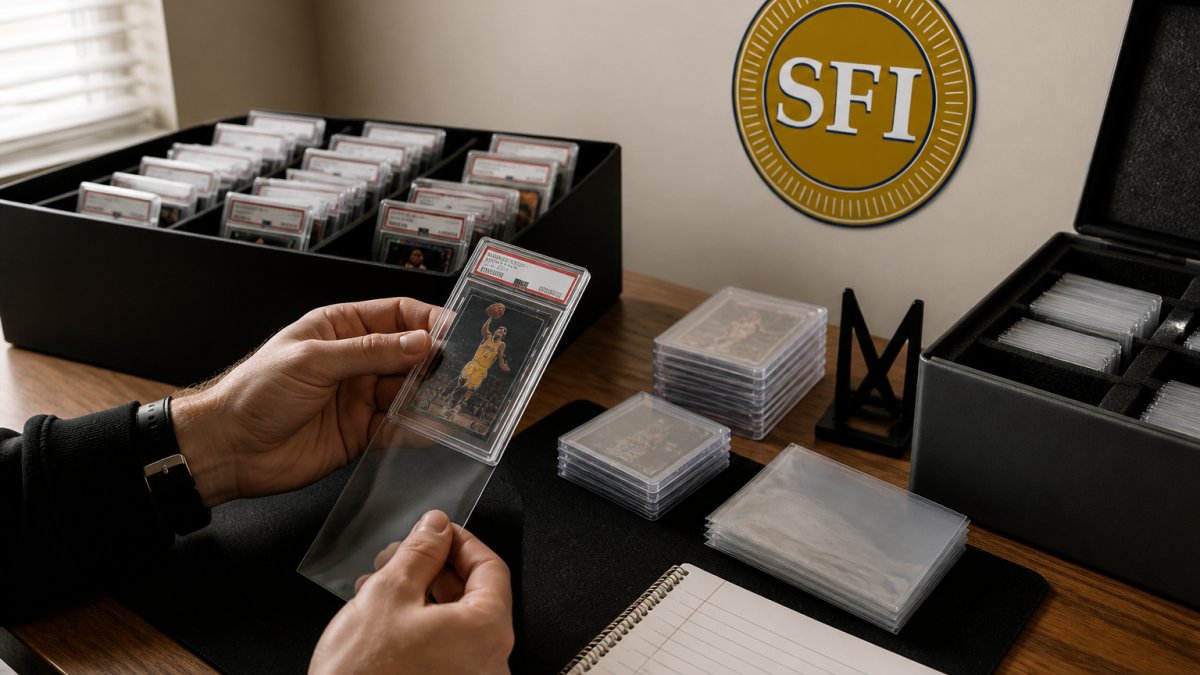
A graded card that comes back from PSA or BGS with a hairline scuff across the case is a frustrating sight, and it happens more often than most collectors expect.
This guide from Superior Fit Sleeves breaks down how premium slab sleeves compare to the thinner options flooding the market, what separates a good sleeve from a bad one, and how to match a sleeve to the slabs you own.
Most buying guides get one thing wrong: they treat every slab sleeve as interchangeable plastic. A loose sleeve slides, traps dust at the edges, and dulls the display.
CardShellz vs Premium Slab Sleeves: Quick Comparison
The core difference between a budget sleeve and a premium slab sleeve comes down to fit, material, and closure. Budget sleeves are cut generously so one size fits many slab brands.
Feature | Budget Slab Sleeves | Premium Slab Sleeves |
|---|---|---|
Fit | Loose, one-size approach | Form-fitting, slab-specific |
Material | Thin polypropylene | Thicker, archival-grade, acid-free |
Closure | Open-top | Resealable tapered flap |
Clarity | Can haze over time | Glass-like clarity |
Dust protection | Partial | Sealed on all sides |
Budget sleeves cost less per sleeve, but you buy more of them because they tear, cloud, or fit poorly. Premium sleeves cost more upfront and reward you with fewer replacements and better display.
What to Look for in Quality Graded Card Sleeves
Quality graded card sleeves share four traits: correct fit, clean material, clear optics, and a closure that actually seals. Miss one and you are paying for protection you are not getting.
Material Type and Thickness
Material is the first thing to check. Most slab sleeves are made of polypropylene, often called OPP, and thickness varies widely by brand. Thin sleeves feel flimsy and crease easily; thicker sleeves hold their shape, resist scuffs, and stay clear longer.
Archival quality matters too. Acid-free sleeves won't leach chemicals onto the slab surface over years of storage. If a sleeve doesn't state its material or archival claims, treat that as a red flag.
Clarity and Display Visibility
A sleeve that fogs or yellows ruins the reason you graded the card. Display clarity depends on material and surface finish, and cheap sleeves often have a slight haze that worsens with handling and UV exposure.
Premium sleeves aim for glass-like transparency with no distortion, so the label, grade, and card art read cleanly through the plastic- the difference between a professional presentation and a cloudy one.
PSA vs BGS Slab Dimensions: Why Fit Varies Across Grading Companies
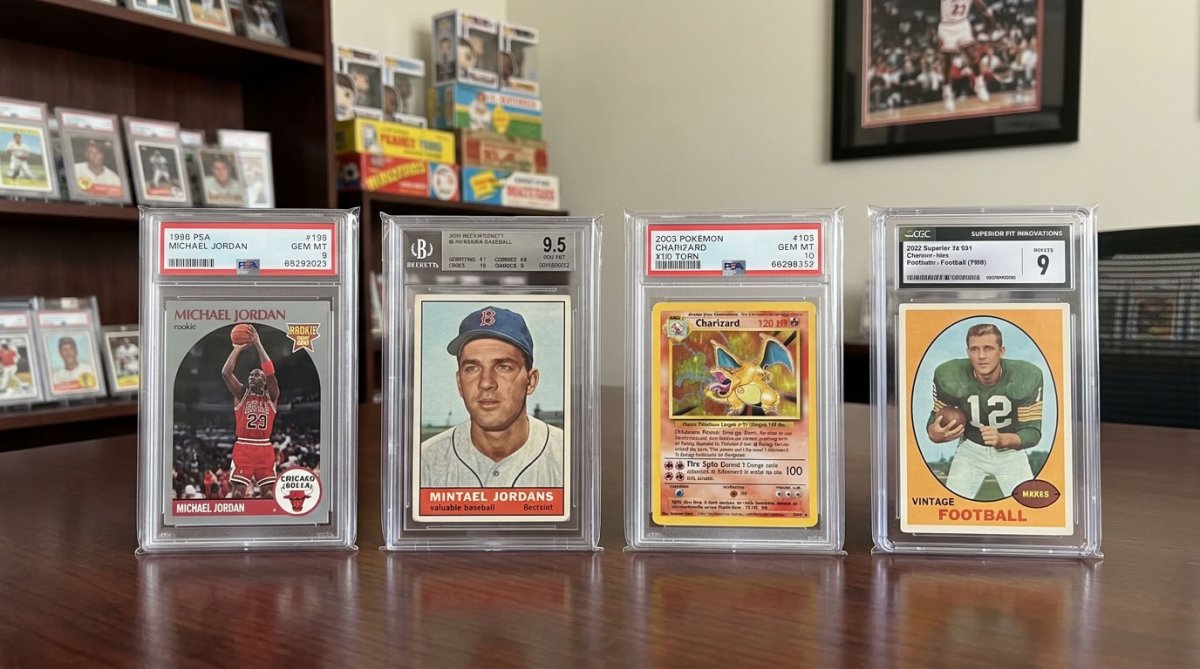
Slab dimensions are not standardized across grading companies, and that fact drives every fit problem collectors run into. PSA, BGS, SGC, and CGC each build holders to their own dimensions and thicknesses, and even within one company, holder generations differ as cases are revised. A sleeve cut for a PSA-style slab may be too tight for a BGS slab and too loose for an SGC one.
What Actually Varies, and Why It Matters
Four measurements decide whether a sleeve fits snug or baggy:
- External length and width. The face dimensions of the holder. A sleeve cut to the wrong face size either will not slide on or will leave slack at the edges.
- Case thickness. The spec most collectors overlook, and the one that decides whether the sleeve hugs the slab or balloons around it. Thickness varies between grading companies and between holder generations.
- Opening size. The sleeve mouth must clear the slab's thickest corner without stretching the seam.
- Corner radius. Rounded versus squared corners change how the sleeve seats at the edges and whether dust can enter at the corners.
A loose fit is not cosmetic. Slack lets the slab shift inside the sleeve every time you pick it up, and that repeated micro-movement causes surface scuffs and hairline scratches on a case that was clean when it came back from grading.
Compatibility Across Grading Companies
Instead of guessing, match the sleeve to the holder you own. A practical compatibility approach looks like this:
Holder | Fit consideration |
|---|---|
PSA-style slabs | Cut to the standard PSA face and thickness; the most common sleeve size |
BGS-style slabs | Thicker case than PSA; a PSA sleeve will not seat correctly |
SGC-style slabs | Its own face dimensions; generic sleeves tend to run loose |
CGC card slabs | Distinct dimensions from the other three; buy CGC-specific |
Much larger format; card sleeves will not fit at all | |
Rigid holders with their own dimensions; need dedicated sleeves |
Two rules fall out of that table. First, buy by brand rather than a "fits most" claim. Second, if you own a mix of holders, buy a mix of sleeves; one universal size is why collections end up with baggy sleeves on some slabs and stretched seams on others.
Generations Within a Single Brand
Even a single grading company is not a single size. Holder generations get revised, and a sleeve that fit a slab graded a decade ago may seat differently on one graded last month.
Superior Fit Sleeves addresses this by cutting separate sleeves for PSA, BGS, CGC, and other major slab brands, plus dedicated sleeves for graded comics and magazines, so the fit matches the holder instead of approximating it.
SGC and CGC Compatibility
SGC and CGC holders add another wrinkle. Their cases run to their own dimensions, and CGC handles both trading cards and graded comics, which are very different sizes. A sleeve that fits a card slab won't fit a comic slab, and vice versa. Treat each holder type as its own purchase decision.
How to Protect Graded Cards from Scratches and Dust
Scratches and dust are the two most common threats to a graded slab, and both come down to how the sleeve seals. Dust settles into any gap between slab and sleeve; scuffs come from the slab sliding against a loose sleeve or other slabs in storage.
A tight fit solves the sliding problem. A sealed closure solves the dust problem. Together, they turn a sleeve from a thin plastic bag into a protective layer that actually does something.
Resealable vs Open-Top Sleeve Designs
Open-top sleeves are the budget standard. They slide on easily and cost less, but the open edge leaves the slab exposed to dust and lets it slide out during handling.
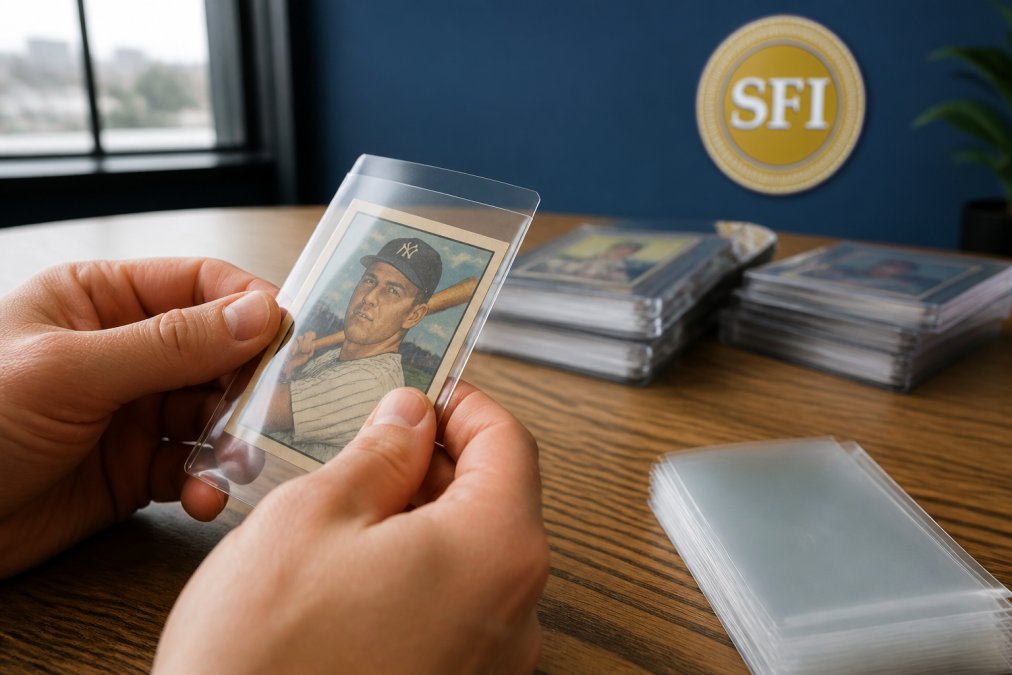
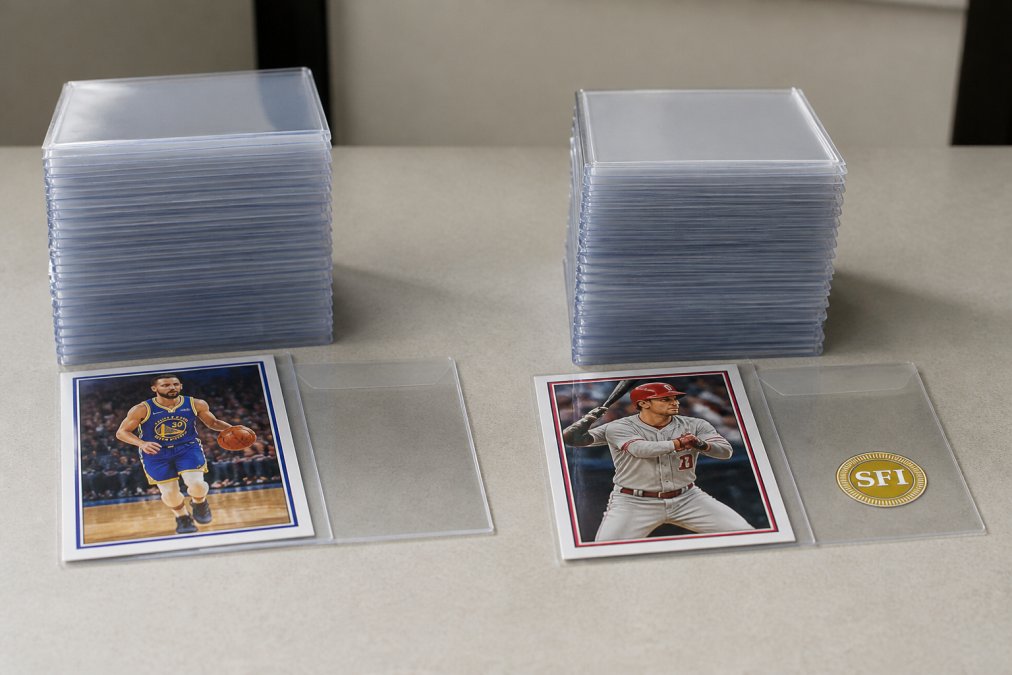
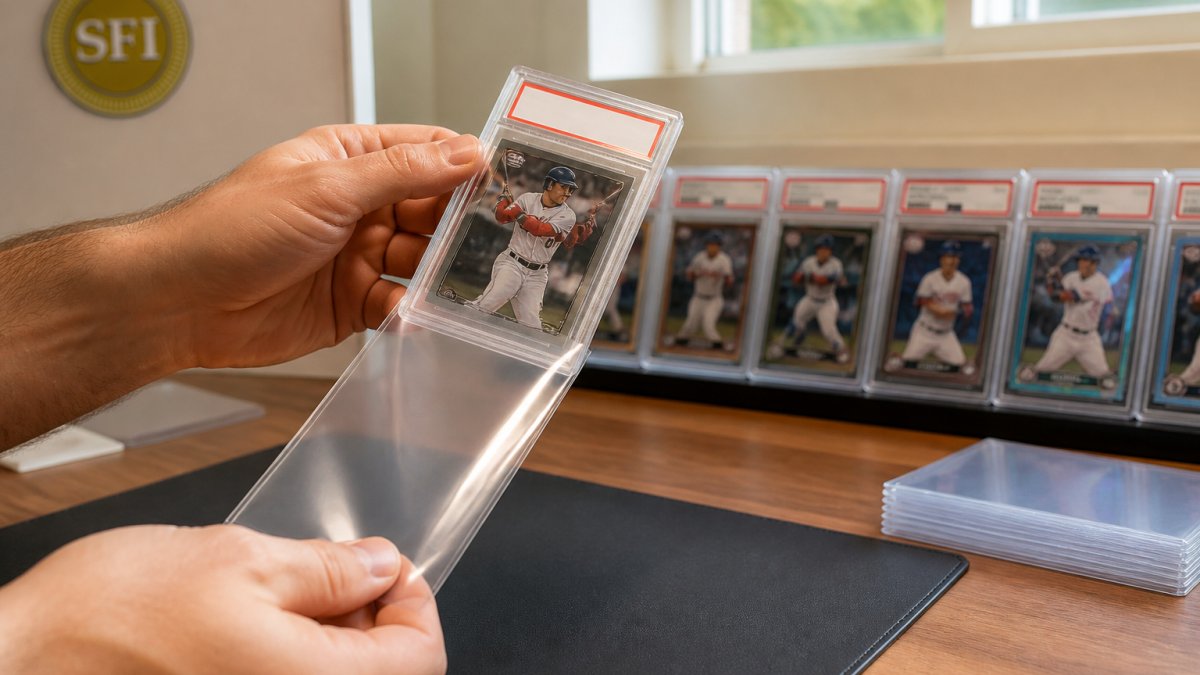
Resealable sleeves close the opening, keep dust out, and hold the slab in place. Superior Fit Sleeves' tapered, resealable flap design, introduced in 2014, was built for exactly this: a snug fit and a sealing closure that keeps the slab in place and clean.
Cost Per Sleeve: What You Actually Get at Each Price Point
Sticker price tells you almost nothing about slab sleeve value. The number that matters is cost per slab protected per year, which only appears once you normalize pack prices to a per-sleeve basis and add the costs buyers ignore: shipping, replacement rate, and the downside of a failed sleeve.
Normalize Every Pack to a Per-Sleeve Figure
The first step is arithmetic. Take the pack price, divide by the sleeve count, and you have a unit cost you can compare across brands and pack sizes.
Budget sleeves typically win on unit cost and lose it back on replacement. If a thin sleeve creases, clouds, or tears after a few months, you buy that pack again, and the effective annual cost climbs toward the premium sleeve you passed on.
The Costs Buyers Forget to Add
Three line items routinely go missing from sleeve math:
- Shipping. A cheap pack with a flat shipping charge can cost more per sleeve than a slightly pricier pack with free or combined shipping. Compare landed cost, not list price.
- Bulk-pack differences. Bulk packs lower unit cost but only if you will actually use the sleeves. Buying 500 sleeves for a 40-slab collection ties up money in plastic you may never open.
- Replacement rate. Every sleeve you replace is a second purchase, and a failed sleeve that scuffs a slab costs far more than the sleeve itself.
A Simple Framework You Can Run Yourself
You do not need a spreadsheet. Ask four questions before you buy:
- What is the landed cost per sleeve, shipping included?
- How many slabs do I actually need to sleeve this year?
- How long will one sleeve last under my handling and storage habits?
- What does it cost me if a sleeve fails and the slab scuffs?
For most collectors, the answer points in the same direction: fewer, better sleeves beat a bulk pack of thin ones, because you buy the premium sleeve once and the budget sleeve repeatedly. The premium sleeve also protects the slab itself, and you can’t rebuy a scuffed slab case at any price.
Where the Premium Sleeve Earns Its Premium
Superior Fit Sleeves sits at the premium end of this math: precision-cut, archival-grade, acid-free material with a tapered, resealable flap means you buy the sleeve once, it fits the holder it was cut for, and you don't need to replace it because it clouded or tore. Premium wins here, not on unit price, but on cost per year of protection and the value of the slab inside.
Which Slab Sleeves Fit Your Collection Best?
The right slab sleeve is cut for your specific holders, made from archival-grade material, and sealed to keep dust out. Everything else is marketing.
If your collection is mostly PSA slabs, buy PSA-style slab sleeves.
For collectors who want a single source, Superior Fit Sleeves makes precision-cut, archival-grade, acid-free sleeves for graded slabs, top-loaders, and magnetic one-touch cases, with the tapered resealable flap that started the category in 2014.
Protecting a graded collection gets complicated fast when every slab brand uses its own dimensions and every budget sleeve fits a little differently.
Frequently Asked Questions
What should you look for in a sleeve for a graded card slab?
Focus on four things: material type (polypropylene or OPP for archival quality), thickness (thicker material resists creasing and surface scuffs better), clarity (glass-like transparency so the slab label and card remain fully visible), and fit (form-fitting sleeves should slide on without being loose enough to trap dust or tight enough to require force). Resealable flaps also help keep dust out during long-term storage. Acid-free construction matters if you plan to store slabs for years.
Do graded card slabs need protective sleeves?
Yes. Graded slabs are made of hard plastic that scratches easily during handling, stacking, and transport. Even minor surface scuffs reduce display clarity and can affect resale presentation. A protective sleeve adds a sacrificial layer that absorbs scratches and dust so the slab itself stays clean. Collectors who submit cards for grading or regularly buy and sell slabs benefit most because handling frequency increases the risk of surface damage.
Can one sleeve fit PSA, BGS, SGC, and CGC slabs?
Not reliably. PSA-style slabs have different outer dimensions than BGS, SGC, and CGC holders. A sleeve cut for one brand may fit another too loosely (allowing dust inside) or too tightly (risking seam stress during insertion). The safest approach is to match the sleeve to the specific slab brand and generation. Some premium sleeve makers produce sleeves sized for multiple slab types, but you should verify compatibility before buying in bulk.
Are resealable sleeves better for graded cards?
For long-term storage and display, resealable sleeves offer clear advantages. The flap seals the opening, blocking dust and reducing the chance of the slab sliding out during handling. Open-top sleeves are faster to load and unload, which suits high-volume sellers who cycle inventory quickly. If your slabs sit on a shelf or in a case for months at a time, a resealable design provides better ongoing protection with minimal extra effort.