 listicle
Best Protective Sleeves for High Value Cards: 2026 Guide
Table of Contents
- Why the Best Protective Sleeves for High Value Cards Matter
- Quick Comparison: Sleeve Types by Holder and Card Value
- Card Saver vs Top Loader: Which Holder Comes First
- The Best Sleeves for Graded Cards and Slabs
- Trading Card Sleeve Sizes: Matching Fit to Card Dimensions
- How to Protect High-Value Trading Cards by Storage Scenario
- Material Safety, Clarity, and Long-Term Storage
- Double-Sleeving and Binder Compatibility
- Frequently Asked Questions
Last Updated: October 17, 2026
Why the Best Protective Sleeves for High Value Cards Matter
A scratched slab or scuffed top loader can knock real money off a card you spent years chasing. At Superior Fit Sleeves, we have engineered precision-fit protection since 2014. The best protective sleeves for high value cards match your holder exactly, seal out dust and moisture, and stay clear for decades. Below, we break down what damages cards, which sleeve fits which holder, and how to protect what you own.
What Actually Damages a Valuable Card
Damage rarely arrives in one dramatic moment. It accumulates.
- Surface scuffs from slabs sliding against each other in a box or case
- Corner and edge wear when a card shifts inside a loose holder
- Dust and grit that settles into seams and acts like sandpaper over time
The fix is boring but effective: a snug outer layer that stops movement, blocks dust, and uses acid-free, PVC-free material.
Quick Comparison: Sleeve Types by Holder and Card Value
Match the sleeve to the holder first, then to the card's value.
Sleeve Type | Fits | Best For | Protection Level |
|---|---|---|---|
Penny sleeve (soft) | Raw standard-size cards | Base cards, bulk storage | Light |
Inner sleeve (perfect fit) | Raw cards, inside outer sleeves | Double-sleeving, grading prep | Light-medium |
Rigid top loaders | Mid-value raw cards | Medium-high | |
Raw cards in transit | Submission and shipping | Medium-high | |
Graded cards, display | High | ||
One-touch magnetic cases | Display and handling | High |
Buy for the holder you already own. A perfect slab sleeve on a raw card does nothing useful.
Card Saver vs Top Loader: Which Holder Comes First
A card saver is a semi-rigid holder that keeps a raw card flat and secure, usually for shipping or grading submissions. A top loader is a rigid plastic holder built for everyday storage and handling. The best choice often depends on the specific requirements of professional card grading services when evaluating your collection.
Which comes first depends on the job:
- Grading submission: card saver first, since most grading services prefer semi-rigid holders for intake.
- Long-term raw storage: top loader first, then a top-loader sleeve over it.
- Shipping a sale: card saver inside a team bag, sandwiched between cardboard.
Whichever route you take, the outer sleeve stops the holder from scratching.
The Best Sleeves for Graded Cards and Slabs
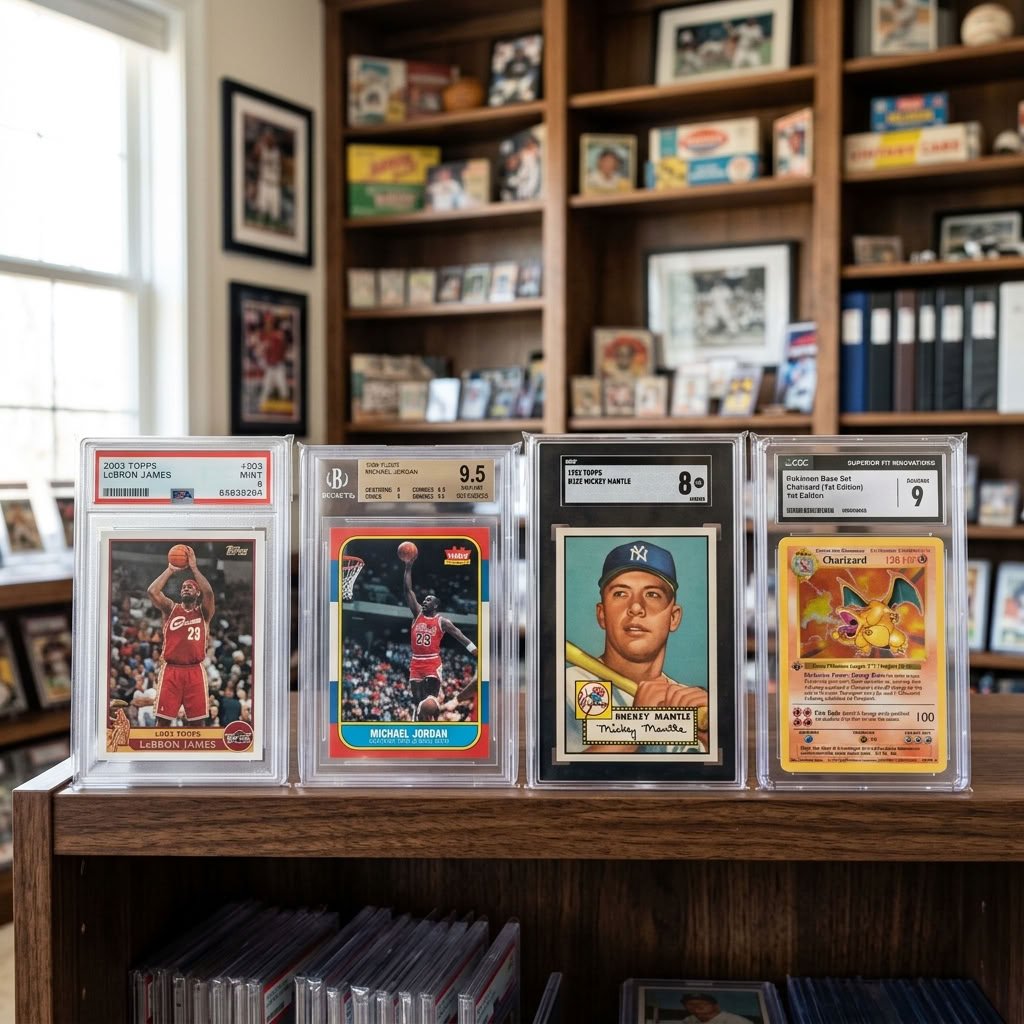
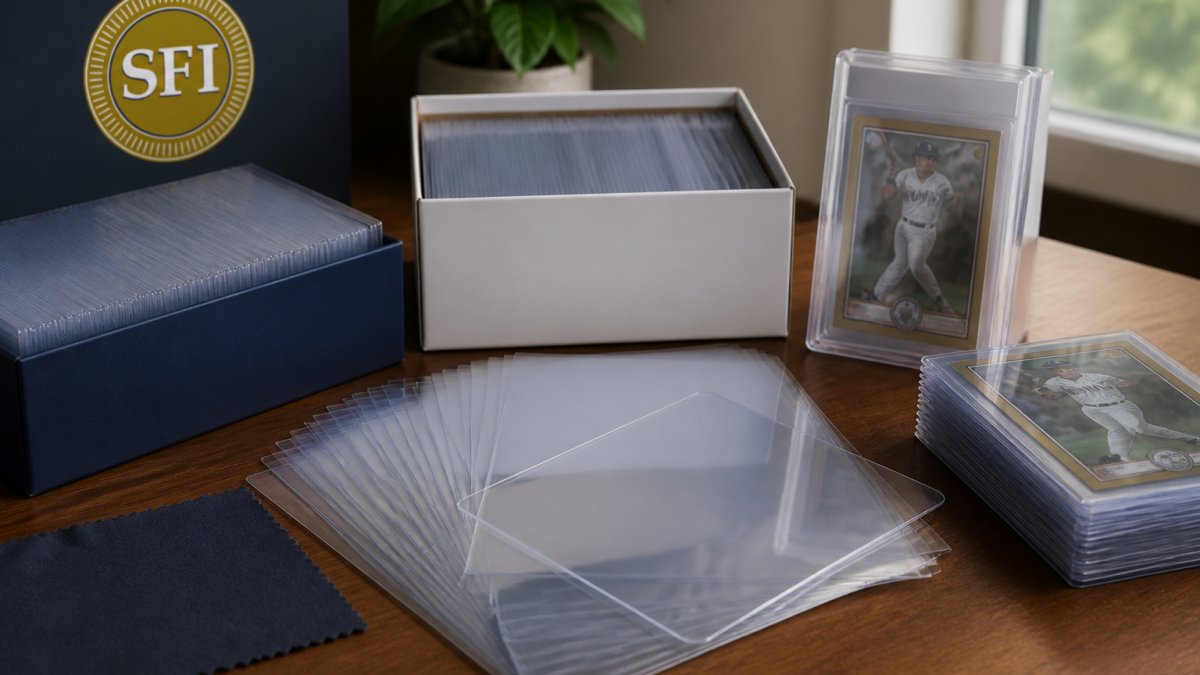
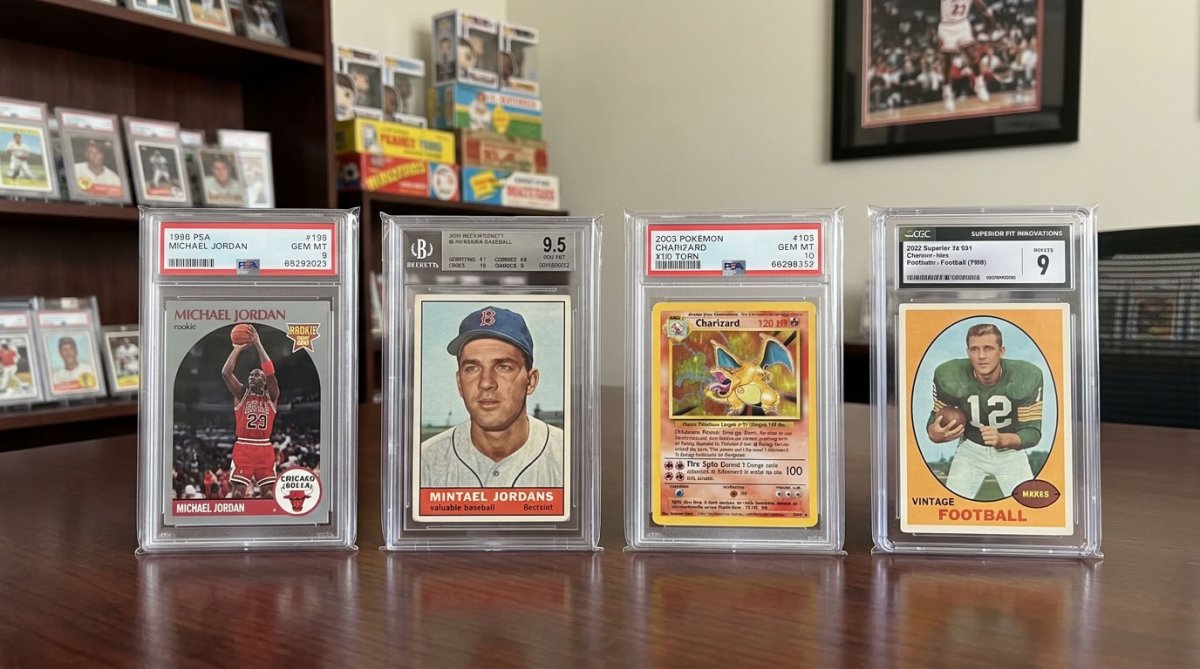
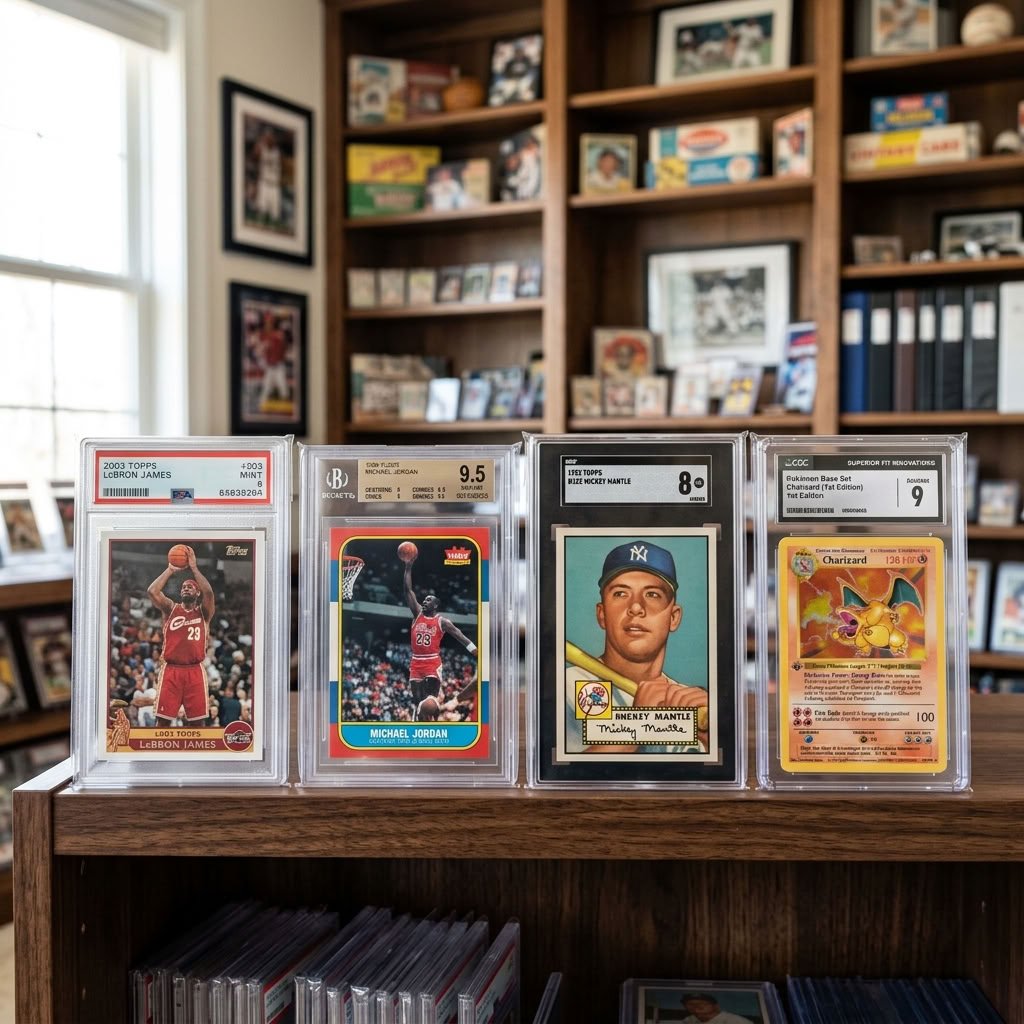
For graded cards, the best sleeve is a dedicated slab sleeve cut to the exact outer dimensions of the case. Our graded card slab sleeves are cut to each grading company, with a tapered resealable flap that folds flat.
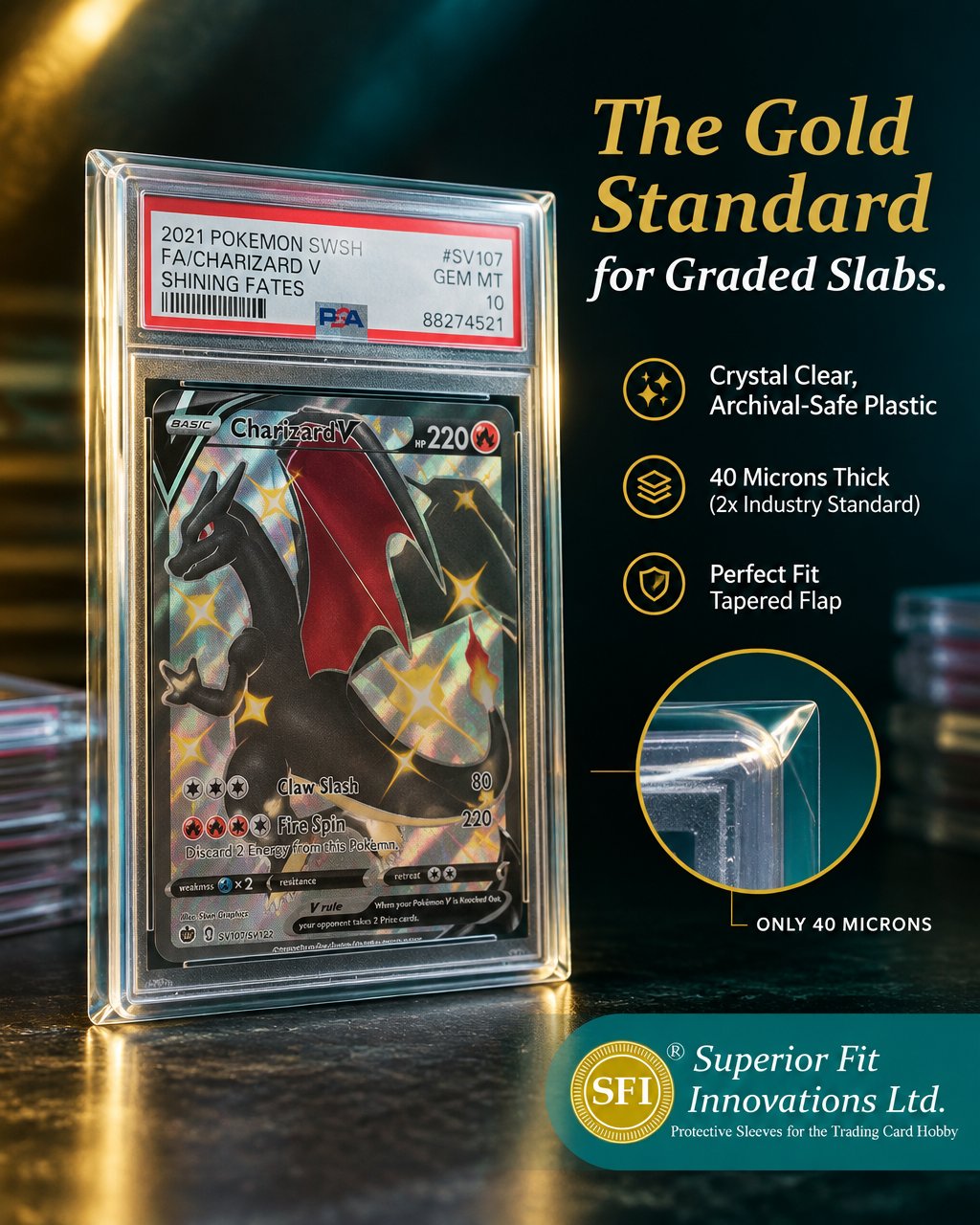
Most guides miss the flap. A taped or open-top sleeve lets dust settle along the slab’s top edge, exactly where scuffs show first. A resealable flap closes that gap and keeps the presentation clean.
Trading Card Sleeve Sizes: Matching Fit to Card Dimensions
Sleeve fit comes down to three measurements: card width, card height, and holder thickness. Standard-size cards share a common footprint, so most penny and inner sleeves come in one size.
A loose sleeve is worse than no sleeve in one way: it lets the card or holder slide, and movement causes the wear you were trying to prevent.
- Raw card: standard-size inner or penny sleeve
- Top loader: sleeve sized to the loader's outer width and height
- Magnetic case: sleeve cut for the one-touch case profile
How to Protect High-Value Trading Cards by Storage Scenario
Protection should scale with value and with where the card lives.
Binder storage (raw cards): penny sleeve or inner sleeve first, then into an acid-free binder page.
Display (graded cards): slab sleeve on every case, stood upright in a case or shelf.
Vault or long-term storage: slab sleeve plus a stable, dry, dark container.
Shipping or sale: semi-rigid holder, sleeve over it, sandwiched between rigid cardboard.
Material Safety, Clarity, and Long-Term Storage
Most sleeve guides stop at "use acid-free, PVC-free sleeves" and move on. That advice is correct but incomplete: material safety is a chain, and the plastic, its additives, the environment, and the card or slab it touches all interact over years.
What the plastic is made of, and why it matters
Sleeves in this hobby are made from a small set of plastics, and the differences matter:
- PVC (polyvinyl chloride): soft, cheap, and best avoided for long-term storage. PVC is formulated with plasticizers to keep it flexible, and those plasticizers migrate out of the film over time, causing yellowing, fogging, and a greasy residue; the migrating compounds can stain or soften a card in direct contact.
- Polypropylene: the standard for penny sleeves and many inner sleeves. It is stiffer than PVC, has no plasticizer problem, and is generally considered safe for card contact. It is not the clearest film, which is why cheap polypropylene sleeves look slightly hazy.
- Polyethylene terephthalate (PET) and related polyester films: clearer and more dimensionally stable than polypropylene, which is why premium outer and slab sleeves tend to use them. Better clarity lets you inspect a card without removing it from its protection.
How to verify a material claim before you buy
Because "archival" is not enforced, use these checks instead of trusting the package:
- Look for the resin, not the adjective. A listing that names polypropylene or PET is more useful than one that only says "archival."
- Ask about plasticizer-free construction. PVC-free is the headline; plasticizer-free is the detail that actually prevents migration.
- Check for acid-free and lignin-free language on anything that touches a card for years, including binder pages, not just sleeves.
- Smell test on arrival. A strong chemical or vinyl odor signals that you should keep that sleeve away from high-value cards.
- Run a sample. Put a common card in the sleeve for a few months under your normal storage conditions, then check for haze, curl, or residue before committing a collection to that product.
Clarity as an inspection tool
Clarity is usually framed as a presentation feature, but for valuable cards it is a handling feature. A hazy or distorted sleeve hides surface flaws, print lines, faint scratches, and edge whitening, so you either miss damage early or remove the card to inspect it, and every removal is a handling event. Ultra-clear, low-distortion film lets you read the surface without breaking the seal.
Environment: the variable the sleeve cannot fix
A proper sleeve slows chemical and physical damage; it doesn't stop environmental damage. Heat and humidity do more harm than handling, and they act through the sleeve:
- Humidity: moisture trapped against a card or slab in a humid room is the classic path to warping and, on raw cards, staining and mold. Keep storage stable and dry, and avoid rooms that swing between damp and dry.
- Heat: sustained warmth accelerates plasticizer migration in any film and can warp raw cards. Keep storage out of attics, garages, and direct sun.
- Light: ultraviolet exposure fades inks and yellows plastics. Display is fine; direct sun on a display is not.
Double-Sleeving and Binder Compatibility
Double-sleeving and binder storage are where sleeve choices stop being abstract and start causing problems, or preventing them. It all comes down to thickness and dimensions.
What double-sleeving actually does
Double-sleeving means a thin inner sleeve against the card, then an outer sleeve over it. Each layer has a job:
- Inner sleeve (perfect fit): sits tight against the card, blocks dust and fine surface scratches, and keeps the card from shifting inside the outer sleeve. It is thin by design so it does not add bulk.
- Outer sleeve: adds rigidity, protects the inner sleeve and card from handling, and provides the seam and edge coverage the inner sleeve lacks.
The combination is the standard setup for cards that see handling, play, or frequent inspection. A single sleeve protects one surface well and the edges less well; two layers cover both.
The thickness math that decides binder fit
Binder pages are sized for a card, not a card plus two sleeves. Every layer you add changes whether the card slides in cleanly, sits flat, or bows the page:
- Single inner sleeve in a page: the usual fit. The card goes in with light resistance and sits flat.
- Inner plus outer sleeve in a page: the combined thickness is meaningfully greater, and the pocket may fight the card on the way in. Forcing it stresses the page seams and the card edges.
- Double-sleeved card in a tight page: the page bulges, adjacent pockets press against each other, and the card can bow over time as the page flexes.
A practical rule: if a double-sleeved card does not slide into a page pocket with light resistance, the page is wrong for that setup. Match the page to the sleeve stack, not the other way around.
Binder compatibility by storage type
- Raw cards in a binder: a single snug inner sleeve is usually the better call. It protects the card, keeps the page flat, and lets you flip pages without the stack shifting.
- Double-sleeved cards in a binder: workable if the pages are sized for the added thickness, but check for bulge and movement before committing to a full binder. Cards that bow in a page aren’t well protected, no matter how many sleeves they are in.
- Graded slabs: binder storage is not an option. Slabs don't fit pages, so slab sleeves plus a dedicated case do the job, and the binder question doesn't apply.
Card movement inside the page
The point of a sleeve is to stop movement, and a binder adds a second source: page flex. A card loose in its pocket slides as the page turns, and that sliding is exactly the wear the sleeve was meant to prevent. A snug inner sleeve keeps the card from moving; a loose sleeve plus a loose pocket is the worst combination.
Before loading a full binder, test one page with your actual sleeve stack. Slide a card in, turn the page a few times, and check for bulge, bowing, and movement. It takes a minute and saves re-sleeving a whole binder.
Frequently Asked Questions
Do penny sleeves actually protect high-value cards?
A penny sleeve alone is a dust and handling layer, not full protection. Soft sleeves prevent fingerprints and surface scratches, but they offer no rigidity, so a valuable card can still bend. For high-value cards, use a penny sleeve as the inner layer and place it inside a rigid top loader or semi-rigid holder. That combination handles the two biggest risks: surface wear and bending. Skip penny sleeves entirely only when the card goes straight into a graded slab or a fitted archival sleeve.
What is the difference between a card saver and a top loader?
A card saver is a semi-rigid holder with a flexible body and a wide opening, and grading submissions commonly use it because the card slides in without pressure. A top loader is rigid plastic with a tighter opening and more structural protection. For shipping and grading prep, many collectors use a card saver; for long-term display and handling, a top loader with a fitted sleeve is the sturdier choice. The card saver vs top loader decision comes down to whether the card is being mailed or stored.
Will protective sleeves fit PSA, BGS, and CGC slabs equally well?
Slab dimensions differ slightly between grading companies, so a sleeve cut for one brand can feel loose or tight on another. Look for slab sleeves that list the grading companies they fit, and check the stated fit for each brand before buying in bulk. A snug, tapered sleeve keeps the slab from sliding and keeps dust off the surface. If your collection mixes PSA, BGS, SGC, and CGC slabs, confirm compatibility per brand rather than assuming one size covers all.
Are perfect-fit inner sleeves safe for valuable cards?
A close-fitting inner sleeve is safe when it is acid-free and PVC-free and the card slides in without force. The risk comes from oversized cards or rough insertion, which can catch a corner. Insert the card slowly, stop if you feel resistance, and never trim a sleeve to make it fit. Pair the inner sleeve with a rigid outer holder for storage. Check the product description for archival materials and avoid any sleeve that feels tacky or smells of plasticizer.
How do I protect high-value trading cards in a binder?
Use a penny sleeve or fitted inner sleeve inside each binder page pocket, and keep the binder out of heat and direct sunlight. Choose pages sized for standard cards and check that sleeved cards slide in without bowing the page. For cards worth more than the rest of the binder, move them to top loaders or slab sleeves instead. Binder storage works well for organized sets, but the most valuable singles deserve rigid holders with a fitted outer sleeve.