 how-to
Preventing Top Loader Surface Scratches: 2026 Guide
Table of Contents
- Why Top Loader Scratches Happen So Easily
- What You'll Need Before You Start
- Step 1: Clean and Deburr New Top Loaders
- Step 2: Apply Sleeves to Prevent Top Loader Scratches
- Step 3: Store and Handle Top Loaders Without Scuffing
- Why Do My Trading Card Sleeves Look Cloudy After Time?
- Trading Card Storage Best Practices for Scuff-Free Holders
- Common Mistakes That Scratch Top Loaders
- Frequently Asked Questions
Last Updated: September 27, 2026
Why Top Loader Scratches Happen So Easily
Preventing top loader surface scratches starts with one hard truth: the plastic in rigid card holders is soft enough that everyday handling leaves marks. Collectors baby a holder for months and still find a haze of fine scratches across the front.
Top loader plastic sits between glass and butter: clear and rigid, but it picks up abrasion from almost anything it touches.
The damage rarely comes from one big accident. It builds up.
What the Plastic Actually Is
Most rigid top loaders are made from rigid PVC or a PET-based sheet. Both sit low on the Mohs hardness scale, well below the quartz (hardness 7) in ordinary sand and household dust. Any grit harder than the plastic will cut it, and most environmental grit is.
That's why the cloth that safely wipes a glass display case can ruin a top loader: glass is harder than most dust; the holder is not.
There are two distinct kinds of damage, and they need different responses:
- Surface marring, shallow scuffs and haze that scatter light and dull clarity. These are cosmetic and often polish out.
- Material removal, deeper cuts where plastic is physically displaced. These can't be polished away without thinning the sheet and creating a visible dip.
Knowing which one you're looking at tells you whether to polish or replace.
How Handling Creates Micro-Scratches
Every time you pick up a bare top loader, you drag it against something. Skin oils, dust, and grit on your fingers act like microscopic sandpaper.
Grabbing holders by the face instead of the edges puts fingerprints and grit directly on the surface you want to keep clear.
Dry debris is the real enemy. A grain of sand trapped between your thumb and the plastic cuts a visible line in one pass.
- Pick holders up by the edges only
- Never slide a bare holder across a table
- Keep a microfiber cloth within arm's reach at all times
- Wash and dry your hands before handling high-value cards
When Storage Causes Surface Damage
Storage does more damage than most collectors realize. Stacking bare top loaders face-to-face grinds the surfaces together every time the box moves.
Moisture is the quieter problem. A humid box clouds plastic over time and softens the surface so it scratches easier.
Cardboard boxes are the worst offender: their fibers shed dry debris that works between stacked holders and grinds against the finish.
The Chemical Side Nobody Warns You About
Most scratch advice focuses on physical abrasion, but the wrong cleaner can do permanent damage before a single grain of grit touches the surface.
- Alcohol and ammonia-based cleaners can haze or craze some plastics, leaving a fog that looks like scratching but is actually chemical etching.
- Abrasive household pastes, the toothpaste trick you'll see recommended online, remove plastic rather than smoothing it, thinning the sheet and creating a dull patch.
- Paper towels and rough rags shed fibers and drag trapped grit across the surface.
A dry microfiber wipe handles most cleaning.
Material Matters: Not All Holders Scratch the Same
Rigid PVC, PET, and acrylic (the material used in many graded slabs and one-touch magnetic cases) behave differently:
- Acrylic is harder and more scratch-resistant than PVC, but it's more brittle and can crack under impact.
- Rigid PVC is softer and more prone to haze, but it flexes instead of shattering.
- PET sits in between, clearer than PVC, tougher than acrylic.
What You'll Need Before You Start
Gather your supplies first so you're not handling bare holders more than necessary.
- A clean, lint-free work surface
- Microfiber cloths, at least two
- A soft brush or compressed air for grit removal
- Sleeves sized for your holders
- A storage box with dividers or slots
Step 1: Clean and Deburr New Top Loaders
New top loaders arrive with manufacturing residue and sharp edges. Cleaning them first removes the grit that causes scratches later.
- Wipe the front, back, and all four edges
- Use compressed air to clear the interior
- Set cleaned holders on a lint-free mat to dry
- Never use paper products on the surface
Step 2: Apply Sleeves to Prevent Top Loader Scratches
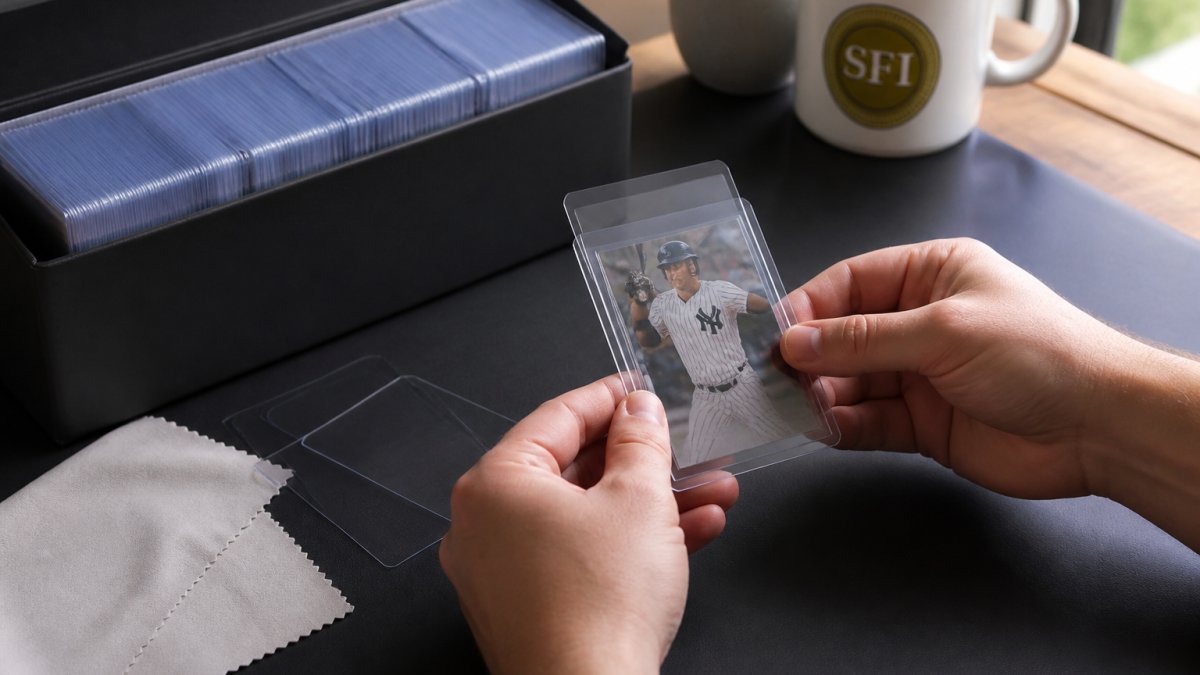
The most reliable way of preventing top loader surface scratches is a sleeve between the holder and the world: a snug outer sleeve takes every scuff so the holder underneath stays clear.
Here's the application process:
- Lay the cleaned holder on a lint-free surface
- Slide the sleeve over the top edge first
- Work it down evenly so it doesn't bunch
- Fold the tapered flap closed to seal the opening
- Smooth the surface with a microfiber cloth
Step 3: Store and Handle Top Loaders Without Scuffing
Storage is where most collections lose their clarity. Get this step right and your holders stay clean for years.
- Store upright in slotted boxes
- Keep boxes off concrete floors
- Avoid stacking more than a few holders loose
- Check stored holders every few months for dust
Why Do My Trading Card Sleeves Look Cloudy After Time?
Cloudy sleeves come down to three preventable things: moisture, chemical residue, or cheap plastic breaking down.
Trading Card Storage Best Practices for Scuff-Free Holders
Good storage habits protect your whole collection, not just the holders.
The Mat and Liner Decision Most Guides Skip
If you use a protective mat or liner under your holders, the material matters more than most collectors realize:
- Silicone mats, heat-resistant and stable across a wide temperature range, won't off-gas, and wipe clean easily. The trade-off: they can trap moisture against a surface if air can't circulate, so dry the area before laying holders down.
- Rubber mats, grippy and cushioning, but many rubber compounds contain sulfur and plasticizers that can off-gas over time and react with plastic surfaces, causing haze or discoloration. Avoid direct long-term contact with holders.
- Fabric liners (felt, baize), soft and non-abrasive, but they shed fibers and hold dust. Once grit works into the fabric, it becomes an abrasive pad. They also trap moisture in humid rooms.
Environment and Handling
- Use slotted or divided storage boxes
- Add a moisture absorber to humid rooms
- Keep collections out of direct sunlight
- Store away from heat sources and vents
- Handle with clean, dry hands every time
- Never stack bare holders face-to-face
Heat is the underrated threat: warm plastic is softer, and a holder near a vent or in a hot car scratches far more easily than one at room temperature. Stable, moderate conditions do more for clarity than any single product.
Consistency Across Holder Types
For graded slabs and magnetic cases, the same logic applies. Superior Fit Sleeves makes Graded Card Slab Sleeves for PSA, BGS, and CGC slabs, plus sleeves for one-touch magnetic cases, so the protection stays consistent across your whole collection.
A Simple Long-Term Routine
- Weekly: quick visual check for dust or haze; wipe with a dry microfiber cloth.
- Monthly: inspect stored holders for moisture or clouding; rotate stock so nothing sits untouched for years.
- Seasonally: replace moisture absorbers, check for temperature swings, and re-sleeve any holder showing wear.
Common Mistakes That Scratch Top Loaders
- Handling holders without sleeves
- Wiping with paper towels or rough cloths
- Stacking bare holders face-to-face
- Storing in humid or hot spaces
- Skipping the initial clean on new holders
- Using harsh cleaning agents that leave residue
If a scratch already exists, a fine polishing compound can sometimes restore clarity. Test it on a spare holder first. For prevention, a snug archival sleeve from Superior Fit Sleeves does more than any restoration attempt.
Frequently Asked Questions
Are scratch-resistant top loaders available for trading cards?
No rigid plastic holder is truly scratch-proof, but scratch-resistant top loaders use harder, more polished plastic that resists fine scuffs better than standard versions. The most reliable protection is still a secondary sleeve over the holder, which absorbs handling contact and keeps the display surface clear. Combining a quality top loader with a snug outer sleeve gives you the closest thing to scratch resistance available.
Do protective sleeves prevent top loader scratches?
Yes. A snug outer sleeve covers the flat display surfaces where most scuffs occur, so keys, fingers, and storage boxes contact the sleeve instead of the rigid plastic. Look for archival-grade, acid-free sleeves with a tight fit and a resealable flap, like those from Superior Fit Sleeves, which were engineered for top loaders and graded slabs. Replace sleeves when they turn cloudy or scratched.
Can you buff out scratches on rigid plastic top loaders?
Fine surface scratches can often be reduced with a plastic polishing compound and a clean microfiber cloth, working in small circles with light pressure. Deep gouges usually cannot be fully removed without distorting the plastic. Test any compound on a spare holder first, clean off all residue, and avoid abrasive household cleaners that can fog the surface. Prevention remains easier than restoration.
How do I store top loaders to avoid surface damage?
Store top loaders upright in a rigid box sized to the holder, with no sliding room, and keep holders from rubbing against each other. Line storage boxes with soft material, avoid stacking heavy items on top, and keep the collection away from heat, humidity, and direct sunlight. Following trading card storage best practices, including sleeving each holder and handling by the edges, prevents most surface scratches before they start.