 blog
VaultX vs BCW Sleeves for Collectors: Which Offers Better Protection?
Last Updated: October 24, 2026
Quick Summary
VaultX vs BCW sleeves differ fundamentally in approach: VaultX prioritizes precision-engineered custom fit specifically for graded slabs with premium clarity, while BCW offers standard sizing options across multiple card formats at budget to mid-range prices. Your choice depends on whether you prioritize premium fit and presentation for high-end collections or value and variety for mixed collecting needs.
- VaultX uses precision-engineered custom fit designed specifically for graded slabs from different graders
- BCW offers standard sizing options and broader product variety across multiple card formats and price points
- Both brands are archival-grade and acid-free, though BCW's quality varies by product line
- Precision-fit sleeves prevent card shifting inside cases, reducing damage risk over time
- High-value graded slabs benefit most from precision-fit sleeves, while bulk storage can use standard options
Table of Contents
- VaultX vs BCW Sleeves: Core Differences for Collectors
- Best Trading Card Sleeves for Collectors: What Sets Them Apart
- Standard-Size Card Sleeves: Fit and Compatibility
- Double-Sleeving Trading Cards: When and How to Layer Protection
- Card Sleeves for Top Loaders: Precision Fit vs Generic Fit
- Archival Quality and Long-Term Protection: What Collectors Need
- Choosing the Right Sleeve for Your Collection
- Frequently Asked Questions
VaultX vs BCW Sleeves: Core Differences for Collectors
When you're protecting graded cards worth hundreds or thousands of dollars, the sleeve you choose matters more than most people realize. VaultX and BCW represent two different approaches to card protection, and understanding those differences helps you make the right call for your collection. Explore other premium alternatives in this category to see how they compare.
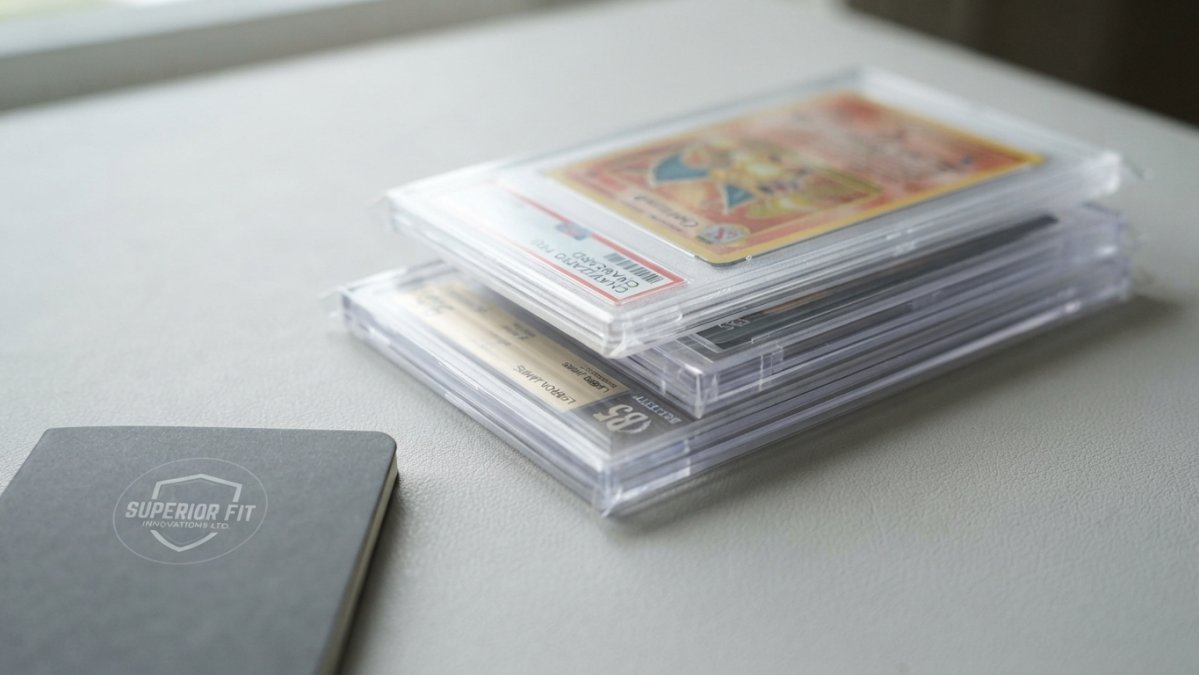
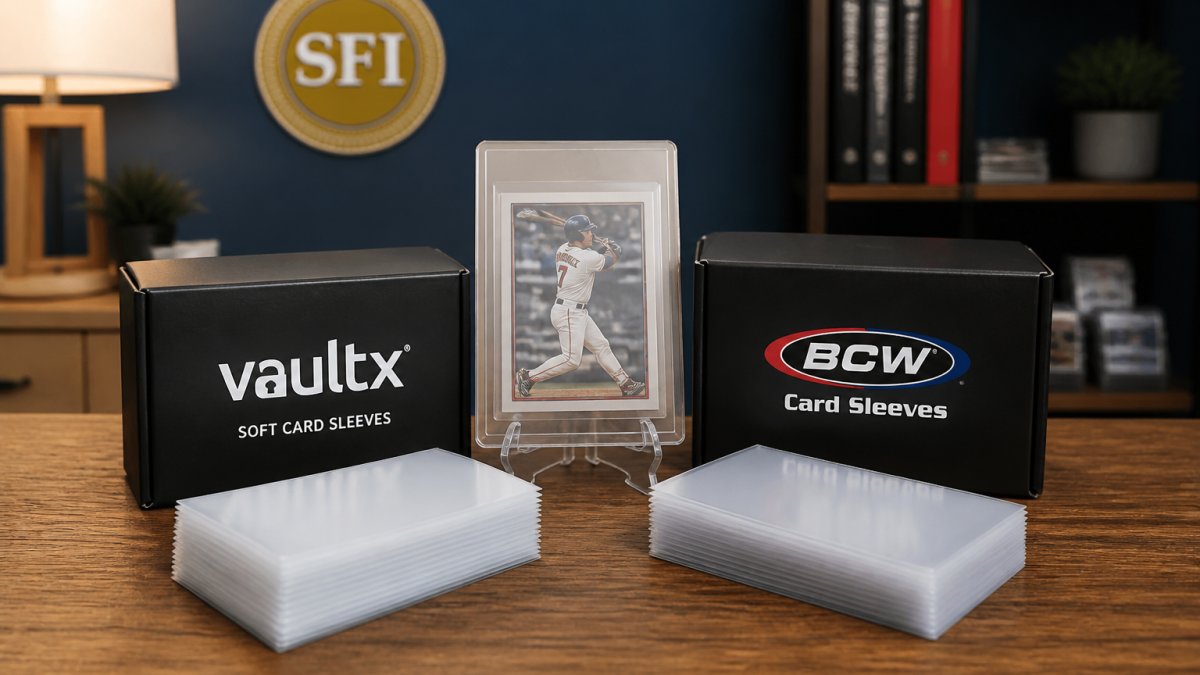
VaultX focuses on precision-engineered sleeves designed specifically for graded slabs. Their sleeves emphasize tight, custom-fitted construction that minimizes movement inside the case. BCW takes a broader approach, offering many protective products across multiple card formats and price points. Both brands have earned respect in the collecting community, but they serve different collector priorities.
The core tension here is simple: VaultX prioritizes premium fit and presentation for high-end collections, while BCW emphasizes value and variety for collectors with mixed needs. At Superior Fit Sleeves, we've engineered our sleeves with a precision-fit philosophy, focusing on archival-grade, acid-free protection that keeps your investment safe while maintaining that professional, snug appearance collectors demand.
Feature | VaultX | BCW |
|---|---|---|
Fit Type | Precision-engineered custom fit | Standard sizing options |
Material Quality | Premium clarity | Varied by product line |
Archival Grade | Yes | Varies by product |
Slab Compatibility | Specialized per grader | General compatibility |
Price Point | Premium | Budget to mid-range |
Best Trading Card Sleeves for Collectors: What Sets Them Apart
The best sleeve for your collection depends on what you're protecting and how you want it to look. High-value graded slabs need different protection than bulk commons in a storage box.
Premium sleeves share certain characteristics. Learn how to select protective sleeves specifically for high-value cards to ensure your investment stays safe. They maintain crystal-clear visibility so your card remains the star. They fit snugly without excess material that creates bulk or looks unprofessional. They're acid-free and archival-grade, meaning they won't yellow, fog, or degrade your card over time. They protect against dust, moisture, and damage from handling.
Many collectors buy the cheapest option available, then discover after a few months that the sleeves have yellowed or the fit is so loose the card shifts inside. That's when they wish they'd invested in quality from the start. The difference between a sleeve that protects your investment and one that merely stores it is the difference between a collection that appreciates and one that deteriorates.
Superior Fit Sleeves delivers on all these fronts. Our sleeves are precision-cut for a snug, professional fit that keeps graded slabs stable and looking sharp. We use archival-grade, acid-free materials that protect your cards for decades. Our ultra-clear construction means your card's grade and condition remain the focal point.
Standard-Size Card Sleeves: Fit and Compatibility
Standard-size card sleeves fit the most common trading card format: 2.5" x 3.5". This dimension works for sports cards, Pokémon, Magic, and most other collectible card games.
The challenge with standard sleeves is that fit varies dramatically. A sleeve that's too loose lets the card shift and rattle inside the case, causing the exact damage you're trying to prevent. A sleeve that's too tight can crease the edges or make insertion difficult. The sweet spot is a sleeve that holds the card securely without excess material.
Graded slabs from major companies like PSA, BGS, and CGC all use slightly different case dimensions. A sleeve designed for one grader might fit differently in another's case. This is where precision engineering matters. A well-designed sleeve accounts for these variations and delivers consistent, snug protection across multiple slab types.
When you're choosing standard-size sleeves, test the fit with one of your actual slabs before committing to a bulk order. The sleeve should hold the card without wiggle room, but it should still slide in smoothly and effortlessly.
Double-Sleeving Trading Cards: When and How to Layer Protection
Double-sleeving means placing a card in one sleeve, then placing that sleeved card in a second sleeve. This approach adds an extra layer of protection for your most valuable cards.
Double-sleeving makes sense when you're storing high-value cards long-term or moving them frequently. The outer sleeve absorbs handling damage and dust, while the inner sleeve protects the card. Many serious collectors use this approach for cards worth over a few hundred dollars.
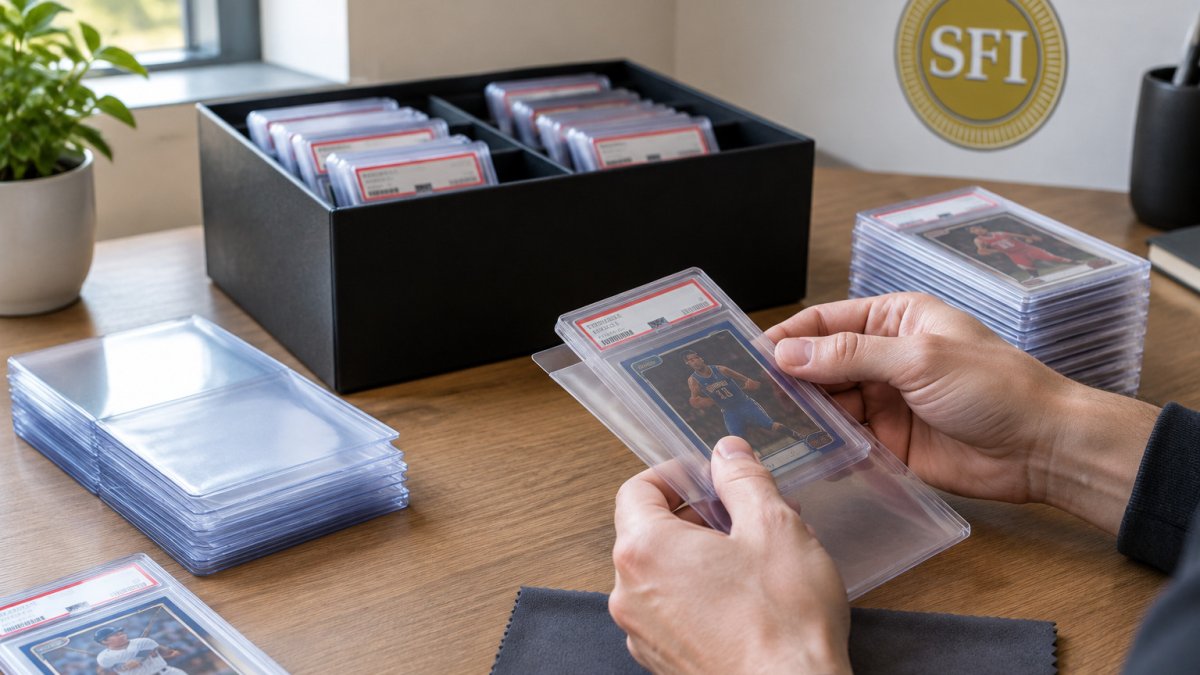
The process is straightforward. Insert the card into the first sleeve, then carefully slide it into a second outer sleeve. Use sleeves designed for this purpose; standard sleeves can be too tight when doubled, making insertion difficult or risky. Use a premium, archival-grade inner sleeve since it touches the card directly. The outer sleeve can be more utilitarian, since its job is simply to shield the inner sleeve from external wear. Organizing these protected cards effectively requires the use of card dividers for binders to maintain a clean and accessible collection structure.
Watch out: forcing a sleeved card into a second sleeve that's too tight can crease the edges or damage the card. If insertion feels resistant, stop and try a different outer sleeve size rather than pushing through.
Card Sleeves for Top Loaders: Precision Fit vs Generic Fit
Top loaders are rigid plastic holders that protect cards from bending. They're popular for storage and display because they keep cards flat and stable. The sleeve goes inside the top loader to prevent the card from shifting and rubbing against the plastic walls.
This is where precision fit becomes critical. A generic, loose-fitting sleeve inside a top loader lets the card shift with every bump or vibration. Over time, that movement creates wear marks on the card's edges and surface. A precision-fit sleeve keeps the card locked in place, eliminating that risk of damage.
Superior Fit Sleeves offers top-loader sleeves engineered specifically for this application. Our tapered design ensures the card stays secure without excess material bunching up or creating visible distortion. The fit is so precise that your card remains centered and protected, with zero movement.
When inserting a card into a top loader, use a sleeve that fits snugly but still slides in smoothly. The card should sit flat against the back of the loader with no gaps or shifting. If you're storing high-value cards in top loaders, precision-fit sleeves are worth the investment.
Archival Quality and Long-Term Protection: What Collectors Need
Archival quality means the sleeve won't degrade your card over time. This requires acid-free materials that won't yellow, off-gas, or react chemically with the card's surface.
Many budget sleeves are made from PVC or other materials that break down over years of storage. They yellow, become brittle, and can actually damage the card they're supposed to protect. Archival-grade sleeves use different materials engineered to remain stable for decades.
The difference becomes visible after just a few years. Cards stored in quality, archival sleeves maintain their appearance and condition. Cards stored in cheap sleeves often show yellowing, and sometimes the card shows signs of chemical exposure.
When evaluating sleeves, look for acid-free certification and archival-grade designation. These aren't marketing terms; they describe specific material standards that ensure long-term stability. Understanding what makes sleeves archival-safe helps you choose the right protection for your collection.
According to Library of Congress preservation guidelines, archival-grade materials must maintain their integrity for 100+ years without degradation. That's the standard we build to. Your graded cards deserve the same protection museums use for irreplaceable artifacts.
For collectors storing cards long-term, archival quality isn't optional. It's the foundation of preservation. Superior Fit Sleeves uses archival-grade, acid-free materials across our entire line, ensuring your collection stays protected for decades.
Choosing the Right Sleeve for Your Collection
Your sleeve choice depends on three factors: what you're protecting, how you're storing it, and how long you plan to keep it.
High-value graded slabs need precision-fit, archival-grade sleeves. The snug fit keeps the card stable inside its case, and the archival materials ensure the sleeve itself won't damage the card over time. Learn how acid-free and PVC sleeves differ so you understand exactly what you're getting.
Cards in top loaders benefit from precision-fit sleeves that eliminate shifting and movement. A well-fitted sleeve inside a top loader provides the most stable, long-term protection available for ungraded cards.
For bulk storage or lower-value cards, standard sleeves offer adequate protection at reasonable cost. The key is still choosing acid-free materials to prevent long-term degradation.
Mixed collections, some graded, some in top loaders, some in magnetic cases, require different sleeve types for different formats. This is where having options matters. Superior Fit Sleeves offers graded card slab sleeves, top-loader sleeves, and magnetic case sleeves engineered for each application.
The real cost of cheap sleeves isn't the money you save upfront. It's the risk you take with cards that might appreciate significantly over time.who prioritize an exact fit and crystal-clear display typically prefer precision-engineered options, while those seeking budget-friendly, general-purpose sleeves may prefertop loaders
Frequently Asked Questions
What is the main difference between VaultX and BCW sleeves for collectors?
VaultX and BCW sleeves differ primarily in fit precision, material clarity, and archival grading. VaultX emphasizes a tapered design for graded slabs, while BCW offers a broader range of generic sleeve options at various price points. The key distinction lies in how snugly each sleeve hugs your specific slab type—PSA, BGS, CGC—and their long-term protection standards. Collectors prioritizing exact fit and crystal-clear display typically prefer precision-engineered options, whereas those seeking budget-friendly, general-purpose sleeves may favor broader-market alternatives.
Are standard-size card sleeves suitable for double-sleeving trading cards?
Yes, standard-size card sleeves work for double-sleeving, but fit matters significantly. When layering two sleeves, the inner sleeve should be slightly smaller or thinner to prevent excessive bulk that stresses the card. Many collectors use an inner sleeve for the card itself, then place that sleeved card into an outer sleeve for graded slabs. This method requires compatible dimensions—standard sleeves paired with precision-cut outer sleeves deliver the best results without creating friction or pressure points that can damage your investment.
Do card sleeves for top loaders fit inside magnetic one-touch cases?
Card sleeves designed specifically for top loaders are engineered to fit snugly around the loader itself, not inside it. However, sleeved top-loaders can sit inside magnetic cases if the dimensions align. The key is measuring your top-loader's exact size and selecting sleeves rated for that dimension. Precision-fit sleeves prevent shifting inside the case, maintaining a professional appearance and protecting both the loader and your card from movement-related wear during storage or transport.
What should I look for in archival-quality card sleeves?
Archival-quality sleeves must be acid-free, PVC-free, and made from materials that resist yellowing and fogging over decades. Check whether the manufacturer specifies acid-free certification and long-term stability testing. Ultra-clear material that maintains transparency without distortion is essential for display-quality protection. Additionally, sleeves should fit your specific slab type—PSA, BGS, CGC—without excess space, as loose sleeves allow movement that can cause micro-scratches. Premium collectors verify that sleeves meet or exceed museum-standard preservation requirements before trusting them with high-value cards.
Your collection represents years of hunting, trading, and investing. The sleeves you choose either preserve that investment or put it at risk. We've spent over a decade engineering sleeves that deliver precision fit, archival protection, and crystal-clear presentation. Start with sleeves designed for the specific format you're protecting, prioritize archival-grade materials, and your collection will stay protected for decades to come.