 blog
Premium Sleeves for Small Collections: A 2026 Buyer's Guide
Last Updated: November 18, 2026
Quick Summary
Premium sleeves are precision-cut, archival-grade sleeves with tight tolerances and ultra-clear, acid-free material, best used on the cards you display or grade in a small collection. Soft sleeves still do the grunt work underneath, and cost per protected card (pack price divided by sleeves per pack) decides whether the upgrade fits your budget.
- Premium sleeves are archival-grade and acid-free, built for snug fits and long-term display.
- Penny sleeves belong on bulk cards and as a first layer inside top-loaders, not on valuable cards.
- Match the sleeve's stated point range to card thickness, not just its footprint.
- Cost per protected card equals pack price divided by sleeves per pack.
- Buy premium sleeves only for cards you handle or display, then stop without stockpiling.
Table of Contents
- Why a Small Collection Still Deserves Premium Sleeves
- Soft Sleeves, Standard Sleeves, and Premium Sleeves Compared
- Penny Sleeves: Where They Belong and Where They Don't
- Trading Card Sleeve Sizes and Getting the Fit Right
- Card Sleeves for Top-Loaders and Graded Slabs
- Binder Sleeves for Cards and Storing a Small Collection
- Cost Per Protected Card and Pack-Size Planning
- Choosing Premium Sleeves for Your Collection
- Frequently Asked Questions
Why a Small Collection Still Deserves Premium Sleeves
Premium sleeves for small collections protect the cards you actually care about, and a tight collection is easier to upgrade than a sprawling one. Scuffed slabs and scratched top-loaders are the usual culprits when collectors with a few dozen favorite cards need to replace holders.
Here is the part most guides skip: value per card matters more than total collection size. A fifty-card collection where ten cards are genuinely valuable deserves better protection than a thousand commons in a shoebox.
Soft Sleeves, Standard Sleeves, and Premium Sleeves Compared
Soft sleeves are the thin, inexpensive inner sleeves used as a first layer. Standard sleeves are thicker outer sleeves for decks and binders. Premium sleeves are precision-cut, archival-grade sleeves built for snug fits and long-term display.
The differences that matter:
- Soft sleeves: thin, loose fit, cheap, fine as an inner layer
- Standard sleeves: thicker, sized for play and binders, moderate clarity
- Premium sleeves: tight tolerances, ultra-clear material, archival-grade and acid-free
For a small collection, premium sleeves make sense on the cards you display or grade. Soft sleeves still do the grunt work underneath. If you are weighing whether the upgrade pays off for a modest stack, our guide to premium vs budget trading card sleeves walks through the trade-offs in detail.
Penny Sleeves: Where They Belong and Where They Don't
Penny sleeves belong on bulk cards and as a first layer inside top-loaders. They do not belong on valuable cards that will be handled, displayed, or graded.
A common mistake is double-sleeving a valuable card in a penny sleeve and calling it done. Penny sleeves are loose by design, so the card shifts inside, and the edges take the wear. Use them as a base layer, then add a snug outer sleeve for anything worth real money.
If your collection has moved past penny sleeves, our breakdown of alternatives to penny sleeves for valuable cards covers what to use instead.
Trading Card Sleeve Sizes and Getting the Fit Right
Sleeve size is where most collections go wrong. Trading card sleeve sizes are not universal, and a sleeve that is slightly too large lets the card slide, while one that is too tight can bow it. For a small collection, you only need to solve this once, measure your handful of card types, buy the right fit for each, and you are done.
Start with the card's nominal dimensions and thickness, then match the sleeve's inner dimensions with a small tolerance.
A compatibility chart for the card types a small collection usually holds:
Card type | Typical size (W × H) | Typical thickness | Sleeve approach |
|---|---|---|---|
Standard trading card (TCG, sports) | 2.5 × 3.5 in (63.5 × 88.9 mm) | ~0.012 in | Standard outer sleeve; perfect-fit inner if double-sleeving |
Mini card | ~1.75 × 2.5 in | ~0.012 in | Mini-sized sleeve; do not force into standard |
Thick memorabilia / patch card | 2.5 × 3.5 in | up to ~0.13 in (120-130 pt) | Thick-fit or graded-card sleeve; standard will bow it |
Vintage card (pre-1980) | often 2.5 × 3.5 in but off-cut | varies | Measure each; vintage stock can run slightly narrow or wide |
Graded slab | varies by grader | rigid case | Slab sleeve sized to the specific grader's case |
Top-loader | varies by holder | rigid holder | Top-loader sleeve sized to the holder, not the card |
Thickness is the variable collectors underestimate. A standard sleeve sized for a 35-point card will bow a 130-point patch card, and a thick-fit sleeve will let a standard card rattle. Match the sleeve's stated point range to the card's thickness, not just its footprint.
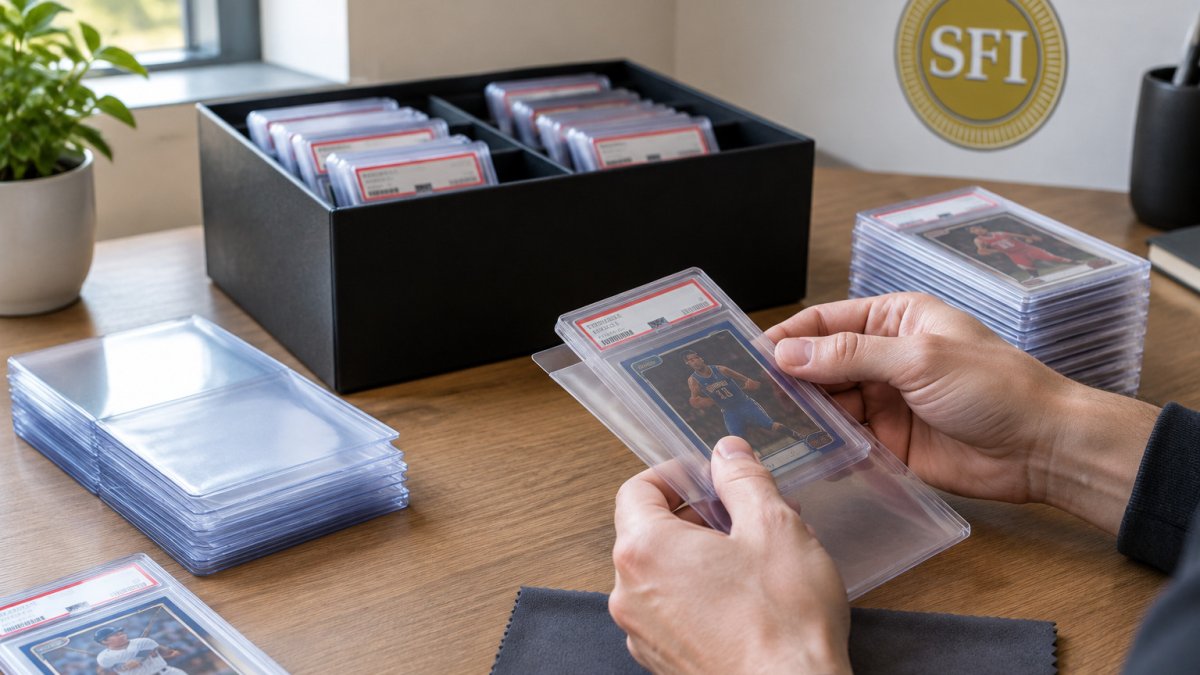
For inner sleeves, the fit is intentionally tight, a perfect-fit inner hugs the card with no excess material, which is why we engineered our tapered-flap design back in 2014. The tapered flap lets you seat the card without catching a corner, and it reseals so the inner stays put inside an outer sleeve or top-loader. For a full side-by-side of the two layers, see perfect fit vs standard sleeves.
If you are unsure, order a small sample of each candidate size and test-fit your actual cards before committing to a pack. A five-minute fit test on your own cards beats any size chart.
Card Sleeves for Top-Loaders and Graded Slabs
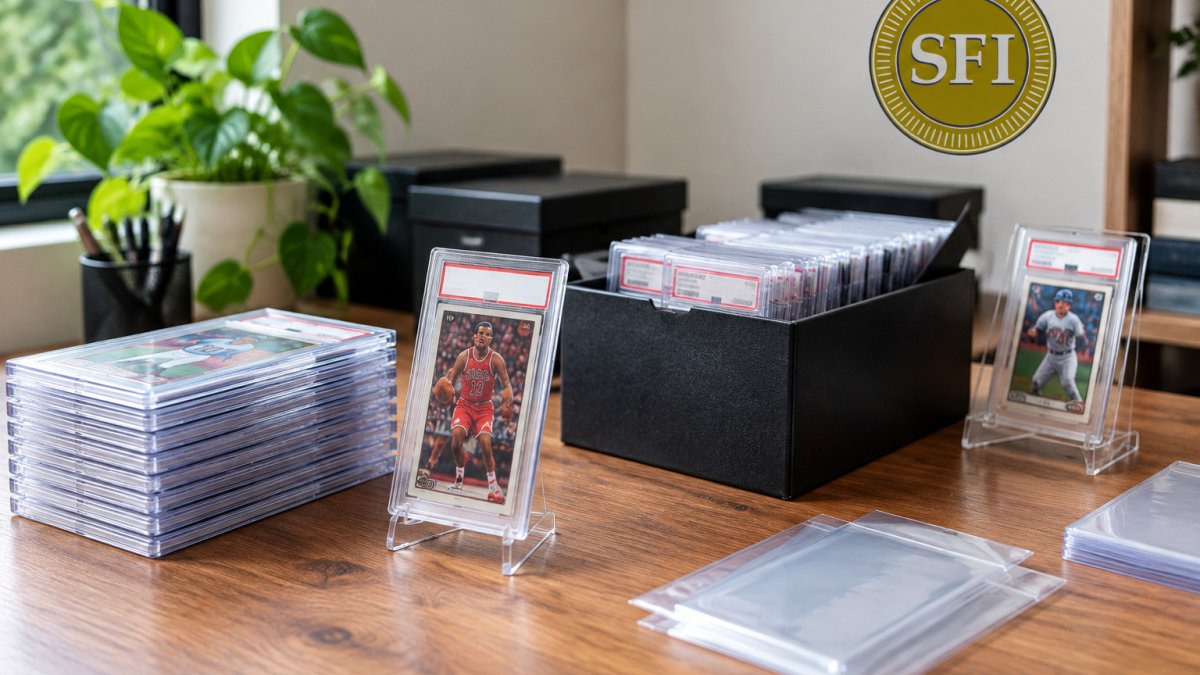
Card sleeves for top-loaders and graded slabs are the outer layer that keeps rigid holders clean. A graded slab sleeve slides over the whole case, protecting the surface from scuffs and fingerprints without adding bulk.
Fit is the whole game here. A slab sleeve that is too loose looks sloppy and traps dust at the edges. One that is too tight fights you every time you insert a card. Our graded slab sleeves are cut for PSA, BGS, SGC, and CGC cases, and our top-loader sleeves do the same job for rigid holders. If top-loaders are your main storage, our complete guide to protecting sports cards in top loaders goes deeper.
Binder Sleeves for Cards and Storing a Small Collection
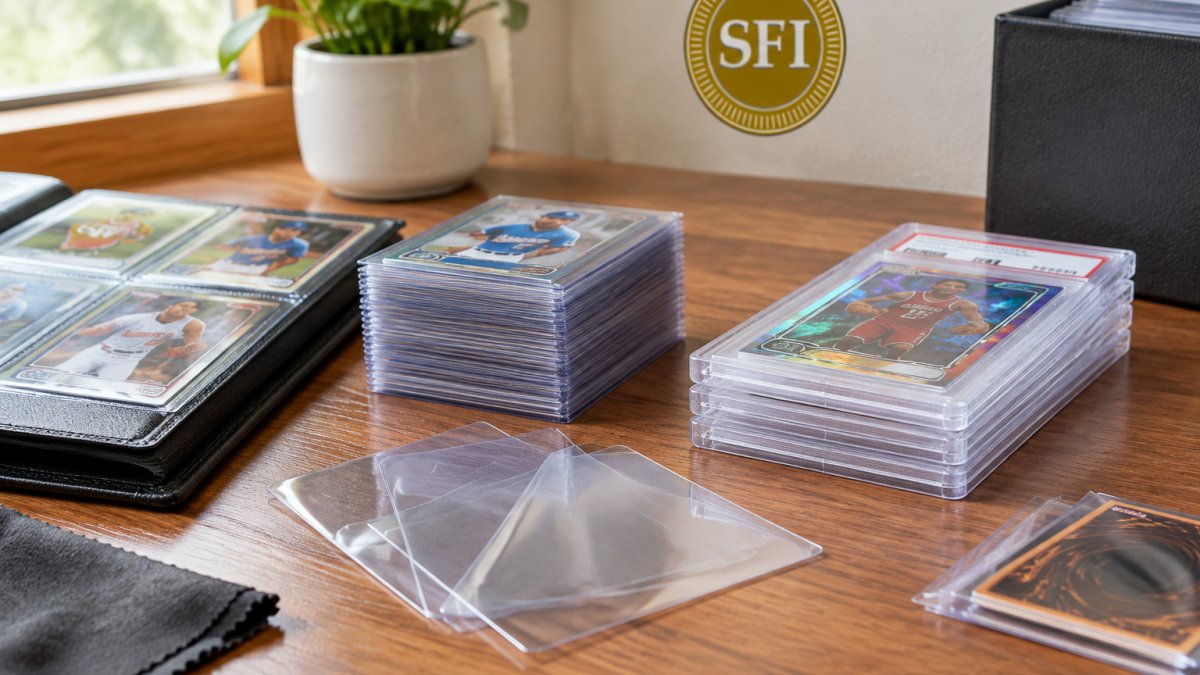
Binder sleeves for cards keep a small collection organized and visible, which matters more than most collectors admit. A binder lets you flip through everything at a glance, and side-loading pages keep cards from sliding out.
The trade-off is handling. Every page turn flexes the cards, so reserve binders for cards you want to look at and keep the highest-value pieces in slabs or top-loaders instead.
Cost Per Protected Card and Pack-Size Planning
Cost per protected card is the number that actually decides whether premium sleeves fit your budget. Instead of comparing pack prices, divide the pack cost by the number of sleeves and think about how many cards truly need the upgrade. That single division reframes the whole purchase: a larger pack with a lower per-sleeve cost is only a better deal if you will actually use the sleeves before they sit in a drawer.
The formula is simple:
Cost per protected card = pack price ÷ sleeves per pack
Run it for each pack size you are considering, then multiply by the number of cards in your protected group. That gives you the true outlay for your collection, not the shelf price of the biggest box.
A practical way to plan, especially for a small collection:
- Count the cards you handle or display regularly
- Separate them from bulk storage cards
- Note how many need inner sleeves versus outer sleeves versus slab sleeves
- Buy premium sleeves only for that first group
- Use soft sleeves for everything underneath
- Round up to the nearest pack size, then stop, do not stockpile
Pack-size planning is where small collections win. If your protected group is 40 cards and the smallest pack covers 50, you are done in one purchase with a small buffer. Buying the bulk case to chase a lower per-sleeve rate leaves you storing hundreds of sleeves you will not use for years, and sleeves do not improve with age in a closet.
A useful pattern for mixed collections: buy one pack size for your most common card type, and a smaller pack for the specialty sizes (thick cards, slabs, top-loaders). You avoid overbuying the sizes you rarely need while still getting the per-sleeve benefit on the size you use most.
Pricing depends on quantity, dates, and delivery, so check our website for current prices or a quote.
Watch out: comparing a 100-count pack against a 25-count pack by sticker price alone hides the per-sleeve difference, always divide before you decide.
Choosing Premium Sleeves for Your Collection
Choosing premium sleeves comes down to three checks: fit, clarity, and material safety. Get those right and the rest is preference.
Fit: measure your cards and holders, then match the sleeve to the exact size. Clarity: hold a sleeve up to the light and look for distortion or haze. Material safety: archival-grade, acid-free sleeves are the ones built to sit against a card for years without yellowing or fogging.
A snug, ultra-clear sleeve with a tapered flap is the style Superior Fit Sleeves is known for. For a mixed collection of slabs, top-loaders, and magnetic cases, you will want a sleeve sized for each holder rather than one universal product. If you are not ready to commit, you can try samples before you buy and test the fit on your own cards.
A small collection still deserves protection that matches what the cards are worth. Superior Fit Sleeves builds precision-cut, archival-grade sleeves with ultra-clear clarity and our original tapered-flap fit, sized for graded slabs, top-loaders, and magnetic cases. Get started with Superior Fit Sleeves and give every card in your collection a snug, clean, professional home.
Frequently Asked Questions
Are premium sleeves worth it for a small collection?
Yes, when the collection is small, each card carries more of your total value. Premium sleeves cost more per unit, but they protect against scuffs, edge wear, and surface scratches that a thin penny sleeve won't stop. For a few dozen graded slabs or high-value singles, the extra cost per card is small compared with the replacement cost of even one damaged card. Match the sleeve to the holder: slab sleeves for graded cases, top-loader sleeves for rigid holders, and magnetic case sleeves for one-touch displays.
What is the difference between penny sleeves and premium card sleeves?
Penny sleeves are thin, loose-fitting soft sleeves meant as a first layer or for bulk commons. Premium sleeves use thicker, archival-grade material cut to a snug fit, so cards don't shift and edges stay covered. Premium sleeves also tend to be clearer, which matters for display. Many collectors double-sleeve: a penny sleeve inside the holder, then a premium outer sleeve over the top-loader or slab for handling and storage.
How do I choose the right sleeve size for a trading card?
Match the sleeve to the card and the holder, not just the card. Standard trading cards fit standard sleeves; mini and board game cards need smaller cuts. If the card goes into a top-loader or slab, measure the outer dimensions of that holder and buy the sleeve sized for it. A snug fit with no excess bulk keeps the card from sliding and keeps dust out. Check the product listing's stated dimensions against your holder before ordering.
Can card sleeves protect cards stored in top-loaders?
Yes. Top-loaders protect against bending but still scuff and scratch on the outside, and that wear transfers to the card's presentation. Card sleeves for top-loaders wrap the rigid holder in a clear, tight layer, so the plastic takes the handling wear instead of the holder. For graded slabs, use slab sleeves sized to PSA, BGS, SGC, or CGC cases. For magnetic one-touch cases, use magnetic case sleeves. This keeps your display clean and your holders looking new.