 blog
Archival Grade Sleeves for Comics: A Collector's Buying Guide
Last Updated: November 13, 2026
Quick Summary
Archival grade sleeves are storage envelopes made from a stable, acid-free plastic that will not break down, yellow, or transfer chemicals into your comic over time. Look for sleeves that name their plastic, state acid-free construction, and fit the books you actually own.
- Polyester, often sold as Mylar, is inert and crystal clear, making it the gold standard for keys.
- Polypropylene is clear and affordable, fine for the bulk of a working collection.
- Acid-free construction matters far more than whether a sleeve is 2 mil or 4 mil thick.
- Measure the comic itself to the nearest sixteenth of an inch, then size up if between sizes.
- Replace a sleeve when it looks cloudy, feels tacky, or shows discoloration.
Table of Contents
- What Makes a Comic Sleeve Archival Grade
- Polypropylene vs Mylar Sleeves: Which Plastic Belongs in Your Box
- Why Acid Free Comic Book Sleeves Matter More Than Thickness
- How to Measure a Comic and Pick the Right Sleeve Size
- Comic Book Backing Boards: Support That Stops Creases
- Comic Book Storage Best Practices Beyond the Sleeve
- Protecting Graded Comic Slabs and Display Copies
- Choosing Your Archival Sleeves and Handling Your Comics Safely
- Frequently Asked Questions
What Makes a Comic Sleeve Archival Grade
Archival grade sleeves are storage envelopes made from a stable, acid-free plastic that will not break down, yellow, or transfer chemicals into your comic over time.
Three things separate archival grade sleeves for comics from ordinary storage bags:
- Material stability. The plastic must resist degradation for decades, not seasons.
- Chemical neutrality. No acid, no plasticizers, no off-gassing that stains paper.
- Physical fit. A loose bag lets the comic slide and abrade; a snug one holds it still.
Thickness alone tells you almost nothing. A thick bag made from the wrong plastic will still fail.
The Three Plastics You Will Actually Find
Polyester (often sold under the Mylar name) is the gold standard. It is inert, crystal clear, and physically strong. Polypropylene is the everyday workhorse: clear, affordable, and fine for most collections. Polyethylene is the softest and least clear of the three, usually reserved for budget storage.
Polypropylene vs Mylar Sleeves: Which Plastic Belongs in Your Box
The short answer: Mylar for keys and long-term holds, polypropylene for the bulk of a working collection. Polyester film costs more and delivers the best clarity and stability. Polypropylene gives you a clear, serviceable sleeve at a friendlier price.
Here is how the two compare in practice:
Feature | Polyester (Mylar) | Polypropylene |
|---|---|---|
Clarity | Excellent, glass-like | Very good |
Chemical stability | Inert, longest-lasting | Stable for years |
Stiffness | Firm, holds shape | Flexible |
Best for | Keys, high-value runs | General collection |
Cost | Higher | Lower |
A common mistake is buying one material for everything. Mix them: protect your top books with polyester and keep the rest in polypropylene.
Why Acid Free Comic Book Sleeves Matter More Than Thickness
Acid is the quiet killer of paper collections. Acid-free sleeves remove the risk of chemical transfer, which matters far more than whether a bag is 2 mil or 4 mil thick. Paper turns yellow and brittle when acid attacks it, and a sleeve that off-gasses or leaches can accelerate that process from the inside.
Thickness does have a job. A 2 mil sleeve is light and flexible, a 3 mil sleeve is the everyday middle ground, and a 4 mil sleeve feels substantial and resists creasing. None of those numbers make a sleeve archival. The material and its chemical neutrality do.
When you shop, look for the words "acid-free" and "inert" on the packaging, not just a mil count. If a listing leads with thickness and never mentions the plastic type, ask.
How to Measure a Comic and Pick the Right Sleeve Size
Measure the comic itself, never the bag it came in and never the backing board. Lay the book flat on a clean surface, close it, and measure the cover's height and width in inches to the nearest sixteenth. Measure at the middle of the book rather than the corners, because a slightly bowed cover reads wider at the edges than it actually is.
Then add an allowance. The sleeve has to slide over the book plus its backing board without dragging on the cover, so the finished interior needs a small margin beyond the board's dimensions. If you are between two sizes, size up rather than down.
Step-by-step guide for measuring comic books to select the correct archival grade sleeves for protection.
Sizing goes wrong in two directions. Too tight, and you scuff the cover edges forcing the book in, or you crease a corner on the way past the flap. Too loose, and the comic shifts every time you move the box, which causes the spine wear collectors dread. Watch out: a sleeve that fits a modern book perfectly will bow a golden-age book and wrinkle its spine, so never assume one size covers a mixed collection.
A Quick Sizing Reference
Standard sleeve categories track the physical dimensions of the books published in each era, and the categories are not standardized across manufacturers, always confirm the printed dimensions on the listing rather than trusting the label alone.
- Modern size: the standard sleeve for books from the 1980s onward, built around the current standard comic trim.
- Silver age: slightly larger to fit mid-century books, which were printed on slightly different trim and often carry thicker paper.
- Golden age: larger again, for the thickest vintage issues, which can run noticeably taller and wider than modern books and vary from publisher to publisher.
- Oversized: for annuals, treasury editions, and magazines, which can be substantially larger than any standard comic size.
Match the sleeve to the era, then check the fit with one book before bagging the run. Slide the book and board in, seal the flap, and hold the sleeve up to a light: you want the comic held flat with no visible bowing and no more than a sliver of movement when you tilt it. If the cover bows, the board is too wide for the sleeve; if the book slides freely, the sleeve is too loose. Adjust on the first book, not the fiftieth.
Comic Book Backing Boards: Support That Stops Creases
A backing board is the stiff insert that sits behind the comic inside the sleeve, and it does more for condition than most collectors realize. The board stops the book from flexing, which prevents spine ticks and corner creases during handling and storage.
Pair the board to the sleeve. A board that is too wide bows the comic; one that is too narrow lets the book curl at the edges. Acid-free boards belong with acid free comic book sleeves, because a cheap board can undo the work of a good bag.
Replace boards when they show yellowing, waviness, or a musty smell. Boards are consumable, sleeves are semi-permanent, and treating them that way keeps a collection healthy.
Comic Book Storage Best Practices Beyond the Sleeve
Comic book storage best practices start with the environment, not the bag. A sleeve slows chemical and physical damage; it cannot stop heat, moisture, or light from doing their work.
The two environmental variables that matter most are temperature and humidity, and the second one is the one collectors underestimate. Paper absorbs and releases moisture with the air around it, and every swing in humidity flexes the paper fibers. Over years, that cycling embrittles pages and accelerates foxing, the brown spotting that shows up on old books.
Light is the third variable. Ultraviolet light fades inks and bleaches covers, and it does so whether the book is raw or slabbed. Keep boxes and displays out of direct sun and away from prolonged fluorescent exposure. If a book lives on display, rotate it rather than leaving one cover facing the light for years.
A few habits that pay off:
- Store boxes upright and avoid stacking heavy loads on top, which distorts the boxes and the books inside.
- Keep comics vertical, not leaning, so spines stay straight and pages do not slump.
- Fill boxes snugly enough that books cannot slump but loosely enough that you are not forcing them in; a partly empty box lets books lean and bow.
- Handle books with clean, dry hands and support the spine when lifting, never by a single cover.
- Keep food and drink away from the storage area, and keep boxes off concrete floors, which wick moisture.
How to Inspect Stored Comics and When to Replace Sleeves
Inspect stored comics on a schedule, once a year is a reasonable rhythm for a stable collection, more often if the storage area is humid or the collection is large.
Watch out: a musty smell in the box is a moisture problem, not a sleeve problem, and replacing sleeves without fixing the environment will only repeat the result. If you find active moisture or mold, isolate the affected books from the rest of the collection before doing anything else.
Sleeves and boards are consumable; the comic is not. Replace a sleeve when it looks cloudy, feels tacky, or shows discoloration, and replace a board when it yellows, waves, or smells.
For a deeper look at keeping slabs safe over time, our guide to CGC graded comic slab storage tips walks through long-term storage in detail.
Protecting Graded Comic Slabs and Display Copies
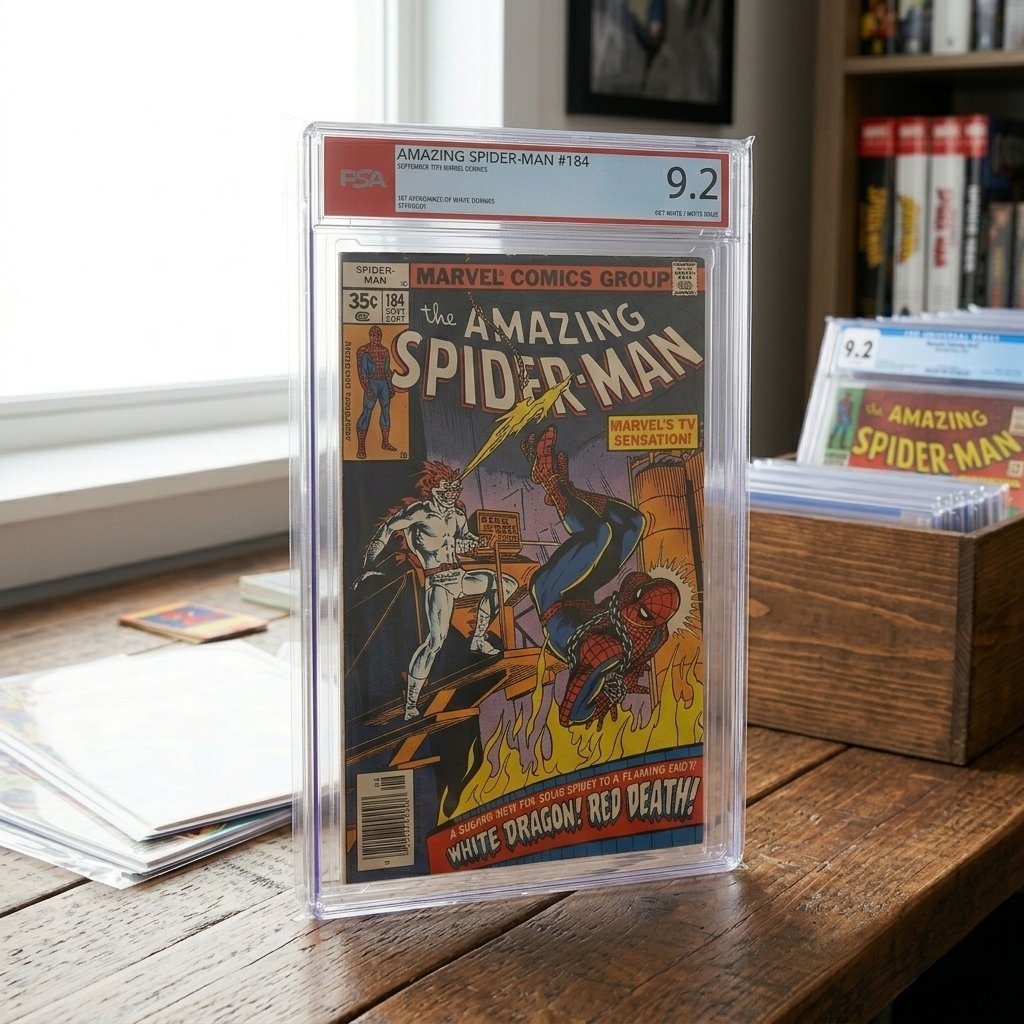
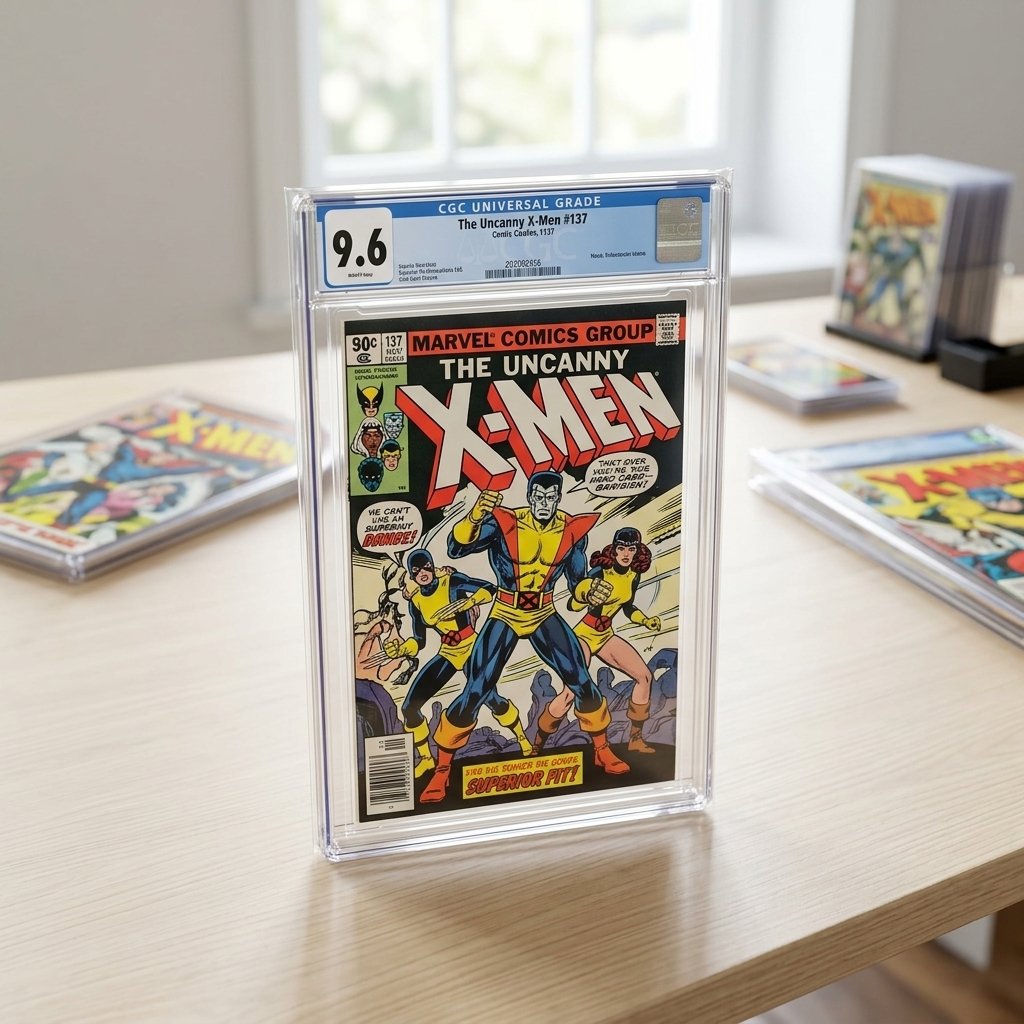
Graded comics need a different kind of protection than raw books. The slab is rigid, so the job is keeping the case itself free of scuffs, smears, and dust while it sits on a shelf or in a display.
This is where a snug, crystal-clear outer sleeve earns its keep. Superior Fit Sleeves for CGC Graded Comic Book Slabs protect your CGC graded comic book slabs from scratches and smears. Superior Fit Sleeves makes Graded Comic Book & Magazine Slab Sleeves with a tapered, resealable flap that seals out dust without adding bulk. We also offer a fit for the newer, thicker CGC comic slabs and dedicated sleeves for CBCS graded comic slabs, so the case brand on your shelf matches the sleeve around it.
A snug sleeve also improves presentation. Nothing undercuts a display like a foggy bag or a case covered in fingerprints.
Choosing Your Archival Sleeves and Handling Your Comics Safely
Buy sleeves that name their plastic, state acid-free construction, and fit the books you actually own.
Insertion and resealing deserve care. Slide the comic in spine-first with a backing board behind it, then press the flap closed along its full length. A partially sealed flap lets dust in and lets the comic work its way out.
When should you replace a sleeve? When it looks cloudy, feels tacky, or shows discoloration. For a broader look at options, our roundup of the best archival sleeves for collection storage compares materials and formats side by side.
Archival protection is a habit, not a single purchase. If you want sleeves engineered for a precise, clean fit on graded slabs, top-loaders, and comic cases, Superior Fit Sleeves builds crystal-clear, acid-free protection with our signature tapered flap.
Frequently Asked Questions
What makes a comic book sleeve archival grade?
A sleeve earns the archival label when the plastic itself is inert and acid-free, so it will not off-gas or transfer chemicals into the paper over time. Polyester film, often sold under the Mylar name, and polypropylene are the two materials that fit that description. Thickness matters less than chemistry: a 2 mil polyester sleeve protects better than a thicker sleeve made from plasticizers that yellow. Look for a stated material and acid-free claim, not just the word archival on the pack.
Are Mylar sleeves better than polypropylene for comics?
Mylar, meaning polyester film, is the stronger performer for long-term preservation. It is stiffer, clearer, and does not degrade with age, which is why museums and archives favor it. Polypropylene is softer, cheaper, and fine for comics you handle often or rotate through a reading box. For a key issue you plan to hold for decades, polyester is the safer choice. For a working collection, polypropylene sleeves do the job at a lower cost per comic.
Do I need backing boards with archival grade sleeves?
Backing boards add rigidity that stops a comic from bending inside the bag, and they make the package stand upright in a storage box. Choose acid-free boards, since ordinary cardboard can leach acid into the paper it touches. Match the board size to the sleeve size so the board does not press against the cover edges. A snug sleeve plus a correctly sized acid-free board is the combination that keeps corners sharp.
How do I choose the right sleeve size for my comics?
Measure the comic's height and width, then add a small margin so the sleeve slides on without stressing the corners. Comics vary in size, so check the product dimensions on the listing against your measurement rather than assuming one size fits all. If a comic sits loose and slides around, step down a size.