 How-to
How to Keep Dust Out of Graded Card Display Cases
Last Updated: November 3, 2026
Quick Summary
To learn how to keep dust out of graded card display cases, seal the door with a continuous gasket, test for light leaks monthly, and place the case away from vents and windows. Dust enters through gaps, air movement, and static, so sealing those paths works better than frequent cleaning.
- Check the door gasket for flattening or cracks, since a worn seal lets dust through.
- Shine a flashlight along each edge in a dark room to find light leaks.
- Apply closed-cell foam weatherstrip to the frame stop, replacing it every 12 to 24 months.
- Keep the case off carpet and away from return-air vents, windows, and doorways.
- Wipe slabs with dry microfiber, never paper towels or alcohol, to avoid scratches.
Table of Contents
- Why Dust Gets Inside Graded Card Display Cases
- Choosing a Display Case That Seals Well
- Managing Static Electricity Around Your Slabs
- Step-by-Step: Sealing and Maintaining Your Display Case
- How to Clean Graded Card Slabs Without Causing Damage
- Protecting Each Slab With Graded Card Slab Sleeves
- Scheduling Your Next Dust Check and Cleaning Routine
- Frequently Asked Questions
Why Dust Gets Inside Graded Card Display Cases
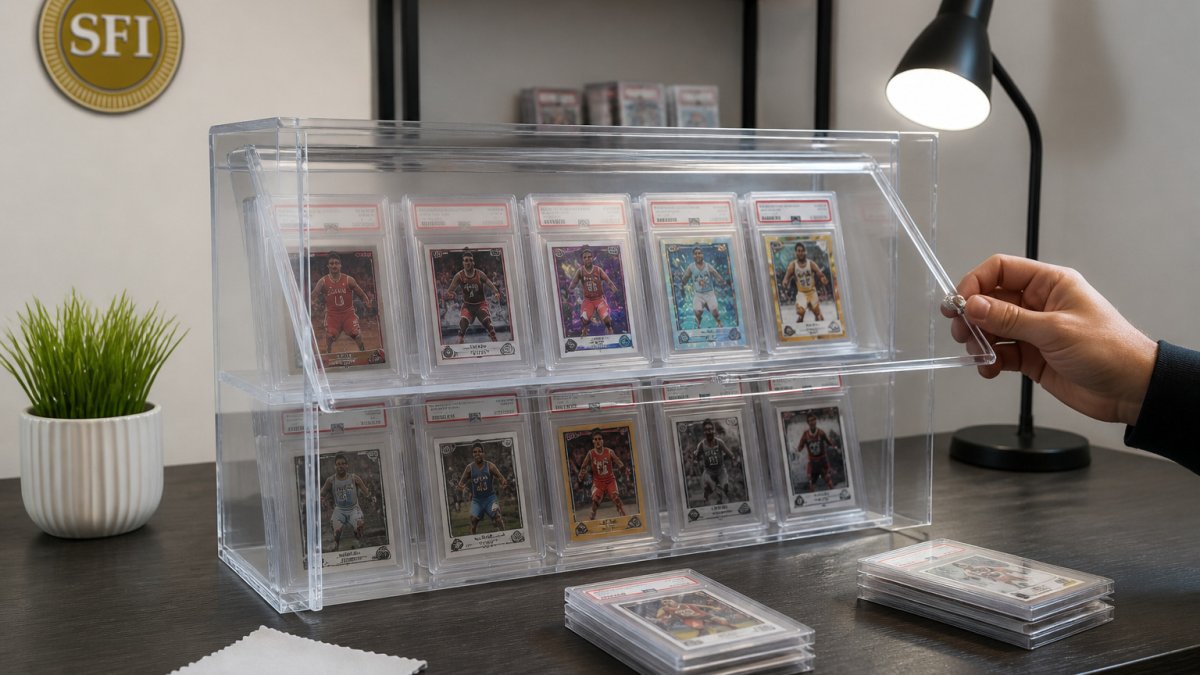
Dust is the main enemy of a clean graded card display, and keeping it out of graded card display cases starts with understanding how it gets in. It settles on the glass, drifts onto the slab edges, and builds up over months. Most collectors do not notice it until the case looks cloudy.
Dust gets in through a few common routes:
- Gaps around the door and frame
- Air moving in and out when the case is opened
- Dust carried in on clothing, hands, and shelves
- Fibers from carpets, fabric, and paper nearby
A display case that sits near a window, a heater, or a busy hallway collects more dust. The air in these spots carries more particles. Knowing where dust comes from makes it easier to stop.
Choosing a Display Case That Seals Well
Case material matters as much as case fit, and almost no guide explains why.
Glass. Tempered or laminated display glass is the least static-prone of the three common materials, so it attracts less airborne dust. It also resists scratching from microfiber and is safe with distilled water and most plastic-safe cleaners. The trade-offs are weight and breakage risk. Glass cases typically seal well because the frame and door are rigid, but the gasket is doing all the work; a glass door with a worn gasket leaks just as badly as an acrylic one. Find out how to set up slabs in a display case step by step.
Acrylic. Acrylic is lighter, cheaper to ship, and far more shatter-resistant, which is why most collector-grade display cases use it.
Polycarbonate. Polycarbonate is the toughest of the three and resists impact better than acrylic, but it scratches more easily than either glass or acrylic and can yellow with prolonged UV exposure unless it is UV-stabilized. For a dust-control case you’ll wipe regularly, the scratch risk is a real long-term downside.
Beyond material, check these sealing features before you buy:
- A gasketed door, not a resting door. Look for a continuous rubber, silicone, or closed-cell foam gasket around the full perimeter. A door that simply rests in its opening will leak at the corners.
- Adjustable hinges. Tight hinges that don't sag are good; adjustable hinges are better because they let you correct a gap as the case ages instead of replacing it.
- A latch that compresses the gasket. The latch should pull the door against the seal, not just hold it shut. Magnetic catches look clean but rarely compress a gasket enough to stop fine dust.
- Minimal penetrations. Fewer cable holes, vents, and seams mean fewer dust paths. If you need case lighting, plan for a single grommeted entry point you can seal.
- A removable tray or shelf system. Being able to lift shelves out makes interior cleaning faster, which means you actually do it.
One more easy-to-miss factor: placement. A case near a return-air vent, a doorway, or a window collects far more dust than the same case on an interior wall.
Watch out: a case advertised as "dust-proof" without a gasket is a marketing claim, not a seal. Ask for the gasket material and thickness before you buy.
Managing Static Electricity Around Your Slabs
Static electricity pulls dust toward your cards, so controlling it is part of keeping dust out of graded card display cases. Plastic slabs, sleeves, and acrylic cases all build a small charge when they rub together or sit in dry air. That charge attracts fine particles that would otherwise drift past.
Simple steps reduce static:
- Handle slabs by the edges and avoid rubbing them on fabric
- Keep the room humidity steady, since very dry air holds more static
- Wipe the case with a lightly dampened microfiber cloth, then let it dry fully
- Avoid placing the case on carpet, where friction builds charge
Our team has found that a steady room temperature also helps. Large temperature swings can cause condensation, which then attracts dust.
Step-by-Step: Sealing and Maintaining Your Display Case
Most guides stop at "wipe it down and close the door." That is dust removal, not dust prevention. The steps below focus on sealing the case so dust never gets a path in, and they include the DIY gasket fixes that high-end collectors use on cases that were not built airtight.
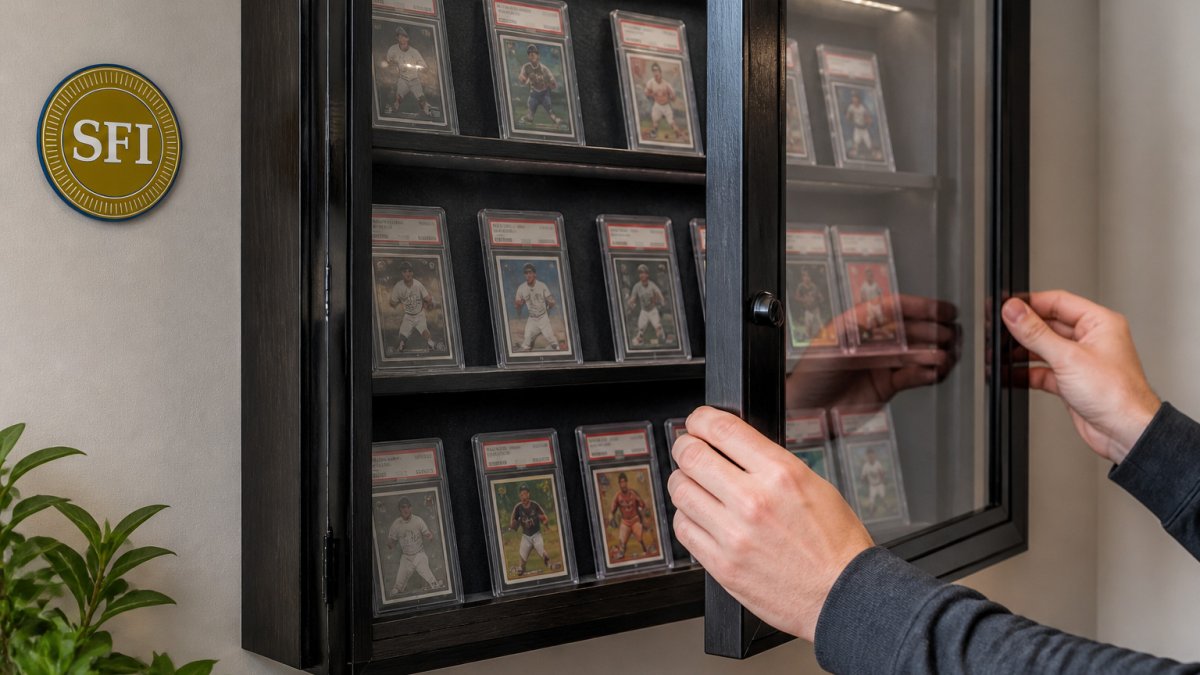
- Clear the case and stage the slabs. Remove every slab and set them face-up on a clean microfiber mat, not on carpet or paper. Carpet fibers and paper dust are two of the most common sources of particles that end up back inside the case.
- Inspect the existing seal. Run a finger along the gasket and look for flattening, cracks, or compression set, the permanent squish that foam develops after years of being compressed. A gasket that no longer springs back lets air through, even if the door feels tight.
- Run a light-leak test. Close the door in a dark room and shine a flashlight along each edge from the outside. Any visible light is a dust path. Repeat from the inside with the light in the case if the door is glass. This is the same test HVAC technicians use on door gaskets, and it is far more reliable than eyeballing the gap.
- Run a dollar-bill test on the latch side. Close a thin strip of paper or a dollar bill in the door at several points along the hinge and latch edges. If it slides out with no drag, the seal is not making contact there. Adjust hinges first, then the latch, before replacing anything.
- Add DIY weather-stripping where the factory seal fails. Self-adhesive closed-cell foam weatherstrip in a 1/8-inch to 3/16-inch thickness is the standard fix for a loose door. Closed-cell foam resists moisture and does not crumble like open-cell foam. Apply it to the frame stop, not the door, so the door still swings freely. For sliding-glass or cabinet-style cases, a brush-style pile weatherstrip or a silicone bulb seal works better than foam because it compresses without binding the track.
- Seal cable and vent penetrations. If the case has a lighting cable, a hygrometer probe, or a vent hole, those are open dust channels. A grommet plus a small dab of removable silicone putty closes the gap without permanently altering the case. Do not seal a case completely airtight if it holds a hygrometer or desiccant that needs periodic access; use a removable plug instead.
- Clean the interior before resealing. Wipe glass and shelves with a dry microfiber cloth, then follow with a cloth lightly dampened with distilled water if needed. Dry immediately. Never spray cleaner into an assembled case; residue lands on slab surfaces and etches acrylic over time.
- Return the slabs and close the door. Handle each slab by the edges. Seat slabs so they don't touch, which reduces friction and the static it creates.
- Set a check schedule. Inspect the seal monthly with the light test, and replace foam weatherstripping every 12 to 24 months depending on how often the door opens. A short log of date, seal condition, and dust level makes it obvious when a case needs a better location rather than another cleaning.
Watch out: over-tightening a latch to close a gap can warp a thin acrylic door and create a larger leak at the opposite corner. Fix the gasket, not the latch tension.
Here is a quick summary of the sealing steps, with the time or frequency for each.
Step | What to do | Time or frequency |
|---|---|---|
Stage the slabs | Set slabs face-up on a clean microfiber mat | Before sealing |
Inspect the seal | Check gasket for flattening or cracks | Before sealing |
Light-leak test | Shine a flashlight along each edge in a dark room | Monthly |
Dollar-bill test | Slide paper along hinge and latch edges | Before sealing |
Add weatherstrip | Apply closed-cell foam to the frame stop | Replace every 12 to 24 months |
Seal penetrations | Grommet and removable silicone putty for cables and vents | Before sealing |
Clean interior | Dry with a microfiber, then distilled water if needed | Before resealing |
Set a check schedule | Inspect seal and log date, condition and dust level | Monthly |
How to Clean Graded Card Slabs Without Causing Damage
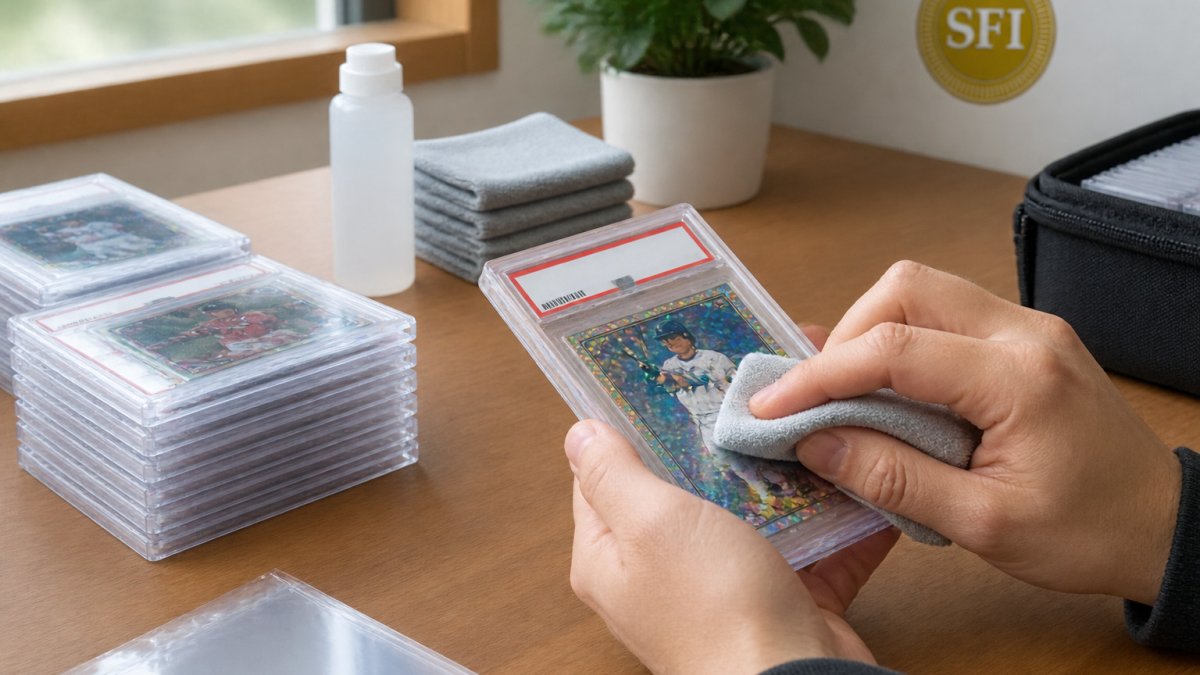
Cleaning a slab takes care. The plastic scratches easily, and harsh products can leave a film on the holder.
Use these methods:
- Dust the outside of the slab with a dry, lint-free microfiber cloth
- Wipe in one direction, never in tight circles
- Avoid household cleaners, alcohol, and paper towels, which can scratch or cloud the surface
- Hold the slab by its edges while you work
If a slab has heavy dust, lift it gently with a soft brush. Do not press hard on the label or the case window. Scratches on the slab are hard to remove, so prevention matters more than cleaning. Follow these safe steps to remove scratches from card slabs.
Protecting Each Slab With Graded Card Slab Sleeves
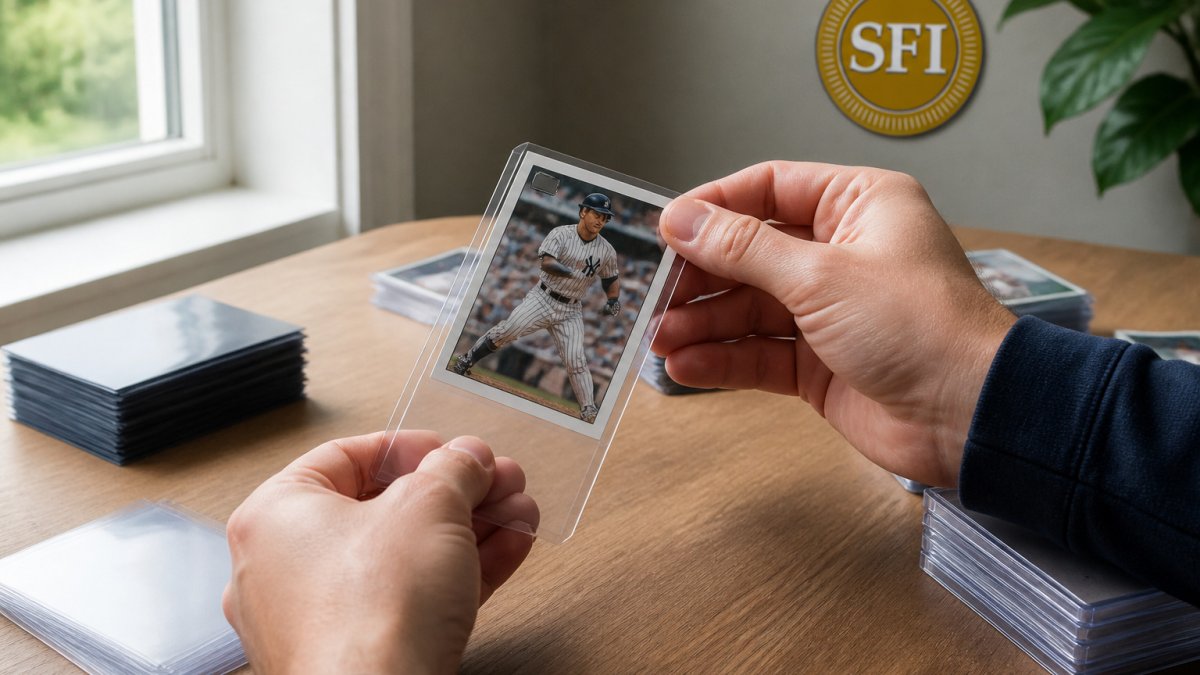
A sleeve adds a protective layer around the slab.
Look for these qualities in a sleeve:
- A clear, distortion-free film
- A tight fit that holds the slab without bulk
- A resealable flap
- Archival-grade, acid-free material
Superior Fit Sleeves makes sleeves designed for graded card slabs. Read a guide to protecting each graded slab with a sleeve. The tapered flap keeps the opening snug. You can browse graded card slab sleeves to find the right fit for your slabs.
Scheduling Your Next Dust Check and Cleaning Routine
A regular schedule keeps your case in good shape. Most collectors do well with a simple monthly routine.
- Monthly: Check the seal, wipe the glass, and look for dust on the slabs
- Every three months: Test the door seal, tighten the hinges, and inspect the sleeves
- Yearly: Replace worn gaskets, review your room humidity, and reassess the case placement
Keeping a short log helps you spot patterns. If dust returns quickly, the case may need a better seal or a different location.
A clean, sealed case protects your slabs for years. Start with a quick check this week, and build the habit from there.lightly dampened with water to lift dust rather than push
Frequently Asked Questions
How do you dust-proof a display cabinet for trading cards?
Start with a cabinet that has a tight-closing door and minimal gaps around the frame. Check the seals and gasket edges, and replace worn weatherstripping if it lets air through. Keep the cabinet away from HVAC vents and open doors, since airflow carries dust onto shelves. Position slabs so their surfaces are not exposed to the open room air, and run a routine check every few weeks to catch dust building up along the edges where air can enter.
Is it necessary to put graded card slabs in protective sleeves?
Sleeves add a second layer of protection on top of the display case. Graded slabs already have a sealed holder, but the outside surface can still collect surface debris and pick up scratches when handled or moved. A snug, clear sleeve adds a layer of protection to the exterior of the slab. Sleeves are most useful for slabs you handle often or keep on open shelving.
How can I prevent dust from settling on my card display shelves?
Dust settles on flat horizontal surfaces first, so keep shelves clear of loose items and paper. Use a lint-free microfiber cloth dampened lightly with water to lift dust rather than pushing it around. Avoid chemical cleaners, which can leave residue on acrylic and glass. Wiping shelves on a set schedule keeps dust from building up into a layer that is harder to remove.
Does using a sleeve for graded cards prevent dust buildup?
A sleeve reduces dust contact with the slab surface, but it does not seal the card completely from the air. Sleeves work best combined with a closed display case, because the case limits airborne dust while the sleeve protects the exterior. Keep sleeves clean, since a dusty sleeve can transfer grit back onto the slab when it is removed.
you remove itn’t exposed to