 blog
Are Perfect Fit Toploader Sleeves Worth the Investment?
Last Updated: October 25, 2026
Quick Summary
Perfect fit toploader sleeves are precision-engineered covers that fit snugly around trading card top loaders using archival-grade, acid-free materials to prevent card movement and protect against scratches, dust, and handling damage. They work across all major grading companies and are worth the investment for high-value slabs stored long-term.
- Match the sleeve's point rating to your holder's point rating to ensure proper fit and prevent binding or sliding.
- Double-sleeving with both inner and outer sleeves is standard practice for high-value graded cards worth more than a few hundred dollars.
- Archival-grade sleeves maintain clarity and won't yellow or degrade over decades, protecting valuable cards stored long-term.
- Test one holder in one sleeve before sleeving your entire collection to confirm proper fit and clearance.
- A fitted outer sleeve protects against scratches, dust, and movement but cannot prevent impact damage or block moisture and UV light.
Table of Contents
- What Are Perfect Fit Toploader Sleeves?
- Understanding Toploader Sleeve Size Guide and Compatibility
- Why Archival-Safe Card Sleeves Matter for Long-Term Storage
- Inner Sleeves vs Outer Sleeves: Which Do You Need?
- How to Protect Trading Cards in Top Loaders
- Protection Benefits and Real-World Performance
- Selecting the Right Perfect Fit Sleeves for Your Collection
- Frequently Asked Questions
What Are Perfect Fit Toploader Sleeves?
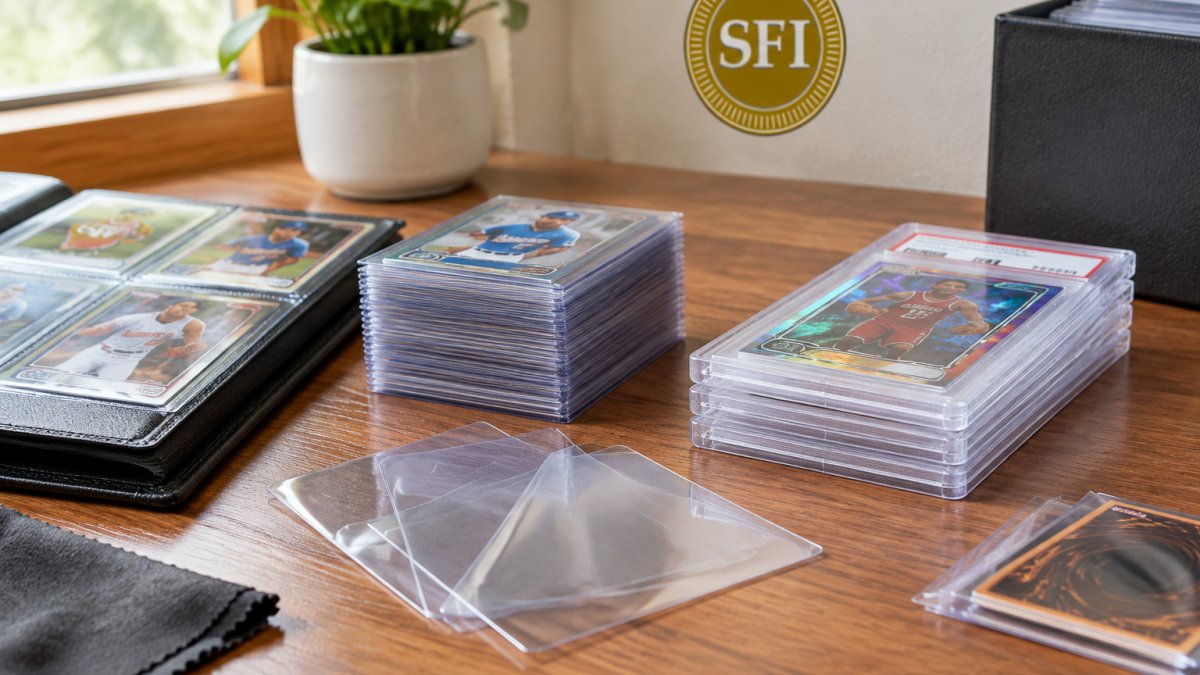
Perfect fit toploader sleeves are precision-engineered covers that fit snugly around trading card top loaders without excess bulk or movement.
Standard sleeves leave gaps that let cards shift inside their holders, risking edge wear and surface damage. A properly fitted sleeve eliminates that movement.
At Superior Fit Sleeves, we've engineered these sleeves with archival-grade, acid-free materials that won't yellow or degrade, and the design works across all major grading companies: PSA, BGS, SGC, CGC, and others.
Understanding Toploader Sleeve Size Guide and Compatibility
Most buying mistakes with perfect fit toploader sleeves come down to matching the sleeve to the holder, not the card.
Standard Trading Card Dimensions
A standard trading card measures 2.5 by 3.5 inches (63 by 88 mm), the size shared by baseball, basketball, and football cards, Pokémon, Magic: The Gathering, and most other collectible card games. Oversized promos, tobacco-era issues, and die-cut inserts need their own holders and sleeves. Ensuring your collection remains in pristine condition is essential when considering the long-term implications of magic card grading on the overall value of your most prized assets.
Toploader Outer Dimensions by Point Rating
Point ratings describe the thickness of the card the holder accepts.
Holder point rating | Typical card thickness | Typical outer width | Typical outer height | Typical outer depth |
|---|---|---|---|---|
20 pt | ~0.020 in | ~2.69 in (68 mm) | ~3.69 in (94 mm) | ~0.04 in |
35 pt | ~0.035 in | ~2.72 in (69 mm) | ~3.75 in (95 mm) | ~0.05 in |
55 pt | ~0.055 in | ~2.75 in (70 mm) | ~3.81 in (97 mm) | ~0.07 in |
75 pt | ~0.075 in | ~2.78 in (71 mm) | ~3.88 in (99 mm) | ~0.09 in |
100 pt | ~0.100 in | ~2.81 in (71 mm) | ~3.94 in (100 mm) | ~0.11 in |
130 pt | ~0.130 in | ~2.84 in (72 mm) | ~4.00 in (102 mm) | ~0.14 in |
Treat those figures as typical rather than universal.
Why the Point Rating Is the Number That Matters
A perfect fit toploader sleeve is cut to the outer dimensions of a specific holder family.
Sleeved-Card Thickness and Insertion Clearance
If you double-sleeve- a thin inner sleeve around the card- then the card inside the toploader, the card's effective thickness rises.
A Quick Compatibility Check
- Measure the holder's outer width, height, and depth with calipers, or read the manufacturer's stated dimensions.
- Note the point rating printed on the holder or its packaging.
- Match the sleeve's stated point rating to the holder's.
- Confirm the sleeve's internal dimensions clear the holder's outer dimensions by a few thousandths of an inch, enough to slide, not enough to shift.
- Test one holder in one sleeve before sleeving the whole box.
Trading Card Industry Standards
That five-step check takes about two minutes and prevents the most common return reason on fitted sleeves: a holder that will not seat or a sleeve that will not stay put. Superior Fit Sleeves lists the point rating on every product page, and the tapered flap matches the body's dimensions so the seal adds no bulk at the top edge.
Why Archival-Safe Card Sleeves Matter for Long-Term Storage
Archival-safe sleeves are made from materials that won't degrade, yellow, or off-gas over years or decades, critical for collectors storing valuable slabs.
Low-quality sleeves often contain plasticizers and other chemicals that break down over time, causing yellowing, brittleness, and sometimes chemical damage to the card inside.
Archival-grade sleeves are acid-free and chemically stable, maintain their clarity, won't leach chemicals into your card, and won't become brittle or crack. Learn more about archival sleeves and how to select them for your collection. For graded slabs worth significant money, archival protection is essential insurance.
The cost difference between archival sleeves and cheap alternatives is minimal over a collector's lifetime, while the protection difference is enormous.
Archival Materials Standards for Collectibles
We designed Superior Fit Sleeves with archival-grade materials because collectors protect valuable assets.
Inner Sleeves vs Outer Sleeves: Which Do You Need?
Inner sleeves and outer sleeves serve different purposes, and most serious collectors use both.
Inner sleeves fit directly around the card inside the top loader.
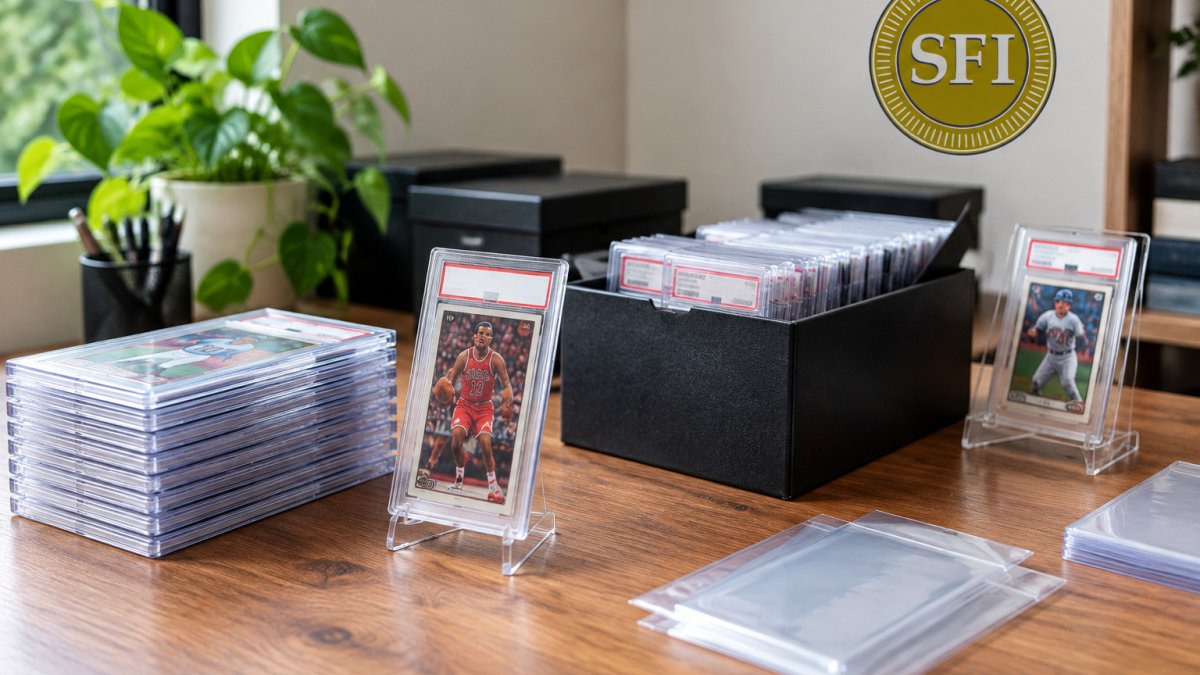
Outer sleeves fit around the entire top loader or slab. These are the perfect fit toploader sleeves we've been discussing.
Think of it this way: an inner sleeve protects the card from the top loader.
Best Practices for Trading Card Storage
How to Protect Trading Cards in Top Loaders
Protecting graded cards starts with proper insertion technique and the right sleeve combination.
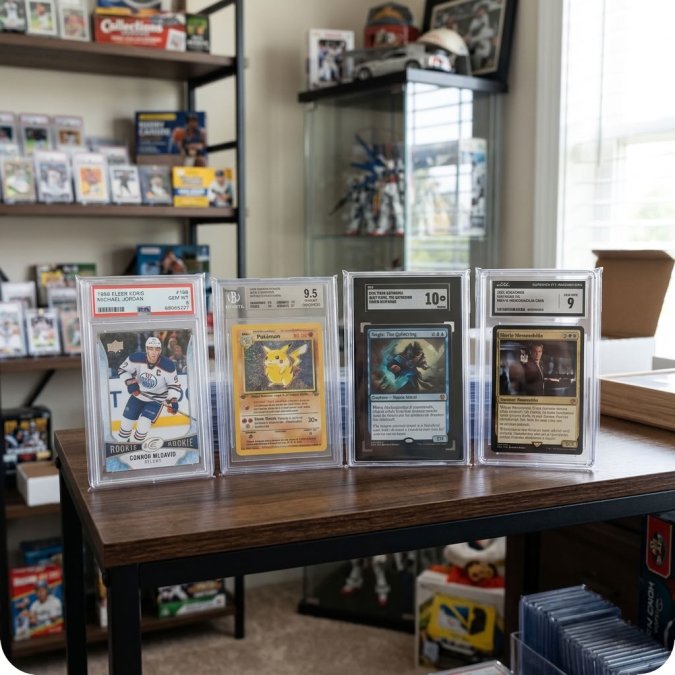
Single-Sleeving vs Double-Sleeving
Single-sleeving means using only an outer sleeve around the top loader, providing basic protection from external damage and dust.
Double-sleeving means using both an inner sleeve (around the card inside the top loader) and an outer sleeve (around the entire top loader), the professional approach. Superior Fit Sleeves for Top-Loader Sleeves are engineered to pair with inner sleeves for complete protection.
Insertion and Removal Best Practices
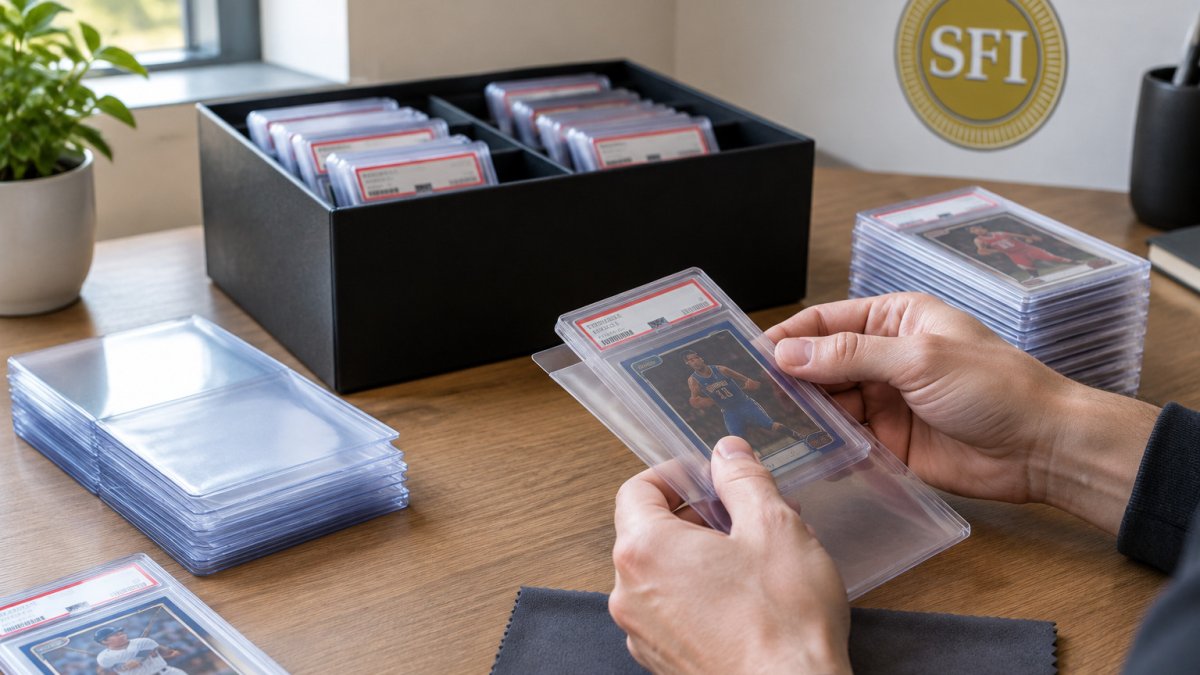
Inserting a graded slab into a perfect fit sleeve requires care:
- Hold the top loader horizontally with the opening facing you.
- Gently slide the slab into the sleeve opening, keeping it level and centered.
- Push slowly until the slab is fully seated inside the sleeve.
- Fold the tapered flap closed and seal it gently.
Removal follows the same principle. Open the flap gently. Slide the slab out slowly, keeping it level.
Watch out: never force a slab into a sleeve that doesn't fit.
Protection Benefits and Real-World Performance
What a Fitted Outer Sleeve Protects Against
- Scratches and scuffs. The outer surface of a rigid holder contacts other holders, boxes, and display cases. A fitted sleeve takes that contact instead, keeping a graded slab's face and edges clear.
- Dust and handling oils. A sealed sleeve keeps fingerprints and airborne dust off the holder and wipes clean without touching the plastic underneath.
- Movement inside the sleeve. A properly sized sleeve holds the holder still so it cannot rub against a neighbor in a box or slide out of a stack.
What It Does Not Protect Against
- Impact and crushing. A sleeve is a thin film. It will not stop a bent corner if a box is dropped or crushed; that requires rigid outer packaging.
- Moisture vapor. Standard sleeve films slow moisture but do not block it like a barrier layer. For humid storage, control the environment rather than relying on the sleeve.
- UV light. Clear film passes visible light and most UV. Display in a case away from direct sun if fading is a concern.
Inner Versus Outer: A Use-Case Matrix
Use case | Inner sleeve | Outer perfect fit sleeve | Why |
|---|---|---|---|
Long-term storage of high-value slabs | Recommended | Recommended | Inner protects the card, outer protects the holder |
Shipping a single slab | Optional | Recommended | Outer sleeve plus rigid mailer handles handling wear |
Display on a shelf or in a case | Optional | Recommended | Outer sleeve keeps dust and fingerprints off the display face |
Bulk storage of lower-value holders | Optional | Optional | Cost and time may outweigh the marginal protection |
Handling cards frequently | Recommended | Recommended | Both layers absorb repeated contact |
Fit-Testing Methodology
You can evaluate a perfect fit toploader sleeve in about five minutes with a caliper and one holder.
- Measure the holder. Record outer width, height, and depth to the nearest thousandth of an inch.
- Measure the sleeve's internal opening. The difference is your clearance: a few thousandths of an inch is normal; a tenth of an inch is too loose.
- Test insertion effort. The holder should slide in with light, steady pressure and no corner catching. If it binds, the sleeve is undersized.
- Test retention. Turn the sleeved holder upside down and tap gently. If it slides out, the sleeve is oversized.
- Check clarity. Under a bright light at an angle, look for haze, distortion, or a visible seam line across the card face.
- Check the seal. Close the flap, set the sleeved holder on a flat surface, and confirm the flap stays closed without lifting.
Record results for each sleeve and holder combination.
Material, Clarity, and Long-Term Storage
Sleeve film is typically a clear plastic chosen for clarity and flexibility.
Clarity is separate from protection: a sleeve can be protective and still slightly hazy, which matters for display.
Archival Materials Standards for Collectibles
Real-World Performance Notes
Among collectors who track their storage, a common pattern is that the fitted outer sleeve shows wear first, scuffs, fingerprints, a slightly dulled surface, while the holder underneath stays clear. Discover how to store graded card slabs safely long term to protect your investment.
Also worth knowing: fitted sleeves are less forgiving of holder variation than loose sleeves.
For collectors ready to match sleeves to their holders, Superior Fit Sleeves for Top-Loader Sleeves lists the point rating on each product so you can pair it with your holders.
Selecting the Right Perfect Fit Sleeves for Your Collection
Choosing the right sleeves depends on three factors: your slab's point rating, your storage method, and your collection's total value.
Start by identifying the point rating of your slabs. Count how many 20-point, 35-point, and 60-point holders you have.
Next, decide whether you're single-sleeving or double-sleeving. If double-sleeving, you'll also need inner sleeves for the cards themselves.
Superior Fit Sleeves offers Top-Loader Sleeves engineered for standard top-loader dimensions: a snug custom fit prevents movement, permanent clarity preserves visibility, and archival-grade material ensures decades of protection.
Protecting a valuable trading card collection requires the right materials, the right technique, and a commitment to archival-grade protection.
Frequently Asked Questions
What is the difference between an inner sleeve and a toploader sleeve?
Inner sleeves fit directly around individual trading cards before they enter a toploader or graded slab. Toploader sleeves are designed to fit over the outside of the toploader itself or a graded slab. Inner sleeves protect the card surface from dust and handling, while toploader sleeves safeguard the entire holder from scratches and moisture. Many collectors use both: an inner sleeve on the card, then a toploader sleeve over the holder for layered protection.
Will perfect fit toploader sleeves fit all grading companies' slabs?
Perfect fit toploader sleeves are engineered to fit standard slab dimensions from major grading companies including PSA, BGS, SGC, and CGC. However, fit depends on the specific point rating of the slab (20pt, 35pt, 60pt) because thicker slabs require sleeves with more clearance. Before purchasing, verify the exact dimensions of your slabs and compare them to the sleeve specifications to ensure a snug, professional fit without excess bulk or gaps.
Are clear plastic sleeves safe for long-term card storage?
Not all clear plastic sleeves are safe for long-term storage. Archival-safe card sleeves are made from acid-free, PVC-free materials that won't yellow, fog, or degrade over time. Standard cheap sleeves often contain harmful chemicals that can damage cards over years of storage. Look for sleeves explicitly labeled as archival-grade and acid-free to ensure your graded cards remain protected and maintain their clarity and condition for decades.
How do I insert a sleeve on a toploader without creasing it?
Start by holding the toploader vertically with the open end facing up. Gently slide the sleeve over the toploader in one smooth motion, keeping the sleeve aligned with the holder's edges. Avoid twisting or forcing the sleeve, as this can create creases. The tapered flap design of precision-fit sleeves allows for easier insertion with minimal friction. Practice with non-valuable slabs first to develop the technique before protecting your most valuable cards.