 Ultimate guide
Long Term Storage Solutions for Collectibles That Actually Protect Value
Last Updated: November 1, 2026
Quick Summary
Effective long term storage solutions for collectibles start with acid-free, lignin-free, and inert materials, since ordinary cardboard and PVC off-gas compounds that stain and degrade paper and cards. Store items in a stable, humidity-controlled space away from attics, basements, and garages, and inspect everything every six months.
- Polyethylene and acid-free polypropylene sleeves are safe for long-term contact with cards; PVC is not.
- A collection held at a stable 45% relative humidity is safer than one swinging between 25% and 65%.
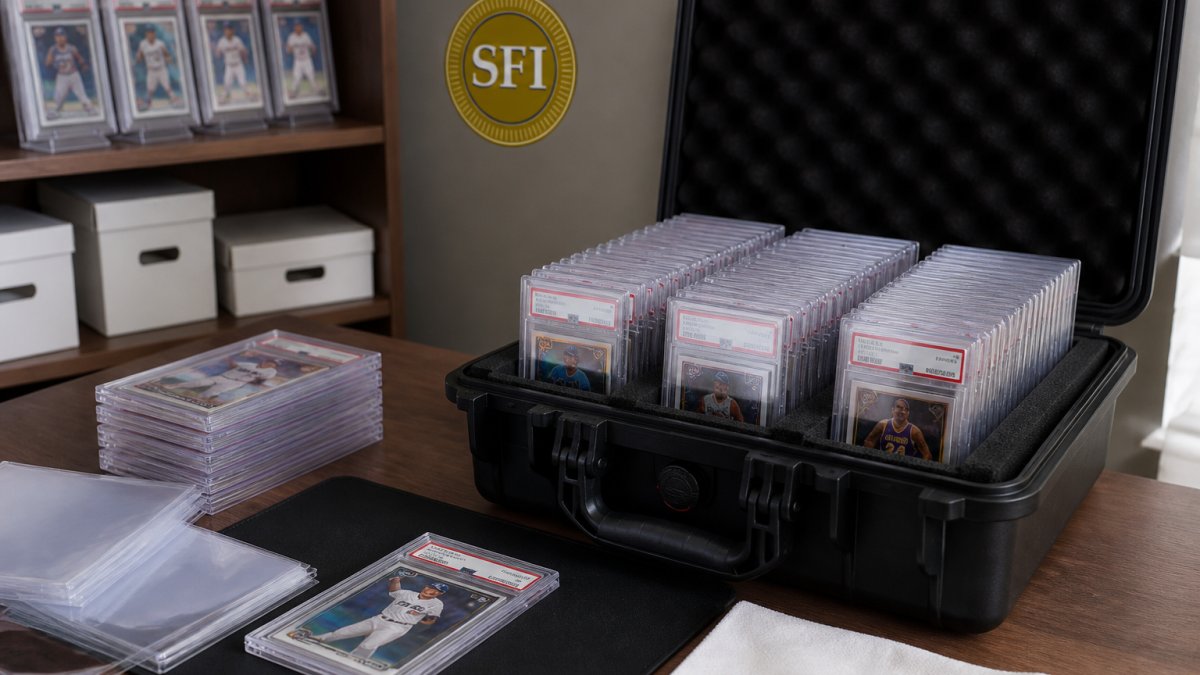
- Stand graded slabs upright in a fitted box with dividers rather than stacking them flat.
- Date silica gel packs when placed and replace or recharge them on a fixed interval.
- Interior closets and living-space shelving away from exterior walls are the safe storage defaults.
Table of Contents
- Start With Materials That Won't Damage Your Collection
- How to Store Collectibles Long-Term Without Regret
- Collectibles Humidity Control: The Number That Decides Everything
- How to Store Graded Cards So Slabs Stay Clean and Scratch-Free
- Where Not to Store a Collection: Attics, Basements, and Garages
- Long-Term Storage Checklist for Collectibles
- Pick the Right Sleeves for Your Shelves
- Frequently Asked Questions
Start With Materials That Won't Damage Your Collection
The biggest mistake collectors make with long term storage solutions for collectibles is choosing containers by convenience instead of chemistry.
The fix starts with two words: acid-free and inert.
Acid-free means the material has a neutral pH and won't leach acids into paper, cardboard, or card stock. Archival storage means the material is also lignin-free and proven stable over decades.
For trading cards, comic slabs, and graded holders, the protective layer touching the item matters most. The Library of Congress preservation guidance on enclosures is a useful reference point for what "archival" actually requires.
Acid-Free Boxes and Archival Storage
Acid-free boxes are built to sit against your collectibles for years without transferring anything. Look for boxes labeled lignin-free and buffered.
For flat items like photographs, prints, and ungraded cards, store them flat in acid-free folders inside an archival box. Don't overfill. Pressure creases paper permanently.
If you're building out archival materials for a card collection specifically, our guide to the best archival sleeves for 2026 collection storage covers which sleeve materials hold up and which break down.
Containers, Bins, and Shelving That Hold Up
Heavy-duty plastic bins with durable lids beat cardboard for anything that needs stacking, provided the plastic is stable, the lid seals, and the bin doesn't sit on a concrete floor where moisture wicks upward.
Plastic shelving won't absorb spills or harbor pests the way particle board does. Coated metal shelving is fine; bare metal can rust in humid rooms. Unfinished wood releases acids and oils.
For graded cards specifically, the best storage boxes for graded cards guide breaks down which boxes actually fit slab dimensions without forcing you to stack them loose.
How to Store Collectibles Long-Term Without Regret
Long-term storage for collectibles works when you prepare the item, control the environment, and inspect on a schedule. Skip any one and the other two won't save you.
- Clean and dry everything first. Dust and skin oils become permanent stains; handle paper items with clean hands or nitrile gloves.
- Bag or sleeve each item individually so one damaged item can't transfer damage to its neighbors.
- Add a buffer layer between items. Acid-free tissue or dividers stop abrasion when boxes shift.
- Seal the container but not airtight. A fully sealed bin traps moisture; use silica gel packs and check them on a schedule.
- Label the outside, not the inside. Writing on a container is fine; writing on the collectible is not.
- Log what's inside. A simple inventory list with photos protects you for insurance and helps you find things years later.
Here is the six-step sequence the article recommends for putting a collection into long-term storage.
Step | What to do |
|---|---|
1 | Clean and dry everything first; handle paper with clean hands or nitrile gloves |
2 | Bag or sleeve each item individually |
3 | Add acid-free tissue or dividers between items |
4 | Seal the container but not airtight; add silica gel packs |
5 | Label the outside of the container, never the collectible |
6 | Log an inventory list with photos |
Collectibles Humidity Control: The Number That Decides Everything
Humidity quietly ruins more collections than any other variable.
Stability matters more than the exact number. A collection that sits at 45% year-round is safer than one that swings between 25% and 65% with the seasons.
Three tools make this manageable:
- A digital hygrometer in each storage area, checked weekly
- Silica gel packs in containers, swapped or recharged on a schedule
- A dehumidifier for rooms that regularly climb above the target range
Watch out: silica gel packs saturate and stop working without any visible sign.
Temperature works alongside humidity. Avoid rapid swings and keep storage away from exterior walls and heating vents.
How to Store Graded Cards So Slabs Stay Clean and Scratch-Free
Graded card slabs need protection from the outside, not the inside. The grading company already sealed the card; your job is to keep the slab clear, unscratched, and free of dust that dulls the display.
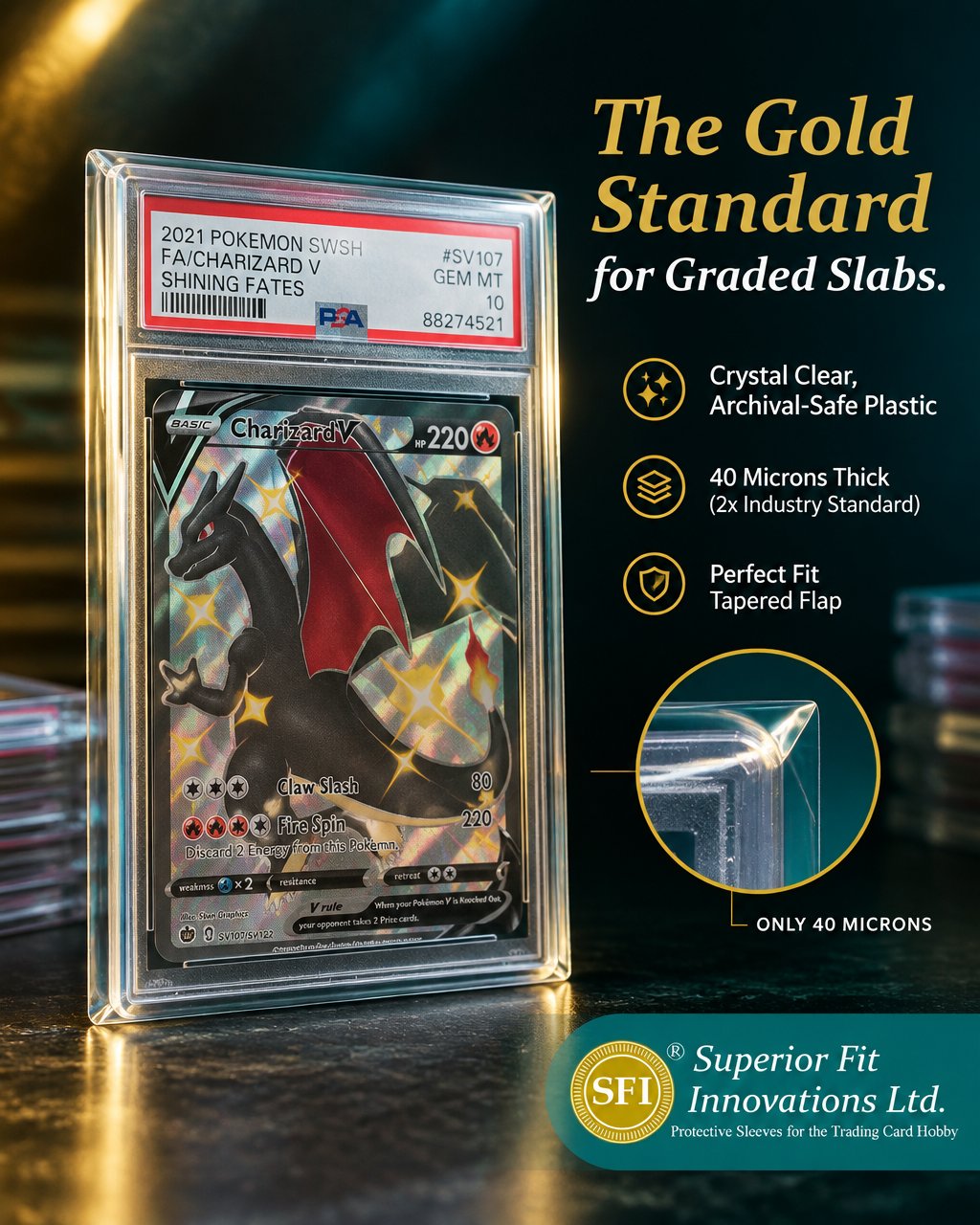
The practical sequence for how to store graded cards:
- Sleeve each slab before it goes anywhere. A fitted slab sleeve keeps scuffs off the case and stops dust from settling into the edges.
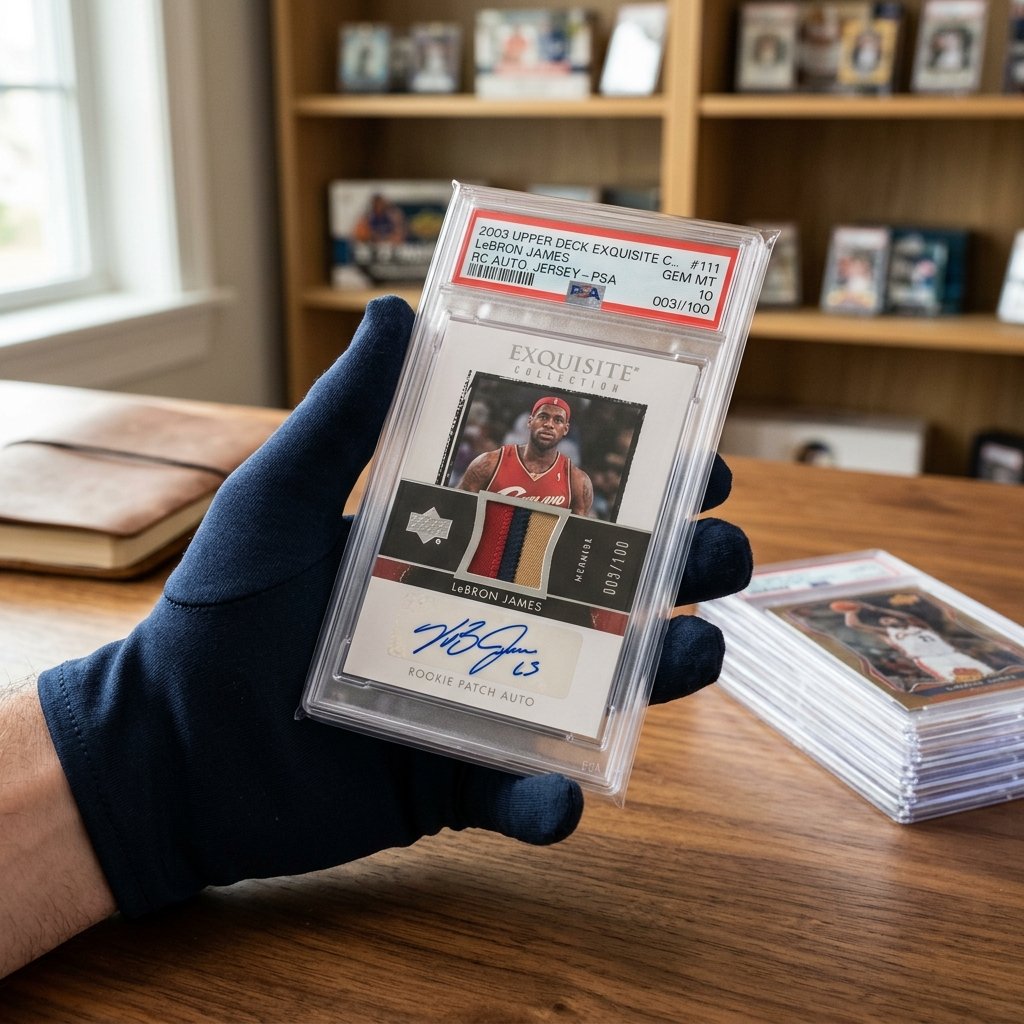
- Stand slabs upright in a fitted box. Stacking flat puts weight on the case faces and invites scratches from grit between slabs.
- Keep them out of direct light. UV fades labels and can cloud some plastics over time.
- Handle by the edges. Fingerprints on the case face are harmless; oils that migrate to the label area are not.
A common mistake is buying sleeves that fit loosely. A loose sleeve lets the slab slide and traps grit against the surface, which is exactly the abrasion you were trying to prevent.
What Actually Damages a Slab Over Time
Slab damage often builds up gradually. It typically happens in a few common ways, and each has a different fix:
- Surface abrasion. Grit trapped between slabs, or between a slab and a loose sleeve, acts like sandpaper every time the slab moves. The fix is a snug sleeve plus upright storage.
- Case clouding. Some plastics haze over years of UV exposure and heat cycling. Keep slabs out of direct sun and away from heat sources.
- Label migration and fading. Heat softens the adhesives on grading labels, and UV fades the printed grade. Stable temperature and low light protect the label as much as the card.
Raw Cards vs. Graded Slabs: Different Storage Rules
A raw card and a graded slab fail in different ways, so they shouldn't share a storage plan.
Raw cards belong in penny sleeves and top loaders or rigid holders, then in an acid-free box standing upright. Graded slabs belong in fitted sleeves, then in a slab-sized box with dividers.
For a mixed collection, sort by format first, then by value, then by size.
Slab Dimensions and Box Fit
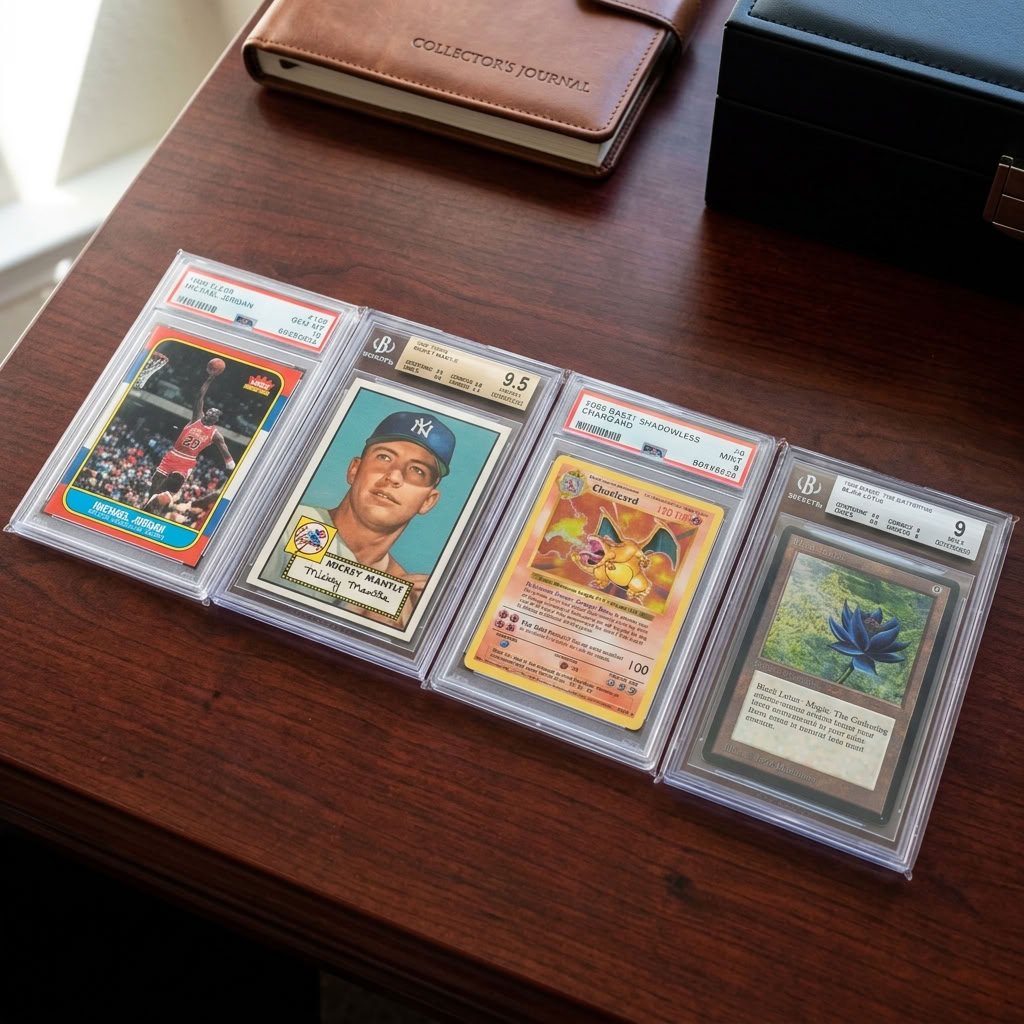
Grading companies use different case dimensions, so a box built for one format will rattle the others. PSA, BGS, SGC, and CGC holders each have their own footprint and thickness.
A snug box with dividers does two jobs: it stops slabs from sliding, and it keeps weight off the case faces. If a slab can shift more than a quarter inch in any direction, the box is too loose.
Displaying Graded Slabs Without Regret
Display is where most collectors undo their own storage work. A slab on a sunny shelf looks great and fades quietly. If you display graded cards, keep them out of direct sun, rotate them periodically so no single face takes years of light, and consider UV-filtering display cases for anything valuable.
For a full walkthrough of storing graded slabs safely over the long haul, see our long-term graded card slab storage guide.
Where Not to Store a Collection: Attics, Basements, and Garages
Attics, basements, and garages are the three worst places to store a collection, and they're also where most people put it. Each one fails a different way.
Attics swing to extreme heat in summer and cold in winter.
Basements are the humidity problem. Even finished basements sit against concrete that holds moisture, and unfinished ones flood.
Garages combine temperature swings with exhaust fumes, pests, and damp floors. They're storage for tools, not for paper.
Home Storage vs. Climate-Controlled Storage Units
When home space runs out, the choice is usually between a closet, a self-storage unit, and a climate-controlled unit. They are not interchangeable, and the trade-offs are concrete:
- Interior closet. Lowest cost, easiest access, best stability if it's away from exterior walls and HVAC vents. Limited by square footage and household humidity.
- Standard self-storage unit. Cheaper per square foot than climate-controlled space, but subject to the same temperature and humidity swings as a garage. Fine for durable goods, risky for paper and cards.
- Climate-controlled unit. Holds temperature and humidity within a tighter band, which is what long-term paper and card storage needs. Costs more per month, and the actual range varies by facility, so ask for the real numbers.
A common pattern is collectors paying for climate control and then storing boxes on the concrete floor, which defeats half the benefit. Use shelving, keep boxes off the floor and away from the door, and check the unit's humidity with your own hygrometer on a visit. Maintaining consistent airflow around your containers is particularly critical when storing diecast cars to prevent the paint bubbling and metal fatigue that often result from trapped moisture.
Questions to Ask Before Signing a Storage Lease
Before you commit to a unit, get answers to these in writing or in person:
- What is the actual temperature range in summer and winter? "Climate-controlled" is not a standard; ask for the band.
- How is humidity managed, and is it monitored? A unit that controls temperature but not humidity is only half the job.
- Is the unit interior or exterior access? Interior units buffer against outside swings better.
- What is the security setup? Cameras, gate codes, and unit locks matter for valuable collections.
- What does access look like? 24-hour access is convenient but often means less climate stability.
- What happens during a power outage? Ask how the facility handles HVAC failures.
- Is the unit insured, and does my homeowner's or renter's policy cover off-site storage? Many policies cap or exclude stored collectibles.
A Decision Framework for Choosing a Space
Work through the collection before you work through the real estate. High-value paper, cards, photographs, and textiles need stable temperature and humidity, which points to interior closets or climate-controlled units.
If you must use a storage unit, choose one that's climate-controlled and inspect it in person before signing. Ask what the unit's temperature range actually is in summer, and check the unit's own humidity with your hygrometer on a visit.
Long-Term Storage Checklist for Collectibles
Use this checklist before anything goes into long-term storage, and repeat the inspection items on a schedule.
Before storage:
- Every item cleaned, dry, and handled with clean hands or gloves
- Each item in an acid-free sleeve, bag, or individual pocket
- Buffer layers between items in each box
Ongoing inspection, every six months:
- Hygrometer reading logged for each storage area
- Silica gel packs checked, replaced, or recharged
- Slabs and sleeves checked for scratches, clouding, or yellowing
That inspection habit is the part most collectors skip, and it's the part that catches problems while they're still cheap to fix. For a full walkthrough of storing graded slabs safely over the long haul, see our long-term graded card slab storage guide.
Pick the Right Sleeves for Your Shelves
Sleeves are the cheapest insurance in the entire storage setup, and the wrong ones are worse than none.
This is where Superior Fit Sleeves comes in.
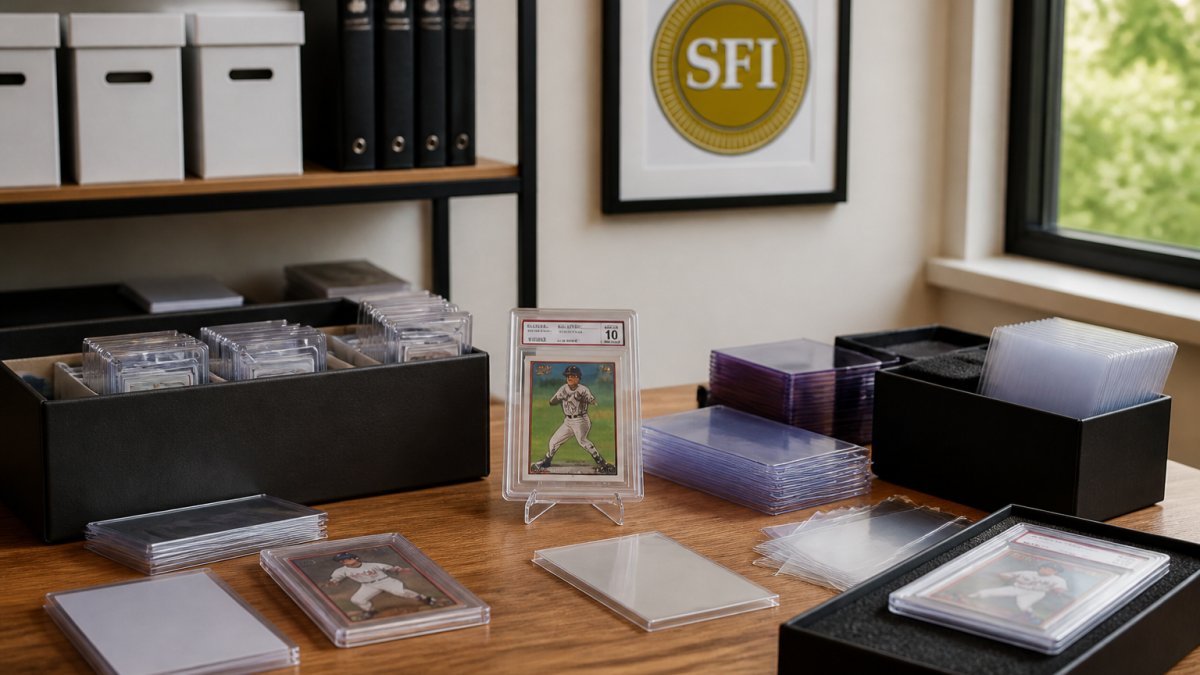
We make fitted sleeves for graded slab holders, including PSA, BGS, SGC, CGC holders & more. We also make Top-Loader Sleeves for raw cards in rigid holders and Magnetic Card Case Sleeves for one-touch displays, plus graded comic and magazine slab sleeves.
For current pricing, check the product pages on our website.
The hardest part of long-term storage isn't buying boxes. It's building a system that survives a decade of seasons, moves, and life changes without you having to think about it.
Frequently Asked Questions
How do you store collectibles long-term without them losing value?
Store collectibles in acid-free boxes and archival sleeves, keep them in a room held between 65 and 70 degrees Fahrenheit with humidity near 45 percent, and block direct sunlight. Avoid attics, basements, and garages where temperature swings and damp air do the most damage. Add silica gel packs to closed containers, label every box, and inspect the collection twice a year so small problems get caught before they spread.
What is the best way to protect collectibles from humidity?
Keep relative humidity around 45 percent and never let it drift above 60 percent for long. Use a hygrometer to measure it, a dehumidifier in damp months, and silica gel packs inside closed bins and boxes. Skip cardboard boxes in humid rooms because paper absorbs moisture. Climate-controlled storage costs more, but it is the only reliable option in a garage or a storage unit without climate control.
Should collectibles be stored in plastic containers?
Yes, provided the plastic is safe for the item. Heavy-duty plastic bins with durable lids keep out dust, pests, and moisture far better than cardboard. Avoid PVC and any container that smells of chemicals, since those gases can fog slabs and stain cards over time. Use acid-free boxes or archival sleeves as the inner layer, then place those inside the plastic bin. Stack bins on plastic shelving, never directly on a concrete floor.
How should graded cards be stored long-term?
Keep graded cards upright, never stacked flat under weight, so the slab and label stay free of pressure marks. Slip each slab into a precision-cut, acid-free sleeve to stop scuffs and scratches on the case itself. Store them in a cool, dry room away from sunlight, inside a rigid box or bin with silica gel. Handle slabs by the edges, and check them every few months for dust or condensation.
What temperature is best for storing collectibles?
Aim for a stable indoor temperature. The exact number matters less than the stability, because repeated swings expand and contract paper, plastic, and adhesive. Avoid any space that climbs above 75 degrees or drops near freezing, which rules out most attics and garages. A closet or interior room on the main floor of a climate-controlled home is usually the safest place for a collection.
How often should stored collectibles be inspected?
Inspect the collection at least every six months, and every three months if it sits in a storage unit or a room prone to damp. Check for dust, condensation inside sleeves, warping, fading, and any sign of pests. Log the date and any changes in your inventory. A short inspection now costs minutes; discovering a humidity problem a year later can cost you the value of the item.