 blog
How to Choose Clear Card Protectors for Pokémon Slabs
Last Updated: November 22, 2026
Quick Summary
The best clear card protectors for Pokémon slabs fit the holder closely, stay optically clear over time, and close to keep dust and fingerprints out. Measure your slab's height, width and thickness before you buy, and check the sleeve's internal dimensions rather than its external size.
- Measure slab height, width and thickness with calipers, sizing to the thickest reading.
- Compare the sleeve's internal dimensions with your slab, not its external size.
- A too-loose sleeve lets dust in and the slab shift; a too-tight one stretches and hazes.
- Avoid PVC for long-term contact with collectibles because plasticizers can migrate out of the film.
- Use a hard case in addition to a sleeve when a slab will be shipped or crushed.
Table of Contents
- What Are the Best Clear Card Protectors for Pokémon Slabs?
- How Raw Cards and Graded Slabs Need Different Protection
- PSA Slab Sleeves: Checking Fit Across Grading Companies
- Clear Sleeves for Graded Cards: Materials, Clarity, and Durability
- Hard Protectors for Pokémon Cards and When to Use Them
- Storage, Display, and Transport: Matching Protection to Use
- Choosing Your Next Protector for Your Graded Pokémon Slabs
- Frequently Asked Questions
What Are the Best Clear Card Protectors for Pokémon Slabs?
Clear card protectors for Pokémon slabs are thin, transparent sleeves that fit over a graded holder to guard its surface from scratches, dust and handling wear.
A good protector does three things well. It fits the holder closely, stays optically clear over time, and seals or closes in a way that keeps dust and fingerprints out. Protection matters most for slabs you handle, trade or ship. A slab that sits untouched in a display case has different needs than one that moves between shows and storage.
Fit is where most protectors fail. A sleeve that is too loose lets the slab rattle and rub, while one that is too tight can make the slab hard to slide in and out.
How Raw Cards and Graded Slabs Need Different Protection
Raw cards and graded slabs are protected differently because they are built differently. A raw card has an exposed surface and edges that can curl, crease or pick up scuffs.
For raw cards, a penny sleeve or toploader is usually the first layer of protection.
Watch out: buying a protector sized for a standard card and sliding a thick graded holder into it can strain the holder's seam.
PSA Slab Sleeves: Checking Fit Across Grading Companies
PSA is the most common grading company for Pokémon cards, and PSA slabs are the usual reference point for sleeve sizing. Check which protector PSA itself recommends before you settle on a fit. Fit still varies. Slabs from different grading companies can differ in thickness and shape, so a sleeve that fits one holder may not fit another well. The practical fix is to stop shopping by brand name and start shopping by measured dimensions.
Measure the slab, not the label
Use digital calipers or a ruler with millimeter markings and record three numbers: height, width and thickness at the thickest point. Measure thickness at the edge where the two plastic halves meet, because that seam is usually the high spot and the part that catches on a tight sleeve. Measure a second time at the center of the slab. If the two readings differ, size to the larger one.
A common pattern among collectors is that two slabs from the same grading company, submitted months apart, can vary by a fraction of a millimeter in thickness. That is normal manufacturing tolerance, not a defect, and it is why a sleeve listed as fitting "PSA slabs" can feel perfect on one holder and snug on the next.
What the fit should feel like
A correctly sized sleeve slides on with light, even pressure and then stays put when you turn the slab upside down and give it a gentle shake.
- Too loose: the slab shifts inside the sleeve, so dust works in through the opening and the slab's corners rub against the sleeve's interior. Loose sleeves also let a slab slide out during transport.
- Too tight: the sleeve stretches at the seams, the plastic hazes where it is under strain, and repeated insertion and removal can scuff the slab's outer shell along the edges.
- Just right: the sleeve hugs the holder with no visible air gap at the corners, the flap or closure meets without tension, and the slab can still be removed without peeling the sleeve away from a corner.
Watch out: a sleeve sized for a standard raw card will not accept a graded holder. Forcing a thick slab into a card-sized sleeve strains the holder's seam and stretches the sleeve past the point where it will lie flat again.
Cross-company compatibility
Slab dimensions are not standardized across grading companies, so treat every "fits all slabs" claim as a starting point rather than a guarantee. The reliable approach is a short compatibility check before you buy:
- Note the grading company and the holder type on your slab's label.
- Record your measured height, width and thickness.
- Compare those numbers with the sleeve's listed internal dimensions, not its external dimensions. External size tells you how much room the sleeve takes up in a box; internal size tells you whether your slab fits.
- Confirm the seller lists fit for your specific holder, including specialty or thick holders, rather than only a generic slab size.
PSA slab sleeves are one option to compare for this purpose. Our SGC graded card holder sleeves are sized for that holder, and we also offer sleeves for PSA specialty and thick card slabs for holders that run thicker than standard. If you keep a mix of companies in one collection, sort your slabs by measured thickness first and buy in matched batches, so you are not guessing which sleeve goes with which holder.
Build a simple fit log
Collectors who trade or ship regularly often keep a one-page log: grading company, holder type, measured thickness, sleeve used, and whether the fit was loose, snug or tight. After a handful of entries you will know your collection's real size range, and reordering becomes a matter of matching numbers instead of re-measuring every slab.
The article's fit checks come down to a few measurements and signs of a good or bad fit.
| Fit type | What it looks like | Risk |
|---|---|---|
| Too loose | Slab shifts inside the sleeve | Dust gets in; slab can slide out during transport |
| Too tight | Sleeve stretches at seams | Plastic hazes; slab edges can scuff |
| Just right | Hugs holder with no corner gap | Slab removable without peeling the sleeve |
| Measure thickness | Check the seam and the center | Size to the larger reading |
| Compare internal size | Use internal, not external, dimensions | External size only shows box room |
Clear Sleeves for Graded Cards: Materials, Clarity, and Durability
Clear sleeves for graded cards differ mainly in material, clarity and how well they resist wear. Most are made from clear plastic, with some using TPU, a flexible polymer that resists tearing. Clarity matters for display, because a cloudy sleeve dulls a slab's appearance over time. This section goes past the material name and covers what actually changes how a sleeve looks and lasts.
What the common materials mean in practice
- PVC (polyvinyl chloride): soft, very clear and inexpensive, but often formulated with plasticizers that can migrate out of the film over time. Migration shows up as a greasy film, a faint chemical smell, or a sticky feel where the sleeve touches the slab. For long-term contact with a collectible, PVC is the material to be cautious about.
- PET / polyester: stiffer and harder than PVC, with good optical clarity and low tendency to yellow. It does not stretch much, so fit has to be right the first time.
- PP (polypropylene): the material behind most penny sleeves and soft sleeves. Flexible and inexpensive, but softer, so it scuffs and hazes faster with repeated handling.
A sleeve described as archival grade and acid-free is telling you the material is meant for long-term contact with a collectible. Ask the seller what the base material is, not just whether it is archival, because "archival" is a marketing descriptor rather than a single standardized specification.
Clarity: haze, glare and yellowing
Clarity is not one property. Three separate things affect how a slab looks inside a sleeve:
- Haze: the milky, diffused look that scatters light instead of passing it through. Haze comes from the film itself, from surface scuffs, and from strain where a sleeve is stretched too tightly over a slab. A sleeve that is slightly too small will haze at the corners within weeks.
- Glare: sharp reflections that can wash out a card's surface under bright display lighting. Glossier films show more glare; slightly matte or textured films cut glare but can soften fine detail. For a display case under direct light, glare is often the bigger complaint than haze.
- Yellowing: a gradual color shift in the film, most associated with PVC and with films exposed to sunlight and heat. PET and PP resist yellowing better. Keeping a displayed slab out of direct sun slows the change regardless of material.
A quick at-home check: hold the empty sleeve against a white sheet of paper under a desk lamp and look for a gray or milky cast. Then slide a slab in and compare the card's colors with and without the sleeve under the same light. If the sleeve visibly dulls the print, it will do the same in a display case.
Durability and residue
Durability depends on use. A sleeve that holds up to occasional handling may not survive daily trading or shipping. The failure points are predictable: the opening edge where fingers go in and out, the corners where the slab's edges press, and the closure.
- Check whether the sleeve has a reliable closure, such as a tapered resealable flap, which keeps the slab in place without forcing it.
- Look for soft, rounded internal edges. Sharp internal seams can scuff a slab's outer shell along its edges over repeated insertions.
- Ask whether the film contains plasticizers, and avoid storing a valuable slab for years in a sleeve that feels oily or smells of chemicals.
Watch out: if a sleeve leaves a residue or a sticky film on the slab, stop using it.
A simple side-by-side test
Before committing a whole collection to one sleeve, run a small test with three or four candidates. Label each sleeve, insert a duplicate or low-value slab, and store them together in the same conditions for a few weeks. Then compare haze, glare, yellowing, scuffing at the corners and any residue on the slab. This is the same method collectors use to compare archival-grade and standard options, and it tells you more than any product description.
For a closer comparison of archival-grade and standard options, read archival-grade sleeves versus standard options for slab scratch protection. The guide covers how each type handles surface scratches and dust.
Hard Protectors for Pokémon Cards and When to Use Them
Hard protectors, such as toploaders and one-touch magnetic cases, add a rigid layer around a card or slab.
Use a hard protector when a card or slab will be shipped, stacked or stored where it might be crushed.
Magnetic cases are a common choice for graded slabs that need frequent access. Superior Fit Sleeves also makes Magnetic Card Case Sleeves are available for magnetic cases.
Storage, Display, and Transport: Matching Protection to Use
Match your protector to how the slab will be used.
Transport calls for the most protection. For slabs you ship regularly, Top-Loader Sleeves are one option for a rigid layer in transit.
A quick check before you ship or store: can the slab move inside its protector?
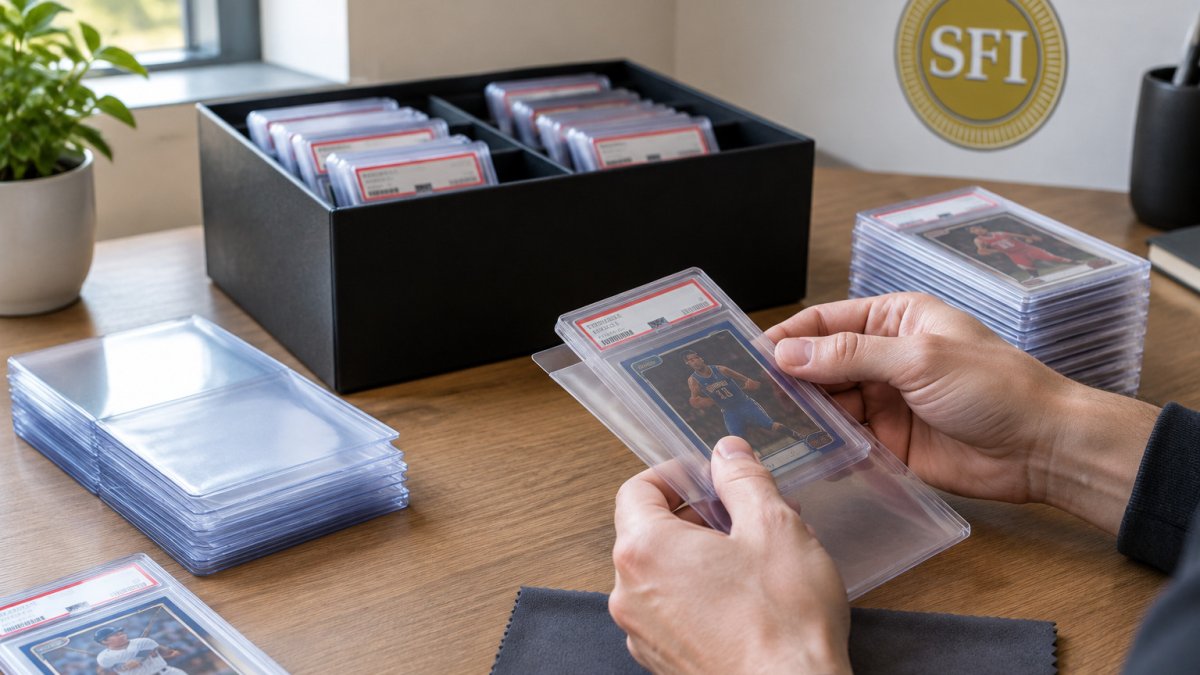
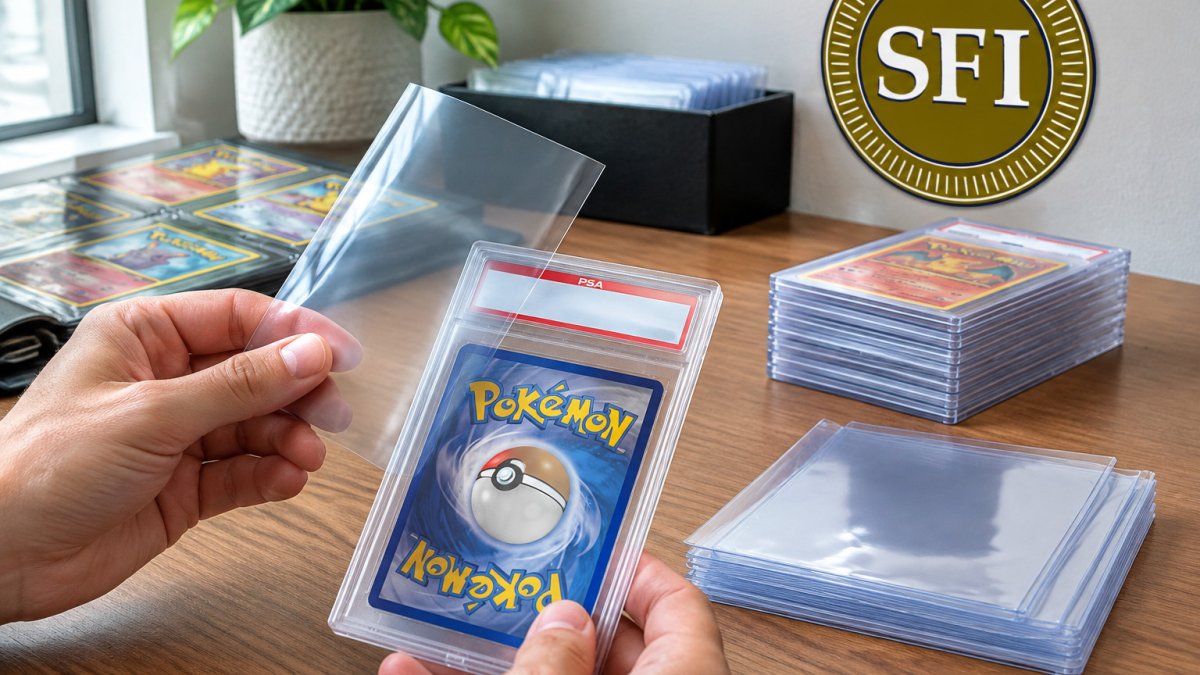
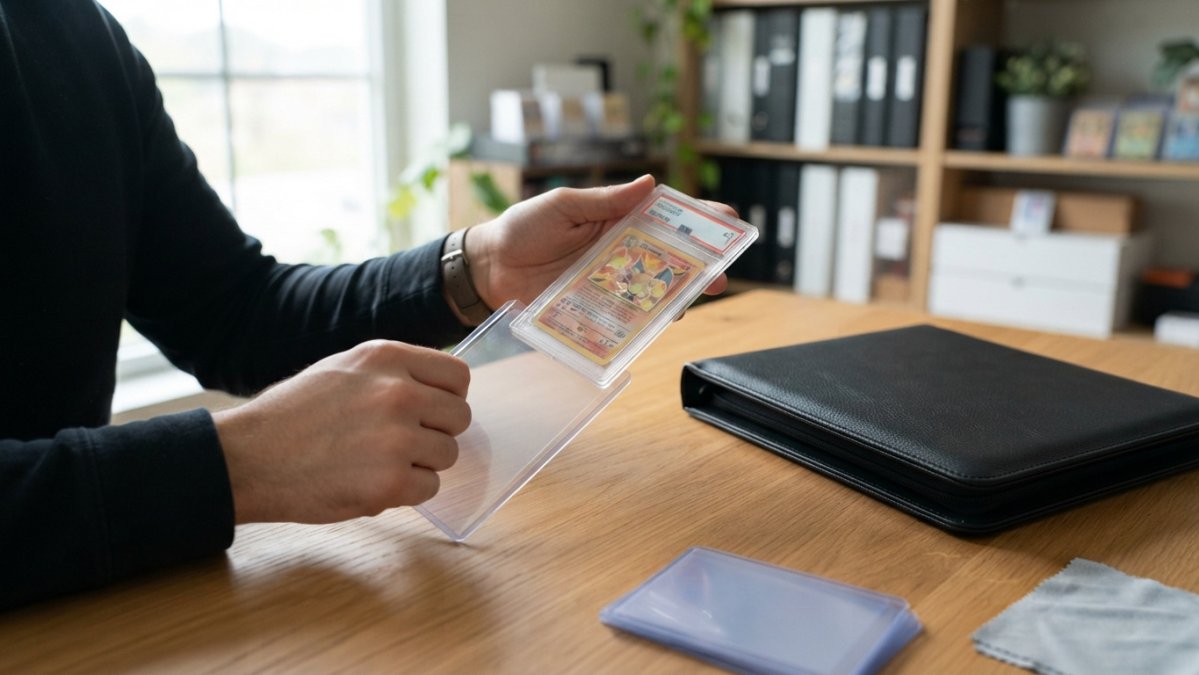
!A collector's hands placing a graded Pokémon card slab into a clear protective sleeve on a clean wooden desk beside a card binder
Choosing Your Next Protector for Your Graded Pokémon Slabs
Start by identifying your slab's grading company, size and thickness, then pick a sleeve sized for that holder.
If your slabs are a standard size, a Snap Slab protector for regular cards is a practical choice for everyday storage. Check the listed dimensions against your holder before ordering.
Superior Fit Sleeves offers sleeves for graded card slabs, top-loaders and magnetic cases. For slabs in graded comic book and magazine holders, Graded Comic Book & Magazine Slab Sleeves follow the same fit-first approach.
Frequently Asked Questions
Will one slab sleeve fit PSA, BGS, SGC, and CGC cases?
Slab dimensions vary slightly between grading companies, so a single sleeve will not always fit every case with the same snugness. Before buying in bulk, measure a sample slab from each company you collect and compare it against the sleeve's listed interior dimensions. A sleeve that is a few millimeters too loose can allow the slab to shift, while one that is too tight can make insertion awkward. Checking your actual slabs before ordering is the most reliable way to confirm fit.
Do graded Pokémon cards need an extra sleeve inside the slab?
A graded slab is already a sealed holder, so it does not usually need an inner sleeve. The outer protector's job is to guard the slab's surface and edges from scuffs, dust, and handling during storage, display, or transport. Adding a clear sleeve over a slab is a common practice for collectors who want an extra layer against surface wear, particularly for high-value cards that will be handled or shipped often.
Can clear slab sleeves prevent scratches?
Clear sleeves reduce the risk of scratches by creating a barrier between the slab and surfaces it might rub against, such as other slabs in a box or the inside of a case. They do not make a slab immune to damage from sharp impacts or heavy pressure. Storing slabs upright, avoiding stacking them without protection, and keeping them in a stable environment all work alongside a sleeve to reduce wear over time.
How should you clean a graded Pokémon card slab?
Clean the outside of the slab gently with a soft, dry microfiber cloth to remove dust and fingerprints. Avoid liquids, solvents, or abrasive materials, which can damage the label, the holder, or the sleeve. If a protector has become cloudy or scuffed, replacing it is usually safer than attempting to clean it. Handling slabs by their edges reduces the oils and smudges that accumulate on the holder.