 blog
How to Choose the Top 10 Essential Tools for Card Collectors
Last Updated: November 2, 2026
Quick Summary
The essential tools for card collectors are penny sleeves, toploaders and team bags, storage boxes and binders, a centering tool, shipping supplies, and an inventory record. Match each tool to a specific job: protecting, storing, assessing, shipping, or tracking your cards. Start with sleeves for every card and add the rest as your collection grows.
- Penny sleeves go on every card first, then toploaders for valuable pieces.
- Toploader thickness should match the card: 35-point for standard, 55-point for thick, 75-point for memorabilia.
- Seal toploaders with a painter's tape tab, not packing tape, so the card is never touched.
- Store toploaders flat or divided so their edges never rub against card faces.
- Record set, number, condition, purchase price, value and physical location for every card in an inventory.
Table of Contents
- Why the Right Tools Matter for Card Collectors
- Card Sleeves and Penny Sleeves for Everyday Protection
- Toploaders, Team Bags and Rigid Holders
- Trading Card Storage Boxes and Binders for Organized Storage
- Card Centering Tool and Condition Assessment Gear
- Trading Card Supplies for Shipping and Mailing
- Card Collection Organization with Inventory Tools
- Building Your Starter Kit Around Your Next Collecting Step
- Frequently Asked Questions
Why the Right Tools Matter for Card Collectors
Serious collectors know that a card's value depends on how well it is kept, and choosing the right essential tools is the first step toward protecting it. Scuffs, bent corners, and surface wear can cut a card's worth quickly, and the right gear is the simplest defense. Superior Fit Sleeves builds protective products for trading card collectors, and this guide walks through the essential tools that help you protect, organize, and display a collection with confidence.
The most useful tools are the ones matched to a specific task. Protecting a card, storing it, grading it, and shipping it each call for different supplies. Buying one item for everything rarely works well, so it helps to think in terms of the job each tool does. The list below covers ten categories, from everyday sleeves to shipping materials and inventory tracking.
Card Sleeves and Penny Sleeves for Everyday Protection
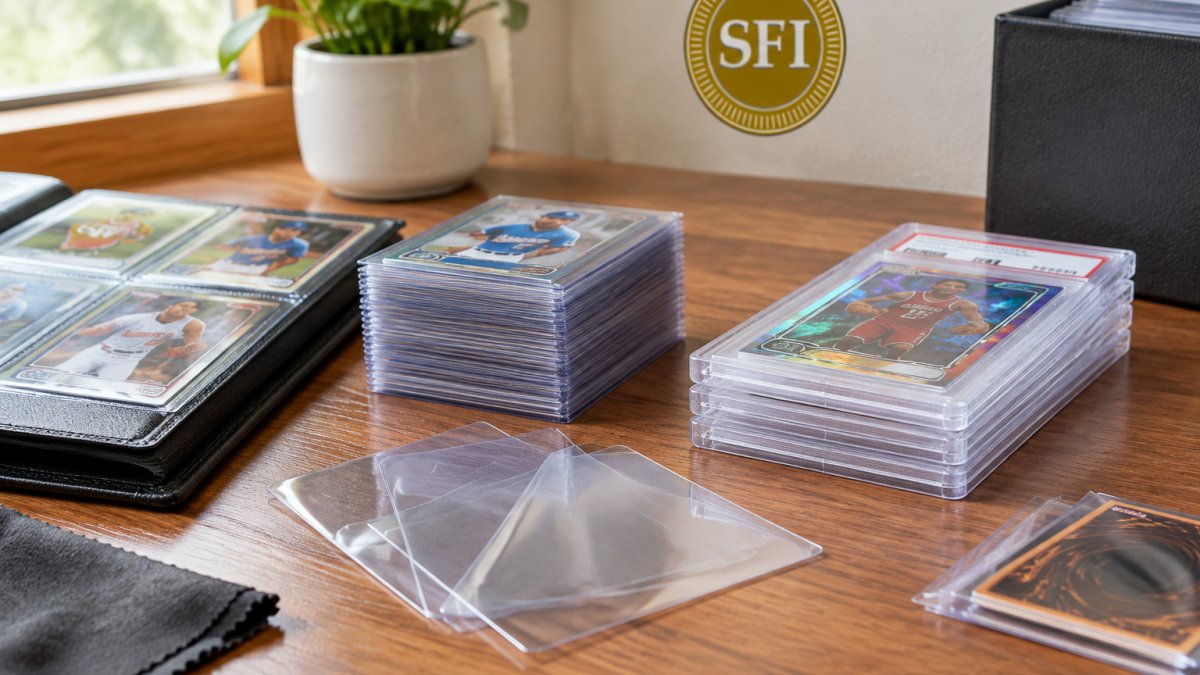
Penny sleeves are the first layer of protection for most collectors. They are thin, inexpensive, and fit most standard cards snugly, which keeps fingerprints and surface dust off the card face. Use them for every card you handle, even if the card will later go into a rigid holder.
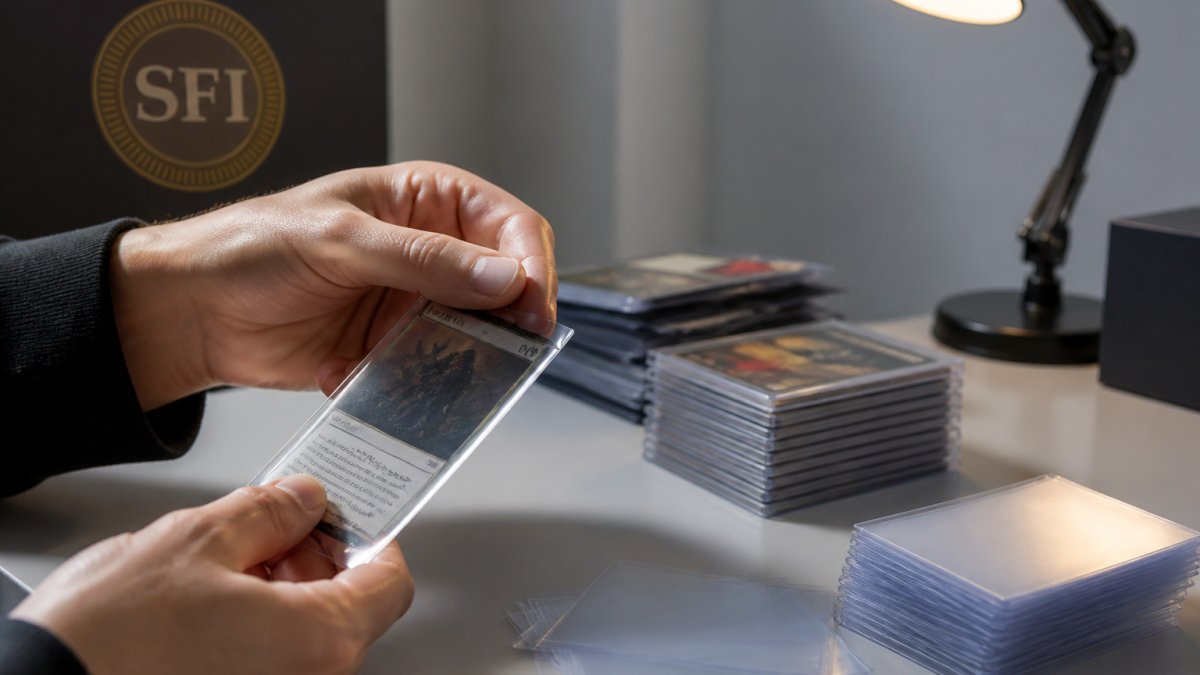
Our Graded Card Slab Sleeves are designed to fit graded slabs cleanly, without excess bulk. When choosing sleeves, check the fit against the card or slab size, and confirm the material is clear and acid-free so it will not discolor the card over time.
Toploaders, Team Bags and Rigid Holders
Rigid holders are the second layer of protection, and the category is broader than most beginners expect. Each format solves a different problem, so matching the holder to the card and to how often you handle it matters more than buying one type in bulk.
Toploaders. A standard toploader is a rigid PVC or PETG sleeve open at the top, typically sized for a 2.5-by-3.5-inch card. The common thicknesses are 35-point for standard cards and thinner stock, 55-point for thicker cards and patch cards, and 75-point and up for memorabilia and relic cards. A card that is too thick for its toploader will bow, and a card that is too thin will rattle and slide, so check the card's stated thickness before ordering.
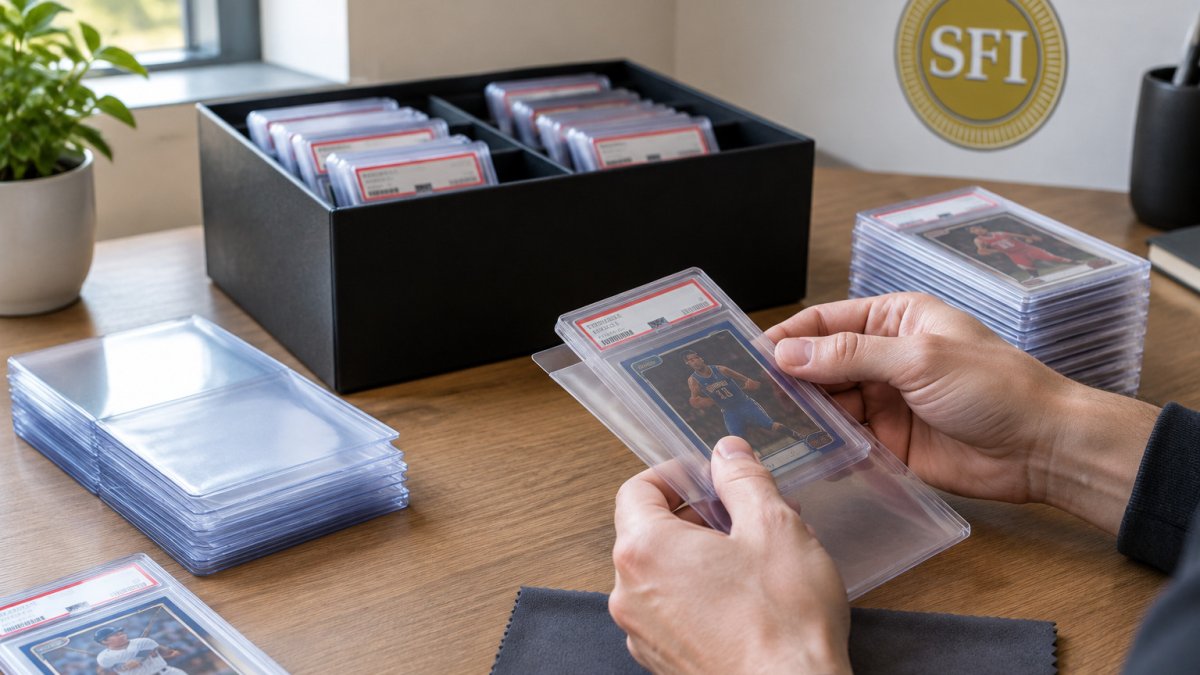
The standard workflow is penny sleeve first, then toploader. The sleeve prevents the card from scuffing against the rigid plastic, and the toploader prevents bending. Seal the open end with a piece of painter's tape folded into a tab rather than packing tape, so the tape never touches the card and the holder can be reopened without residue.
Team bags. A team bag is a resealable, slightly larger clear bag that holds a stack of toploaders or a group of raw cards together. They are the standard way to keep a set, a team lot, or a shipment grouped without rubber bands, which can dent edges. Team bags are also the usual outer layer when mailing toploaders, because they keep dust and moisture off the holder seams.
Rigid holders beyond toploaders. For cards you intend to keep untouched, consider a one-touch magnetic holder, which snaps closed around the card and holds it flat without pressure on the surface, or a screw-down holder for thicker cards. Both are heavier and more expensive than toploaders, so most collectors reserve them for display pieces and high-value singles rather than bulk storage.
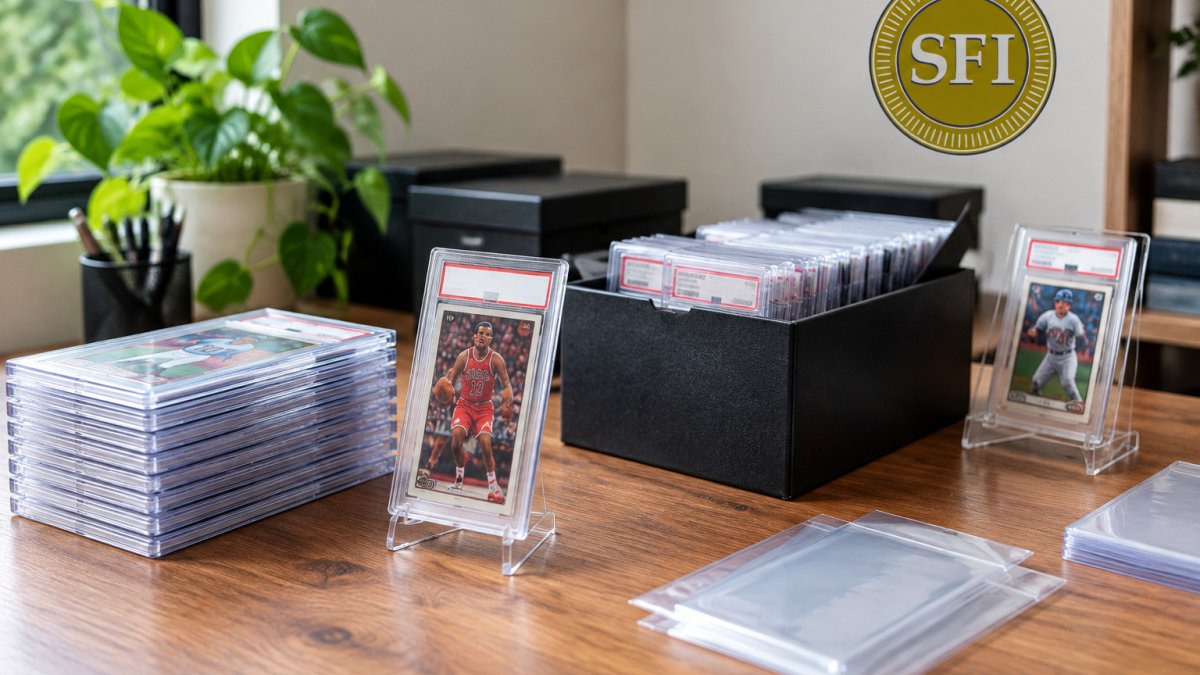
Sleeves for graded slabs. Once a card is encapsulated, the slab itself becomes the thing that gets scratched. A snug outer sleeve sized to the slab keeps the case clear and protects the label. Our Top-Loader Sleeves and Graded Card Slab Sleeves are built for exactly this job, fitting graded slabs cleanly with no excess bulk and no flap hanging off the edge.
Watch out: storing toploaders upright in a box with nothing between them lets the plastic edges rub against card faces over time. Store them flat, or use dividers, and never stack heavy boxes directly on top of a row of toploaders.
The table below summarises the rigid holder formats covered in this section, so you can match each one to the card and how often you handle it.
| Format | Best for | Key detail |
|---|---|---|
| Toploader (35-point) | Standard cards and thinner stock | Fits typical 2.5-by-3.5-inch cards |
| Toploader (55-point) | Thicker cards and patch cards | Prevents bowing on heavier cards |
| Toploader (75-point and up) | Memorabilia and relic cards | Heavier protection for thick items |
| Team bag | Grouping toploaders or raw cards | Resealable; keeps dust and moisture off seams |
| One-touch magnetic holder | Display pieces and high-value singles | Holds card flat with no surface pressure |
| Screw-down holder | Thicker cards | Secure closure for thicker items |
| Graded slab sleeve | Protecting encapsulated slabs | Snug outer fit that protects the label |
Trading Card Storage Boxes and Binders for Organized Storage
Storage boxes keep large collections sorted and upright, which reduces the chance of edge damage. For a dedicated guide to boxes for Pokemon cards and their protection, see boxes for Pokemon cards. Look for boxes sized to your card format and sturdy enough to stack. Binders suit collectors who want to browse their cards, but binder pages should be sleeved, and the pages should be acid-free.
A simple system helps: sort by set, then by number, and label each box clearly. If you are planning long-term storage, read about solutions that actually protect value over time. This makes finding a specific card faster and reduces handling, which is one of the main causes of wear.
Card Centering Tool and Condition Assessment Gear
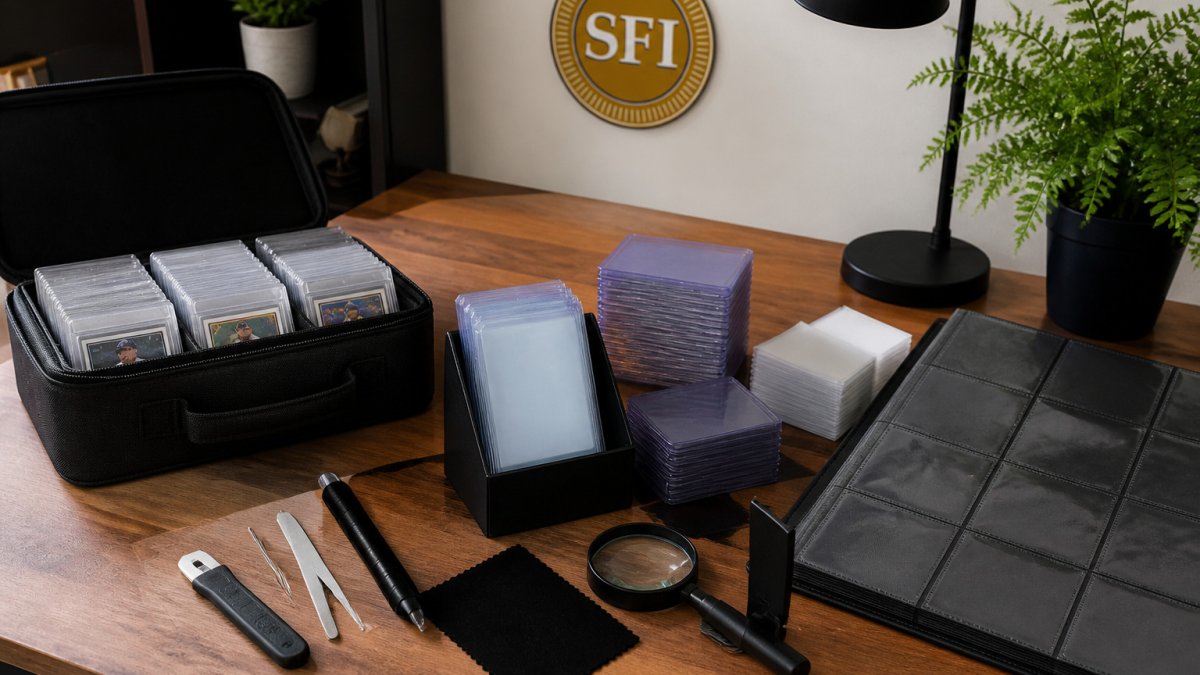
Centering, the balance of the border around a card's image, is one of the key factors in how a card is graded. A centering tool or a clear measuring guide lets you check each side against the others. Pair it with a magnifying glass or loupe to inspect corners, edges, and surface for small flaws that are easy to miss by eye.
Condition assessment works best when you check every card in the same lighting. A consistent method makes your notes comparable from one card to the next.
Trading Card Supplies for Shipping and Mailing
Cards that are sold or traded need to arrive undamaged. Use a rigid mailer or a cardboard support, wrap the card in a sleeve, and secure it so it cannot shift inside the package. Bubble mailers suit lower-value cards, while higher-value cards call for more rigid packaging and tracked shipping.
Keep a small shipping station stocked with painter's tape, labels, and a shipping scale. Weighing the package before you ship helps you choose the right postage and avoid surprise charges.
Card Collection Organization with Inventory Tools
Most supply guides stop at boxes and binders, but the tool that saves the most money over a collecting lifetime is a record of what you own. A digital inventory turns a pile of cards into a searchable collection, and it is the difference between knowing your holdings and guessing at them.
What to record for every card. At minimum, log the set name, card number, player or character, variation or parallel, condition or grade, purchase date, purchase price, current estimated value, and physical location. The location field is the one collectors skip and later regret: "Box 3, row 2" tells you where the card actually is, which cuts down on handling and the wear that comes with it.
Spreadsheet versus dedicated app. A spreadsheet gives you full control, unlimited rows, and no subscription, and it works well for collections in the hundreds of cards. For collections in the thousands, the time saved on data entry usually justifies an app. Many collectors run both: an app for scanning and valuation, and a spreadsheet export as a backup they own outright.
Valuation and portfolio tracking. Record what you paid and what the card is worth now, and update the value field on a schedule rather than daily. A quarterly update is enough for most collectors and keeps the record useful for insurance, estate planning, and deciding what to sell. If you insure a collection, your inventory is the document an insurer will ask for, so keep photos of high-value cards alongside the entries.
Duplicate and want-list management. A good inventory makes duplicates visible, which matters when you are building sets or trading. Tag each card as a keeper, a duplicate, or a want, and you can generate a trade list in minutes instead of digging through boxes. Set builders can track completion percentage per set, which is far easier than counting gaps in a binder by hand.
Backups and portability. Export your inventory to a common file format on a regular schedule and store a copy somewhere other than the device you enter data on. A collection record that lives on one phone is one lost phone away from gone.
Watch out: entering condition and grade inconsistently, such as "mint" on one card and "M" on the next, makes the whole inventory unreliable for valuation. Pick one condition scale and use it for every entry.
Building Your Starter Kit Around Your Next Collecting Step
You do not need all ten tools at once. Start with sleeves for every card, add toploaders for your most valuable pieces, and then build storage and shipping supplies as your collection grows. A starter kit should match what you actually collect, whether that is sports cards, trading card games, or graded slabs.
Our Magnetic Card Case Sleeves are a practical next step if you already use magnetic cases and need a snug, protective fit. Choose the supplies that solve your current storage or handling problem first, then expand from there.
Frequently Asked Questions
What supplies do you need to start collecting trading cards?
Start with penny sleeves for every card, toploaders or team bags for cards worth protecting more, and a binder or storage box for sorting. A card centering tool or magnifying glass helps you judge condition before buying or grading. Add a shipping setup only when you begin selling. Buy the protection first, since scratches and bends are the most common losses for new collectors. Expand the kit as the collection grows and its value rises.
How should you store valuable trading cards?
Keep valuable cards in individual rigid holders or graded slab sleeves, then place them upright in a storage box with dividers. Store the box somewhere cool, dry and away from direct sunlight, since heat and humidity can damage cards and sleeves over time. Handle cards by the edges with clean, dry hands and avoid stacking heavy items on top of the box.
How can you keep track of a trading card collection?
Record each card with its set, number, condition and purchase price in a spreadsheet or a dedicated collection-tracking app. Assign each card a storage location, such as box and slot number, so you can find it quickly. Update the record when you move, sell or regrade a card. Consistent records make insurance claims and selling far easier.