 ultimate-guide
Graded Card Protectors: The Complete 2026 Guide
Table of Contents
- What Graded Card Protectors Actually Do (And Why It Matters)
- Material Quality, Durability, and Archival Safety
- PSA Slab Sleeves: Fit, Clearance, and Compatibility
- Preventing Scratches on Card Slabs: Surface Protection Explained
- UV Protection, Impact Resistance, and Drop Protection
- How to Store Graded Trading Cards the Right Way
- Choosing the Right Graded Card Protectors for Your Collection
- Conclusion
Last Updated: August 25, 2026
What Graded Card Protectors Actually Do (And Why It Matters)
Graded card protectors are specialized sleeves, cases, and enclosures designed to shield certified slab cases from surface scratches, UV degradation, impact damage, and environmental contamination. They defend the slab itself, not just the card inside. A scratched slab loses visual appeal and resale value; a fogged sleeve obscures the grade label.
The core job comes down to four functions: preventing surface scratches during handling and storage, absorbing minor impacts before they reach the slab, blocking UV radiation that degrades both sleeve and card, and maintaining archival integrity so materials don't off-gas chemicals onto the slab surface. Graded card protectors are the last line of defense between that slab and irreversible condition problems.
Material Quality, Durability, and Archival Safety
The material a protector is made from determines everything downstream: clarity, chemical stability, impact resistance, and optical longevity. This is where cheap options consistently fail.
Polycarbonate vs. Acrylic vs. Archival-Grade Sleeves
Polycarbonate is the material of choice for impact-resistant rigid cases. It absorbs shock well, resists cracking, and maintains dimensional stability across temperature changes. Grading companies like PSA and BGS use polycarbonate for their slab shells for these reasons.
Acrylic offers superior optical clarity but is more brittle under impact and scratches more easily than polycarbonate. It can craze when exposed to certain cleaning solvents.
Archival-grade sleeves are typically made from polyethylene terephthalate (PET) or similar inert polymers. The critical requirement is chemical inertness: no plasticizers, no chlorine compounds, and no acids that could migrate onto the slab surface. According to the Library of Congress guidance on archival materials, acid-free, chemically stable enclosures are the foundation of long-term preservation for any collectible item.
Long-Term Chemical Stability and Acid-Free Standards
A sleeve that looks clear on day one can yellow, fog, or become brittle within five years if it contains unstable additives. PVC-based sleeves are the most common offender: PVC off-gasses hydrochloric acid as it degrades, damaging both the slab surface and the card label inside.
Archival-quality graded card protectors should meet these standards:
- Acid-free composition (pH neutral or alkaline buffer)
- No PVC or chlorinated polymers
- Passed PAT (Photographic Activity Test) or equivalent chemical stability testing
- No plasticizer migration under standard storage temperatures
The Image Permanence Institute resources on material stability provides detailed guidance on chemical stability testing. If a sleeve manufacturer can't tell you whether their product is acid-free, that's your answer.
PSA Slab Sleeves: Fit, Clearance, and Compatibility
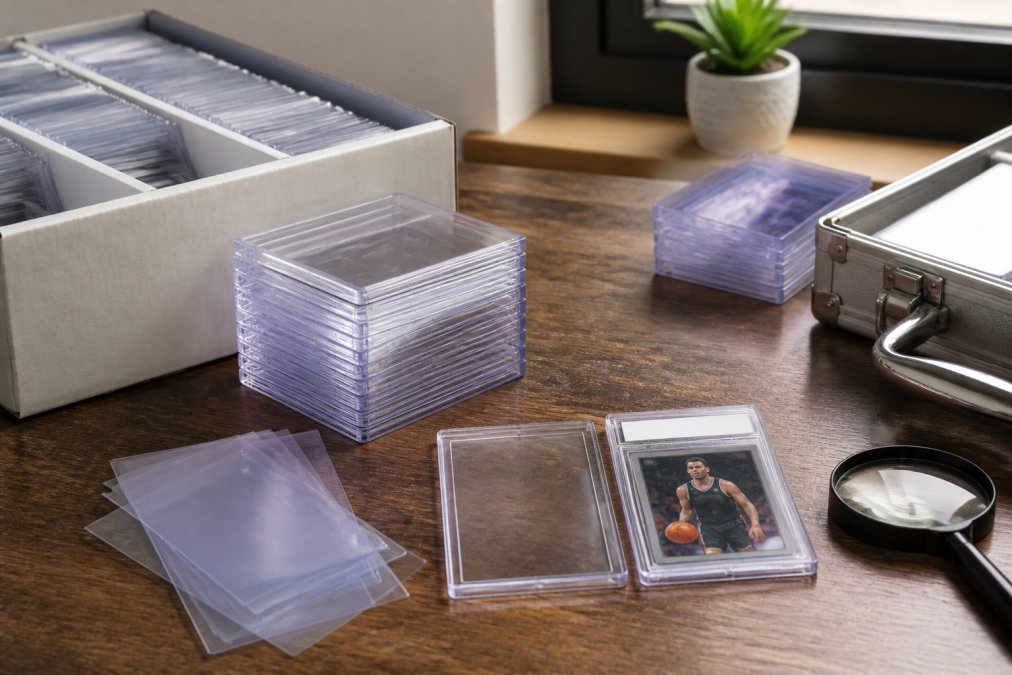
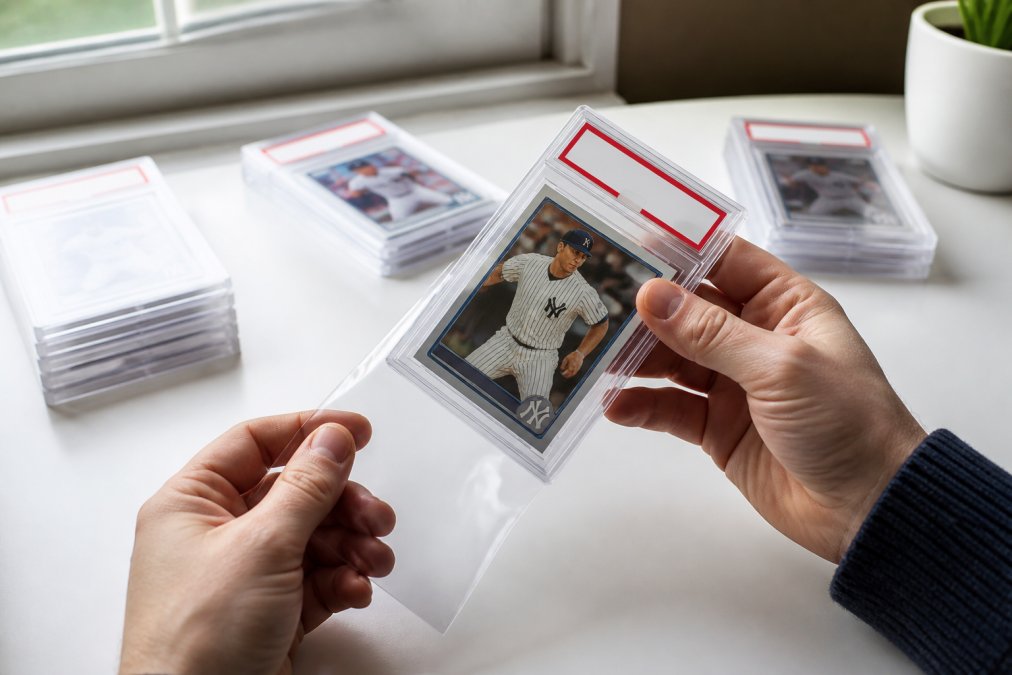
PSA slab sleeves represent the largest segment of the graded card protector market. A well-fitted PSA slab sleeve sits snugly against the slab's edges without forcing or bowing the sleeve material, and it leaves enough clearance at the opening to allow clean removal without scratching.
Slab Dimensions and Why Fitment Precision Matters
PSA standard slab dimensions run approximately 63mm wide by 88mm tall by 10mm deep. A sleeve cut to these dimensions with a tapered design, slightly narrower at the base than the opening, allows the slab to slide in cleanly while creating a secure fit that doesn't shift during handling.
Loose fitment allows the slab to move inside the protector, causing micro-scratches over time. Tight fitment stresses the sleeve material and can leave pressure marks on the slab's edges. The precision-cut, tapered sleeve design addresses this directly, guiding the slab in smoothly without pressure points.
Compatibility Across BGS, CGC, CBCS, and SGC Slabs
Different grading companies use different slab dimensions. BGS slabs are wider and thicker than PSA slabs. CGC and CBCS slabs for comics are significantly larger than trading card slabs. SGC uses a slimmer profile than PSA.
| Grading Company | Slab Type | Key Dimension Difference |
|---|---|---|
| PSA | Standard trading card | Baseline reference size |
| BGS | Trading card | Wider and thicker than PSA |
| SGC | Trading card | Slimmer profile than PSA |
| CGC | Comic book slab | Significantly larger format |
| CBCS | Comic book slab | Similar to CGC, minor variation |
A single sleeve size will not fit all five. Collectors with mixed collections need brand-specific sleeves for each slab type. Always verify sleeve specifications against the slab dimensions for your specific grading company before purchasing.
Preventing Scratches on Card Slabs: Surface Protection Explained
Slab surfaces scratch from direct contact with hard surfaces during handling and friction from adjacent slabs during storage. The sleeve material's surface hardness and coefficient of friction both matter. A sleeve made from soft, low-friction PET creates a buffer between the slab surface and anything it contacts, absorbing the scratch instead of the slab.
This only works if the sleeve fits correctly; a loose sleeve that shifts around transfers friction directly to the slab surface rather than absorbing it. Even with sleeves, avoid storing slabs directly against each other face-to-face under weight. Store slabs upright with a small gap between each one.
UV Protection, Impact Resistance, and Drop Protection
UV protection is the most underappreciated feature in graded card protectors. Ultraviolet radiation degrades both the sleeve material and the card inside the slab over time. Card surfaces yellow, ink fades, and labels become harder to read. A UV-blocking sleeve adds meaningful protection that standard clear sleeves do not provide.
Not all "UV-resistant" claims are equal. Look for sleeves that specify UV-filtering properties in their material composition, not just UV stability for the sleeve itself.
Impact resistance matters most during transit and at shows where slabs are handled repeatedly. A rigid outer case made from impact-resistant polycarbonate absorbs drop energy before it reaches the slab. Soft sleeves alone provide minimal drop protection. For high-value slabs that travel frequently, combine a fitted soft sleeve inside a rigid outer case.
As the American Institute for Conservation guidelines on handling collectibles notes, the majority of damage to collectible items occurs during handling and transit rather than in static storage.
How to Store Graded Trading Cards the Right Way
Storing graded trading cards correctly means controlling four variables: temperature, humidity, light exposure, and physical pressure. Cool, dry, and dark storage keeps well-protected slabs in pristine condition for decades. Significant temperature swings cause materials to expand and contract, stressing both the slab and sleeve. High humidity promotes mold and can cause card stock inside the slab to absorb moisture.
Weight, Bulk, and Slab Storage at Scale
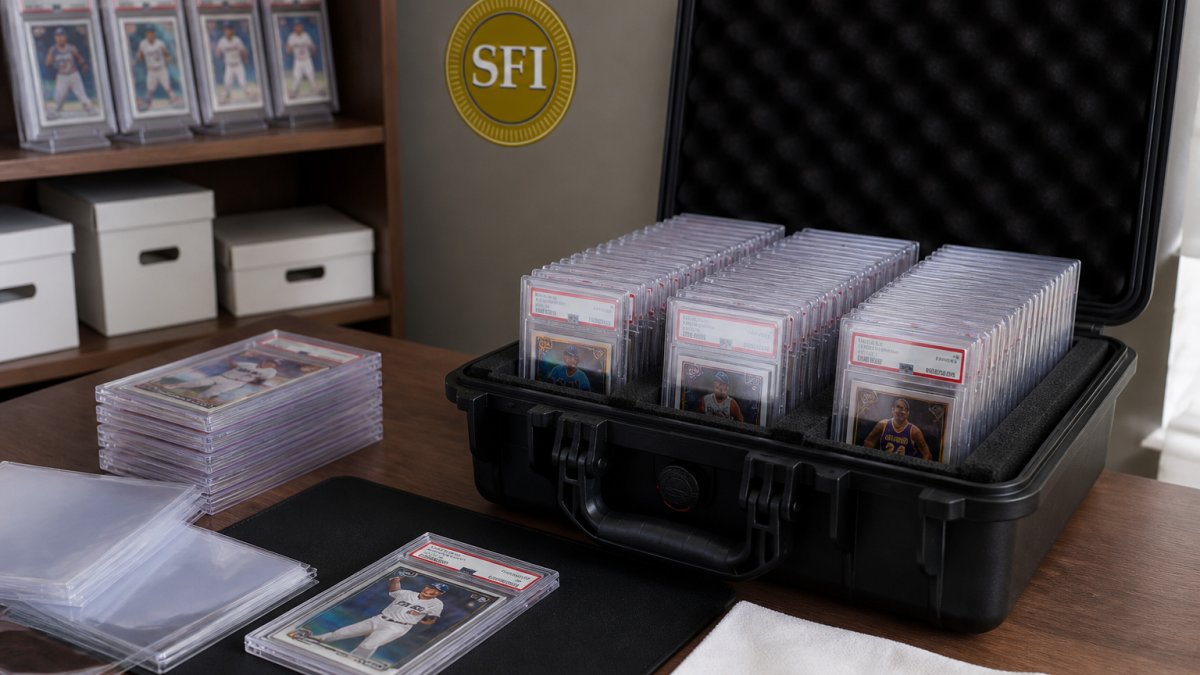
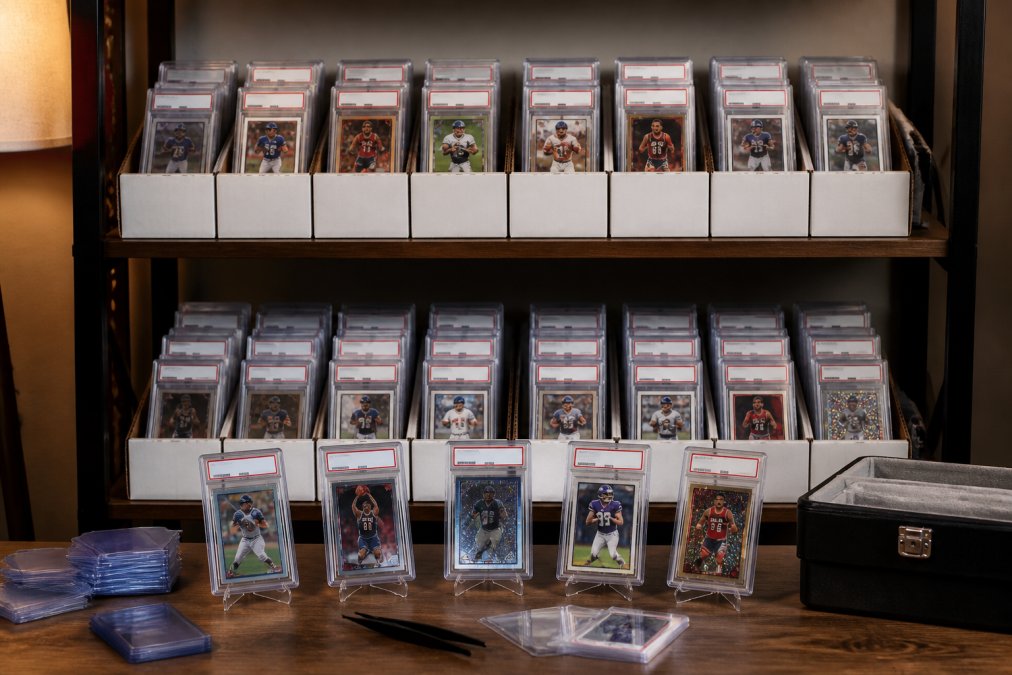
A standard PSA slab weighs roughly 50 grams. A collection of 500 slabs approaches 25 kilograms before accounting for storage boxes and shelving. Shelving must be rated for this load, and storage boxes must be structurally sound enough to support stacked weight without compressing slabs at the bottom. Thin-profile sleeves minimize bulk without sacrificing surface protection.
Display Stands, Slab Storage Boxes, and Organization
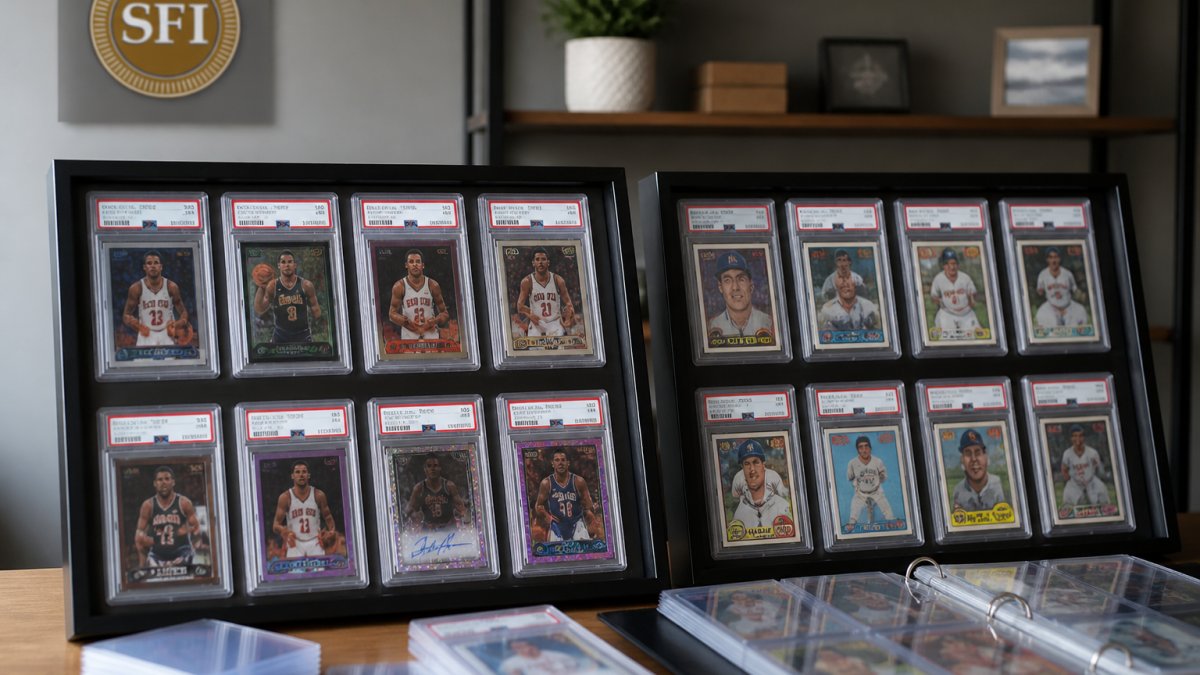
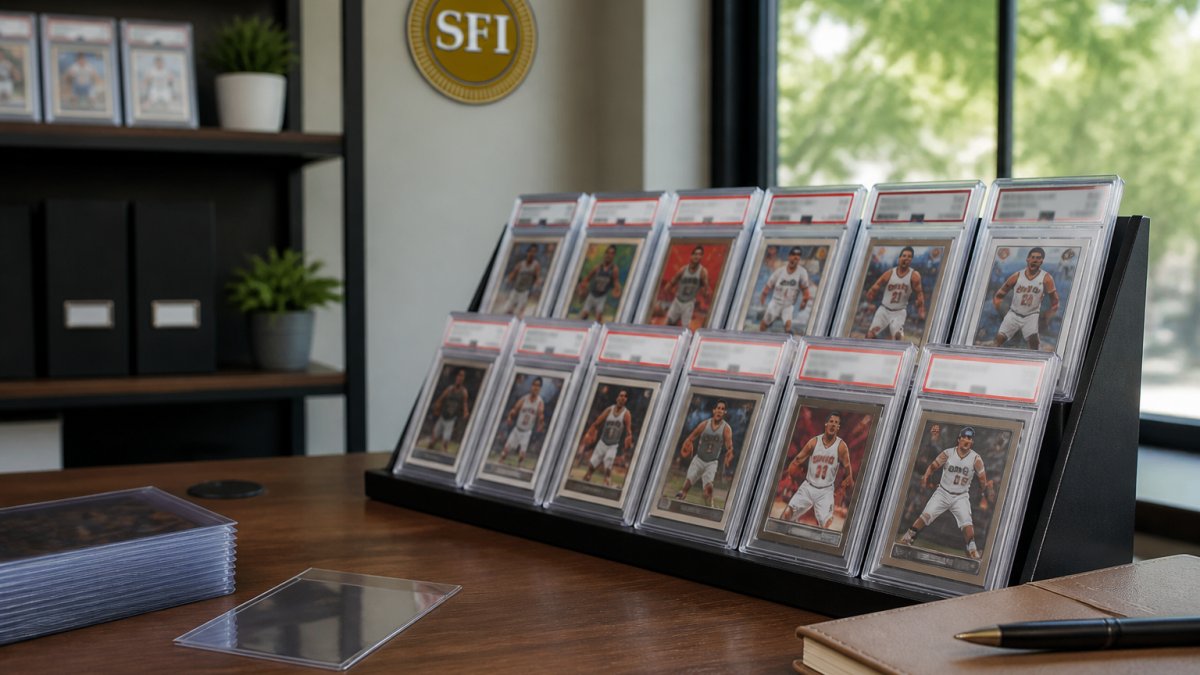
Display stands hold featured slabs upright for viewing on a shelf or desk. Slab storage boxes hold larger quantities in a protected, organized format. For display, the sleeve should be optically clear with no distortion across the label area. For storage, the priority shifts to durability and fitment consistency. Sleeves that maintain their shape over years of storage make retrieval and reorganization significantly easier.
According to the Professional Sports Authenticator's collector resource guidelines, proper storage and handling practices are among the most important factors in maintaining a graded card's long-term condition and value.
Choosing the Right Graded Card Protectors for Your Collection
The right graded card protectors depend on which grading companies are in your collection, how you use it (primarily stored vs. frequently handled or displayed), and what level of archival quality you need. For collectors with PSA, BGS, CGC, CBCS, and SGC slabs, brand-specific sleeves for each slab type are essential. Universal sleeves that claim to fit everything typically fit nothing well.
| Use Case | Protection Priority | Recommended Approach |
|---|---|---|
| Long-term static storage | Archival stability, acid-free | Fitted PET sleeve in storage box |
| Active display | Optical clarity, UV protection | Ultra-clear UV-filtering sleeve + stand |
| Frequent handling/shows | Impact resistance, surface protection | Soft sleeve + rigid outer case |
| Mixed collection (PSA + CGC) | Fitment precision | Brand-specific sleeves per slab type |
| High-value investment slabs | All of the above | Layered protection system |
For collectors with smaller collections, premium graded card protectors are worth it. The cost difference between archival-grade and generic sleeves is minimal per sleeve. The cost of a damaged slab is not.
Cleaning and Maintaining Your Slab Sleeves
Dust accumulates on sleeve surfaces over time and, if not removed carefully, gets dragged across the slab surface during removal. A soft, lint-free microfiber cloth removes dust without scratching. Never use paper towels or standard household cloths. For sleeves with surface haze from handling oils, a small amount of distilled water on a microfiber cloth is sufficient. Avoid alcohol-based cleaners on soft sleeves; they can cloud PET material. Replace sleeves that have developed deep scratches, yellowing, or stiffness.
Protecting a graded card collection requires more than a sleeve pulled from a bulk pack. The right combination of archival-grade materials, precision fitment, UV protection, and impact-resistant casing makes a measurable difference in long-term slab condition and presentation quality. Superior Fit Sleeves offers precision-cut, acid-free, distortion-free sleeves engineered specifically for PSA, BGS, CGC, CBCS, and SGC slabs, built to the archival standards that serious collectors and investors require. Search the Superior Fit Sleeves catalog to find the exact sleeve for your slab type and start protecting your collection the right way.
Frequently Asked Questions
Which graded card protector is best for long-term storage?
For long-term storage, archival-grade sleeves made from acid-free, chemically stable materials are the top choice. Hard shell polycarbonate cases add impact resistance and drop protection, while clear sleeves designed specifically for graded slabs prevent surface scratches without adding unnecessary bulk. The best option combines UV protection, a snug fit for your specific slab brand, and materials that won't yellow or off-gas over time. Check the sleeve's archival rating before committing to long-term use.
What card protector works best for PSA slabs?
PSA slabs have specific dimensions that require precision-fit sleeves to avoid a loose, rattling fit or a sleeve that's too tight to remove cleanly. Purpose-made PSA slab sleeves with a tapered design seat flush against the casing, preventing dust ingress and surface scratches. Avoid generic one-size sleeves, the clearance gap they leave allows the slab to shift and contact the sleeve's interior, which can cause micro-abrasions on the polycarbonate surface over time.
Are graded card protectors worth it for high-value cards?
For any graded card with meaningful resale or sentimental value, a quality protector is worth the cost. Graded card protectors guard against the most common damage types: surface scratches from handling, UV fading during display, and impact damage during transport. A scratched or hazed slab casing can affect buyer perception at resale even when the card grade itself is unchanged. The cost of a premium sleeve is a fraction of the potential value loss from avoidable casing damage.
What is the difference between a graded card sleeve and a hard shell protector?
A graded card sleeve is a flexible, clear film that slides over the slab to protect its surface from scratches, dust, and minor abrasion during handling and storage. A hard shell protector is a rigid case, typically polycarbonate or acrylic, that adds structural impact resistance and drop protection. Many collectors use both: the sleeve protects the slab's surface finish, while a hard shell guards against physical impact. For display purposes, sleeves offer the clearest view with minimal added bulk.
This article was written using GrandRanker