 blog
9 Card Saver Facts Every Collector Should Know
Quick Summary
A card saver is a semi-rigid plastic holder that protects a single trading card from bends, scratches, and dust while keeping it visible. It offers more support than a penny sleeve but less bulk than a top loader, which is why many collectors pick it for cards they handle often.
- A card saver gives more support than a penny sleeve but less bulk than a rigid top loader.
- Top loaders offer more bend resistance, so they suit cards that will be shipped or stacked.
- Hold cards by the edges and check they sit flat, without edges caught under the lip.
- Store holders upright, not stacked flat, and out of direct light and humidity.
- Replace holders that show clouding, yellowing, cracks, or a loose fit.
Table of Contents
- What a Card Saver Is and What It Is Used For
- Card Saver vs. Top Loader: Which Protects Better?
- How to Put a Trading Card Into a Card Saver
- Choosing a Trading Card Semi-Rigid Holder for Your Collection
- How to Store Trading Cards Long Term Without Damage
- Common Card Saver Mistakes That Lead to Wear
- Choosing the Right Protection for Your Next Purchase
- Frequently Asked Questions
9 Card Saver Facts Every Collector Should Know
Last Updated: November 6, 2026
What a Card Saver Is and What It Is Used For
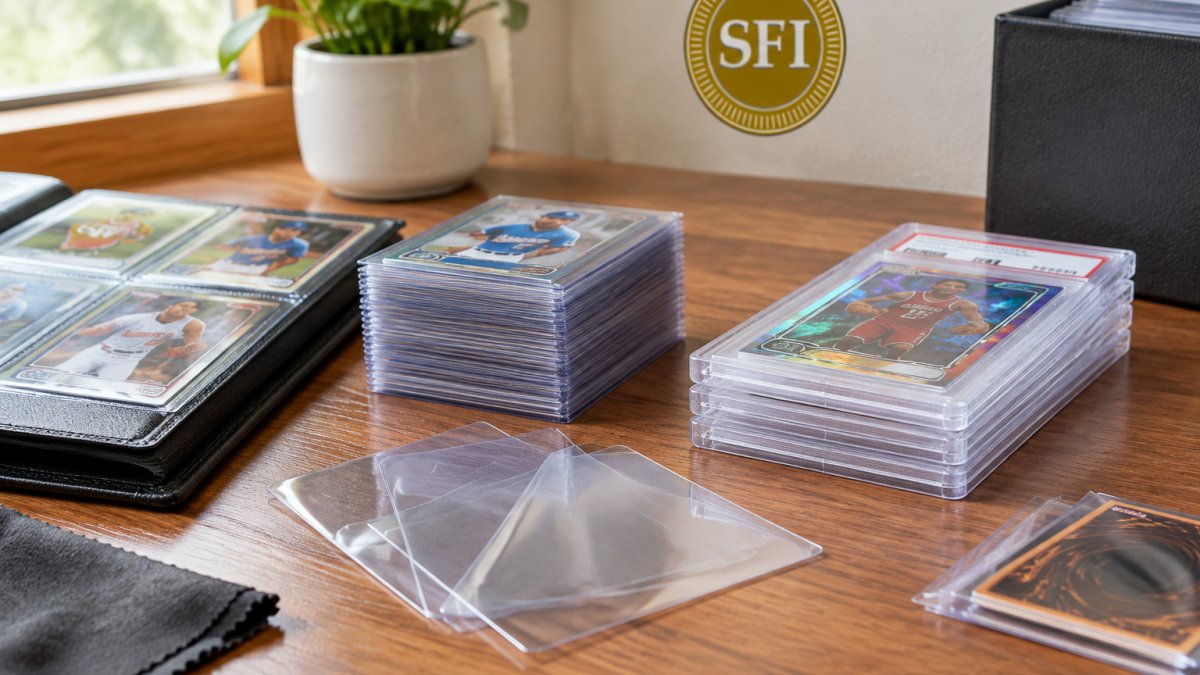
A card saver is a semi-rigid plastic holder designed to protect a single trading card from bends, scratches, and dust while keeping it visible. Most card savers have a clear front, a firm backing, and a flap or opening that lets you slide the card in and out.
Card savers sit between two common options. They offer more support than a plain penny sleeve but less bulk than a rigid top loader. That middle ground is why many collectors pick them for cards that will be looked at often.
At Superior Fit Sleeves, we make sleeves for Card Saver 1 holders in a precise fit, so the card sits snug without strain on the edges. Our Superior Fit Sleeves for Card Saver 1 Card Holders are built for collectors who already own these holders and want an added layer of protection.
Card Saver vs. Top Loader: Which Protects Better?
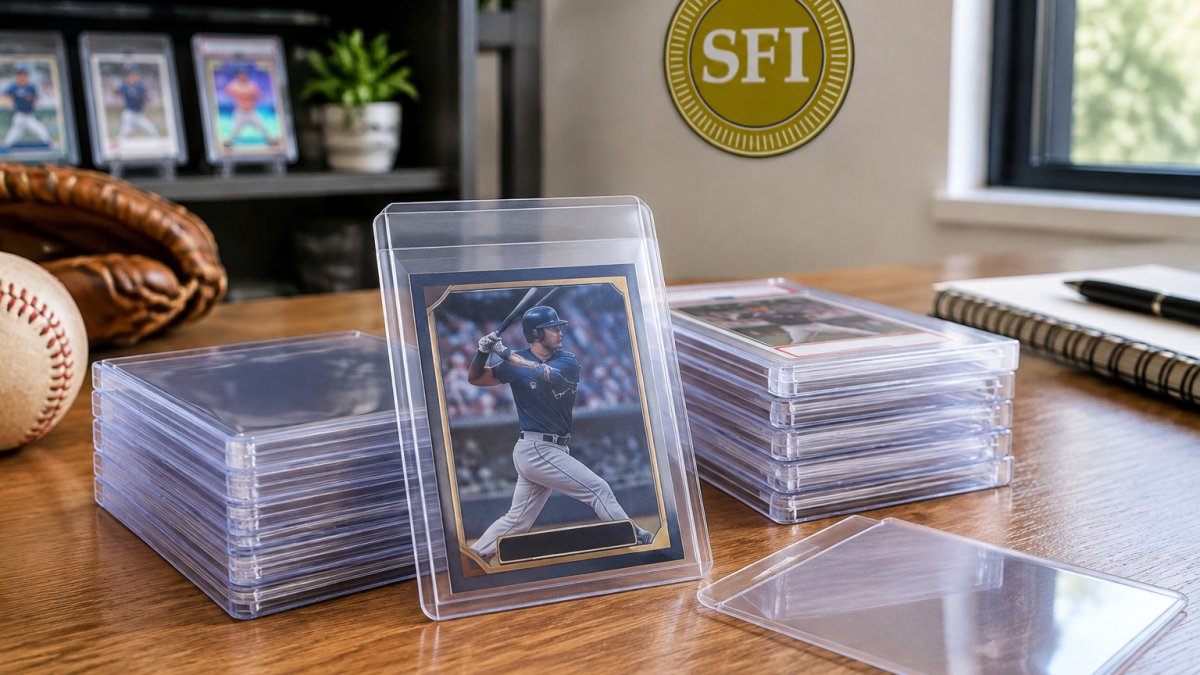
A card saver and a top loader both shield a card, but they do it differently. A top loader is rigid and offers more physical protection against bending. A card saver is semi-rigid and is easier to slide in and out, which many collectors prefer for frequent handling.
Neither option is universally better. The right choice depends on how the card will be stored, moved, and shown. We recommend thinking about handling habits before deciding.
Side-by-Side Comparison of Protection Features
| Feature | Card Saver | Top Loader |
|---|---|---|
| Rigidity | Semi-rigid | Fully rigid |
| Ease of insertion | Easier to slide in and out | More deliberate insertion |
| Bulk | Lower profile | Thicker, takes more storage space |
| Best for | Frequent handling and display | Maximum bend resistance and transport |
The table shows the trade-offs. A top loader gives more bend resistance, which matters when cards travel through the mail or sit in a box. A card saver is the more practical pick when you want to check a card often without fully removing it from its holder.
When a Top Loader Still Makes More Sense
Top loaders remain the better choice for high-value cards that will be shipped or stored in a stack where pressure is a concern. For cards that will not move much, the extra rigidity of a top loader provides protection a card saver cannot match. If you are protecting a valuable card for transit, our 75-120 PT top loader sleeves add a layer of protection inside a top loader.
How to Put a Trading Card Into a Card Saver
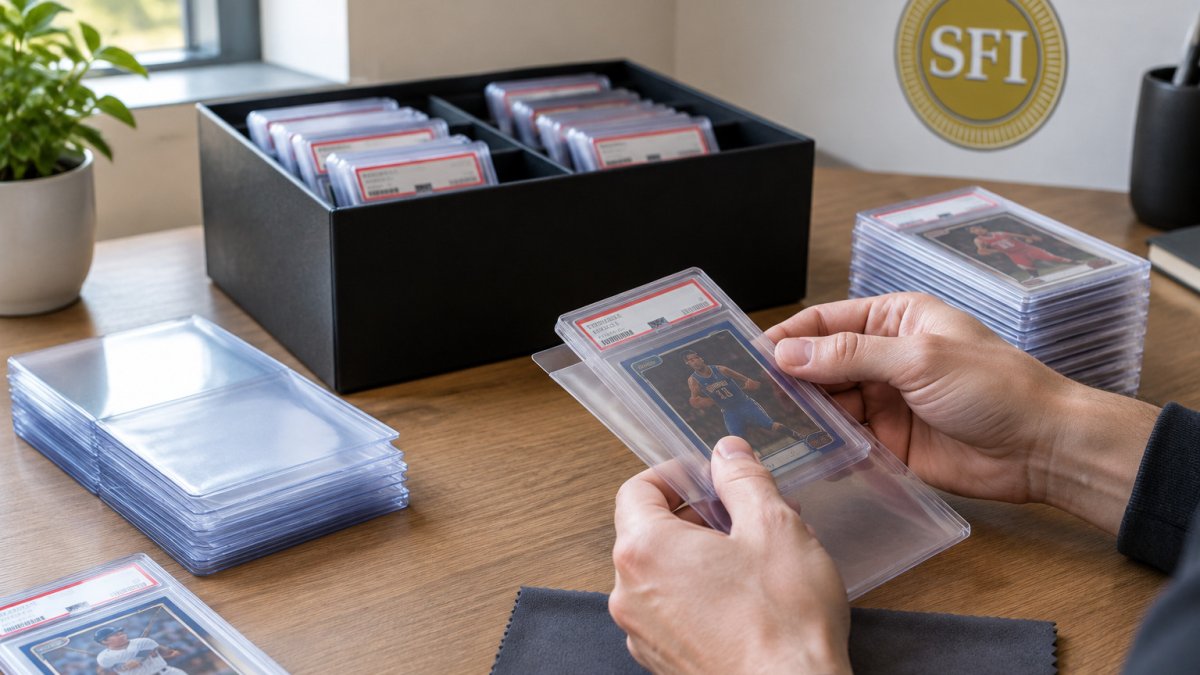
Start with clean hands and a dry work surface. Hold the card by its edges, angle it slightly, and slide it into the holder from the opening side. Avoid pressing on the front face, since that can leave fingerprints or create stress marks.
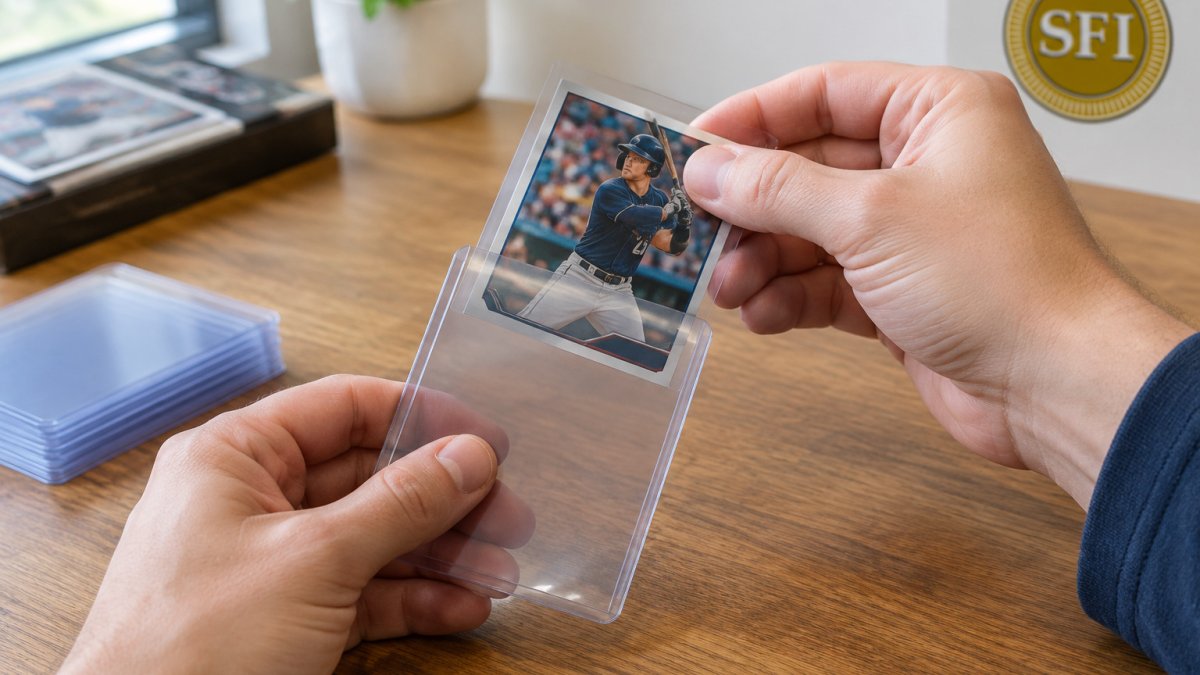
Once the card is seated, check that it sits flat and that the edges are not caught under the holder's lip. Gently close any flap or seal the holder has. A properly seated card should not shift when you tilt the holder.
Watch out: forcing a card into a holder that is too tight can bend the corners. If the card resists, stop and check the sizing.
Choosing a Trading Card Semi-Rigid Holder for Your Collection
A trading card semi-rigid holder is the general category that includes card savers. When choosing one, look at three things: fit, clarity, and how the holder opens. A snug fit prevents the card from sliding around, clear material lets you see the card without removing it, and an easy opening keeps handling simple.
If you already use Card Saver 4 holders, our Card Saver 4 sleeves are designed to match that format for a precise fit inside the holder.
How to Store Trading Cards Long Term Without Damage
Long-term storage is about controlling four variables: moisture, heat, light, and pressure. Most damage that shows up after years in a box traces back to one of those four, and each one has a practical countermeasure you can set up in an afternoon.
The Four Variables and How to Control Them
Moisture is the slowest and most destructive. Paper stock absorbs humidity, which softens corners and feeds mold. Avoid basements and garages, where humidity swings widely with the seasons.
Heat accelerates chemical breakdown in both the card stock and the plastic holder. Keep storage away from radiators, heating vents, attics, and the tops of appliances.
Light, especially ultraviolet, fades inks and clouds clear plastic. Store holders in a closed box or cabinet rather than on an open shelf near a window.
Pressure is the variable most collectors underestimate. Stacking holders flat under weight bows the holders and transfers stress to the card.
A Repeatable Long-Term Storage Setup
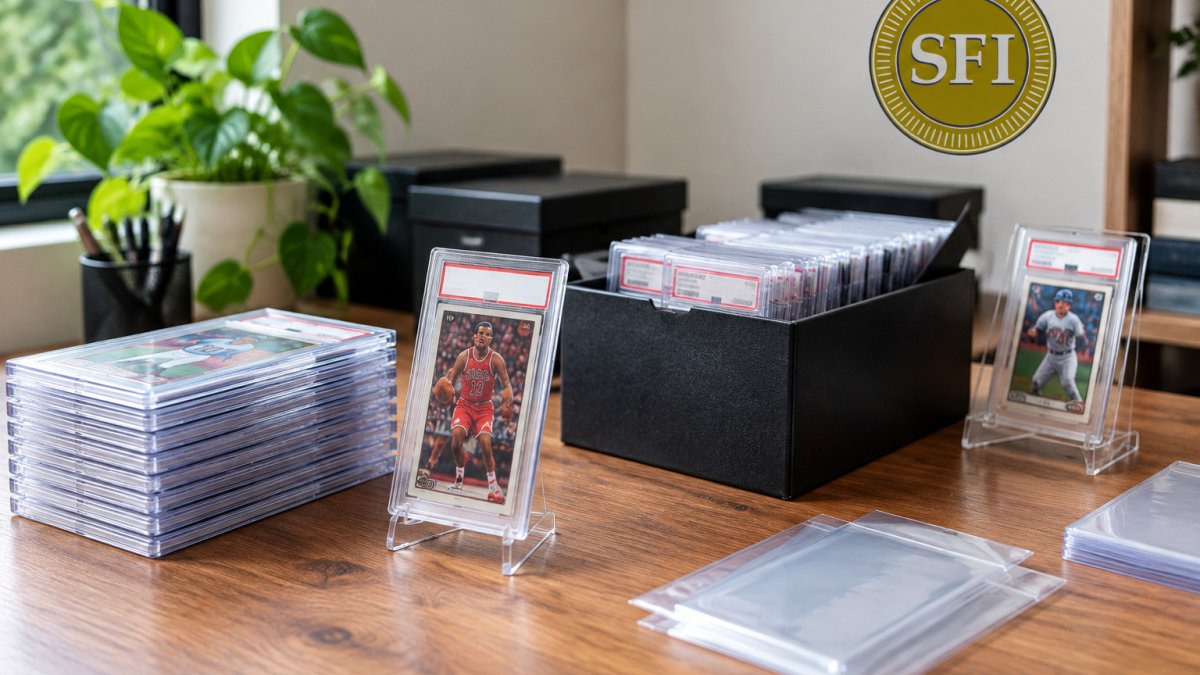
- Sort cards by holder type so each box holds one format and stacks evenly.
- Line the box with an acid-free inner or use an archival-grade card storage box.
- Stand holders upright with a slight backward lean, not flat.
- Add a desiccant pack to sealed bins and note the date you added it.
- Label the box with contents and the date it was packed.
- Store the box in an interior closet or cabinet away from exterior walls.
The Inspection Cadence
Check stored cards on a schedule rather than only when something looks wrong. A practical rhythm is a quick visual pass every six months and a full audit once a year. During the quick pass, look for clouding, yellowing, or condensation inside the holder. During the annual audit, pull a sample of holders, confirm the card still sits flat with no edge lift, and check that the desiccant is still active.
Watch out: a holder that has gone cloudy or yellow is usually a sign of humidity exposure, and the card inside may already have absorbed moisture, inspect the card itself before assuming the holder is the only problem.
When to Replace a Holder or Sleeve
Replace a holder when you see clouding, yellowing, a cracked corner, or a fit that has loosened enough for the card to shift. Replace an inner sleeve when it has creased, stretched, or picked up grit that could abrade the card surface. Replacing a low-cost holder is always cheaper than repairing a card.
Our long term storage guide covers storage setups in more detail.
Common Card Saver Mistakes That Lead to Wear
Most wear inside a card saver comes from a small set of repeatable errors. The fix is less about being careful in the moment and more about building a short review routine you run every time a card goes into storage. Below are the mistakes, why each one causes damage, and a checklist that catches them before the card is sealed away.
The Mistakes and the Mechanism Behind Each
Loose fit. A card that slides inside its holder rubs its edges against the plastic every time the holder moves.
Direct sunlight. UV light fades ink and clouds clear plastic.
Handling the face. Finger oils and grit transfer to the card surface and, once inside a holder, have nowhere to go.
Forcing a tight holder. Pushing a card past a lip that is too narrow bends corners and can crack the holder edge.
Reusing a worn holder. A holder with a crease, a cracked corner, or grit inside will keep damaging the card.
Mixing formats in one box. Different holder sizes stack unevenly, which creates pressure points.
An Objective Pre-Storage Checklist
Run this short audit before a card goes into long-term storage. Each item is a yes/no check, which makes it easy to apply consistently across a whole collection.
| Check | Pass condition | Why it matters |
|---|---|---|
| Fit | Card does not slide when the holder is tilted | Prevents edge rub |
| Seating | Card sits flat with no edge caught under the lip | Prevents corner stress |
| Holder condition | No clouding, cracks, or creases | Prevents surface damage |
| Inner sleeve | Snug, uncreased, no grit | Adds a buffer layer |
| Handling | Card held by edges only | Prevents oil transfer |
| Storage position | Holder upright, not stacked flat | Prevents pressure warp |
| Environment | Out of direct light, stable humidity | Prevents fade and moisture damage |
A Repeatable Review Workflow
A simple workflow keeps quality consistent across a collection:
- Inspect the card under bright, indirect light before it goes into a holder.
- Insert the card into a snug inner sleeve first, then into the card saver.
- Tilt the holder to confirm the card does not shift.
- Run the checklist above and note any failures.
- Store upright in a labeled box with the date packed.
- Re-check on a six-month visual pass and a yearly full audit.
Watch out: if a card fails the fit check, do not compensate by pressing it flat, a loose fit needs a different holder format or a thicker inner sleeve, not more pressure.
Before-and-After: What the Fix Looks Like
A card that slid loosely in an oversized holder often shows faint edge whitening after a year of handling. Moving it into a snug inner sleeve inside the correct card saver format stops the movement, and the wear stops progressing. A card stored flat under a stack may show a slight bow; standing the holder upright in a sized box lets the holder relax and removes the pressure point. These are the two most common corrections, and both are cheap compared with the cost of a damaged card.
Choosing the Right Protection for Your Next Purchase
The right protection depends on how you plan to use the card. If you want frequent access and clean display, a card saver is a practical choice.
Many collectors use both. A card can sit in a card saver for everyday viewing and move into a top loader for shipping.
Browse our graded card slab sleeves and other options to find what suits your collection.
Card saver FAQs
What is a card saver? A card saver is a semi-rigid plastic holder that protects one trading card from bends, scratches, and dust while keeping it visible.
Is a card saver better than a top loader? Neither is better in every case.
Frequently Asked Questions
What is a card saver used for?
A card saver is a small semi-rigid holder that protects a single trading card from bending, surface scratches and edge wear. Collectors use it for cards they plan to handle, display or ship, and for cards that are too valuable to sit loose in a binder. Because it is sized to one card, it adds little bulk and keeps the card visible on both sides. For cards already in a graded slab, the slab itself is the primary protection, and a card saver is not needed.
Is a card saver better than a top loader?
Neither is better in every case. A card saver fits a single card snugly and is easy to slide into a binder or box, which suits frequent handling. A top loader is a thicker rigid holder that offers more physical protection against crushing, so it is often preferred for shipping and higher-value raw cards. Choose based on how the card will be stored and moved, and whether the extra rigidity is worth the added thickness.
What size cards fit in a card saver?
Most card savers are sized for standard trading cards, typically in the common sports and Pokemon card dimensions. Oversized or thicker cards may not fit cleanly, so check the holder's listed internal dimensions against your card before buying in bulk. Graded slabs usually require a separate sleeve or case sized to the slab rather than a standard card saver.
Are card savers suitable for long-term storage?
Card savers can serve long-term storage when they are made from clean, inert plastic and the card is inserted without force. Check that the material is labeled acid-free and free of plasticizers that can migrate onto the card over years. Store holders upright in a cool, dry place away from direct sunlight, and inspect them periodically for cloudiness or yellowing that signals material breakdown.