 How-to
How Do You Protect Valuable Trading Cards Properly?
Last Updated: November 20, 2026
Quick Summary
To protect valuable trading cards, match the protection to each card's worth and how often it will be handled, then layer a fitted sleeve inside a rigid holder. Use acid-free, PVC-free materials, keep cards away from humidity, heat and direct light, and inspect your collection regularly.
- Use a penny sleeve and binder page for low-value bulk cards.
- Pair a fitted sleeve with a top loader or card saver for mid-value cards.
- Choose PVC-free, acid-free materials to avoid haze and residue on card surfaces.
- Keep storage stable and moderate in humidity and temperature, away from direct light.
- Inspect your collection every three to six months and log what you find.
Table of Contents
- Matching Protection to Each Card's Value and Use
- Choosing Sleeves: Penny Sleeves and Premium Soft Sleeves
- Using Top Loaders and Rigid Holders for Valuable Cards
- Layering Protection: Sleeve Plus Holder Step by Step
- Storing Cards in a Binder Without Damage
- Controlling Humidity, Light and Handling Over Time
- Protecting Graded Cards and Planning Your Next Step
- Frequently Asked Questions
Protecting valuable trading cards properly comes down to layers, the right materials, and a few habits that stop damage before it starts. At Superior Fit Sleeves, we have spent years building sleeves for graded slabs and top loaders, so we know where collectors most often go wrong. This guide walks through how to match protection to each card, how to layer it, and how to store and handle your collection over time.
Matching Protection to Each Card's Value and Use
Start by asking three questions to protect valuable trading cards: what is the card worth, how often will it be handled, and where is it going, staying in your collection, going to a grader, or going up for sale? A common mistake is wrapping every card in the same heavy protection. A bulk commons box does not need what a graded key card needs, and over-holding a low-value card wastes money and space.
A decision path you can actually follow:
- Is the card worth less than the cost of a holder and unlikely to be sold? Use a penny sleeve and a binder page. This is the bulk tier, protection against surface contact, not against bending.
- Is it a mid-value raw card you handle occasionally? Sleeve it, then put it in a semi-rigid holder (a card saver) or a top loader. Card savers are the better choice if the card may be submitted for grading, because most grading services ask for cards in semi-rigid holders rather than rigid top loaders. Top loaders are the better choice for cards you display or store long-term and handle rarely.
- Is it a high-value raw card you want to display? A fitted sleeve inside a rigid holder, or a magnetic one-touch case for a card you want visible. Magnetic cases are display tools, not shipping tools, they can pop open if dropped.
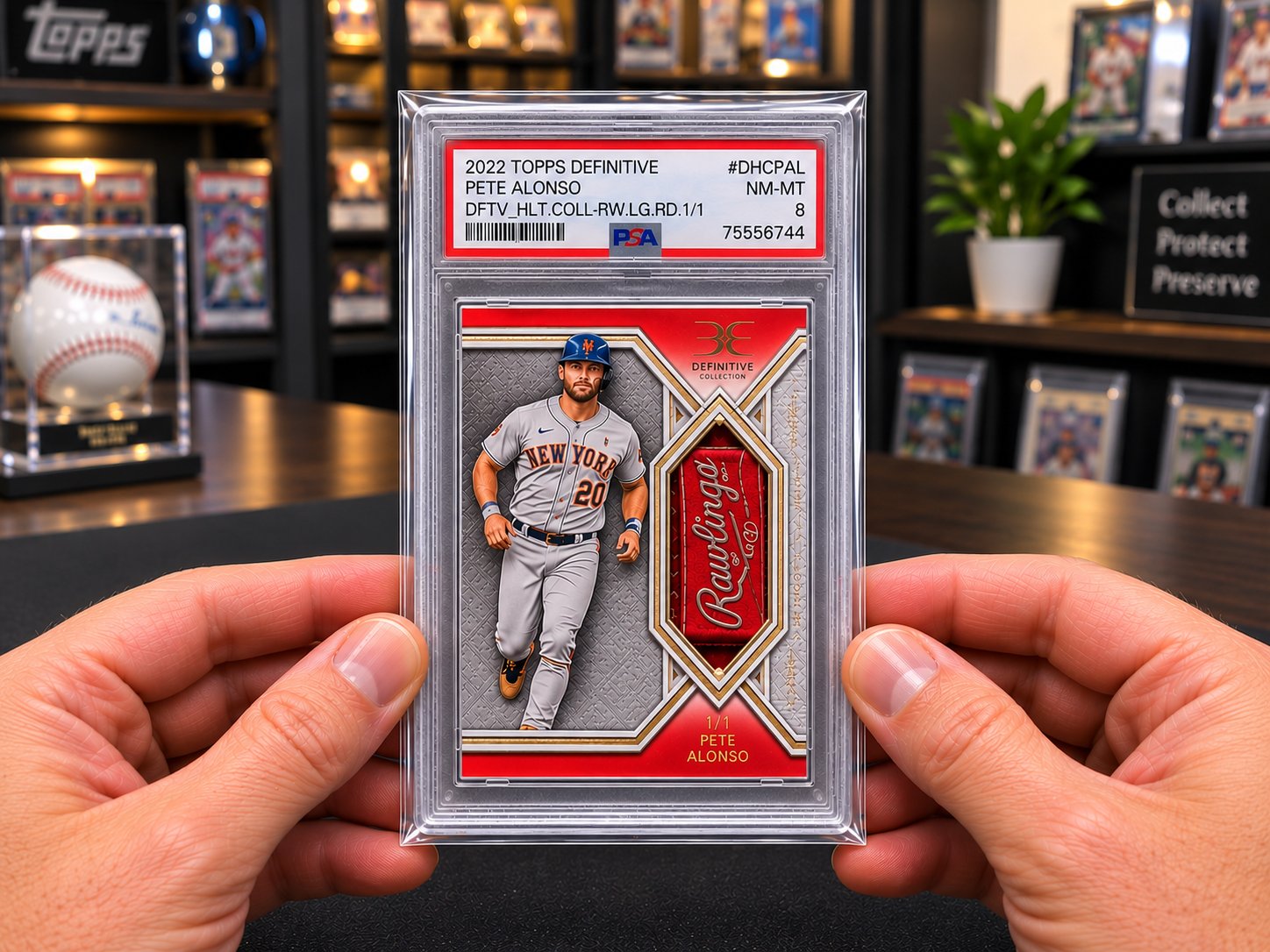
- Is it already graded? The slab is the rigid layer; add a fitted slab sleeve to protect the case from scuffs and store slabs upright in a padded box.
- Is it headed to a grader or a buyer? Match the holder to the submission or shipping requirement, and pack for transit rather than for display.
Know the materials that cause damage. Avoid sleeves and pages made with PVC, which can off-gas and leave a sticky residue or haze on card surfaces over years; look for acid-free, PVC-free plastics such as polyethylene or polyester (Mylar).
Weigh handling frequency. Cards you pull out often face more wear than cards that stay in a box. If you show or trade a card regularly, give it a tighter, more durable setup and accept that it will see more handling risk. If it stays put, prioritize long-term stability over convenience.
When grading is worth considering. Grading makes sense when a card's value is high enough that authentication and a numeric grade add more than the service costs, or when you plan to sell and buyers expect a grade. It is usually not worth it for low-value cards.
Watch out: a holder that is too tight, a PVC sleeve, or an over-tightened screw-down case can damage a card that would have been fine in a simple sleeve and top loader, fit and material matter more than how heavy the protection looks.
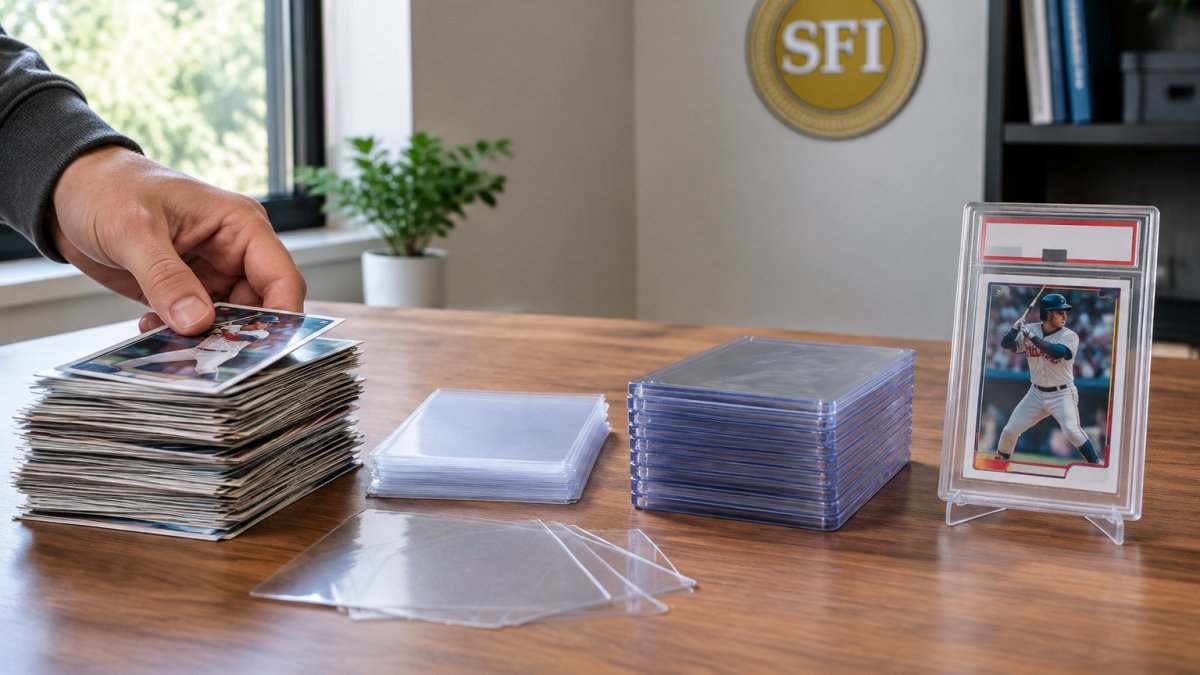
Choosing Sleeves: Penny Sleeves and Premium Soft Sleeves
Sleeves are the first line of defense. They stop surface scratches, fingerprints, and dust from reaching the card face.
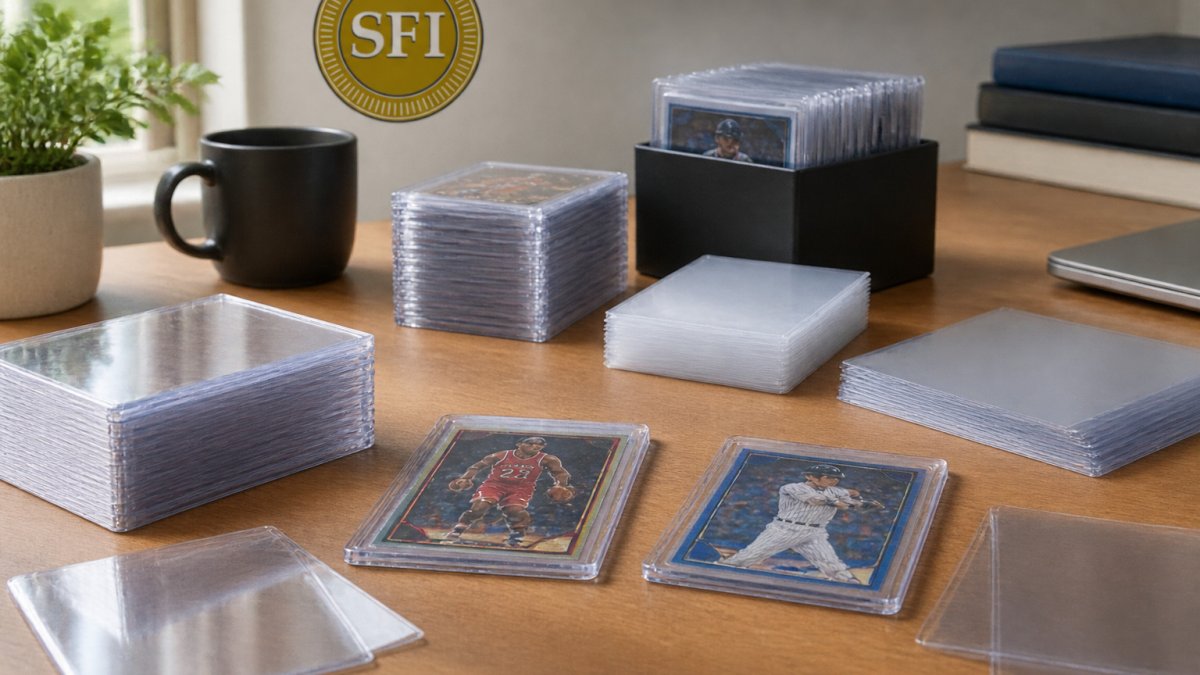
Penny sleeves are thin, inexpensive, and easy to find. They work well for bulk cards and as an inner layer. They offer little protection against bending or pressure on their own.
Premium soft sleeves are thicker and fit more snugly. A tight fit matters because loose sleeves let cards slide, rub, and pick up edge wear. For graded slabs, a fitted sleeve keeps the holder from scuffing against other items.
When you choose sleeves, look for:
- Acid-free and PVC-free materials
- A tight, consistent fit for the card or slab size
- Clear, distortion-free plastic for good display
Superior Fit Sleeves for graded card slabs are designed to fit snugly without excess bulk. You can see the full range on our graded card slab sleeves page.
The two main sleeve types differ in thickness, fit and best use, as summarised below.
| Sleeve type | Best for | Key difference |
|---|---|---|
| Penny sleeve | Bulk cards and an inner layer | Thin and inexpensive, little protection against bending |
| Premium soft sleeve | Valuable cards and graded slabs | Thicker and fits snugly, stops cards sliding |
Using Top Loaders and Rigid Holders for Valuable Cards
Top loaders are rigid holders that stop bending and crushing. They are the standard choice for valuable raw cards and a good layer for anything you want to keep flat and safe.
Pick the right point thickness for your cards. A top loader that is too loose lets the card move. One that is too tight can strain the card when you slide it in.
Good handling habits matter here:
- Slide the card in slowly, edge first, and follow our complete guide to protecting sports cards in top loaders for safe setup.
- Keep your hands clean and dry
- Hold cards by the edges, never the face
- Never force a card into a holder
Browse our top-loader sleeves to find the right fit for your cards. For a deeper look at setting up sports cards in top loaders, read our complete guide to protecting sports cards in top loaders.
Layering Protection: Sleeve Plus Holder Step by Step
Layering gives you the best protection. A sleeve guards the surface, and a rigid holder guards against bending and impact.
Step 1: Check the card. Make sure it is clean, dry, and free of loose debris.
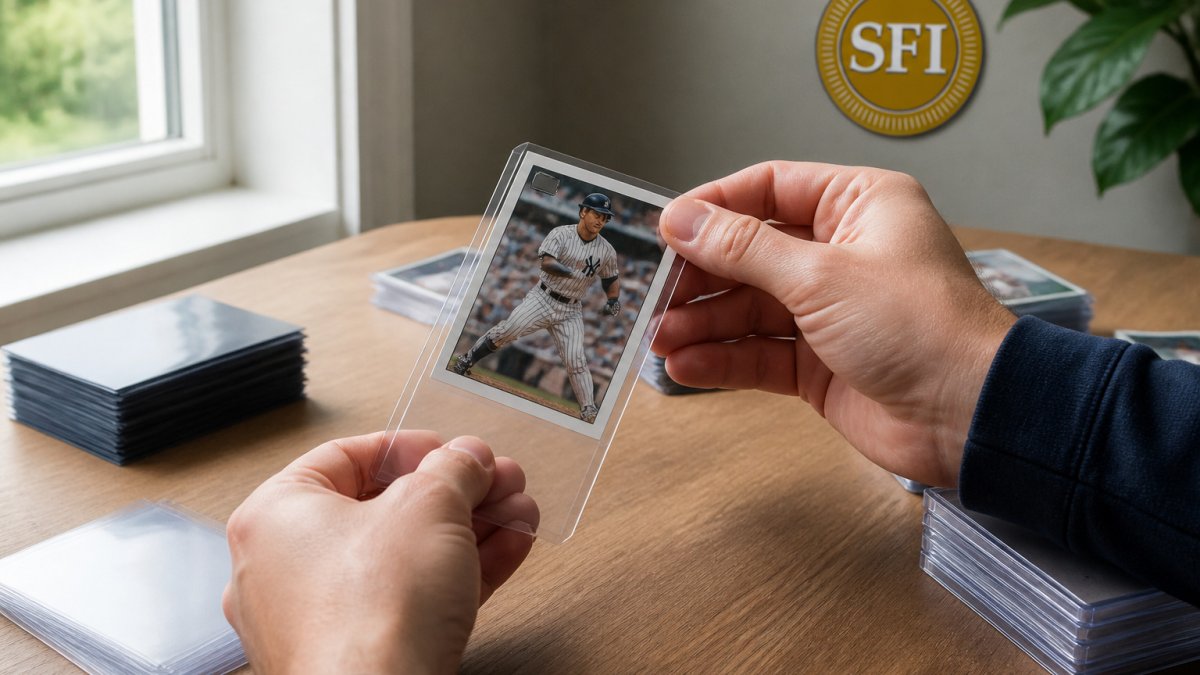
Step 2: Sleeve the card. Slide it into a fitted sleeve. Keep the sleeve tight so the card cannot slide around.
Step 3: Insert into the holder. Place the sleeved card into a top loader or semi-rigid holder. The sleeve should fit without bunching.
Step 4: Seal and label. Close the holder, then label it on the outside, not the card.
Step 5: Store flat or upright. Keep holders in a box or binder where they cannot be crushed.
Tip for removal: slide the card out slowly from the top, never pull from the side. Pulling from the side can catch the sleeve edge and cause scratches.
If you want to compare sleeve types before layering, our fitted sleeves vs penny sleeves comparison explains which one protects better in different situations.
Storing Cards in a Binder Without Damage
Binders are convenient, but they can cause damage if used the wrong way. Pressure from pages, tight binder rings, and sliding cards can all cause edge wear.
Follow these steps to store cards in a binder safely:
- Use pages made from materials that are free of PVC
- Sleeve every card before it goes into a binder pocket
- Avoid overfilling pockets, which bends cards
- Store binders upright on a shelf, not stacked on their sides
- Keep the binder away from direct sunlight and heat
For valuable cards, a binder works best as a display or organizing tool, with the most valuable cards kept in holders in a separate box. The best way to protect cards in a binder is to combine sleeves, careful page choice, and light pressure.
Controlling Humidity, Light and Handling Over Time
Your storage environment matters as much as your sleeves. Card stock is paperboard with a printed coating, and it responds to moisture and heat by swelling, warping, and cockling.
Humidity. Aim to keep storage in a stable, moderate humidity range, since high or low humidity can damage card stock and holders over time (How do I preserve my letters or paper documents?).
Temperature. Keep the collection in a stable, moderate temperature range and, more importantly, avoid swings. A closet that spikes to 90°F in summer or drops near freezing in a garage causes repeated expansion and contraction of the card stock and the plastic around it.
Light. Ultraviolet light fades inks and yellows plastic over months and years, not days. Keep cards out of direct sun and away from strong display lamps.
Handling. Wash and dry your hands before touching raw cards; skin oils and salts transfer to the surface and can etch or stain over time. Hold cards by the edges only.
Build an inspection routine. Check the collection on a fixed schedule, every three to six months is a reasonable default, and more often if you live in a humid climate. At each check, look for:
- Bending, warping, or a card that no longer sits flat in its holder
- Moisture, staining, foxing, or a musty smell in the storage box
- Sleeves that have yellowed, clouded, or gone loose around the card
- Cards that have shifted, or holders that have cracked or scuffed
- Desiccant packs that are saturated and need replacing
- Hygrometer readings drifting outside your target range
Log the date and what you found. A written record turns a vague worry into a trend you can act on, and it doubles as condition documentation if you ever insure or sell.
Protecting Graded Cards and Planning Your Next Step
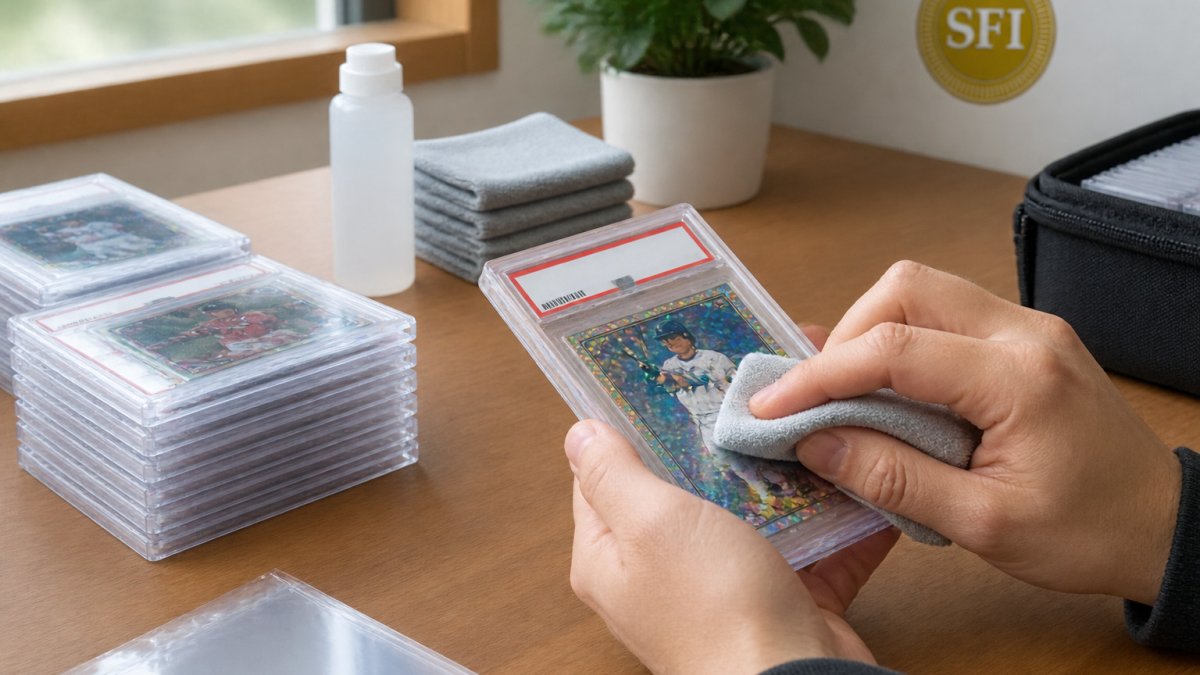
Graded slabs already come in a rigid case, but the case itself can scratch and crack. Adding a fitted sleeve protects the slab from scuffs and keeps it looking sharp. Choose a sleeve sized for your slab, and store slabs upright.
Keep a simple record of your collection. Note each card, its grade or condition, where it is stored, and when you last checked it. This record helps with insurance, sales, and planning.
For long-term storage guidance, see our article on how to store graded card slabs safely long term. If you are ready to upgrade your setup, browse our top-loader sleeves and graded card slab sleeves to find the right fit for your collection.
Protecting your collection is worth the small effort. Start with the cards that matter most, layer your protection, and check on them regularly. Superior Fit Sleeves is here to help you find sleeves that fit your cards and your collection.
Frequently Asked Questions
What is the best protection for trading cards?
The best protection depends on the card's value and how it will be used. Penny sleeves guard against surface scuffs during handling, while rigid top loaders or semi-rigid holders resist bending and crushing. For cards you plan to keep long term or ship, layering a soft sleeve inside a rigid holder gives the most complete protection. Match the level of protection to the card's worth so you neither underprotect a high-value card nor overspend on bulk commons.
Do penny sleeves actually protect cards?
Yes, penny sleeves protect against the most common damage: surface scratches, fingerprints, dust and edge wear from being shuffled. They are inexpensive and work well for bulk storage. They do not stop bending or crushing on their own, so a valuable card in a penny sleeve should still sit inside a toploader or be stored flat in a box. Think of penny sleeves as the first layer, not the only one.
What is the best way to protect cards in a binder?
Use acid-free pages with individual soft sleeves for each card, and keep the binder upright on a shelf rather than stacked flat under other items. Avoid overfilling pages, which can cause bending along the spine. For higher-value cards, place a sleeve inside a rigid holder before putting it in a pocket, so the binder pressure does not warp the card. Check pages periodically for moisture or sticking.
Should valuable trading cards be stored upright or flat?
Store valuable cards upright in a box or binder rather than flat in a stack. Flat stacking puts the weight of every card on those below it, which can bend or crease the bottom cards over time. Upright storage in a well-fitting box, with cards supported by the case walls, reduces pressure on any single card. Keep the box on a shelf away from direct sunlight and heat sources.