 ultimate-guide
Preventing Yellowing on Card Slabs: A 2026 Guide
Table of Contents
- Why Graded Card Slabs Turn Yellow
- UV Light: The Primary Cause of Case Discoloration
- Graded Card Storage Best Practices for Long-Term Preservation
- How to Clean Graded Card Slabs Without Causing Damage
- Choosing Archival-Grade Slab Sleeves for Added Protection
- Environmental Monitoring Tools Every Collector Should Use
- Restoration Risks: Why Prevention Beats Repair
- Conclusion: Protect Your Investment with a Proactive Approach
- Frequently Asked Questions
Last Updated: September 8, 2026
Why Graded Card Slabs Turn Yellow
Yellowing on a graded card slab is a case of material science, not a judgment on the card inside. The clear case is typically made from either acrylic (polymethyl methacrylate, or PMMA) or polycarbonate. These engineering plastics are chosen for their optical clarity and impact resistance, but they are not inert. They undergo a chemical degradation process when exposed to specific environmental triggers.
Ultraviolet (UV) light is the primary catalyst. UV photons carry enough energy to break the carbon-carbon bonds in the polymer chains. This process, known as photodegradation, creates free radicals. These unstable molecules then react with oxygen in the air, leading to the formation of chromophores, chemical structures that absorb visible light and reflect a yellow or amber hue. The result is the familiar discoloration that collectors dread.
It is critical to understand that this plastic degradation is independent of the card stock inside. The card itself is a different material with a different failure mode. Card stock is made of cellulose fibers that oxidize over time. This oxidation, accelerated by light and heat, causes the paper to yellow, become brittle, and develop a distinct, musty odor. A collector might see a yellowed slab and assume the card is ruined, but in many cases, the case has sacrificed itself, absorbing the UV damage while the card inside remains in near-mint condition.
Understanding this distinction is the foundation of any serious preservation strategy. If the case is yellowed but the card is pristine, the value loss is primarily cosmetic and can be addressed by re-holding the card (if the grading company's policies allow). If the card stock itself has yellowed, the damage is permanent and irreversible. The goal of this guide is to help you prevent both scenarios, but the first step is knowing which one you are actually facing.
UV Light: The Primary Cause of Case Discoloration
Direct sunlight is the single greatest threat to graded card slabs. Ultraviolet radiation accelerates the plastic degradation process, and even indirect light through a window can cause noticeable yellowing within months. The chemical reaction triggered by UV exposure creates free radicals that break down the molecular structure of the case material, leading to discoloration, crazing, and eventual warping.
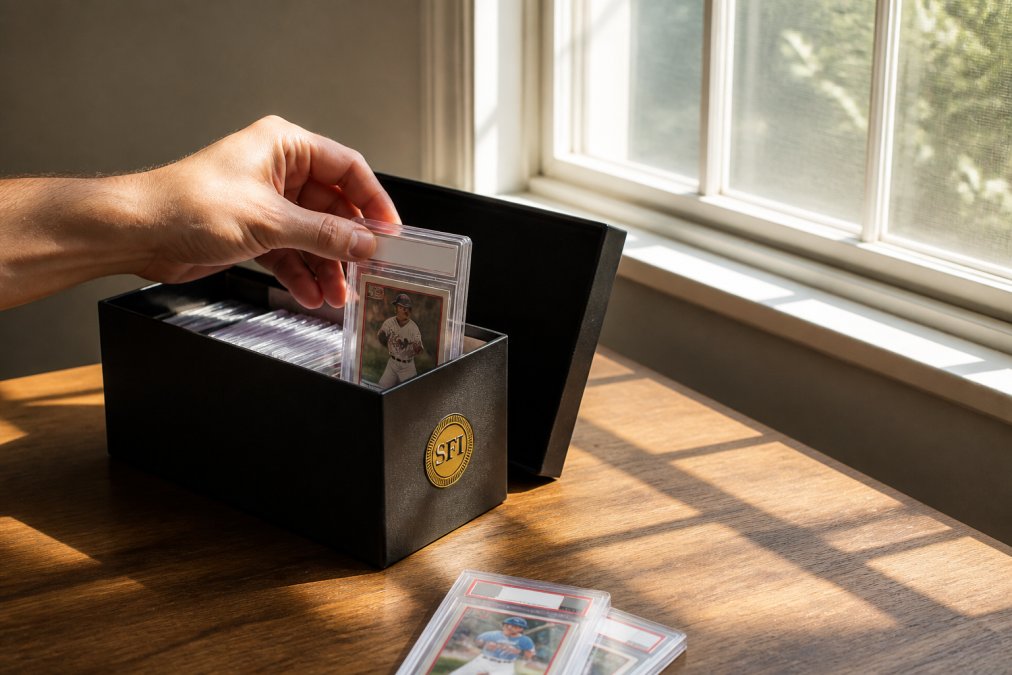
Light exposure also fades label ink and can damage the card stock through the clear case. Many collectors display slabs on shelves or desks near windows without realizing the cumulative damage. The Library of Congress preservation guidelines recommend keeping paper-based collectibles out of direct sunlight entirely, and the same principle applies to graded cards.
Graded Card Storage Best Practices for Long-Term Preservation
Proper storage conditions prevent most yellowing before it starts. Relative humidity should stay between 40 and 50 percent, as excessive moisture promotes mold growth while extremely dry air can cause the plastic to become brittle and crack (loc.gov). Temperature stability matters just as much, with consistent temperatures between 60 and 70 degrees Fahrenheit being ideal for both the case and the card inside.
Graded card storage best practices begin with choosing the right location. Avoid attics, basements, and garages where temperature and humidity fluctuate dramatically. A climate-controlled room or closet provides the most stable environment. When stacking slabs, store them vertically like books rather than flat, which prevents pressure points from causing warping over time.
For collectors serious about long-term preservation, archival storage boxes made from acid-free materials offer an additional layer of protection. These boxes block light while allowing air circulation, reducing the risk of trapped moisture. The investment in proper storage is minimal compared to the value of the cards you are protecting.
How to Clean Graded Card Slabs Without Causing Damage
Cleaning graded card slabs requires a gentle touch and the right materials. Many collectors damage their slabs by using paper towels or household cleaners that leave scratches and chemical residue. A microfiber cloth paired with a mild solution of distilled water and a drop of dish soap is safe for most acrylic and polycarbonate cases.
The proper technique involves wiping in straight lines rather than circular motions, which can leave swirl marks visible under bright light. Apply the cleaning solution to the cloth, never directly to the slab, to prevent liquid from seeping into the case edges. Dry immediately with a separate clean microfiber cloth to prevent water spots.
For stubborn residue or dust trapped in the case edges, use compressed air rather than inserting tools that could scratch the interior. If your slab has developed scratches on the exterior, case polishing compounds designed specifically for acrylic can restore clarity, but use them sparingly to avoid thinning the plastic. How to clean graded card slabs properly is a skill worth mastering, since improper cleaning causes more damage than the dirt you are trying to remove.
Choosing Archival-Grade Slab Sleeves for Added Protection
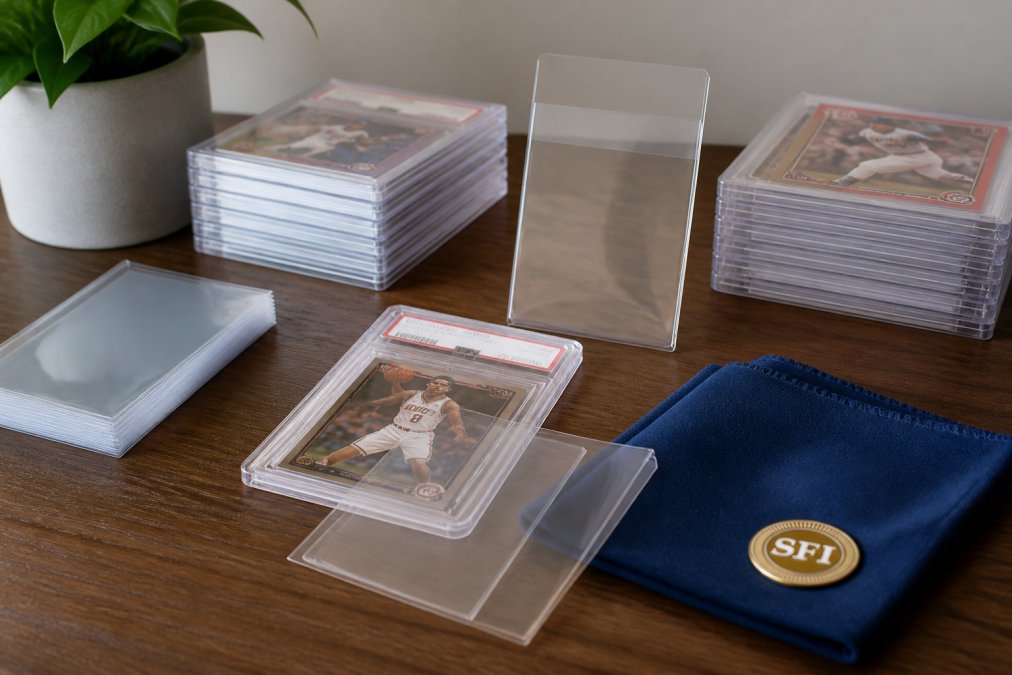
Archival-grade slab sleeves provide the best defense against environmental damage. These precision-fit protective covers shield the case from dust, scratches, and light exposure while allowing you to handle and display your cards safely. The key difference between archival-grade sleeves and standard plastic bags comes down to material quality and fit.
Superior Fit Sleeves, the original inventor of perfect-fit tapered sleeves since 2014, manufactures archival-grade, acid-free sleeves specifically engineered for PSA, BGS, and CGC slabs. The precision-cut design ensures a snug, professional fit that prevents the sleeve from slipping or bunching, while the ultra-clear, distortion-free material maintains the visual impact of your graded card. Acid-free protection matters because standard plastics can off-gas chemicals that accelerate the yellowing process. For collectors using one-touch magnetic cases, Superior Fit Magnetic Card Case Sleeves offer the same archival-grade protection in a format tailored to those holders.
When selecting sleeves for card slabs, look for materials that are PVC-free and archival-grade. PVC breaks down over time and can actually cause the very yellowing you are trying to prevent. A properly fitted sleeve also reduces the need for frequent cleaning, since the case stays protected from fingerprints and airborne contaminants that require regular wiping.
Environmental Monitoring Tools Every Collector Should Use
You cannot manage conditions you cannot measure. A digital hygrometer placed near your collection provides real-time readings of temperature and relative humidity, alerting you to conditions that could damage your slabs. These devices are inexpensive and give you the data needed to make informed decisions about your storage environment.
Silica gel packets offer a simple solution for managing humidity in enclosed storage containers. Place several packets in your storage box and replace them every few months to maintain consistent moisture levels. For larger collections, a dehumidifier in the storage room provides more comprehensive control, particularly in humid climates.
The Smithsonian Institution conservation resources emphasize that stable environmental conditions are the most important factor in preserving collectibles. Fluctuations cause more damage than consistently imperfect conditions, so focus on creating a stable environment rather than chasing perfect numbers. An opaque storage solution, whether a box or cabinet, eliminates the light exposure that drives plastic degradation.
Restoration Risks: Why Prevention Beats Repair
Once a slab has yellowed, the damage is permanent. The chemical bonds in the plastic have been broken, and no polishing or cleaning agent can reverse that molecular-level change. Attempting to 'fix' a yellowed case is a high-risk gamble that almost always ends in further devaluation.
The most common misguided attempt is polishing the case with a plastic restorer or an abrasive compound. While this might remove surface scratches and cloudiness, it does nothing for the internal discoloration. Worse, it thins the case walls, compromising the structural integrity of the slab. A thinner case is more susceptible to cracking under pressure or during handling, which can expose the card to dust, moisture, and physical damage.
Chemical cleaners marketed for plastic restoration pose an even greater threat. Many contain solvents like isopropyl alcohol, acetone, or ammonia. These solvents can penetrate the surface of the plastic and cause a phenomenon known as crazing, a network of fine, microscopic cracks that scatter light and permanently ruin the case's clarity. The reaction is not always immediate; it can take weeks or months for the crazing to become visible, by which time the damage is irreversible.
The label inside the slab is another casualty of restoration attempts. Label fading is caused by UV light breaking down the inks. No chemical treatment can restore the original color of a faded label. In fact, some solvents can cause the ink to bleed or smear, destroying the label's legibility and, with it, a significant portion of the card's market value.
A final, catastrophic risk is liquid ingress. Any attempt to clean the inside of the slab or use a solvent that seeps past the sonically sealed edges can damage the card itself. A single drop of moisture can cause the card stock to ripple, stain, or develop mold. This transforms a cosmetic issue with the case into a permanent, value-destroying defect on the card.
Given these risks, the only rational strategy is prevention. If a slab is already yellowed, the best course of action is to leave it as-is or, if the card's value justifies it, consider having it re-holdered by the original grading company. For the rest of your collection, focus on the environmental controls and physical protection methods outlined in this guide.
Conclusion: Protect Your Investment with a Proactive Approach
Yellowing on card slabs is preventable with the right knowledge and tools. The plastic case and the card stock face different threats, but both respond to the same protective measures: stable environmental conditions, minimal light exposure, and physical protection from handling and storage.
The collectors who protect their investments successfully treat preservation as an ongoing practice, not a one-time decision. Monitor your storage environment, handle slabs carefully, and use archival-grade protection on every graded card you own. Superior Fit Sleeves for Graded Card Slabs provides the precision-fit, acid-free sleeves that serious collectors trust to keep their PSA, BGS, and CGC slabs in pristine condition. The hobby standard for protection since 2014, our archival-grade sleeves safeguard your collection from the environmental factors that cause yellowing and degradation. Get started with Superior Fit Sleeves and give your graded cards the protection they deserve.
Frequently Asked Questions
Can you reverse yellowing on acrylic card slabs?
In most cases, no. Yellowing is a chemical change in the plastic polymers, often triggered by UV exposure. Attempting to reverse it with chemicals or polishing compounds can scratch the case, cloud the clarity, or damage the label. The safest approach is prevention: store slabs away from direct sunlight and use archival-grade slab sleeves. If a case is severely yellowed, re-holdering the card through the grading service is the only reliable fix, though it comes at a cost.
Do archival-grade sleeves help prevent slab yellowing?
Yes. Archival-grade slab sleeves add a physical barrier that blocks UV radiation and filters out the specific light wavelengths that accelerate plastic degradation. They also protect the case from scratches, dust, and airborne pollutants that can cloud the surface over time. Look for sleeves made from acid-free, archival-grade materials. A precision-fit sleeve from a reputable brand like Superior Fit Sleeves provides a snug, clear layer of defense without adding bulk to your storage system.
What is the ideal storage environment to prevent plastic degradation?
Aim for a cool, dark, and stable environment. Keep the relative humidity between 40% and 50% to prevent mold and warping. Avoid attics, garages, and basements where temperature and humidity fluctuate. If you display slabs, keep them out of direct sunlight and away from windows. For long-term storage, opaque boxes are the best defense against light exposure. Consider using silica gel packets in your storage container to manage moisture levels.