 ultimate-guide
Pokémon Card Holder: Complete Guide to Protection
Table of Contents
- Types of Pokémon Card Holders: From Sleeves to Display Cases
- Top Loader vs Magnetic Case: Which Pokémon Card Holder Wins?
- Best Card Sleeves for Pokémon: Material Quality Matters
- How to Store Graded Pokémon Cards Without Damaging the Slab
- Casual Collector vs Serious Investor: Choosing the Right Setup
- Organization Systems for Large Pokémon Collections
- Displaying High-Value and Rare Cards Safely
- Conclusion
Last Updated: August 26, 2026
Types of Pokémon Card Holders: From Sleeves to Display Cases
A Pokémon card holder is any protective accessory designed to shield trading cards from surface damage, edge wear, moisture, and UV exposure. At Superior Fit Sleeves, we've worked with collectors since 2014, and the most consistent mistake we see is mismatching the holder type to the card's actual value and purpose. Choosing the wrong solution can degrade a card's condition over time, which matters enormously when grading or resale is on the table.
The core product categories are straightforward once you understand what each one is built to do.
Penny Sleeves and Perfect-Fit Sleeves
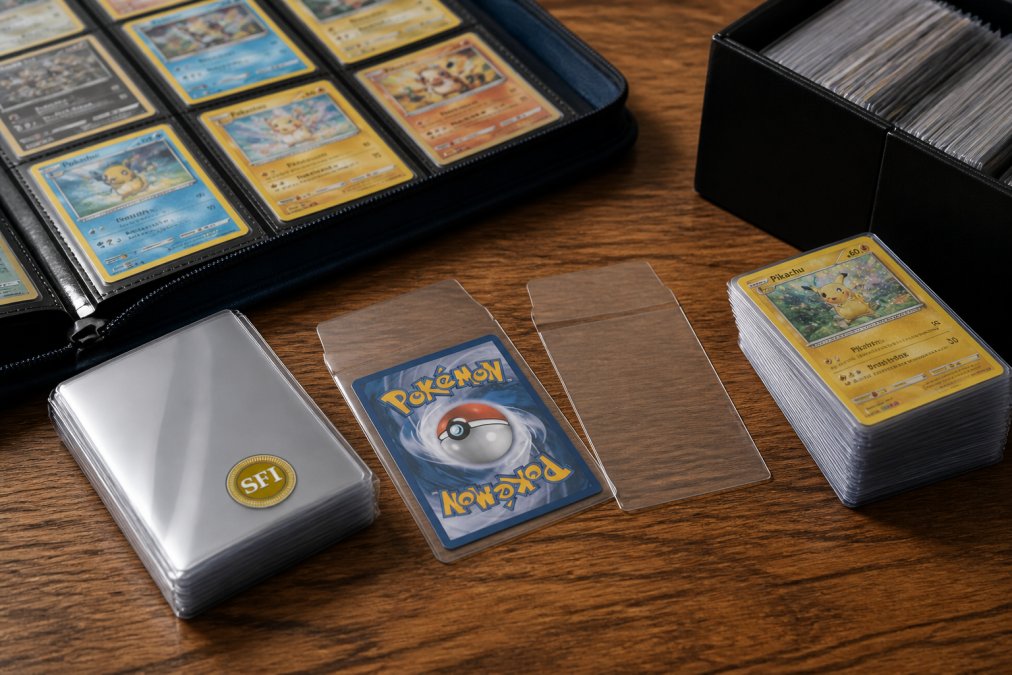
Penny sleeves are thin polypropylene shells that slide over a standard-size card, providing basic surface protection against fingerprints and light scratches. They're practical for bulk storage due to their minimal cost.
Perfect-fit sleeves are precision-cut to sit flush against card edges, eliminating the loose, billowing look of a standard penny sleeve. This matters when double-sleeving, because a sloppy inner sleeve creates friction and micro-abrasions every time the card moves. A snug fit prevents that.
Top Loaders and Semi-Rigid Holders
Top loaders are rigid PVC-free plastic cases, typically around 3x4 inches, that a sleeved card slides into from the top. They're affordable, stackable, and widely compatible with standard-size cards. Semi-rigid holders offer a middle ground, more flexible than a hard top loader but stiffer than a sleeve, useful for lightweight protection during transport. For collectors using top loaders with sleeved cards, Top-Loader Sleeves provide a precision fit that prevents the card from shifting inside the case during storage or transport.
The critical thing to know about top loaders is that not all are acid-free. Cheaper versions with PVC can off-gas over time, causing surface yellowing and fogging. Always confirm the material is PVC-free and acid-free before committing to long-term storage.
Binders, 9-Pocket Pages, and Deck Boxes
A 3-ring binder fitted with side-loading 9-pocket pages is the most space-efficient way to organize a large collection. Side-loading pages keep cards from sliding out when the binder is upright. A standard binder with 20 pages holds 180 cards, and multiple binders create a manageable inventory system.
Deck boxes are the go-to for active players who need quick access to game decks. They're compact, usually water-resistant, and sized for sleeved cards. For serious collectors, deck boxes are less relevant than binders or rigid cases.
Top Loader vs Magnetic Case: Which Pokémon Card Holder Wins?
The top loader vs magnetic case debate is the most common question serious collectors face, and the answer depends entirely on what you're doing with the card.
Top loaders win on cost and practicality for bulk storage. They stack efficiently, are universally available, and work with standard sleeves. For a collection of hundreds of cards, top loaders are the sensible default. The tradeoff is that they're open at the top, so dust and debris can enter over time unless you seal the opening.
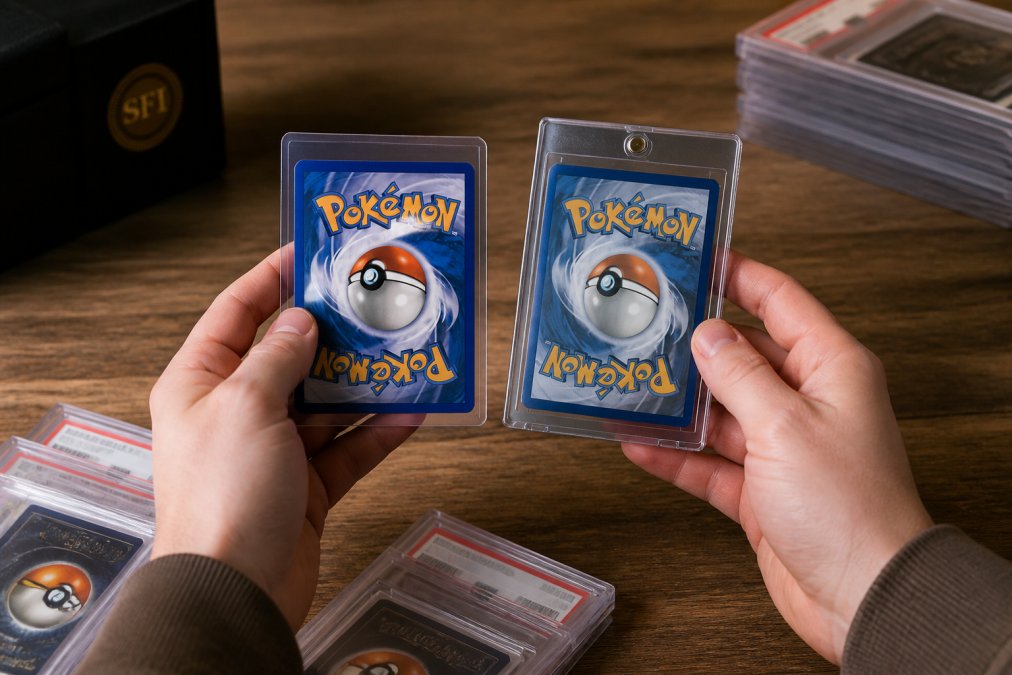
Magnetic cases, often called one-touch cases, are sealed enclosures that snap shut with a magnet. They offer superior surface protection because the card never needs to be removed to be viewed. The clear UV-blocking acrylic on quality magnetic cases provides meaningful protection against light-induced fading, which top loaders generally don't offer. For a high-value card you want to display, a magnetic case is the correct choice. Magnetic Card Case Sleeves are precision-engineered to fit inside these cases, preventing card movement and protecting against direct contact with the acrylic interior.
The one practical issue with magnetic cases: the magnet itself. There's a persistent concern about whether rare earth magnets can affect card holograms or foil surfaces over extended contact. The current consensus among collectors is that standard magnetic case magnets pose no meaningful risk to card surfaces, but if you're storing a card for years rather than displaying it, a top loader or archival sleeve is a lower-risk option.
| Feature | Top Loader | Magnetic Case |
|---|---|---|
| Seal type | Open top | Fully sealed |
| UV protection | Minimal | UV-blocking acrylic |
| Best for | Bulk storage, transport | Display, high-value singles |
| Sleeve compatibility | Standard sleeves | Requires fitted sleeve |
| Display quality | Functional | Professional-grade |
| Long-term archival | Acceptable (acid-free) | Excellent |
Best Card Sleeves for Pokémon: Material Quality Matters
The sleeve market is flooded with options that look identical in product photos. Material composition is where the real differences live.
Polypropylene vs PVC-Free: What the Labels Actually Mean
Polypropylene is a thermoplastic polymer that is inherently acid-free, optically clear, and chemically stable over long periods. Polypropylene sleeves don't off-gas, yellow, or become brittle under normal storage conditions. For any card you care about, polypropylene is the baseline expectation.
PVC-free tells you what a product doesn't contain, not what it does contain. PVC (polyvinyl chloride) releases plasticizers over time, which can transfer to card surfaces and cause irreversible yellowing and tackiness. A PVC-free label is necessary but not sufficient, you also want to confirm the alternative material is acid-free and archival-grade.
A polypropylene sleeve labeled as archival-grade, acid-free, and PVC-free gives you verifiable protection. A sleeve only labeled "PVC-free" might be made from a cheaper alternative that still degrades over time.
According to Library of Congress guidance on archival materials, acid-free, chemically stable materials are the standard for long-term preservation of paper-based collectibles. The same principles apply directly to trading card storage.
Superior Fit Sleeves manufactures its sleeves from archival-grade, acid-free materials to meet this standard, delivering crystal-clear, distortion-free display quality that doesn't compromise over years of storage.
How to Store Graded Pokémon Cards Without Damaging the Slab
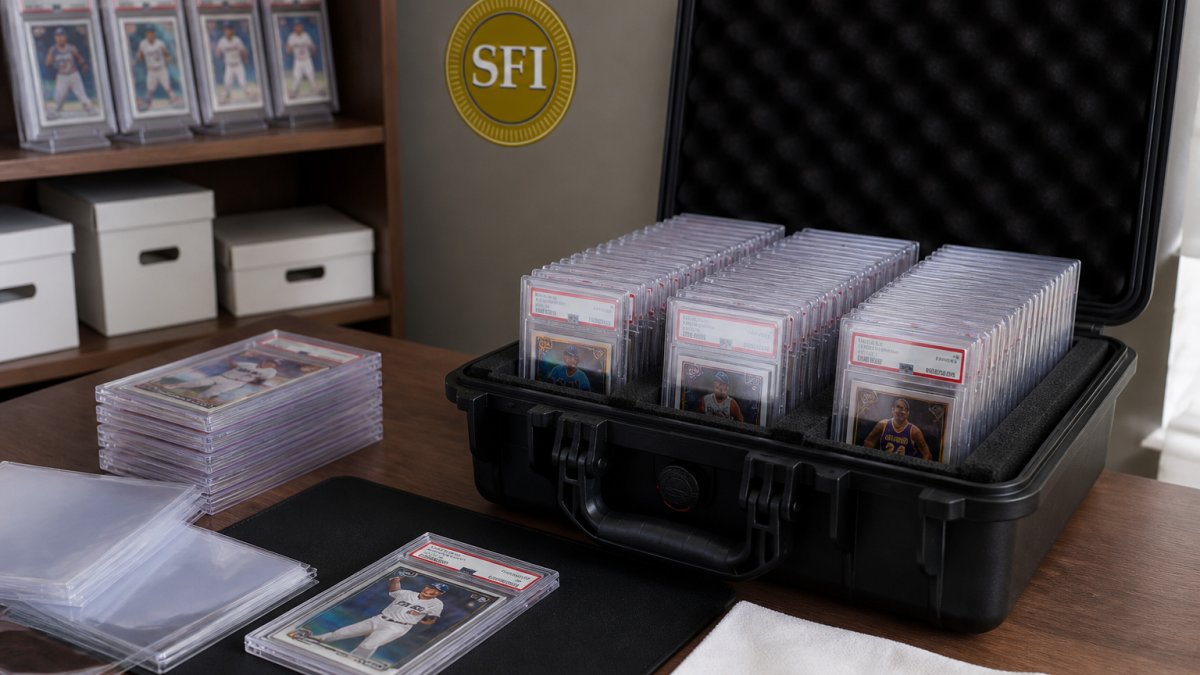
Graded cards introduce a new problem: you're protecting not just the card but the slab itself. PSA, BGS, and CGC slabs are hard acrylic cases that scratch, collect dust in seams, and can shift if mishandled. Knowing how to store graded Pokémon cards correctly is a different skill set from storing raw cards.
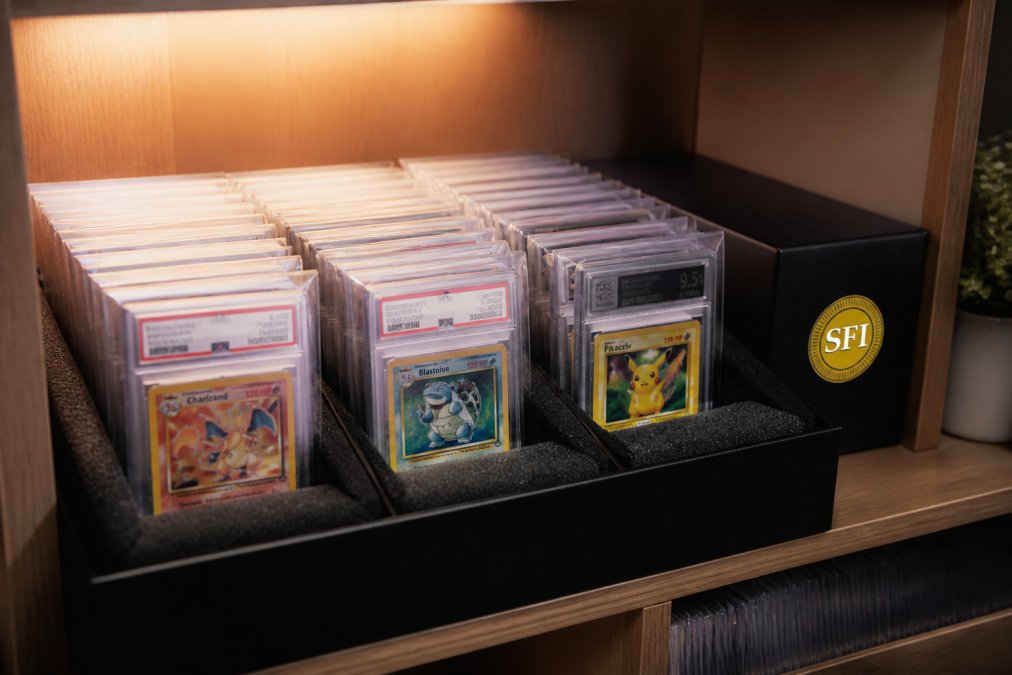
The first rule is to always sleeve the slab. A graded card slab without a protective sleeve is exposed to surface scratches every time it's handled, stacked, or transported. Graded Card Slab Sleeves are precision-fit to sit flush against the acrylic and prevent contact damage while maintaining optical clarity for display.
The second rule is orientation. Store slabs upright, not flat-stacked. Flat stacking puts weight pressure on the bottom slab's label and can cause micro-flex in the acrylic over time. Upright storage in a padded box distributes weight evenly and keeps labels flat.
Archival Standards and Long-Term Preservation
Long-term archival storage for graded slabs means controlling four variables: light, humidity, temperature, and physical contact.
Light exposure is the most underestimated threat. UV radiation fades card artwork and causes label discoloration even through acrylic. UV-blocking sleeves and display cases significantly reduce this risk. As noted in National Archives guidance on environmental storage conditions, stable, low-light environments dramatically extend the lifespan of paper-based materials.
Humidity and temperature stability matter more than specific numbers. Rapid cycling between humid and dry conditions causes the paper core of cards to expand and contract, stressing the slab seal over time. A stable indoor environment, away from exterior walls and HVAC vents, is the practical solution for most collectors.
Physical contact damage is easiest to prevent: sleeve every slab, store upright, and never stack slabs directly against each other without a buffer.
Casual Collector vs Serious Investor: Choosing the Right Setup
The biggest mistake casual collectors make is over-engineering their setup before understanding their collection's actual direction. The biggest mistake serious investors make is under-protecting early, before cards are graded, then discovering edge wear or surface damage that costs them a grading tier.
A casual collector with 50 graded cards still benefits from proper slab sleeves. The investment per sleeve is minimal relative to the value of even a moderately graded card. The question isn't whether your collection is "big enough" to warrant protection, it's whether the cards have value you'd regret losing.
Serious investors and dealers need a more systematic approach: standardized sleeves across all slab types, a consistent binder or storage box system for raw cards, and clear separation between display inventory and archival inventory. Cards you're displaying in magnetic cases get different treatment than cards you're holding for long-term appreciation in a controlled storage environment.
Match your protection level to your exit strategy. If you plan to hold a card for a decade, archival-grade storage is non-negotiable. If you're flipping within a year, functional protection is sufficient.
Organization Systems for Large Pokémon Collections
Organization is where most collectors fall behind, and it compounds fast. A collection of 500 cards with no system becomes unmanageable. A collection of 5,000 cards with no system is effectively inaccessible.
The most functional systems share three characteristics: they're searchable, scalable, and separate storage tiers by card value.
Searchable means you can locate any specific card in under two minutes. This typically requires a catalog, either a spreadsheet or a dedicated app, that maps each card to its physical location. For graded slabs, catalog by slab number and storage box position. For raw cards in binders, catalog by set and card number.
Scalable means your system accommodates new acquisitions without requiring full reorganization. Side-loading 9-pocket pages in 3-ring binders scale naturally. Rigid storage boxes with labeled dividers scale similarly for slabs.
Value-tiered means your most valuable cards get the most protective treatment. A three-tier structure works well for most serious collectors:
- Tier 1 (graded slabs, high-value raw cards): individual slab sleeves, upright in padded storage boxes
- Tier 2 (mid-value raw cards): double-sleeved in top loaders, stored in card storage boxes with dividers
- Tier 3 (bulk commons and uncommons): single-sleeved in 9-pocket binder pages, organized by set
According to PSA's collector resources on card organization, consistent organization practices directly support accurate inventory management and make collection insurance documentation significantly easier to maintain.
Displaying High-Value and Rare Cards Safely
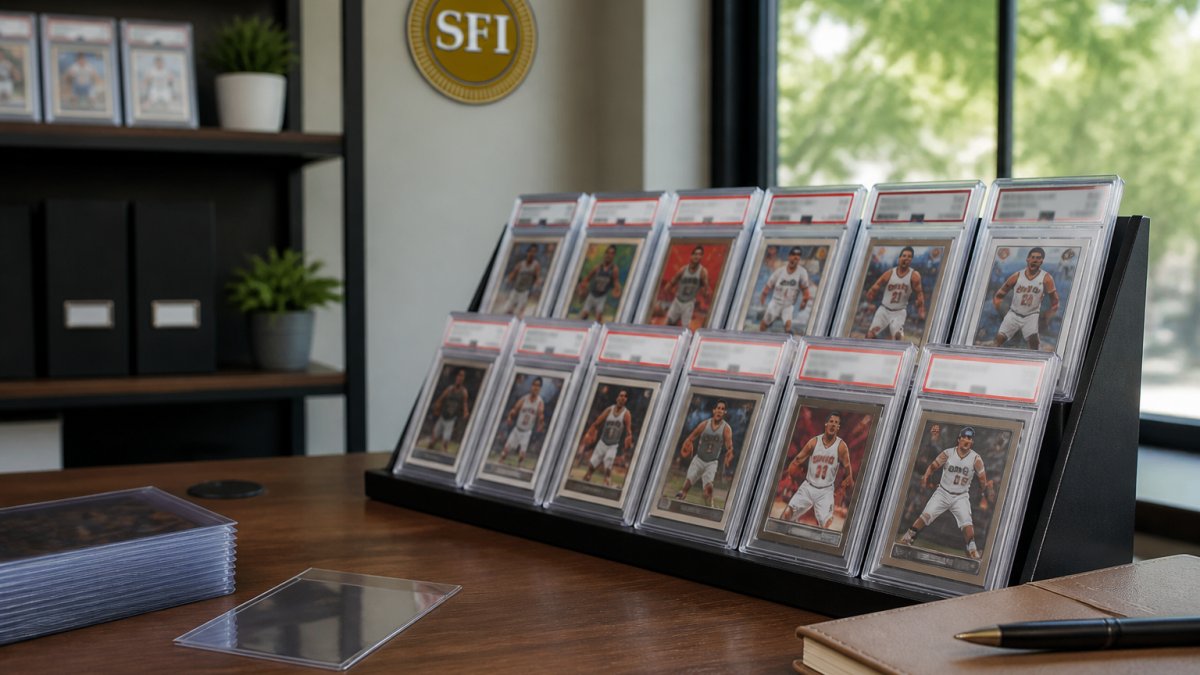
Display is where protection and presentation must coexist. A card locked in an opaque storage box is perfectly safe and completely invisible. A card on an open shelf looks great and accumulates UV damage and dust.
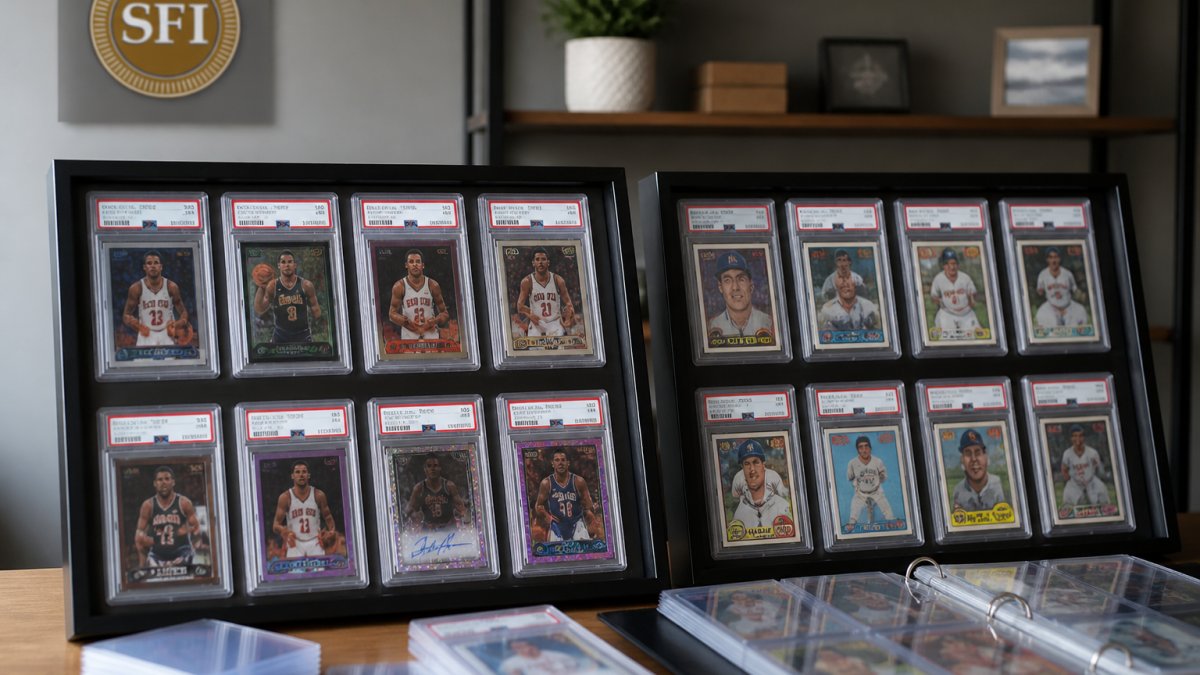
The practical solution is a UV-blocking display case, either wall-mounted acrylic or a tabletop display with a sealed front. These cases block the wavelengths most responsible for color fading while keeping the card visible. For slabs, a fitted sleeve inside the display case adds an additional contact-damage barrier.
Magnetic one-touch cases are the most common display solution for individual high-value cards. They offer sealed protection, UV-blocking acrylic, and a clean professional look. Use a precision-fit sleeve between the card and the case interior, direct card-to-acrylic contact is a surface damage risk that a sleeve eliminates.
For wall displays of multiple cards, keep the display away from direct sunlight and any heat-generating light source. Heat accelerates both UV damage and humidity cycling. A north-facing wall in a climate-controlled room is ideal for rare or high-value cards.
The rarity of a card should directly determine its display treatment. A card with significant market value deserves UV-blocking protection, a precision sleeve, and a stable environment. Displaying a genuinely rare card in a basic top loader on an open shelf is a preservation decision you'll likely regret.
For collectors building out a display setup, Smithsonian Institution guidelines on displaying collectibles offer a useful framework for light, humidity, and temperature standards that translate directly to home collection display environments.
Protecting a Pokémon card collection at any scale comes down to matching materials to value and purpose. The right sleeve, the right case, and the right storage environment aren't luxuries, they're the difference between a collection that holds its condition and one that quietly degrades. Superior Fit Sleeves has been engineering precision-fit, archival-grade, acid-free protective sleeves for graded slabs, top loaders, and magnetic cases since 2014. Our sleeves are precision-cut for PSA, BGS, CGC, and other major slab brands, with ultra-clear, distortion-free clarity that protects without compromising presentation. If your collection is worth protecting, get started with Superior Fit Sleeves and give every card the fit and finish it deserves.
Frequently Asked Questions
What is the best type of card holder for Pokémon cards?
The best pokemon card holder depends on the card's value and how you plan to use it. Raw cards in regular play benefit from a penny sleeve inside a top loader. High-value raw cards deserve a magnetic one-touch case. Graded slabs from PSA, BGS, or CGC need precision-fit archival sleeves that hold the slab snugly without scratching the case. For bulk storage, acid-free, PVC-free 9-pocket binder pages protect standard-size cards while keeping them organized and accessible.
Are binders safe for high-value Pokémon cards?
Binders are safe for mid-range cards when you use PVC-free, acid-free polypropylene pages with side-loading pockets. Side-loading pages prevent cards from sliding out and reduce edge wear. For cards worth $100 or more, individual top loaders or magnetic cases offer better surface protection than binder pockets. Graded slabs should never go in a binder, the rigid slab will crack the pocket and the sleeve. Use dedicated slab storage boxes with archival-grade sleeves instead.
What is the difference between a top loader and a magnetic case for Pokémon cards?
A top loader is a semi-rigid PVC-free sleeve open at the top, designed for everyday protection and easy trading. A magnetic case (one-touch) uses two interlocking acrylic panels held by magnets, creating an airtight, UV-blocking display-quality enclosure. Top loaders cost less and stack efficiently for storage. Magnetic cases show off the card better and offer stronger surface protection, making them the preferred pokemon card holder for high-value collectibles. Both work best with an inner penny sleeve for added surface protection.
How do I store graded Pokémon cards to maintain their value?
Store graded Pokémon cards upright in archival-grade, acid-free sleeves sized precisely for the grading company's slab, PSA, BGS, and CGC cases each have slightly different dimensions. Loose-fitting generic sleeves scratch the slab surface and look unprofessional. Keep slabs away from direct sunlight and humidity. UV-blocking display cases prevent label fading. For large collections, use padded storage boxes that hold slabs vertically. Precision-fit tapered sleeves, like those from Superior Fit Sleeves, are engineered specifically for each slab brand to prevent movement and abrasion.
This article was written using GrandRanker