 blog
Creative Ways to Showcase Your Card Collection at Home
Last Updated: November 11, 2026
Quick Summary
The best way to showcase a card collection at home is a display that both shows the cards and protects them. Wall-mounted shadow boxes and acrylic cases suit permanent displays, while stands and shelves work for cards you rotate often. Use UV-filtering glass, acid-free mounts, and a tight seal to guard against fading, dust, and handling damage.
- Choose UV-filtering glass when the display sits near a window, since direct sunlight fades card colors.
- Lay out cards on the floor before hanging anything to settle the spacing.
- Use non-adhesive or removable archival mounts so cards can come out without damage.
- Rotate displayed cards on a set schedule, such as once a month, to keep the collection fresh.
Table of Contents
- Why How You Display Cards Matters
- How to Display Trading Cards on a Wall
- Trading Card Display Stand Options
- Sports Card Display Ideas for Different Collections
- How to Display Trading Cards at Home on a Budget
- Protecting Displayed Cards From Dust, Light and Handling
- Choosing Your Display Setup and Rotating Cards
- Frequently Asked Questions
Why How You Display Cards Matters
A display should do two jobs at once: show the cards off and keep them safe. Cards that are displayed without protection can end up with scuffed edges, faded borders, and dust on the glass.
Your display choice also shapes how much of your collection you actually see. A card stuck in a binder gets looked at once a year. A card on a wall gets seen every day. Pick a setup that lets you enjoy the cards without handling them constantly.
- Protection from light, dust, and handling
- Easy access for rotating cards you love
- A display that fits your room and budget
How to Display Trading Cards on a Wall
A wall is the most popular place to show a card collection, and for good reason. It takes up no floor or desk space, and it puts your favorite cards at eye level. The key is picking a frame or case that holds each card firmly and keeps out dust.
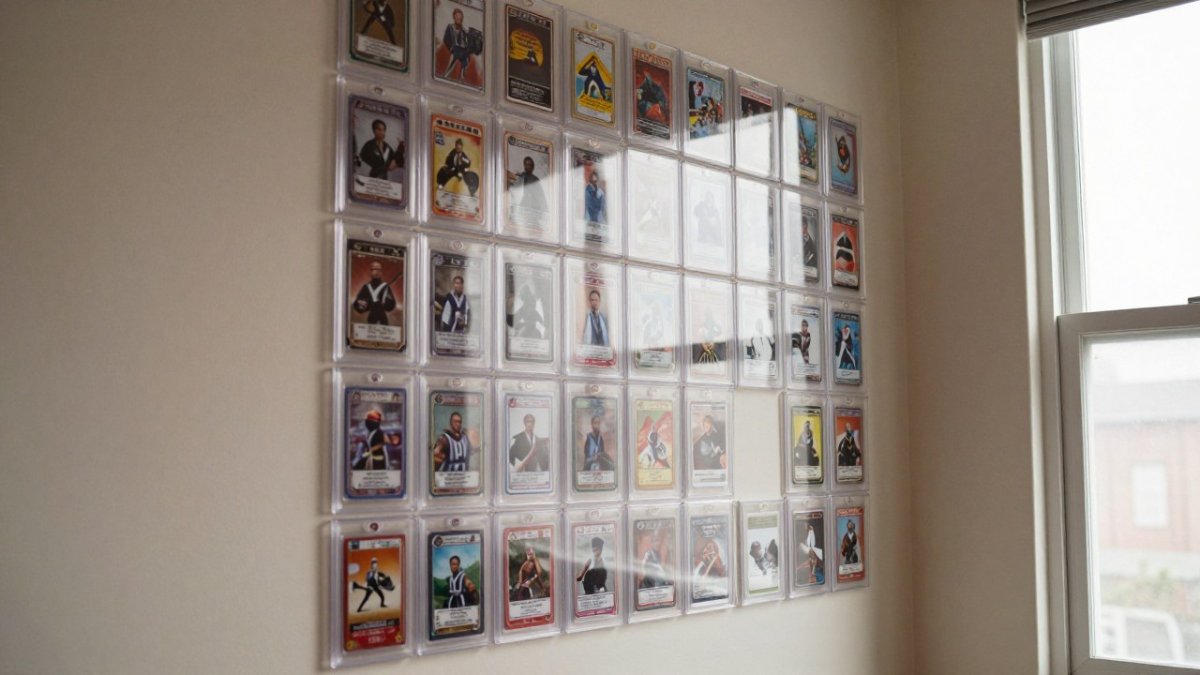
Start with a layout on the floor before you hang anything. Lay out the cards you plan to show and move them around until the spacing looks right. Then mark the spots on the wall and hang the pieces.
Framed and Shadow Box Displays
Shadow boxes are deep frames with glass fronts, and they work well for mixed collections. Place a card on a backing board, secure it with clear mounts, and close the glass. Shadow boxes keep cards flat and out of reach of curious hands.
Choose UV-filtering glass if the display sits near a window. Direct sunlight can fade card colors over time.
Wall-Mounted Acrylic Cases
Acrylic cases are a clean, modern option. Each case holds one card or a small group, and most mount with simple hardware. They show off both the front and the back of a card, which is useful for autographed or numbered cards.
- Pick cases sized to your card type, such as standard or jersey cards
- Mount them at the same height for a tidy grid
- Leave space between cases so each one stands out
Trading Card Display Stand Options
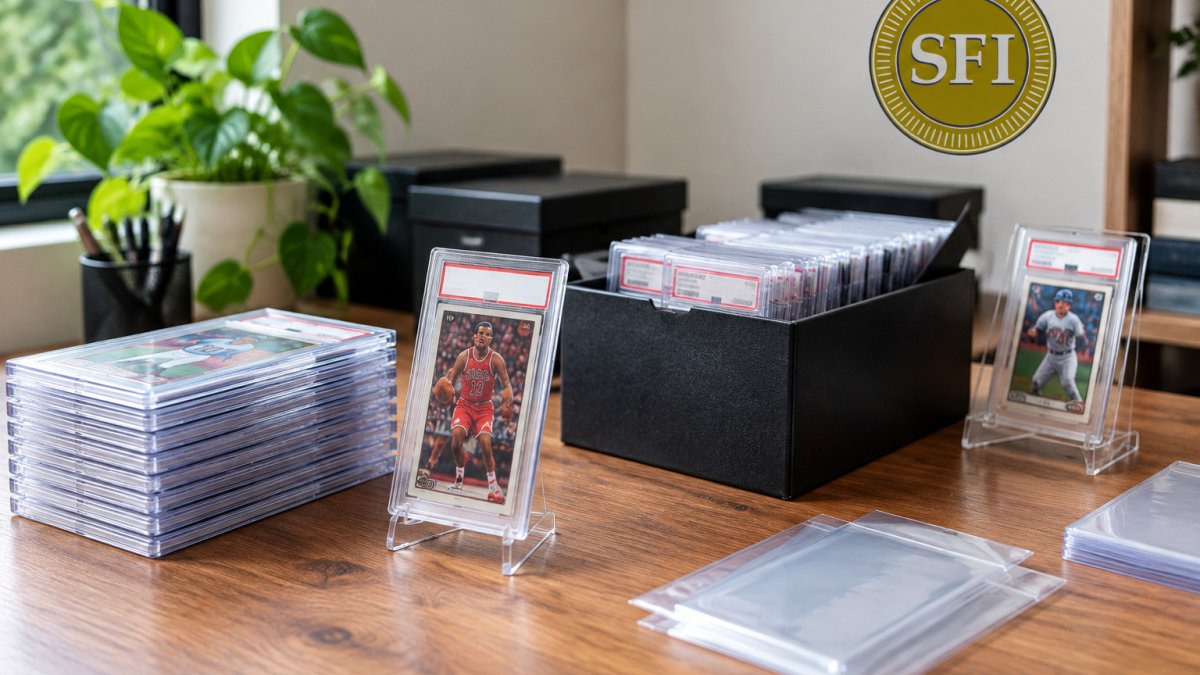
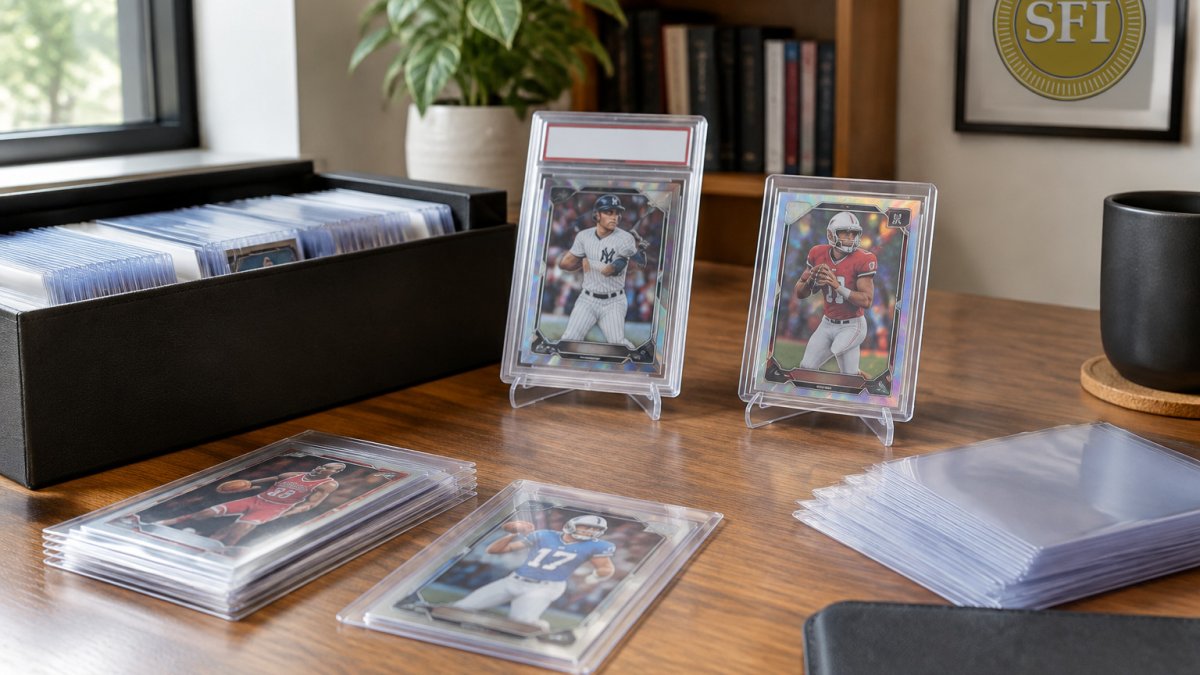
Stands work well on a desk, shelf, or dresser. They let you swap cards quickly, which suits collectors who rotate their favorites every few weeks. A simple acrylic stand holds one card upright and keeps it visible from across the room.
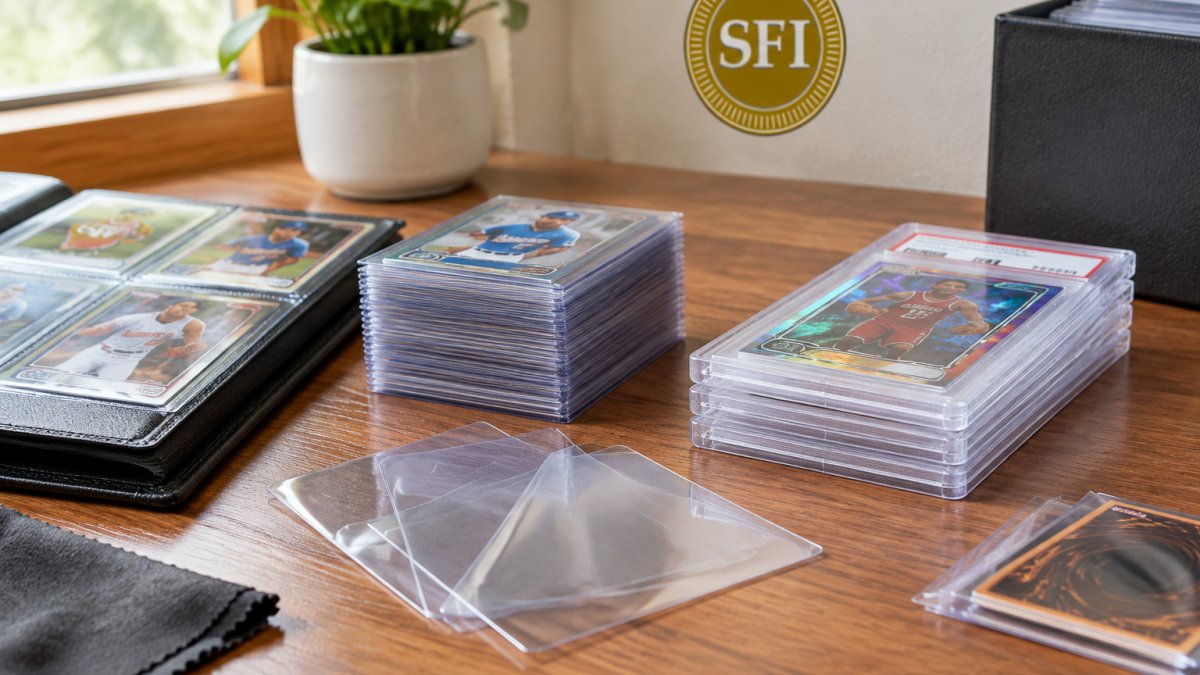
Look for stands that grip the card by its edges rather than its face. Pressure on the surface can leave marks over time. Some collectors place a card inside a Top-Loader Sleeves before standing it up, which adds a layer of safety without hiding the design.
Sports Card Display Ideas for Different Collections
Sports cards come in many sizes and styles, so the right display depends on what you own. A set of base cards can share one shadow box, while a single rookie card or a jersey card may deserve its own case.
Group cards by team, player, or season for a display that tells a story. Mix in a few stars and a few common cards to add variety. A side-by-side layout of two players from the same game often draws the most attention.
How to Display Trading Cards at Home on a Budget
A good display does not require premium cases. The right budget setup depends on how many cards you show, how valuable they are, and how much of the wall or desk you want to use. Comparing a few common options makes the trade-offs clear.
The cheapest approach is a row of sleeves or toploaders on a bookshelf or desk. Sleeves protect cards from fingerprints, but they offer little defense against dust or light, so keep them in a closed cabinet or box if the shelf is open to the room. This works well for a rotating set of common cards that you want to look at often.
A picture frame is the next step up. Standard frames in common sizes such as 8 by 10 inches can hold a mounted card or a small grid of cards on a backing board. Choose a frame with UV-filtering glass if you can find one within your budget, since ordinary glass offers no protection from light. Frames hang cleanly and can make a card look like artwork.
Acrylic stands are easy to swap. Look for stands that hold the card by its edges, not its face, and that keep the card at a slight angle so it does not lean on the surface. They work best on a desk or dresser where you change cards every few weeks.
Shadow boxes and wall cases can hold more cards and offer strong protection when sealed. Spend on these when you own cards that matter most to you, and keep cheaper displays for the rest.
A practical budget order works like this. Protect your most valuable cards first with the best case or frame you can afford. Use sleeves and stands for common cards you rotate often. Check each display every few months, tightening loose mounts and replacing any sleeve that shows wear.
Space also shapes the budget. A small room needs one or two displays placed at eye level, while a larger wall can hold a grid of frames. Planning the layout before you buy saves money, since you avoid purchasing cases in sizes that do not fit your chosen spot.
Protecting Displayed Cards From Dust, Light and Handling
Most display damage happens slowly, and it comes from four sources: ultraviolet light, humidity, airborne dust, and the materials the card touches. Understanding each one tells you which fixes matter for your setup.
Ultraviolet light is the biggest threat to color. The inks on many cards, especially those with bright foil or colored borders, break down under UV exposure. Glass or acrylic with a UV-filtering coating can block much of that wavelength range. Keep displays out of direct sun even with filtered glass, because heat from sunlight also speeds up fading and can warp mounts over time. A display that gets two or three hours of afternoon sun will show visible changes in a few years, while one on a north-facing wall will hold up much longer.
Humidity causes a different kind of harm. Moisture can cause edges to curl, and it can encourage mold growth inside sealed cases if the card or backing board is damp when sealed. Keep relative humidity in the room steady, and avoid hanging displays on exterior walls where condensation forms. Seal cards only after they are fully dry, and use silica gel packs in closed cases if the room runs humid. Check the packs periodically and replace them when they change color.
Dust settles on any open surface and works into the gaps of frames. A tight seal around a case or shadow box is the simplest fix. Between cleanings, a soft, dry brush or a microfiber cloth removes surface dust from the outside of the glass. Clean the inside of an acrylic case only when it is open, and never use household cleaners that contain ammonia or alcohol on the plastic, since these can cloud the surface.
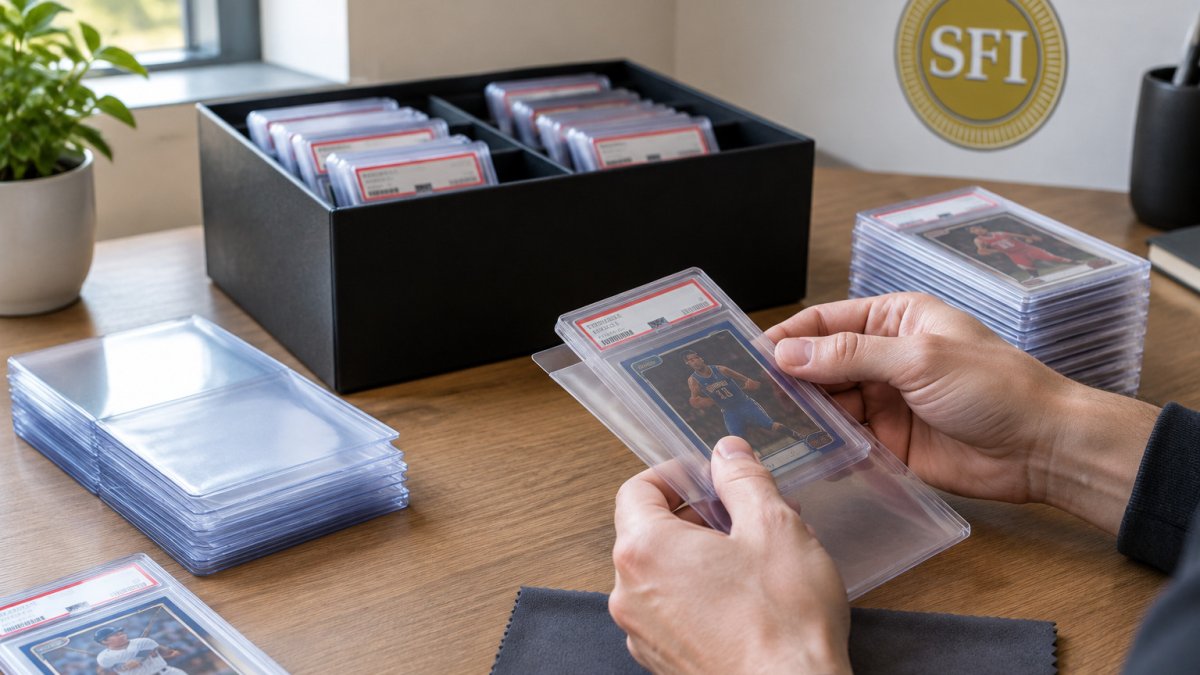
The materials touching the card matter as much as the environment. Choose archival-quality, acid-free backing boards and mounts, and avoid cardboard, ordinary foam board, and adhesive tape, which can yellow and transfer residue. Hinges and corner mounts should be non-adhesive or use removable archival adhesive so the card can come out without damage. Keep the card itself inside a sleeve before it goes into a mount, so the surface never rubs directly against the backing. For graded cards, Graded Card Slab Sleeves are designed to fit graded slabs.
Handling is where many collectors cause the most damage without realizing it. Hold cards by their edges, keep your hands clean and dry, and work over a clear surface when you swap cards in or out of a display. Rotate cards by taking the whole mount out of the frame rather than sliding the card around inside it.
Watch out: Glass frames that are not UV-filtered can look fine for years while the cards inside quietly fade, so check the product label before you buy.
Choosing Your Display Setup and Rotating Cards
Pick a display setup based on how often you want to change what you show. A wall grid works best for a permanent collection, while stands and shelves suit cards you rotate often. Many collectors use both: a wall for the best pieces and a shelf for the rest.
Rotate cards on a set schedule, such as once a month. Each time you swap a card, check its sleeve or case for wear. Rotation keeps your collection fresh and gives you a reason to look at cards you might otherwise forget about. Magnetic cases such as Magnetic Card Case Sleeves make these swaps quick, since the card slides in and out without much handling.
If you are ready to protect your display, Superior Fit Sleeves offers sleeves built to fit graded slabs, top loaders, and magnetic cases. Pricing depends on quantity and delivery, so check the website for current options. Our sleeves give your cards a snug, clear fit that stays protected on the wall or the shelf.
Frequently Asked Questions
How do I display a card collection without damaging the cards?
Keep displayed cards out of direct sunlight, which fades inks and warps card stock over time. Use cases or sleeves that seal against dust and avoid adhesives or tape directly on the card surface. Handle cards by the edges, and rotate pieces periodically so no single card sits under constant light exposure. Graded slabs are already sealed, but they still benefit from being mounted in a stable case away from humidity and temperature swings.
What is the best way to display sports cards at home?
The best option depends on how many cards you own and how often you want to change them. Wall-mounted shadow boxes work well for a small set of favorites, while tiered shelves suit a larger collection you want visible at a glance. Acrylic stands are a practical choice for individual graded cards on a desk or shelf. Mixing formats, such as a feature wall plus a rotating shelf, lets you show off top pieces while keeping the rest organized and protected.
How do you display a lot of trading cards without clutter?
Sort cards by theme, team, year, or value before choosing a layout, then display one category per shelf or wall section. Tiered displays and grid-style wall frames keep large collections orderly. Limit each display area to a fixed number of cards so the arrangement stays clean. Rotating a few pieces into a featured spot every few months keeps the collection fresh without requiring every card to be on show at once.