 listicle
Best Pokemon Booster Pack Sleeves: 2026 Guide
Table of Contents
- Why Sealed Booster Packs Need Extra Protection
- Sleeved vs. Loose Booster Packs: What Collectors Should Know
- What to Look For in Booster Pack Sleeves
- Top Booster Pack Sleeve Options Compared
- How to Store Sealed Pokemon Booster Packs for Long-Term Safety
- Extending Archival-Grade Card Protection to Graded Slabs
- Best Sleeves for Graded Slabs and Sealed Product Display
- Final Verdict: Choosing the Right Protection for Your Collection
- Frequently Asked Questions
Last Updated: September 6, 2026
Why Sealed Booster Packs Need Extra Protection
A sealed Pokémon booster pack is fragile. The thin cardboard wrapper offers almost no defence against moisture, UV light, or crushing pressure. This guide from Superior Fit Sleeves explains why booster pack sleeves are no longer optional for collectors who treat sealed product as an investment.
The secondary market rewards condition: a pack with crisp edges, flat surfaces, and intact plastic wrap commands a premium, while anything showing wear drops fast in value.
Most collectors know about card preservation, but many miss that the pack itself needs the same care. A booster box provides some structural protection, but loose packs are exposed; the sleeve acts as a buffer, absorbing minor impacts and keeping dust and moisture away from the original wrapper.
Sleeved vs. Loose Booster Packs: What Collectors Should Know
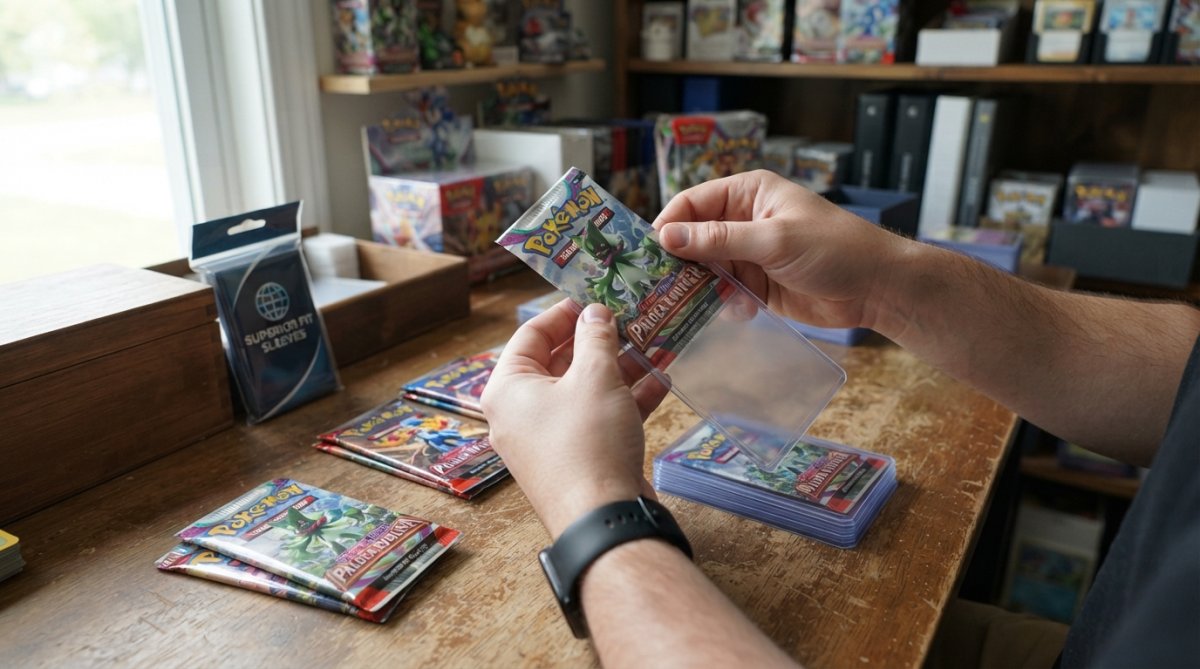
The difference comes down to one question: how much risk are you willing to accept? Loose packs have only the thin plastic wrap protecting the cards inside. Sleeved packs sit inside an additional protective layer, usually a clear polypropylene sleeve with a cardboard backing or a fitted plastic cover.
A sleeve prevents surface scratches, blocks UV light that fades pack art, and adds rigidity so the pack resists bending. Sleeved packs also stack more evenly, and the sleeve adds a layer of tamper-evident security, making it easier to spot if someone has opened the pack.
What sleeving does not do is change the contents. There is no connection between the sleeve and pull rates. The sleeve protects the packaging, not the odds.
What to Look For in Booster Pack Sleeves
Not all sleeves are worth your money. The material and fit decide whether a sleeve protects or just adds bulk. Look for four qualities before you buy.
Archival-grade, acid-free material. This is non-negotiable. Cheap PVC sleeves can off-gas over time, leaving a hazy film on the wrapper and potentially interacting with the card stock. Archival-safe polypropylene is inert and will not yellow or fog.
Precision fit. A sleeve that is too loose lets the pack slide around, which causes its own scratches. One that is too tight is a struggle to insert and risks bending the pack. The best sleeves are cut to the exact dimensions of a modern Pokemon booster pack.
Ultra-clear finish. You want to display the pack art, not hide it behind a cloudy film. High-transparency sleeves keep the pack visible while protecting it.
Tapered design for easy insertion. A tapered opening lets you slide the pack in smoothly without catching the corner. This sounds minor, but it prevents the most common cause of damaged wrappers during sleeving.
Top Booster Pack Sleeve Options Compared
The market for booster pack sleeves has grown alongside the collectible market, and several brands now offer dedicated options. Here are some options for collectors who want real protection, not just a plastic bag.
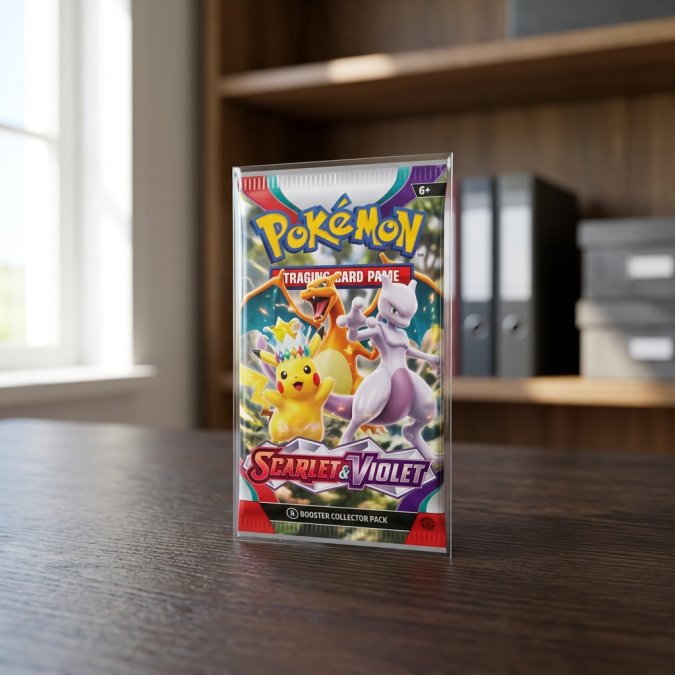
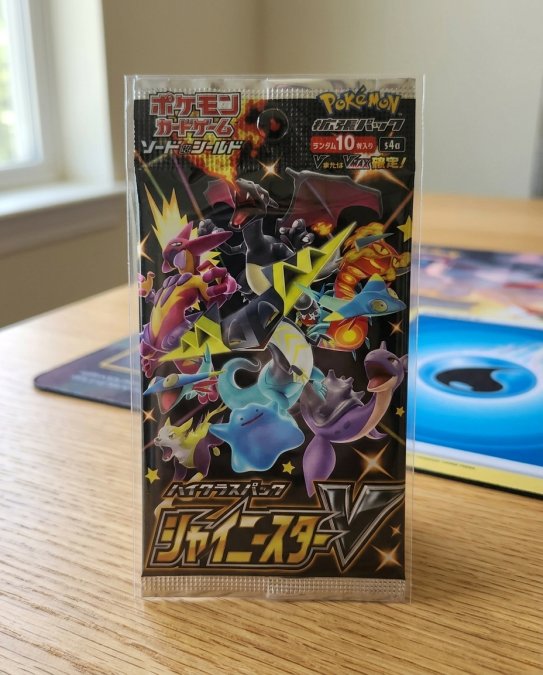
Superior Fit Sleeves Booster Pack Sleeves: Archival-Grade Choice
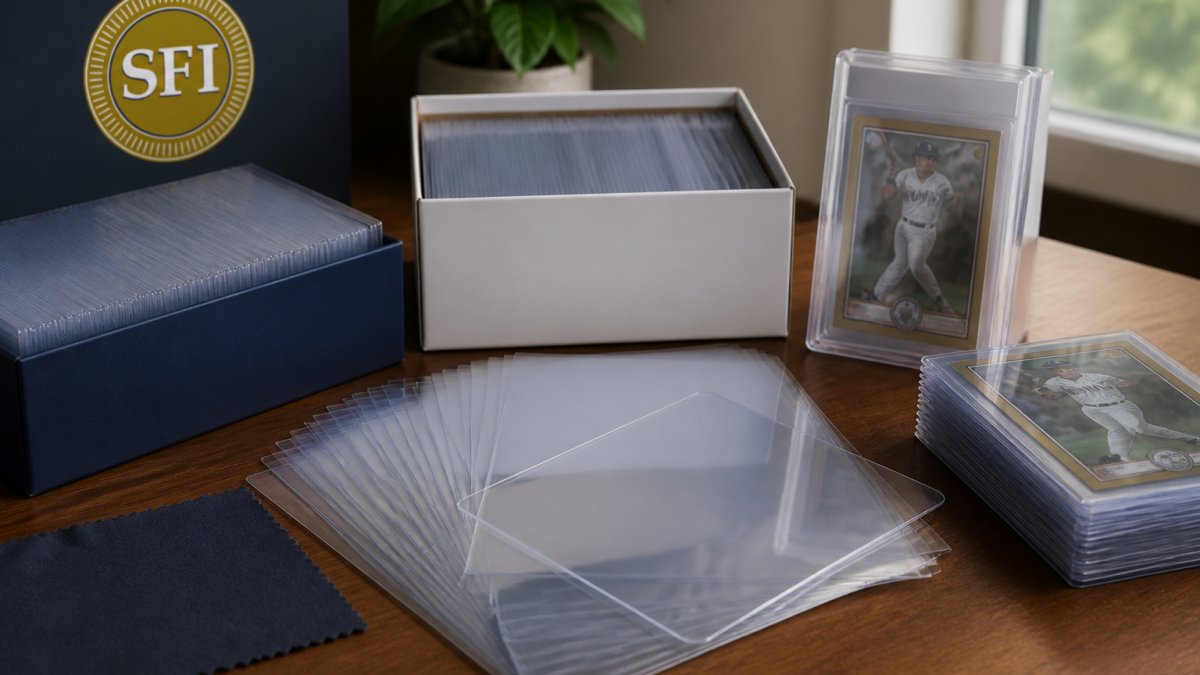
Superior Fit Sleeves offers sleeves for collectors who prioritize long-term preservation. These sleeves are precision-engineered for the exact dimensions of modern & the taller vintage Pokémon booster packs, using archival-safe, acid-free, and PVC-free polypropylene. The material is ultra-clear, and the tapered design makes insertion smooth and corner-safe.
Superior Fit Sleeves applies an archival-grade standard, using the same material science the brand applies to its graded slab sleeves, top-loader sleeves, and magnetic case sleeves. If you are protecting sealed product you intend to hold for years, the acid-free composition matters. The sleeves will not yellow, fog, or interact with the pack wrapper over time. For a collection with real value, this is a suitable option.
Dragon Shield: Maximum Durability
Dragon Shield brings its reputation for heavy-duty protection to booster packs. These sleeves use extra-thick material that resists tearing and splitting, and the clear finish is highly transparent. If you are rough on your collection or store packs in a way that involves frequent handling, the durability is a genuine advantage.
The thickness is also the main drawback. Dragon Shield sleeves take up more space in storage, so a box that holds a certain number of sleeved packs will hold fewer when using these. For collectors who value material thickness above all else, this is a solid option.
TitanShield and Gamegenic: Mid-Range Value
TitanShield offers a reliable middle ground. The sleeves are clear, archival-safe, and fit standard booster packs without fuss, protecting against humidity and dust at a more accessible price point. The material is slightly thinner than the premium options, which is the trade-off, but for casual collectors or those sleeving packs for short-term display, it gets the job done.
Gamegenic targets the display-focused collector. The sleeves are extra-clear with a professional presentation in mind, and the acid-free material is archival-safe. Availability can be spotty at smaller retailers, but when in stock, these are a strong mid-range pick.
Sleeve Brand | Material Quality | Clarity | Fit Precision | Best For |
|---|---|---|---|---|
Archival-grade, acid-free | Ultra-clear | Precision-cut, tapered | Long-term storage and investment protection | |
Dragon Shield | Extra-thick, durable | High transparency | Standard | Heavy handling and maximum durability |
TitanShield | Archival-safe, thinner | Clear | Standard | Reliable mid-range value |
Gamegenic | Acid-free | Extra-clear | Precision | Professional display |
How to Store Sealed Pokemon Booster Packs for Long-Term Safety
Sleeving is the first line of defence, but a long-term storage strategy is what separates a preserved collection from a depreciating one. Most online advice stops at 'keep it cool and dry,' which is not enough for collectors who plan to hold sealed product for five, ten, or twenty years.
The Three Environmental Killers: Humidity, Heat, and Light
Relative Humidity (RH) is the single most important factor in sealed pack preservation. The cardboard wrapper and the plastic film are both hygroscopic, meaning they absorb and release moisture from the air. When RH cycles up and down, the cardboard expands and contracts, leading to warping, softening, and a permanent loss of that crisp, flat feel that collectors prize. The industry-standard target for paper and cardboard archival storage is 30-40% RH. A simple digital hygrometer, available for around $10-$15 at most hardware stores, is an essential investment.
Temperature compounds the humidity problem. Warm air holds more moisture, which is why a hot attic or garage is a death sentence for sealed product. The ideal range is between 60°F and 70°F; avoid any location with wide temperature swings. A climate-controlled closet or an interior room away from exterior walls is a far better choice than a basement or an uninsulated space.
Light is the third factor. UV light, both from the sun and from fluorescent bulbs, causes photodegradation. This fades the ink on the pack art and can yellow the plastic film over time. For display purposes, use UV-filtering glass on frames or cases, and never place a collection in direct sunlight. For long-term storage, opaque, archival-safe containers are the safest option.
The Right Storage Container: Not All Plastic Is Equal
Many collectors make a critical mistake storing sleeved packs in a standard plastic tote from a big-box store. Many of these containers are made from plastics that off-gas volatile organic compounds (VOCs) over time, which can interact with your packs and cause a chemical breakdown that manifests as a hazy film or a distinct, unpleasant odor.
For archival storage, you need containers made from polypropylene (PP) or polyethylene terephthalate (PET) . These are inert plastics that do not off-gas. Look for containers labelled 'archival-safe' or those made from these specific resins. A common choice among serious collectors is a polypropylene storage bin with a gasket seal to keep out dust and pests. Avoid containers with a strong plastic smell when you open them; that is a sign of off-gassing.
The Role of Desiccants and Oxygen Absorbers
Silica gel packets are a good start, but they are not a set-and-forget solution; they absorb moisture until they reach capacity and then stop working. For serious long-term storage, consider a larger, rechargeable desiccant canister that can be dried out in an oven and reused.
For the highest level of protection, some collectors use oxygen absorbers inside their sealed storage containers. These small packets contain iron powder that oxidizes, removing oxygen and creating a low-oxygen environment that inhibits mold and mildew and slows oxidation. This is the same principle used by museums and archives.
A Step-by-Step Archival Storage Protocol
Here is a practical, repeatable process for storing sealed packs for the long term:
- Sleeve each pack in an archival-grade, acid-free polypropylene sleeve. This is your first layer of physical protection.
- Place the sleeved packs upright in a polypropylene storage bin. Do not overfill the bin; you want to avoid pressure on the packs.
- Add a rechargeable desiccant canister to the bin. Check it every few months and recharge it when the indicator changes color.
- Add an oxygen absorber if you are storing packs for more than a year. Replace it annually.
- Seal the bin with its gasket lid and store it in a dark, climate-controlled closet or room.
- Monitor the environment with a digital hygrometer. Check the RH level in the storage area at least once a month.
The 'Freezer' Myth and Why You Should Avoid It
A persistent myth is that freezing sealed packs preserves them. This is false and dangerous: the moisture inside the pack will freeze and expand, causing micro-tears in the card stock and wrapper, and thawing introduces condensation that can lead to mold. Never freeze your sealed product.
The Bottom Line on Long-Term Storage
The goal is to create a stable, inert environment that mimics a museum archive. By controlling humidity, temperature, and light, and using archival-safe materials, you can dramatically slow the aging process of your sealed packs, preserving the structural integrity that determines their value on the secondary market.
Extending Archival-Grade Card Protection to Graded Slabs
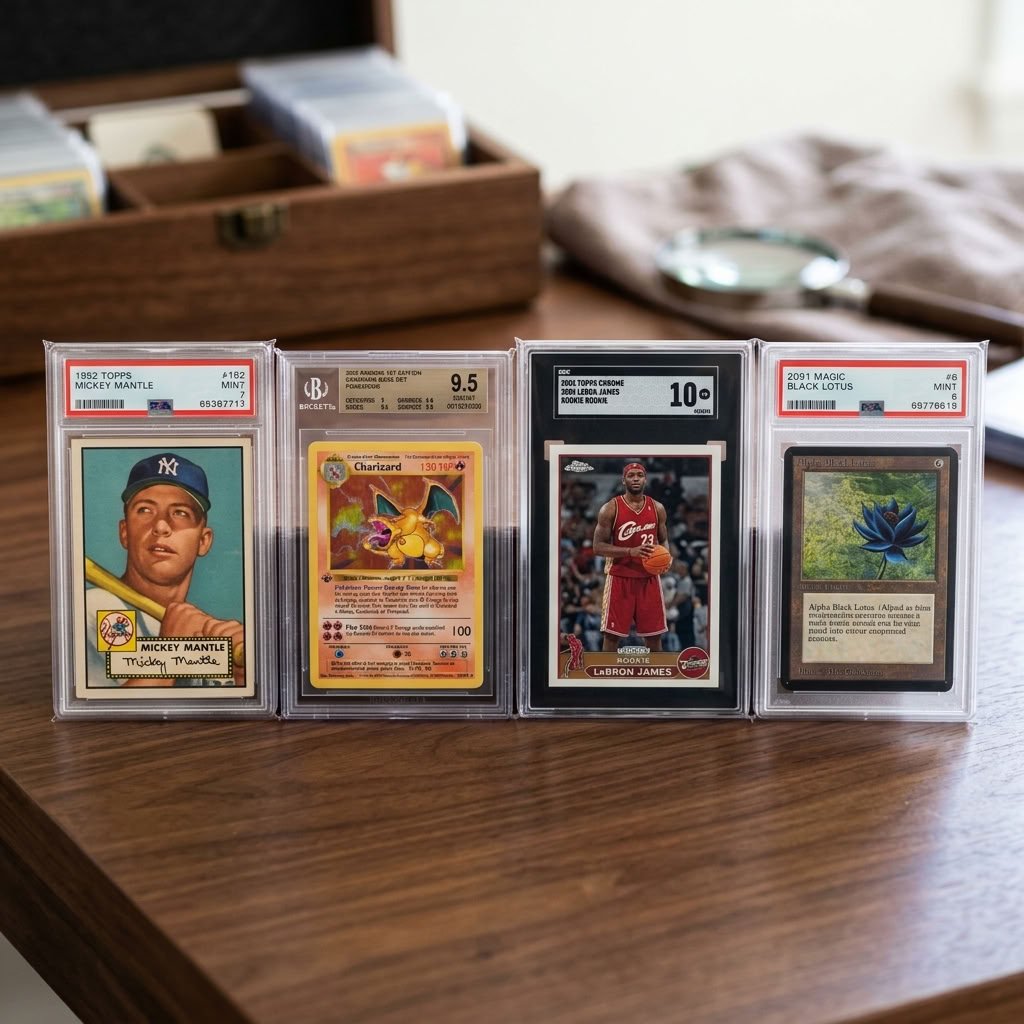
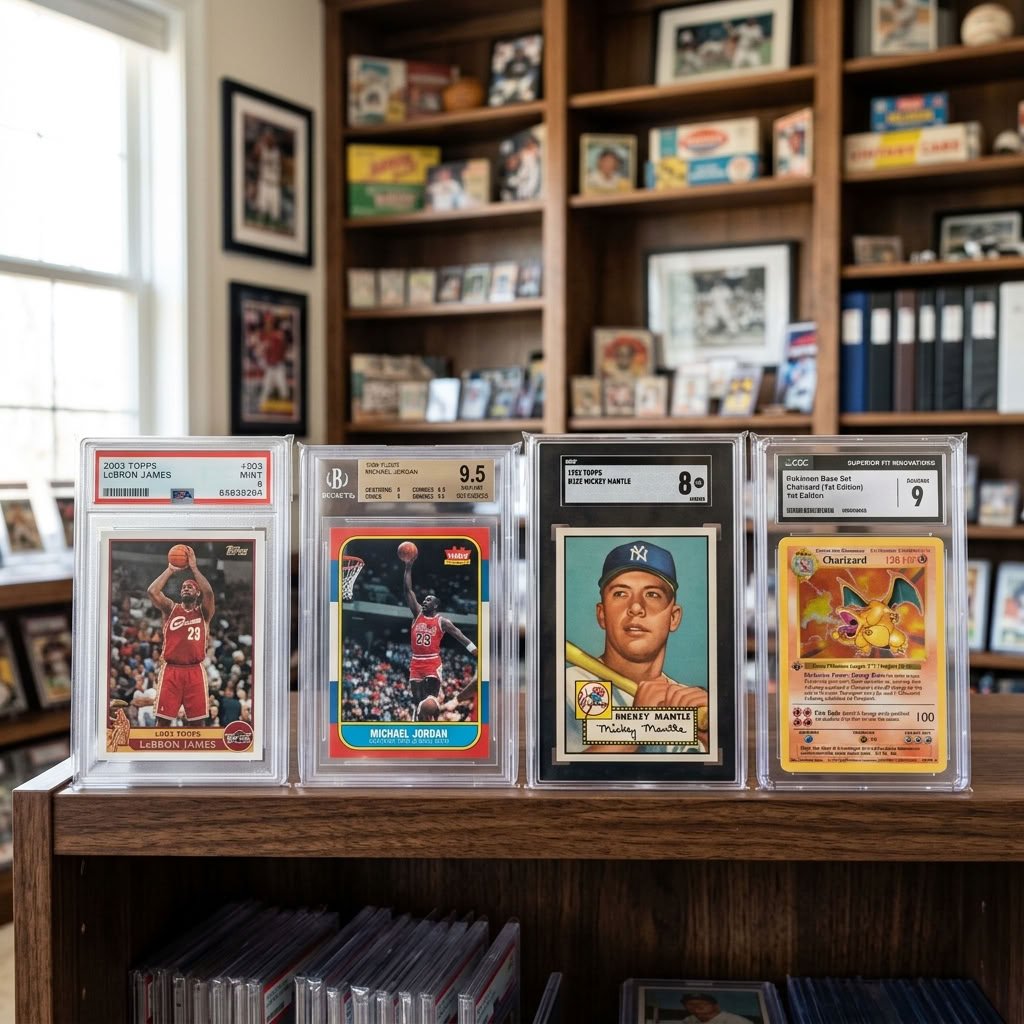
The same preservation logic applies to the rest of a serious collection. Graded slabs, whether PSA, BGS, or CGC, are designed to protect cards, but the slabs themselves are not immune to scratches; a scuffed holder loses display quality and can raise questions about the card's condition during a resale.
Archival-grade protection means using sleeves that are acid-free and precision-fit for the slab dimensions, not generic bags that rattle around. A fitted slab sleeve keeps the holder clean, prevents micro-scratches, and adds impact protection; clarity matters here as much as it does for booster packs, since the point of grading is to display the card.
For collectors who hold both sealed product and graded cards, the storage principles are identical. Control moisture, avoid UV light, and use archival-safe materials. Grading standards from PSA emphasize the importance of holder condition in determining a card's overall presentation.
Best Sleeves for Graded Slabs and Sealed Product Display
Display cases and shelves put your collection on show, but they also expose it to dust, UV light, and curious hands. Sleeves solve the dust problem and add tamper-evident security.
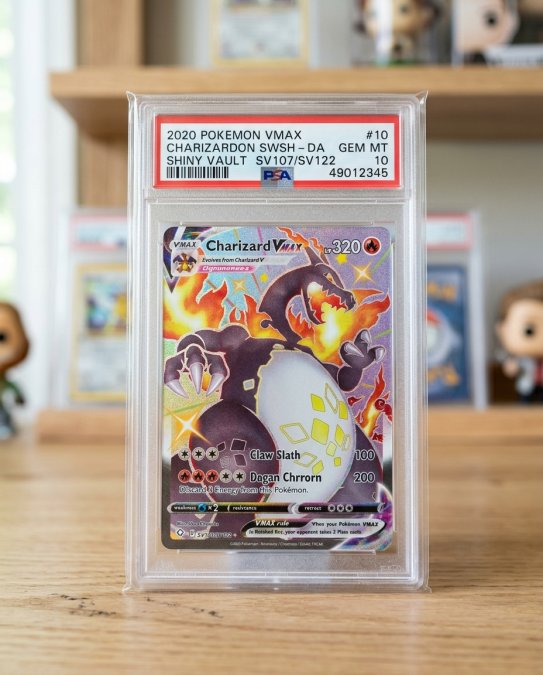
For graded slabs, a precision-fit sleeve from Superior Fit Sleeves is an option. The sleeves are cut to the exact dimensions of PSA, BGS, and CGC holders, so they fit snugly without being tight. The ultra-clear material keeps the card fully visible, and the archival-grade, acid-free composition ensures the sleeve itself will not degrade or yellow over the years. CGC's guidance on comic and card preservation similarly recommends archival-safe holders and sleeves for long-term storage.
For sealed booster packs on display, the same sleeve that protects in storage also works on a shelf. The key is consistency: use archival-grade materials throughout the collection so every item gets the same standard of care. Mixing cheap PVC sleeves with premium storage undermines the entire effort.
Final Verdict: Choosing the Right Protection for Your Collection
The decision comes down to what you are protecting and for how long. Casual collectors with a few packs for display can consider various options. Collectors who treat sealed product as a long-term investment may consider archival-grade sleeves from Superior Fit Sleeves, where the acid-free, precision-fit design is built for years of storage. The same logic applies to graded slabs and toploaders.
The throughline is simple. Packaging integrity is the foundation of collectible value. A sealed pack with a damaged wrapper, a graded slab with a scuffed holder, a card with yellowed edges from a cheap sleeve, all of these lose value in ways that are entirely preventable. The Pokemon Company's guidance on card care reminds collectors that proper handling and storage are essential to maintaining card condition over time.
Choose sleeves that match the value of what they protect. For a collection worth holding, that means archival-grade, acid-free, precision-fit protection from a brand that specializes in it. Superior Fit Sleeves has been the original inventor of perfect-fit tapered sleeves since 2014, and the booster pack sleeve line brings that same engineering to sealed product.
Frequently Asked Questions
Are sleeved booster packs better for protecting card value?
Yes. A sealed booster pack in mint condition holds more resale value than one with creases, dents, or a damaged wrapper. Sleeves act as a barrier against scuffs, dust, and moisture that degrade the pack art and cardboard backing over time. For collectors aiming to sell or grade sealed product later, preserving that original factory-sealed condition is essential.
What is the difference between standard and perfect-fit sleeves for booster packs?
Standard sleeves offer a looser fit with extra room around the pack, which can let the pack shift and rub against the sleeve interior. Perfect-fit sleeves, like the tapered designs from Superior Fit Sleeves, hug the booster pack precisely. This eliminates movement, reduces friction damage, and creates a cleaner display with less visible plastic wrap.
Do I need acid-free sleeves for my Pokemon collection?
For long-term storage, yes. Acid-free, archival-grade materials prevent chemical reactions that cause yellowing, fogging, or brittleness over time. Cheap PVC-based sleeves can off-gas and damage both the sleeve and the pack art. Look for polypropylene sleeves that are explicitly labeled archival-safe and PVC-free to ensure your collection stays in mint condition for decades.
How do you prevent damage to sealed Pokemon booster packs?
Keep packs in a cool, dry environment away from direct sunlight to avoid UV damage and temperature-related warping. Place each pack in a rigid or semi-rigid booster pack sleeve to guard against scuffs and dents. Store them vertically in a booster box or storage container to prevent crushing, and avoid areas with high humidity, which can cause moisture damage to the cardboard and pack art.