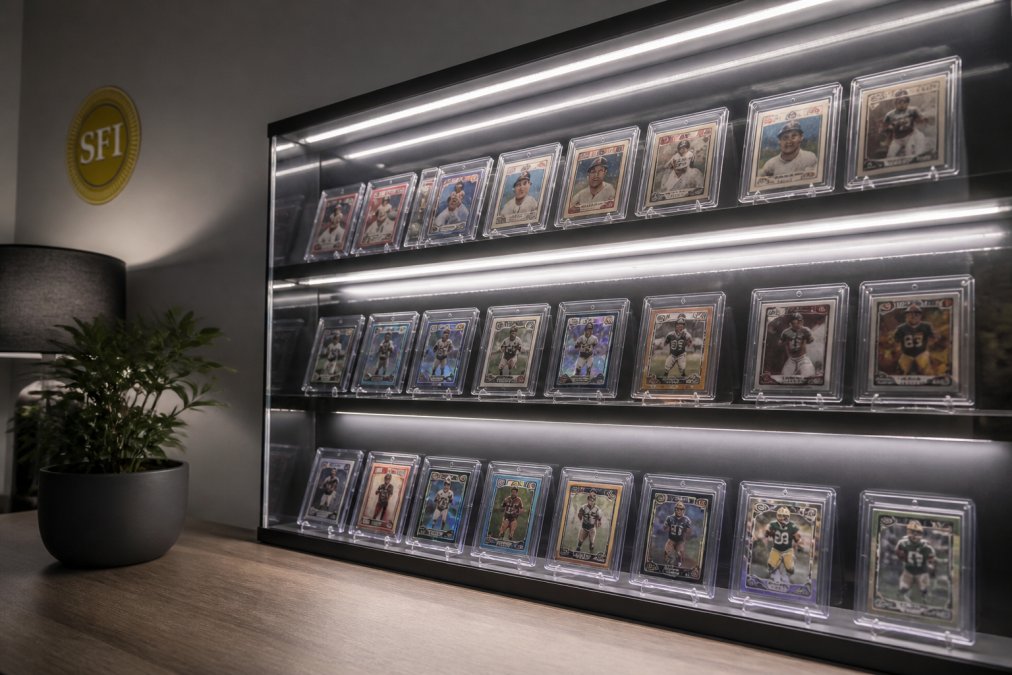
 ultimate-guide
Best Lighting for Card Display Cases: 2026 Guide
Table of Contents
- Why Card Display Lighting Matters for Preservation
- LED Strips vs. Puck Lights: Which Works Best
- The Best Color Temperature for Trading Cards
- UV Protection for Card Display Cases
- LED Strip Light Installation for Cabinets
- Reducing Glare on Acrylic Display Cases
- Smart Home Integration for Display Lighting
- Comparison: Top Lighting Options for Card Displays
- Frequently Asked Questions
Last Updated: September 22, 2026
Why Card Display Lighting Matters for Preservation
The wrong light can quietly destroy a collection worth thousands. This guide from Superior Fit Sleeves breaks down the best lighting for card display cases, heat, UV, color temperature, and installation, so you can find the best lighting for card display cases that protects your collection.
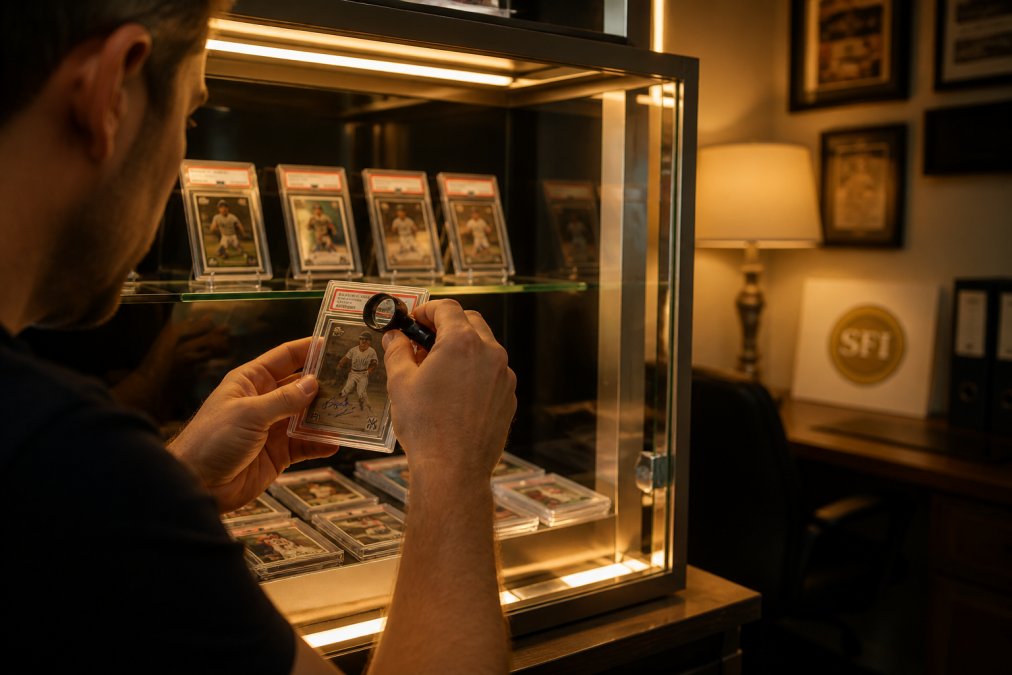
Heat, UV, and Fading: What Actually Damages Cards
Heat accelerates chemical breakdown in card stock and adhesives; UV attacks pigments and dyes directly, causing fading and yellowing.
LED Strips vs. Puck Lights: Which Works Best
LED strips provide even, continuous coverage along a shelf; puck lights deliver concentrated, directional light on individual cards. Neither is universally better, and many collections benefit from both.
| Feature | LED Strips | Puck Lights |
|---|---|---|
| Coverage | Even, continuous | Focused, spot |
| Best for | Full shelves, rows of slabs | Single high-value cards |
| Installation | Adhesive backing, cuttable | Adhesive or magnetic mounts |
| Heat output | Low | Low |
| Typical use case | Cabinet-wide ambient lighting | Accent lighting |
When to Choose LED Strips
Choose LED strips for an entire shelf or cabinet where you want consistent brightness across every card. They're cuttable at marked intervals, mount with adhesive backing, and run on 12-volt power supplies.
When to Choose Puck Lights
Choose puck lights to draw the eye to one or two standout cards rather than illuminate everything evenly. Their small form factor tucks into corners discreetly, and adjustable brightness controls the spotlight a card receives.
The Best Color Temperature for Trading Cards
The best color temperature for trading cards sits between 3000K and 4000K, balancing accurate color rendering with a neutral tone. Warmer light flatters vintage stock; cooler light suits modern chrome and foil.
Kelvin Ratings Explained: 2700K to 6500K
Kelvin ratings describe the color of light, not its brightness: lower numbers are warmer and more yellow, higher numbers cooler and more blue.
- 2700K (warm white): Cozy, amber-toned. Flatters vintage cards but can make modern foils look dull.
- 3000K-3500K (neutral white): The sweet spot for most collections. Accurate without feeling clinical.
- 4000K-5000K (cool white): Crisp and clean. Good for chrome, refractors, and modern parallels.
- 6000K-6500K (daylight): Very blue. Can wash out warm-toned cards and feels harsh in a home setting.
UV Protection for Card Display Cases
UV protection for card display cases is usually treated as a single checkbox: buy low-UV LEDs, add UV acrylic, done. That misses which wavelengths do the damage and how fast. UV is only one slice of the fading problem, the visible spectrum does its own slow work on card inks.
What Each Light Source Actually Emits
- Incandescent and halogen: Meaningful UV output plus high heat. Halogen is the worst common offender for display use because it combines UV with infrared heat close to the card.
- Standard white LEDs: Very low UV, low heat. The dominant choice for preservation-minded collectors.
- Fluorescent (including CFL): Emits UV that phosphor coatings only partly convert; older tubes and cheap fixtures can leak more than expected.
- Direct sunlight: The single largest UV and total-light source in any home. No lamp comes close.
A common pattern: a collector upgrades to LEDs but leaves the cabinet beside a south-facing window. The lamp is no longer the problem; the window is.
UV-Filtering Acrylic and Slab Protection
UV-filtering acrylic blocks most of the ultraviolet spectrum that causes fading, though it does nothing about heat or visible-light damage, it's one layer in a system, not a complete solution. It also degrades: the UV-blocking additives are consumed over time, so a panel that blocked most UV when new will block less after years of sun exposure.
A Practical Preservation Stack
For a collection you intend to keep sharp for decades, layer defenses in this order:
- Control total light exposure. Keep cases out of direct sun and away from windows. This matters more than any bulb choice.
- Use low-UV, low-heat LEDs. They remove the two fastest damage paths from the lamp itself.
- Add UV-filtering acrylic to the case front if ambient light is unavoidable.
- Sleeve the slab to protect the plastic surface and slow its yellowing.
- Limit on-time. Run display lights on a schedule rather than 24/7; every hour of light is a small withdrawal from the card's long-term appearance.
LED Strip Light Installation for Cabinets
LED strip light installation for cabinets takes about 30 to 60 minutes per shelf and requires four things: strips, a 12-volt power supply, connectors, and a plan for hiding wiring. Get the wiring right and the rest is straightforward.
Wiring, Power Supplies, and Cable Management
Cable management is where most DIY installs fall apart. A perfectly lit case still looks amateur if wires dangle across the shelves.
- Measure each shelf run before cutting. Strips are cuttable only at marked intervals, so plan lengths around those points.
- Match the power supply to total strip length. A 12-volt supply that's underpowered causes dimming at the far end of a run.
- Route wires along the back edge or behind a shelf lip, then bundle them with adhesive clips.
- Use connectors rated for your strip width, and test every run before mounting permanently.
- Keep the power supply outside the case where possible, so heat and clutter stay away from the cards.
The single biggest upgrade to any display setup isn't brighter light; it's cleaner wiring. Hidden cables make a mid-range cabinet look custom, while visible wires make an expensive case look unfinished.
Reducing Glare on Acrylic Display Cases
Glare on acrylic display cases comes from light hitting a reflective surface at a direct angle, and the fix is almost always repositioning rather than new equipment. But graded slabs add a wrinkle most guides ignore: you're lighting a glossy plastic brick with its own front face, internal reflections, and often a foil or chrome card surface underneath, each reflecting light differently.
Why Slabs Glare More Than Bare Cards
A raw card has a matte or lightly glossed paper surface that scatters light in many directions. A graded slab has a smooth, hard acrylic face that reflects light in a tight, mirror-like cone, so a single bright source produces a single sharp reflection. Holographic, refractor, and chrome cards act like tiny mirrors inside the slab, throwing highlights back at the viewer, the classic complaint of a beautiful card that looks like a white blob under the display light.
Positioning Rules That Actually Work
- Get the light off the viewing axis. Angle the source downward at roughly 30 to 45 degrees and offset it to one side rather than pointing straight at the card. The reflection cone then points away from your eye.
- Light from above and slightly behind the viewer's shoulder. This is the standard museum approach: the source is high and forward, so the glare cone bounces toward the floor, not the viewer.
- Keep the front panel clean. Fingerprints, dust, and smudges scatter light and turn a mild reflection into a hazy wash. A microfiber cloth and a plastic-safe cleaner do more for glare than most hardware changes.
- Diffuse the source. A diffuser spreads the beam so the reflection becomes a soft glow instead of a hard hot spot. Frosted diffuser film over a strip or a diffuser cap on a puck light both work.
- Reduce brightness, don't just reposition. A dimmer reflection is a less distracting reflection. Dimmable modules let you find the lowest brightness that still reads the card clearly.
Matching the Fix to the Case Type
- Glass-front cabinets: The front pane is the biggest reflector. Angle interior lights downward and keep the pane spotless; consider an anti-reflective film if glare persists.
- Acrylic display cases: Acrylic reflects slightly less than glass but scratches more easily, and scratches scatter light. Handle panels by the edges and store them covered.
- Open shelves: No front panel to fight, so glare comes only from the card and slab face. The 30-45 degree rule handles most of it.
- Wall-mounted cases: External arm lights mounted above the case keep heat and wiring outside the display entirely and can be angled to avoid the reflective angle that causes glare on the front panel.
When Glare Is a Surface Problem, Not a Lighting Problem
Sometimes the reflection isn't from your lamp at all. Scratched acrylic, cloudy slab plastic, and yellowed cases scatter light and create a permanent haze no repositioning will fix. If a slab's face looks dull even under soft light, the plastic is the issue, an archival-grade outer sleeve restores a clean, clear surface layer while protecting the slab underneath.
Smart Home Integration for Display Lighting
Smart home integration lets you control display lighting from your phone, set schedules, and adjust brightness or color temperature without opening the case, turning manual switches into one scene.
Comparison: Top Lighting Options for Card Displays
Here's how the main options stack up, from DIY strips to turnkey cabinets.
| Option | Best For | Key Feature | Setup |
|---|---|---|---|
| LED strips | Full shelves, even coverage | Cuttable, adhesive backing, 12V | DIY, 30-60 min per shelf |
| Puck lights | Highlighting single cards | Adjustable brightness, magnetic mounts | Quick, no wiring |
| Arm lights | Wall-mounted cases | Angled 30-45 degrees, glare reduction | External mount |
| Smart modules | Multi-cabinet setups | Selectable color temperature, dimmable | Moderate |
| Integrated cabinets | Turnkey displays | Built-in LED, concealed wiring | None |
Frequently Asked Questions
What is the best type of lighting for a display case?
LED lighting is the best choice for card display cases because it runs cool, uses little energy, and comes in dimmable options. LED strips work well for even shelf lighting, while puck lights suit targeted spotlighting. Look for lights rated 3000K to 4000K with a CRI above 90 for accurate color. Avoid halogen or incandescent bulbs, which produce heat that can warp cards and damage acrylic slabs over time.
Does LED lighting cause fading in trading cards?
LEDs emit very little UV radiation compared to fluorescent or halogen sources, so fading risk is low. However, any light exposure over years can slowly degrade inks and foil. Use UV-filtering acrylic cases, keep brightness moderate, and limit continuous illumination. Rotating displayed cards and using dimmable LEDs further reduces cumulative exposure. Proper UV protection for card display cases is the most reliable way to prevent long-term fading.
What color temperature is best for displaying sports cards?
The best color temperature for trading cards sits between 3000K and 4000K. Warm white (2700K to 3000K) flatters vintage cards and wood cabinets, while neutral white (3500K to 4000K) shows foil, holographic, and chrome finishes accurately. Cool white (5000K and above) can wash out colors and create harsh reflections on acrylic slabs. Match the Kelvin rating to your card types and room lighting for consistent results.
How do I install LED strips in a card display cabinet?
Clean the mounting surface, then press the adhesive backing of the LED strip along the front or side edge of each shelf. Route wiring through corners using clips or channels to hide cables. Connect strips to a 12-volt power supply sized for the total length, and use a dimmer for brightness control. Test the layout before securing everything permanently, and keep strips away from direct contact with card slabs to avoid hot spots.
Lighting a collection well takes planning, and the wrong setup can fade a card before you ever notice the damage. Superior Fit Sleeves builds the protection layer that works alongside your lighting: archival-grade, acid-free sleeves with a precision-cut, ultra-clear fit for PSA, BGS, and CGC slabs, top-loaders, and magnetic cases. Get started with Superior Fit Sleeves and give your display the clarity and protection it deserves.