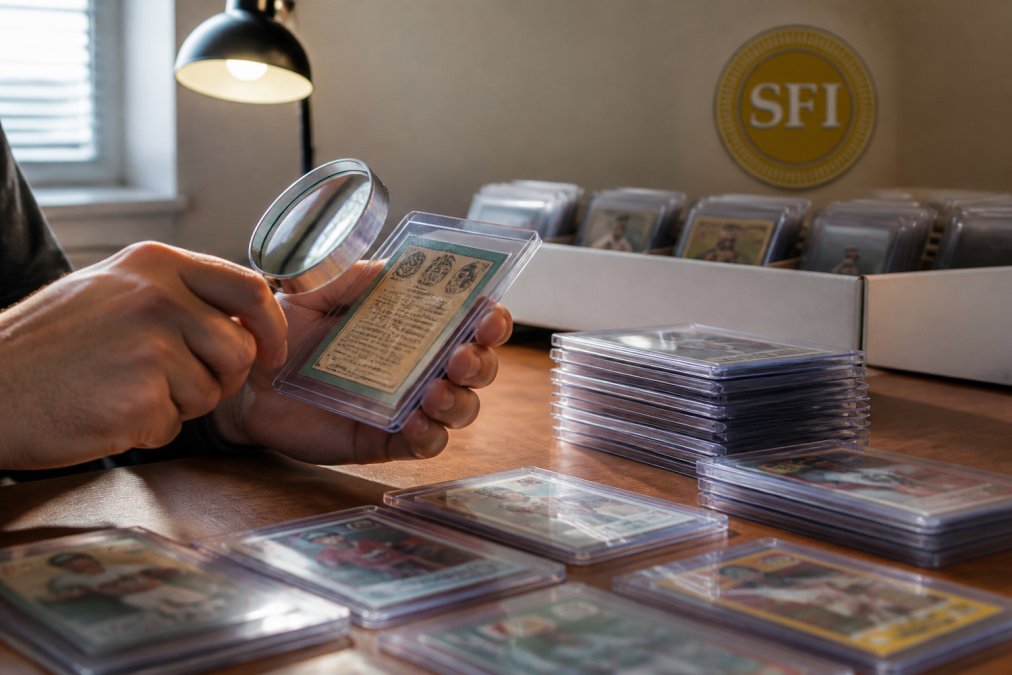
 ultimate-guide
Are Graded Guards Worth It? A Collector's Guide
Table of Contents
- What Are Graded Card Guards and Why Collectors Use Them
- Graded Card Protectors: Core Benefits for Your Collection
- UV Protection and Long-Term Slab Durability
- Best Slab Sleeves for PSA, BGS, and CGC Slabs
- How to Store Graded Cards for Maximum Preservation
- Resale Value Impact: Do Guards Protect Your Investment?
- Pros and Cons: Is the Cost Justified?
- Frequently Asked Questions
Last Updated: September 21, 2026
What Are Graded Card Guards and Why Collectors Use Them
Graded guards worth considering are protective sleeves specifically designed to fit around graded trading card slabs. These slabs come from professional grading companies like PSA, BGS, and CGC, which encapsulate and authenticate cards in tamper-evident holders. The guards add an extra layer of protection without compromising the slab's integrity or the card's visibility.
Collectors use graded guards to shield valuable slabs from dust, scratches, scuffs, and handling wear. While slabs are protective, they're not immune to micro-abrasions or environmental damage over time, precision-fit sleeves make a measurable difference.
Superior Fit Sleeves specializes in archival-grade protective solutions engineered specifically for graded slabs. Since 2014, we've designed sleeves that fit snugly around PSA, BGS, CGC, and other major grading company cases. Proper fit is critical: loose sleeves allow cards to shift and create friction, while too-tight sleeves stress the slab's edges.
Graded Card Protectors: Core Benefits for Your Collection
Graded card protectors reduce the risk of direct contact damage. When you handle a slab, your fingers can leave oils or cause micro-scratches on the case surface. A protective sleeve acts as a barrier, preventing direct contact with the slab.
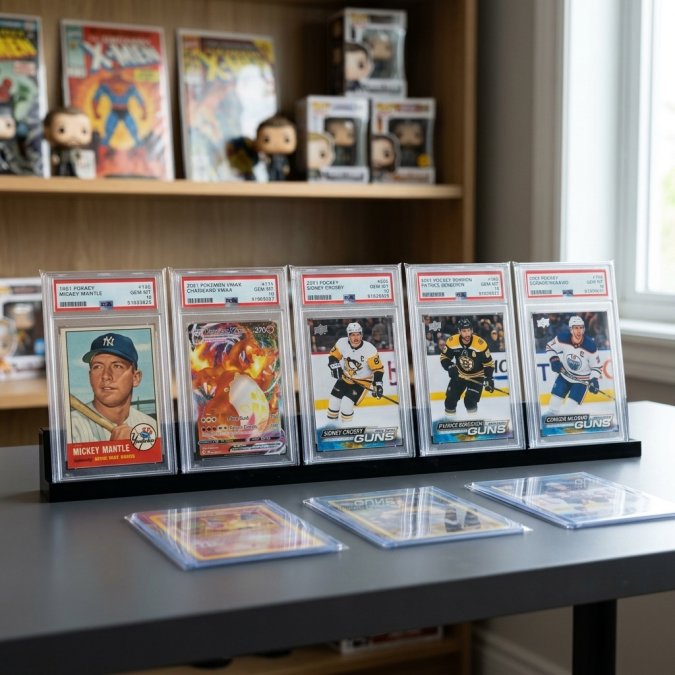
Close-up of graded trading card slabs in precision-fit protective sleeves.
Sleeves also improve storage organization by creating consistent dimensions and reducing friction between cases, making stacking and shelving easier.
A uniform set of clear, distortion-free sleeves creates a professional appearance while preserving card visibility, important for displaying high-value pieces.
Archival-grade sleeves prevent chemical degradation over decades. Cheap sleeves can yellow, fog, or off-gas over time, damaging cards. Premium sleeves maintain clarity and integrity long-term.
UV Protection and Long-Term Slab Durability
UV damage is a legitimate concern for collectors who display cards in natural light. However, the relationship between protective sleeves and UV defense is more nuanced than most collectors realize.
Standard protective sleeves do not block UV rays. However, sleeves provide indirect UV protection by encouraging storage in boxes rather than open display. The real UV defense comes from your storage environment, not the sleeve itself.
Archival-grade sleeves resist yellowing and off-gassing, preventing the sleeve itself from becoming a source of chemical degradation inside the case. This matters more than UV blocking for long-term preservation.
Long-term slab degradation is driven by UV exposure, temperature fluctuation, and humidity. Premium archival sleeves are acid-free and formulated to allow minimal moisture exchange, preventing moisture trap.
A slab in an archival-grade sleeve, with consistent temperature (65-75°F) and humidity (30-50%), will remain clear and structurally sound because the sleeve's material composition prevents moisture accumulation and chemical off-gassing.
For long-term preservation, archival-grade materials prevent the sleeve from becoming a degradation vector. Combined with proper storage conditions, cool, dry, away from direct sunlight, a quality protective sleeve extends slab lifespan.
Best Slab Sleeves for PSA, BGS, and CGC Slabs
Different grading companies use slightly different slab dimensions. A sleeve that fits perfectly on a PSA slab might be loose on a BGS or too tight on a CGC, which is why precision fit matters.
Superior Fit Sleeves manufactures precision-cut sleeves for each major grading company, engineered to fit snugly without excessive pressure. The fit is tight enough to prevent shifting but not so tight that it stresses the slab edges.
When evaluating sleeves for your collection, check the manufacturer's specifications. They should clearly state which grading companies their sleeves fit. A generic "one-size-fits-all" sleeve is a red flag, it won't perform well across different slab types.
Material clarity is also important. You want to display your cards, not hide them. Ultra-clear materials allow the card and slab to be fully visible without distortion. Cloudy or yellowing sleeves defeat the purpose of protecting your investment.
Consider whether you need sleeves for top-loaders as well. Many collectors mix formats, some cards in magnetic cases, others in top-loaders. You may need different sleeve types depending on your storage method. Superior Fit Sleeves offers specialized options for top-loaders and magnetic one-touch cases, so your entire collection can have consistent protection.
How to Store Graded Cards for Maximum Preservation
Proper storage is the foundation of long-term card preservation. Even the best protective sleeves can't compensate for poor environmental conditions.
Temperature stability is critical. Extreme heat damages cards and slabs. Extreme cold makes polycarbonate brittle. Aim for consistent room temperature between 65-75 degrees Fahrenheit. Avoid basements prone to flooding, attics that heat up, or garages that freeze in winter.
Humidity control prevents warping and mold growth. High humidity encourages fungal growth inside slabs. Low humidity can cause card stock to become brittle. A humidity level between 30-50% is ideal. If you live in a humid climate, consider storing your collection in a climate-controlled cabinet with a dehumidifier.
Stacking and shelving matter. Don't stack slabs more than a few high without support. Weight can damage cards at the bottom of a tall stack. Use shelving with proper support to prevent sagging. Organize by grading company so you can quickly identify which sleeves fit which cards.
Keep cards away from direct sunlight. UV damage is cumulative and irreversible. If you display cards, use UV-filtering glass or acrylic in your display case. For long-term storage, keep cards in opaque boxes or drawers.
Handling should be minimal. Every time you remove a slab from storage, you risk accidental damage. If you must handle cards, use protective sleeves to reduce direct contact with the slab. Keep your hands clean and dry. Avoid touching the slab surface directly.
Document your collection. Take photos and keep records of card condition, purchase price, and grading details. This documentation is valuable if you ever need to file an insurance claim or sell cards.
Resale Value Impact: Do Guards Protect Your Investment?
Collectors often ask whether graded guards worth the investment preserve resale value. The answer hinges on buyer perception and the specific price tier of the card.
A protective sleeve doesn't directly add value to a card, but it prevents value loss by maintaining slab condition. A card stored without protection accumulates micro-abrasions, dust particles embedded in the case, and handling wear. Over years, these visible defects degrade the slab's appearance. When you sell, a buyer sees a worn case and questions whether the card inside is still in the condition the grader certified. Even if the card's condition is unchanged, the slab's cosmetic wear signals poor stewardship, which erodes buyer confidence and justifies a lower offer.
A card stored in a protective sleeve maintains the slab's cosmetic integrity. The case stays clear, free of scratches, scuffs, and dust. When you sell, the buyer sees a pristine slab. This visual signal of care translates to buyer confidence in condition and, often, a higher selling price.
Buyer psychology differs by price tier. For cards worth $50 or less, most buyers focus on the card's intrinsic grade and don't scrutinize slab cosmetics heavily. A sleeve's protective benefit is marginal. For cards worth $100-$500, slab condition becomes a secondary factor in pricing. Visible wear on the case can justify a 5-10% price reduction, even if the card inside is flawless. A protected slab avoids this penalty. For cards worth $1,000 or more, slab cosmetics are critical. High-end collectors and dealers expect museum-quality presentation. A scratched or cloudy case on a five-figure card raises red flags about authenticity or handling history. A pristine, guarded slab signals professional stewardship and commands full market price.
Tamper-evidence perception is an underappreciated factor. A slab stored in a protective sleeve appears untouched and original. A bare slab with visible handling wear raises subtle questions: Has this case been opened? Has the card been removed and reinserted? These concerns are rarely voiced explicitly, but they influence buyer willingness to pay. A guarded slab eliminates this psychological friction by presenting the card as sealed and undisturbed since grading.
The financial math is straightforward. For a card worth $500, a sleeve can represent a small percentage of the card's value.
Pros and Cons: Is the Cost Justified?
Aspect | Pro | Con |
|---|---|---|
Protection | Prevents scratches, scuffs, and handling wear | Doesn't protect against environmental damage alone |
Display | Enhances visual presentation with clarity | Adds slight bulk to collection footprint |
Durability | Archival-grade materials last decades | Requires proper storage conditions to be effective |
Cost | Relatively inexpensive per card | Adds up with large collections |
Ease of Use | Simple to apply and remove | Requires correct size for proper fit |
Resale Value | Helps preserve slab condition | Doesn't directly increase card value |
The pros are straightforward. Protective sleeves prevent visible damage to your slabs, maintain display quality, and cost very little per card. For serious collectors with valuable cards, they're a no-brainer.
Frequently Asked Questions
Do graded guards prevent scratches and scuffs on slab surfaces?
Yes. Protective sleeves create a physical barrier between your slab and dust, handling wear, and micro-abrasions. Polycarbonate and acrylic sleeves prevent direct contact with the case, reducing the risk of surface scratches. However, guards protect the outer slab case itself, not the card inside—the grading company's original casing already protects the card. Guards add an extra layer of defense for the slab's integrity during storage and display.
Will graded card protectors fit PSA, BGS, and CGC slabs equally well?
Slab dimensions vary slightly between grading companies. PSA cases, BGS cases, and CGC cases have different measurements. Precision-fit sleeves engineered for specific slab types ensure a snug fit without excess space or tightness. When selecting protective sleeves, verify compatibility with your grading company's slab dimensions. Universal sleeves may fit multiple brands but often leave gaps or fit too snugly, compromising protection and display aesthetics.
How do I know if a protective sleeve won't yellow or degrade over time?
Look for archival-grade, acid-free materials certified for long-term preservation. Quality sleeves use materials that resist yellowing and chemical breakdown. Reputable manufacturers provide transparency about composition. When evaluating options, ask about material certifications and how the manufacturer verifies long-term stability.
Does adding a guard affect the resale value of a graded card?
Protective sleeves do not diminish resale value when removed before sale. Buyers care about the graded slab's condition and grade, not the external protective case. In fact, collectors who received slabs in guards often report them arriving in better condition. The sleeve protects value during storage and transit. Remove the guard before selling if the buyer prefers the original slab presentation, or keep it on if the buyer values the added protection during shipping.