 listicle
Alternatives to Standard Plastic Card Stands
Table of Contents
- Why Standard Plastic Card Stands Fall Short
- Acrylic Card Display Stands: Clear, Durable, and Versatile
- Best Card Stands for Graded Slabs: Material-by-Material Breakdown
- DIY Card Display Ideas That Actually Work
- Specialty and Premium Card Display Alternatives
- Space-Saving Configurations and Ergonomic Display Tips
- Protecting Slabs Before You Display Them
- Conclusion
Last Updated: August 27, 2026
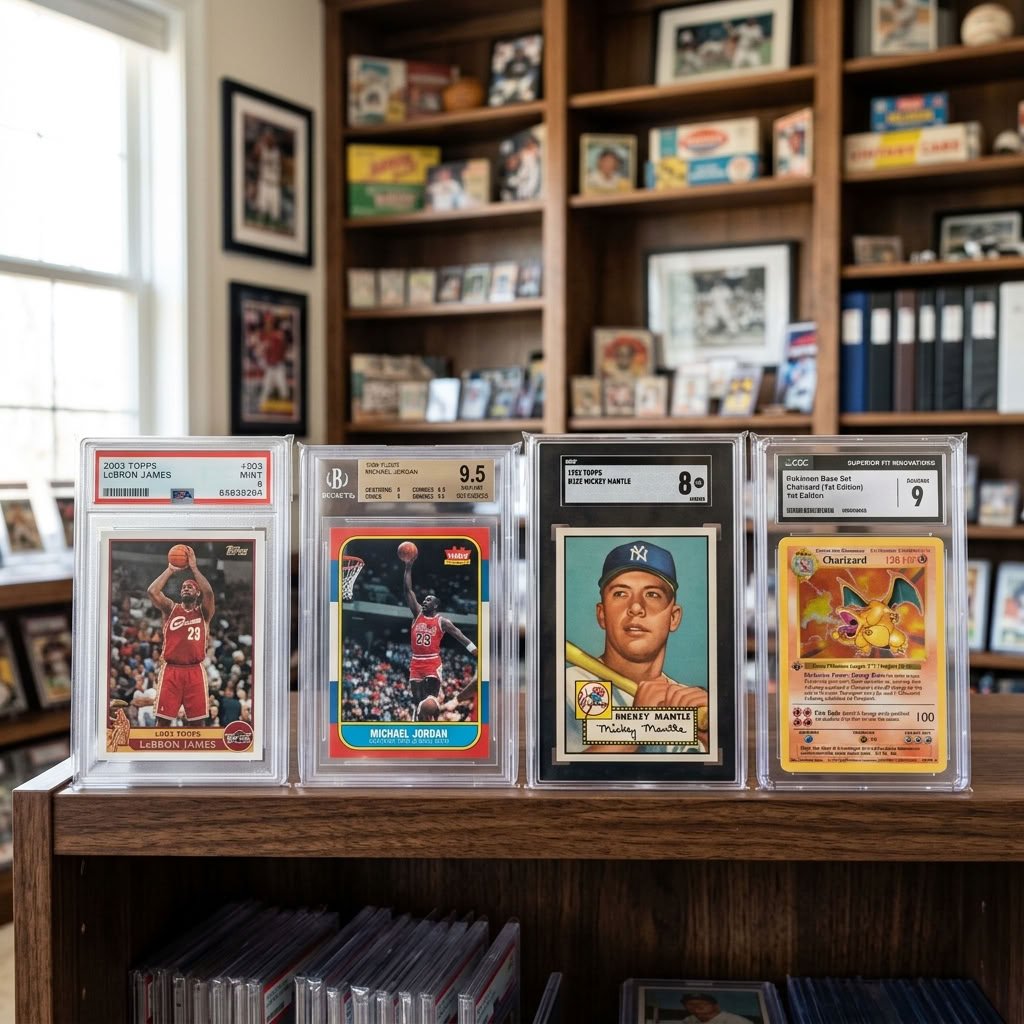
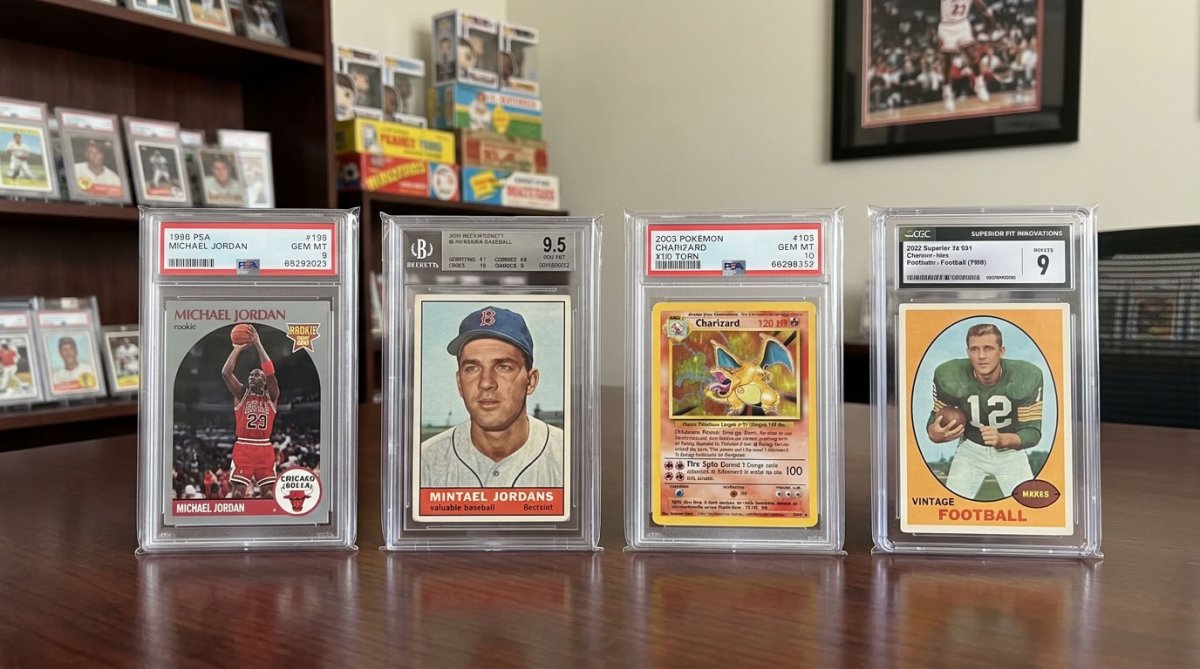
Standard plastic card stands wobble, scratch, and look cheap next to a PSA 10 or BGS 9.5. At Superior Fit Sleeves, we work with collectors who've invested heavily in graded slabs only to undercut the presentation with a flimsy stand that tips over at the slightest nudge. This guide covers the best alternatives to standard plastic card stands across every material, price point, and use case, so your display matches the quality of what you're protecting.
Why Standard Plastic Card Stands Fall Short
Standard plastic stands are injection-molded polystyrene with a narrow base slot, designed for raw cards, not the substantially thicker and heavier graded slabs from PSA, BGS, or CGC. They lean, rock, and topple under that weight.
Polystyrene also degrades. It yellows under UV exposure, becomes brittle over time, and can scratch slab surfaces if slot edges aren't properly finished. For a collector who's paid grading fees and acquisition costs on a card worth hundreds or thousands of dollars, that's unacceptable.
A cloudy, scratched plastic stand diminishes the visual impact of a high-grade slab. Serious collectors display their cards as collectibles and investments, and the stand is part of that presentation. The alternatives in this guide address all three failure points: stability, material quality, and visual presentation.
Acrylic Card Display Stands: Clear, Durable, and Versatile
Acrylic card display stands are the most widely used upgrade from standard plastic. The material is optically clear, significantly more durable than polystyrene, and resistant to yellowing under normal display conditions. A quality acrylic stand lets the card be the focal point without visual interference.
Acrylic stands designed for trading cards feature a machined or laser-cut slot calibrated to specific thicknesses, whether that's a standard 35pt card, a top-loader, or a graded slab. Slot depth and width matter considerably: too loose and the slab wobbles; too tight and you risk scratching the case edges on insertion.
Extra-thick acrylic construction, often 3mm or more, provides meaningful rigidity. Thinner acrylic stands flex under load, recreating the instability problem you're trying to escape. When evaluating acrylic stands, thickness is the first specification to check.
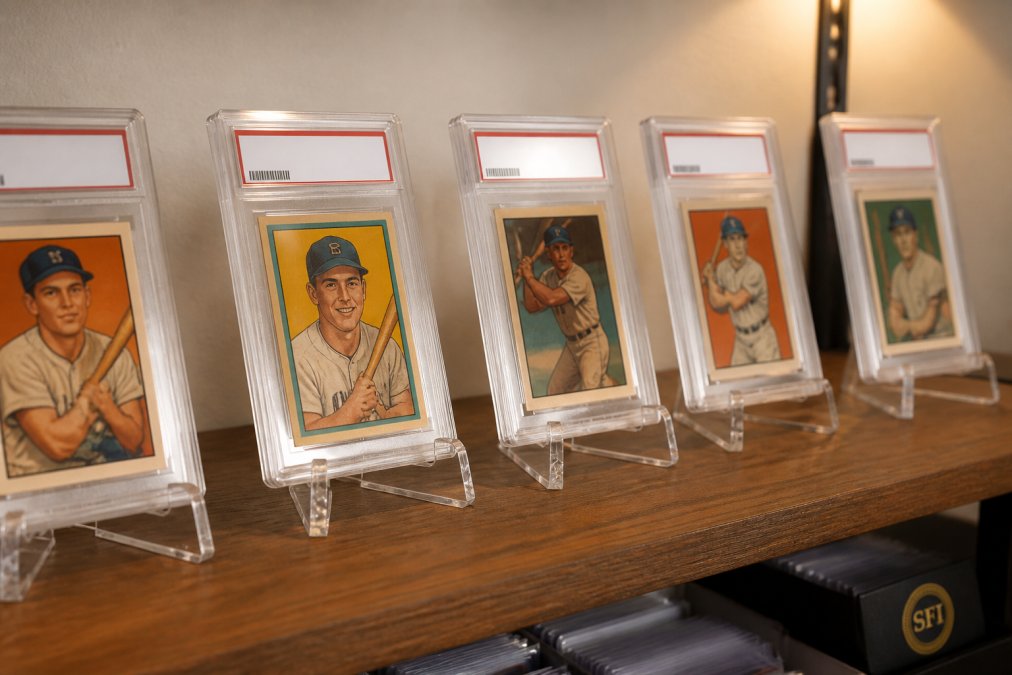
According to the Hobby Collectors Network community resource on display materials, acrylic outperforms polystyrene on scratch resistance and optical clarity across long-term display scenarios, making it the standard recommendation for any collector displaying graded slabs.
Vertical vs. Horizontal Orientation for Acrylic Stands
Vertical orientation is the default for most acrylic card display stands and the right choice for individual showcase pieces. A vertically displayed slab reads like framed artwork: the full card face is visible, the label is prominent, and the stand occupies minimal shelf space.
Horizontal orientation serves a different purpose. Some collectors prefer to lay slabs flat in display cases with glass lids or shadow boxes where overhead viewing is the primary angle. Horizontal acrylic stands are also useful for photography, eliminating parallax distortion when shooting a vertically tilted card.
The practical decision comes down to your display environment. Shelving with depth favors vertical. Flat display cases and photography setups favor horizontal.
Stability and Weighted Base Considerations
A weighted base is the single most important feature for any acrylic card display stand holding a graded slab. Standard acrylic stands rely on base width for stability, which works for raw cards but fails for the additional mass of a PSA or BGS case.
Weighted bases, typically achieved through thicker acrylic at the base or an integrated metal insert, lower the center of gravity and prevent tipping. This is especially relevant for collectors displaying slabs near air vents, in high-traffic areas, or on surfaces that experience vibration.
The real difference between a reliable acrylic stand and a frustrating one comes down to slot depth combined with base weight. A shallow slot with a light base is a toppling risk. A deep slot with a weighted base is a stable display platform.
Best Card Stands for Graded Slabs: Material-by-Material Breakdown
Choosing the best card stands for graded slabs requires matching material properties to your specific use case. Each material offers a distinct combination of aesthetics, stability, and durability.
Material | Stability | Aesthetics | Best For | Customizable |
|---|---|---|---|---|
Acrylic | Good | Clear, minimal | Everyday display | Limited |
Wood | Excellent | Warm, natural | Home collections | Yes |
Resin | Excellent | Premium, weighted | Showcase pieces | Yes |
Metal | Excellent | Industrial, sleek | High-value slabs | Yes |
3D-Printed | Very Good | Precise fit | All slab formats | Highly |
Upcycled Card | Fair | Unique | Budget displays | No |
Wood Stands: Natural Aesthetic and Solid Stability
Wood stands bring warmth and solidity to card displays that no synthetic material replicates. Birch wood, with its tight grain and light color, provides a clean backdrop that doesn't compete visually with the card itself. Wood's mass gives it inherent stability that acrylic at comparable dimensions can't match.
The practical limitation of wood stands for graded slabs is slot precision. A hand-routed or CNC-cut slot needs to be calibrated carefully to the specific slab dimensions of PSA, BGS, or CGC cases, which differ from one another. A slot cut for a PSA slab will be too loose for a CGC slab.
Resin and Metal Stands: Premium Weight and Customization
Resin and metal stands occupy the premium tier of card display solutions. Both materials offer exceptional weight, which translates directly to stability. A resin or metal stand won't move unless you pick it up.
Resin allows significant design flexibility. Cast resin stands can incorporate color, texture, and embedded elements, making them popular for themed displays. The weight of a resin stand also makes it suitable for displaying multiple slabs in a tiered configuration without any risk of the assembly shifting.
Metal stands, typically aluminum or steel, project a professional aesthetic and are particularly well-suited for high-value slabs. Metal doesn't yellow, doesn't scratch easily, and doesn't degrade over time. Both materials support customization including logos and branding.
3D-Printed Stands: Precision Fit for Every Slab Format
3D-printed stands solve the precision problem that wood and acrylic sometimes create. Because the slot geometry is defined in the design file, a 3D-printed stand can be calibrated to the exact dimensions of a PSA 10, a BGS half-point slab, or a CGC comic slab with accuracy that machining can't always match at small production volumes.
Adjustable three-piece designs allow a single stand to accommodate raw cards, graded slabs, top-loaders, and magnetic cases. That versatility is genuinely useful for collectors with mixed collections who don't want a different stand type for every protection format.
DIY Card Display Ideas That Actually Work
The best DIY solutions aren't just cheap; they're genuinely functional and sometimes more interesting than commercial alternatives.
Thrift Store and Household Finds Worth Repurposing
Business card holders are the most frequently cited DIY alternative to standard plastic card stands. A clear acrylic business card holder has a slot designed to hold a rigid card upright, and many standard-sized trading cards fit adequately. For raw cards in top-loaders, a business card holder often provides a cleaner display than a dedicated card stand.
Baseball card sorters can be repurposed as multi-card display racks. The separation slots keep cards from touching each other, which is useful for displaying multiple cards simultaneously without risking edge-to-edge contact.
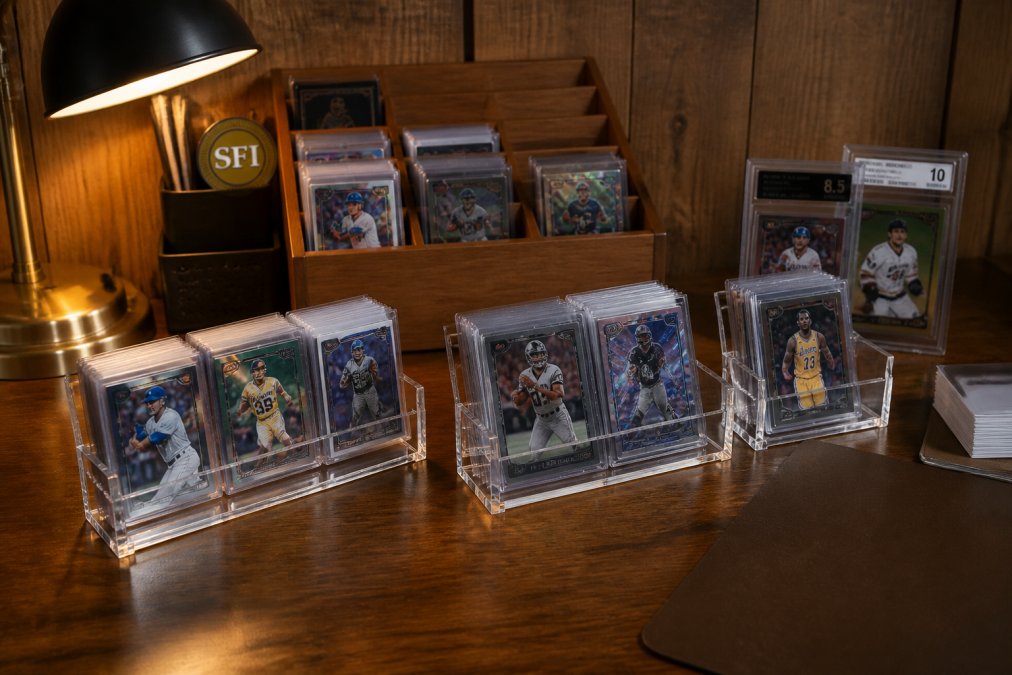
The limitation of household repurposing for graded slabs is slot width. Most business card holders and sorters are designed for standard card stock thickness, not the 4-6mm thickness of a graded slab case.
Eco-Friendly and Upcycled Display Options
Upcycled card stands turn unwanted commons into functional display pieces. Some providers produce stands made from upcycled base cards. The environmental logic is sound: base cards that would otherwise be discarded become a useful product.
According to the Environmental Protection Agency's guidance on material reuse and recycling, upcycling converts waste materials into new products of higher value and is one of the most effective forms of waste reduction. For collectors who generate significant volumes of base cards from breaks, repurposing those cards as display stands is a genuinely sustainable choice.
The practical limitation is durability. Cardboard stands are appropriate for standard 35pt card thickness and are not suitable for graded slabs.
Specialty and Premium Card Display Alternatives
Some collectors want more than a stand. They want a display that communicates the significance of what they're showing.
Magnetic Mount Displays for One-Touch Cases
Magnetic mount displays are designed specifically for cards housed in magnetic cases. The mount attaches to a wall or surface and holds the magnetic case via an integrated magnet, creating a floating display effect where the card appears to hover without visible support.
The Mag Mount system is compatible with major magnetic case brands up to 360pt thickness and requires no tools for installation. Cards can be swapped in and out easily, which makes these mounts practical for collectors who rotate their displays.
These mounts work only with magnetic cases. If your collection includes PSA or BGS slabs, you'll need a separate display solution for those pieces.
Levitating and LED Display Stands
The AIRTIME levitating LED display uses electromagnetic levitation to suspend a graded slab in mid-air with 360-degree rotation and an integrated LED halo ring for lighting. It fits standard graded cards from PSA, BGS, SGC, and CGC, as well as 35pt top-loaders.
It requires AC power, which limits placement flexibility. But for a centerpiece display or content creation setup, the visual impact is difficult to match with any conventional stand.
Space-Saving Configurations and Ergonomic Display Tips
Space-saving card display is a real design challenge for serious collectors. A collection of 50 graded slabs displayed individually on separate stands requires significant surface area. The practical solution is tiered or grouped configurations that maximize vertical space.
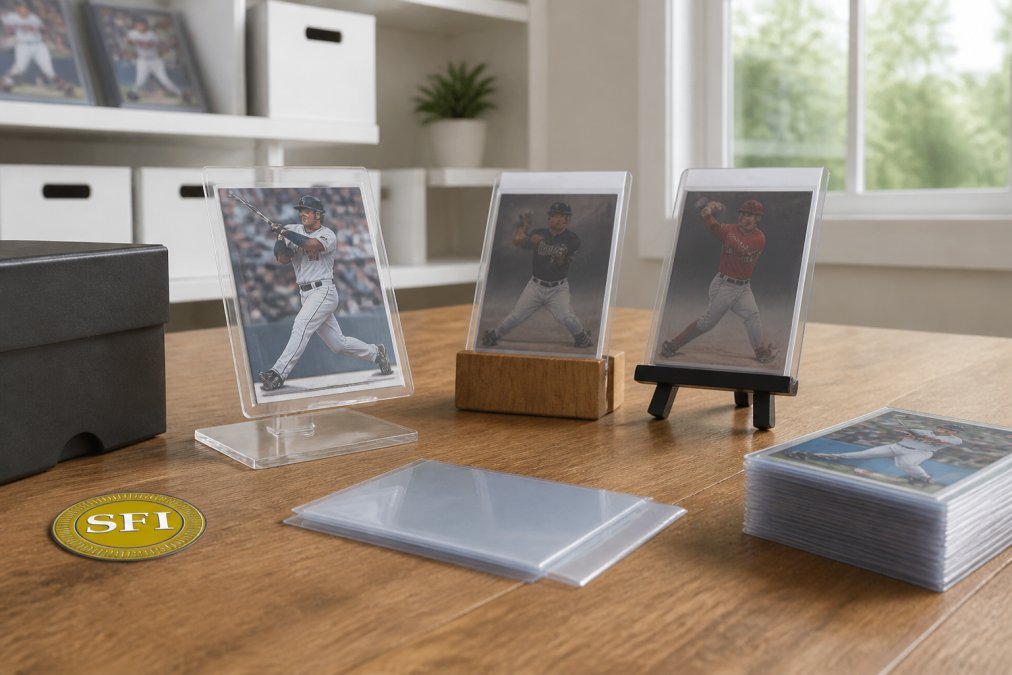
Tiered wood or acrylic display racks allow multiple slabs to be displayed at different heights on a single shelf footprint. The key ergonomic consideration is sightline: the front row should be lower than the back row, so every card is visible without having to move others.
For ergonomic display during active gameplay or trading sessions, consider stands that allow quick card removal and replacement. Deep-slot stands that require careful extraction are frustrating in a session context.
According to the American Physical Therapy Association's guidance on ergonomic workspace design, displays positioned at eye level when seated reduce neck strain during extended viewing. For collectors who spend significant time at a display desk, shelf height matters as much as stand design.
Standardizing on one or two stand types across a display creates a cohesive look that lets the cards themselves draw the eye.
Protecting Slabs Before You Display Them
A display stand is the last line of defence. The first line is the sleeve on the slab itself.
Graded slab cases from PSA, BGS, and CGC are durable, but they're not impervious. Surface scratches accumulate from handling, dust, and contact with other surfaces. A precision-fit sleeve over the slab case prevents the majority of that damage before it reaches the case surface.
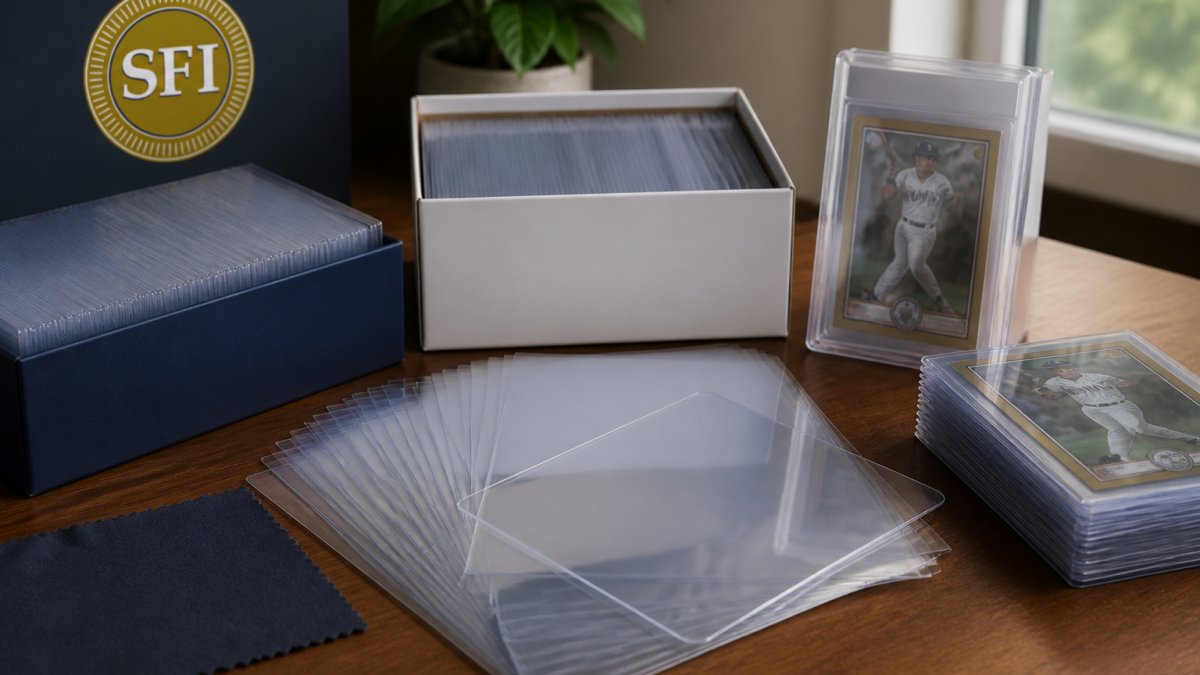
Graded Card Slab Sleeves from Superior Fit Sleeves have been engineered specifically for PSA, BGS, CGC, and other major slab formats since 2014. The sleeves are ultra-clear and distortion-free, acid-free for long-term storage and display, and cut to precision dimensions that protect the case without adding bulk.
The practical workflow is straightforward: sleeve the slab first, then place it in the stand. The sleeve protects the case from the stand's slot edges, from dust accumulation, and from fingerprints during handling. When you move the slab between stands or take it to a show, the sleeve travels with it.
For collectors who also display raw cards in Top-Loader Sleeves or Magnetic Card Case Sleeves, Superior Fit Sleeves maintains the same archival-grade standard across every protection type in a collection, ensuring consistent quality whether you're displaying graded slabs, top-loaders, or magnetic cases.
Standard plastic card stands were never designed for graded slabs, and using them puts both the presentation and the physical condition of your cases at risk. The right display stand paired with precision-fit, archival-grade protection creates a complete display solution that honours your collection's value. Visit Superior Fit Sleeves to find the right sleeve for your collection.
Frequently Asked Questions
Q: Are acrylic stands better than plastic for card displays?
A: Acrylic outperforms standard polystyrene or polypropylene plastic stands in nearly every practical area. It is more optically clear, less prone to yellowing over time, and resists scratching better than basic plastic. Acrylic also tends to carry more weight without flexing, which matters when displaying thick graded slabs. For collectors who prioritize long-term display quality and protection, acrylic card display stands are the more reliable choice over generic plastic alternatives.
Q: How do I keep my card slabs from tipping over on a shelf?
A: A weighted base is the most reliable fix. Stands made from wood, metal, or thick acrylic have enough mass to hold graded slabs upright without slipping. For lighter stands, placing them on a non-slip mat or inside a display case with a lip prevents tipping. Horizontal orientation also eliminates the problem entirely for slabs displayed on flat shelving. Avoid narrow slot designs that grip only the bottom edge, as these offer less lateral stability for heavier PSA or BGS slabs.
Q: What are the best ways to display graded trading cards?
A: The best card stands for graded slabs depend on your setup. Acrylic stands work well for shelf displays because they keep the card visible from all angles. Magnetic wall mounts create a floating effect for featured pieces. 3D-printed stands offer a precision fit for specific slab brands like PSA, BGS, or CGC. For maximum protection during display, pair any stand with an archival-grade slab sleeve to prevent surface scratches and dust accumulation on the case itself.
Q: Can I use wooden stands for sports card displays?
A: Yes. Wood stands, particularly those made from birch or similar hardwoods, provide excellent stability and a clean aesthetic that suits both sports cards and collectibles. They work especially well for top-loaders and standard-sized trading cards. For graded slabs, confirm the slot depth accommodates the thicker casing before purchasing. Wood is also one of the more sustainable display materials, making it a practical choice for collectors who prefer eco-friendly options over synthetic plastics.
Q: How do I display thick cards without damaging the edges?
A: Choose stands with a wide, smooth slot rather than a tight grip channel. Thick graded slabs need a slot that supports the base without applying lateral pressure to the casing edges. Felt-lined or rubber-padded bases add an extra layer of protection. If you are using a DIY option like a business card holder or baseball card sorter, check that the slot opening is wide enough for the slab before inserting it. Forcing a thick card into a narrow stand is the most common cause of edge damage.
This article was written using GrandRanker